
Why Polyamory Should Be Normalized In Animated Media
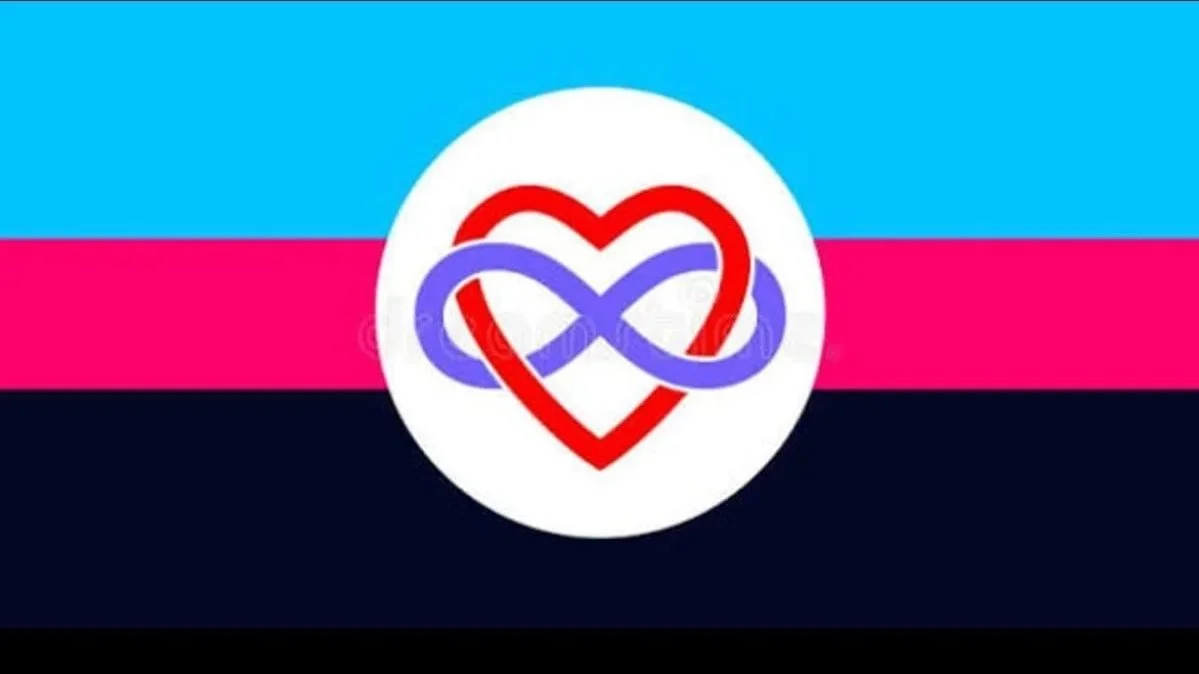
Polyamory has an…odd reputation.
On the worst side of opinion, it is a savage concept, practiced by degenerates. On the slightly more positive side, it's utilized by indecisive fanfiction writers unable to decide which ship to commit to.
In reality, it is neither of those definitions. It is human: complex, misunderstood, and severely overlooked and underrepresented in both real life and especially the media.
To truly begin, we must clear up a common misconception, that of polygamy versus polyamory.
Polygamy tends to be where much of our often negative and often Western portrayal and disdain comes from. Here, there is usually a singular person (historically often male) who in turn marries several others (usually female), legally tying those people to him, but not necessarily each other. This was a historical practice rarely practiced today and often subject to belittling racial and moral scorn by others, subject to prejudicial portrayal by often colonialist cultures in ways we don’t really have time to get into at the moment.
Polyamory, on the other hand, is a little broader, but simultaneously more equal in how it is practiced, in theory. In this situation, three or more people engage in an equal relationship, with varying configurations (physically, emotionally, and mentally) in regard to how they fit together. Where polygamy will tie several people to one, polyamory will tie several people to each other.
RELATED:

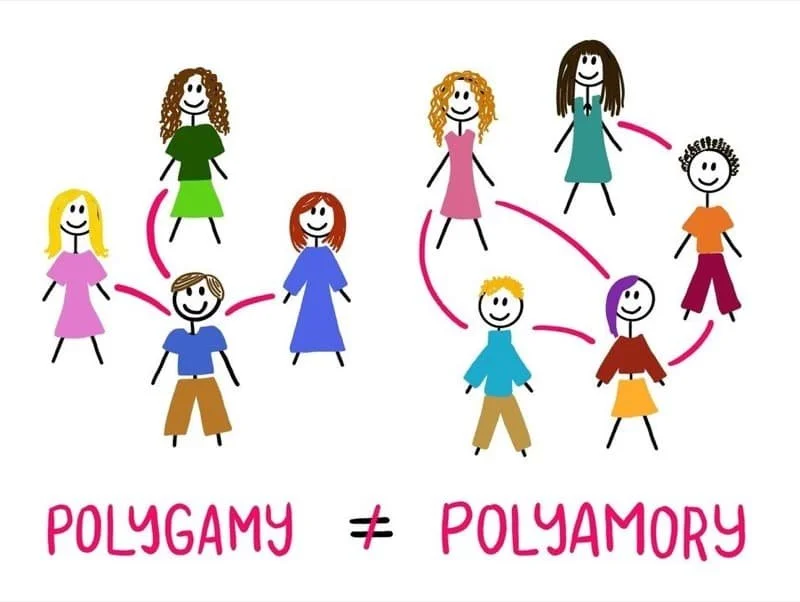
Image Source: Olive Abroad
On the lowest end of matters, it's a tier structure versus a triangle: whereas flipping the tier causes issues and inequality, flipping the triangle shouldn't shift the power balance too much, if at all.
Now obviously, this is a very broad and limited interpretation of how polyamory can work. It can be as few as three to as many as a dozen. It can be a closed circuit or a series of geometric shapes within each other, or even, sometimes, an open relationship, a series of lines with a gap or three. It can be complex and varies person to person.
Which is part of the reason it's often looked down upon, or straight-up ignored by the media.
There's no denying that monogamous relationships are not only the norm but actively encouraged. The idea that you have the perfect “one”, your soulmate, is touted as the ideal and perfect form of romanticism. Love triangles, beloved in dramas, are treated as temporary speed bumps and often, not even triangles, but competitions. Usually, two men are fighting over an indecisive woman. However, she may feel about both of them, there is the expectation that in the end she will choose one set of feelings over the other, choosing her ideal companion and metaphorically Highlander-ing the other to the curb. There can only be one.
Or…can there be?
For a long time, polyamory was often seen as something of a fandom's horny attempt to either write/draw a threesome between three attractive beings (the Twilight series, particularly the Eclipse tent scene comes to mind), or an attempt to have the best of both worlds without having to either commit to path and subsequently have to lock away the other. Many within various queer communities often didn't see it as such, but to a majority outside it, it was the purview of teenage girls who wanted Edward and Jacob and sought to live vicariously through Bella.
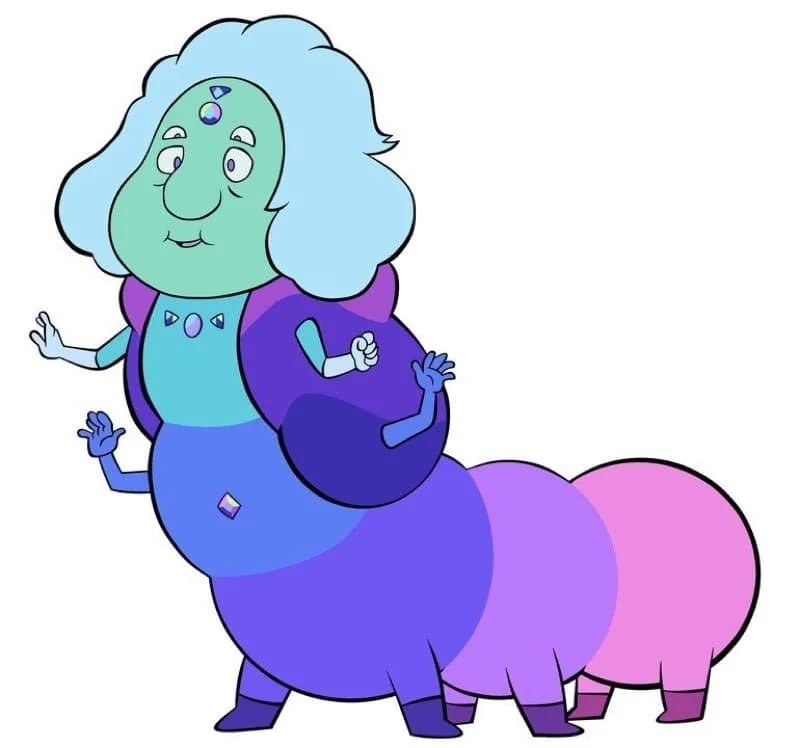
Image: Steven Universe Wiki
But then we got the likes of Steven Universe.
The show can be attributed to much: stellar writing, catchy tunes, fantastic animation, but one of its greatest achievements is how it presented a variety of queer relationships and presentations to a wide, ranging audience.
In the show, female-identifying sentient crystalline aliens known as Gems interact with each other and humans in a variety of ways, from Gem/human relations, one of which gave us the titular protagonist, Steven, to Gem/Gem connections, the least of which is a process known as Fusion.
It's through Fusion that the show presents us a variety of queer forms of expressions, from gender fluidity and bisexuality, to asexuality/romanticism and yes, polyamory.
While Fusion between more than two Gems is often presented as friends or comrades combining to acquire a tactical advantage in combat, there are more examples we see as the series progresses, including multiple appearances from the character Fluorite, a perma-Fusion of six Gems living as a singular stable entity.
And suddenly, the nature of polyamory presentation becomes abruptly, startlingly tangible. Real. Not fandom nonsense, but a reflection of reality. Art imitates life. We've seen it's possible to portray.
So…why don't we see more of it?
Well, the first answer to that question is probably the first thought that came to mind: queer narratives and characters are still a scary concept to the pocketbooks of predominantly white, heterosexual male studio executives. Rebecca Sugar, Steven Universe's lead creator and director had a hard-fought battle to show two queer characters having a wedding, despite the show's success and positive audience engagement. The CW and Netflix have a storied history of queer characters either dying prematurely, being given little to no relative story time or being given a singular triumphant episode of them coming out before subsequently being shuffled off into the background. Given that there are seem to be issues with presenting two non-heteronormative people, one can see why three or more might, however illogical as it is, give studio executives metaphorical heart attacks.
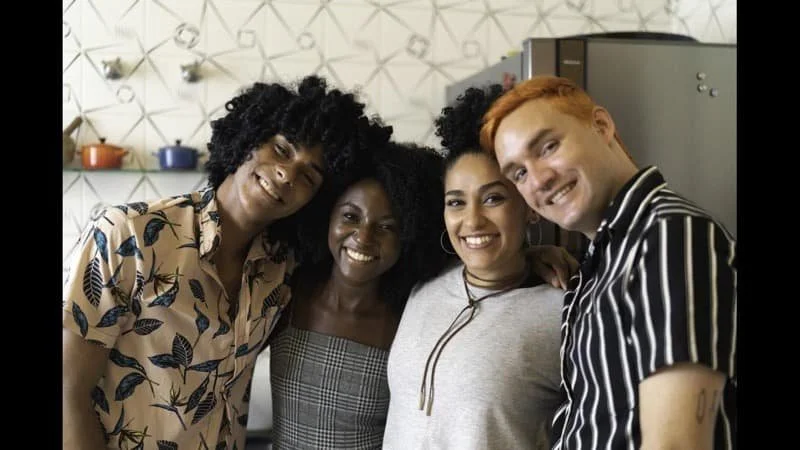
Image Source: Medical News Today
The next issue is down to how polyamorous relationships are presented—that is to say, consistently sexualized.
“Sex sells” is an age old mantra of television, and queer relationships in particular are unfortunately not spared. If anything, it is often worse. Lesbian relationships in particular are often set up on screen to feature a “male” substitute—the tomboy, the tough girl, the butch—allowing networks to show a queer relationship while still maintaining a “comfortable” standard, although this has often been a realistic representation of a subset of real-life lesbian culture.
Not only does this do a disservice to said relationships, but one can easily see how this can impact how a trio (or more) is shown, often to the female member(s) disadvantage: one female to two males, and she is a loose woman. Two females to one male, and he is the “lucky” one, dismissing the equality of a poly relationship in favor of a wink and nudge to the audience that implies his patriarchal superiority.
That's not even touching on the fact that queer relationships, monogamous or polyamorous, are often not so black and white as male/female gays, lesbians, and/or bisexuals, but can, as noted above, feature a melody of interpersonal relationships and preferences: demisexuality, asexuality, aromanticism, gender fluidity or neutrality, etc. It's a complex and beautiful web that the screen has a tendency to conveniently forget.
So…where does that put us? Where do we go? What can we do?
Despite how I've depicted the situation, it's important to remember that 1) this is a very broad strokes interpretation of the situation and 2) just because polyamorous relationships in media have proved incredibly limited in their portrayal, it doesn't mean they are not slowly being tested.
As noted, there was Fluorite from Steven Universe, but Nate Stevenson, creator of She-Ra and the Princesses of Power, has confirmed that side characters Lonnie, Kyle, and Rogelio (also referred to as the Horde Trio by fans) are in a relationship by the end of the series. Recent Sony hit KPop Demon Hunters gave a wink and a nod to fandoms by mentioning, albeit jokingly, a three-way relationship between the character Mira and two of her demonic pinkette enemies, Romance and Abby, within the film itself.
What this tells us is that fandom desires and societal reflections are noticed by creators, producers, directors, etc. Polytrix, the fandom name for the romantic relationship between Rumi, Mira, and Zoey of the aforementioned KPop Demon Hunters, has had acknowledgment by both its creator, Maggie Kang, and Zoey voice actor Rei Ami. Rei has even garnered a reputation for engaging and commenting on various fanworks, from fics to artists.
And on the side of fans, approval and desire to see polyamorous, on-screen relationships is no longer limited. While some ships, like that of the Marvel Comics/Cinematic Universe ship of Tony Stark/Steve Rogers/Bucky Barnes, are extremely popular is unlikely to ever be shown on screen, some like the Star Wars ship of Rey/Finn/Poe Dameron could be possible. The franchise is far from over, and not as long-established, leaving the potential present. And even if a ship isn’t possible, that it exists at all proves itself a reflection of reality.
Slowly but surely, we're seeing a minuscule restructuring of the norm. We're seeing that, bit by bit, the attitude of the computer screen is solidifying and gaining strength, and as such, there are slow steps for the screen to start reflecting the complexity of humanity. Representation is very, very, very slow…but it does exist.
Which means it is also up to fandom to continue making noise.
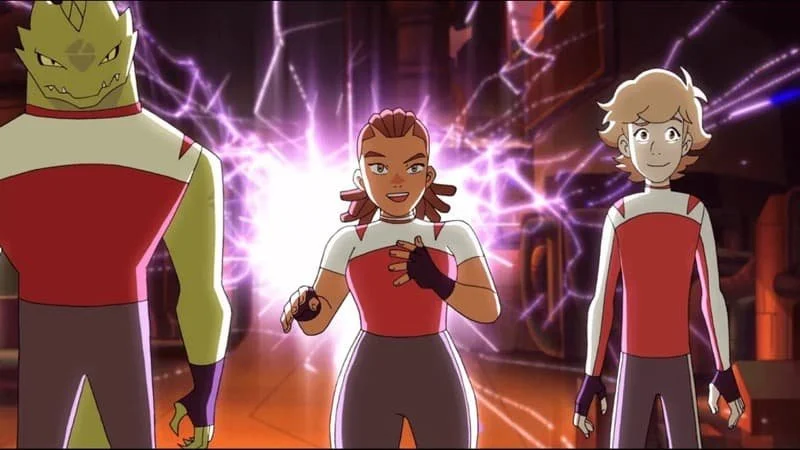
Image Source: She-Ra and the Princesses of Power Wiki
Write your posts. Make your analyses. Create your fanfics, fan videos, and fan art. Show your support with views, or lack thereof. Write letters, tweets, and blogs. And above all else, never believe that your voice doesn’t matter.
Polyamory in animation is valid and comes down to us to cultivate it. To not only encourage its growth on the screen, but also to continue to produce our own works. We live in an age where indie film, television and animation creators are increasingly more popular and respected. and poly relationships deserve to be more than the occasional shocking spectacle but treated as every other relationship: normal, human, messy and beautiful.
CultureSlate: Made by humans, for humans.
Please consider supporting our AI-free content via our Patreon page.
READ NEXT:

Latest News

Featured



• All sizes are adult unisex
• Printed art on the front
• 100% cotton
• Pre-shrunk fabric
• Shoulder-to-shoulder taping
• Culture Slate Exclusive Design
See more products here