
A Brief Retrospective Of Dune (1984)
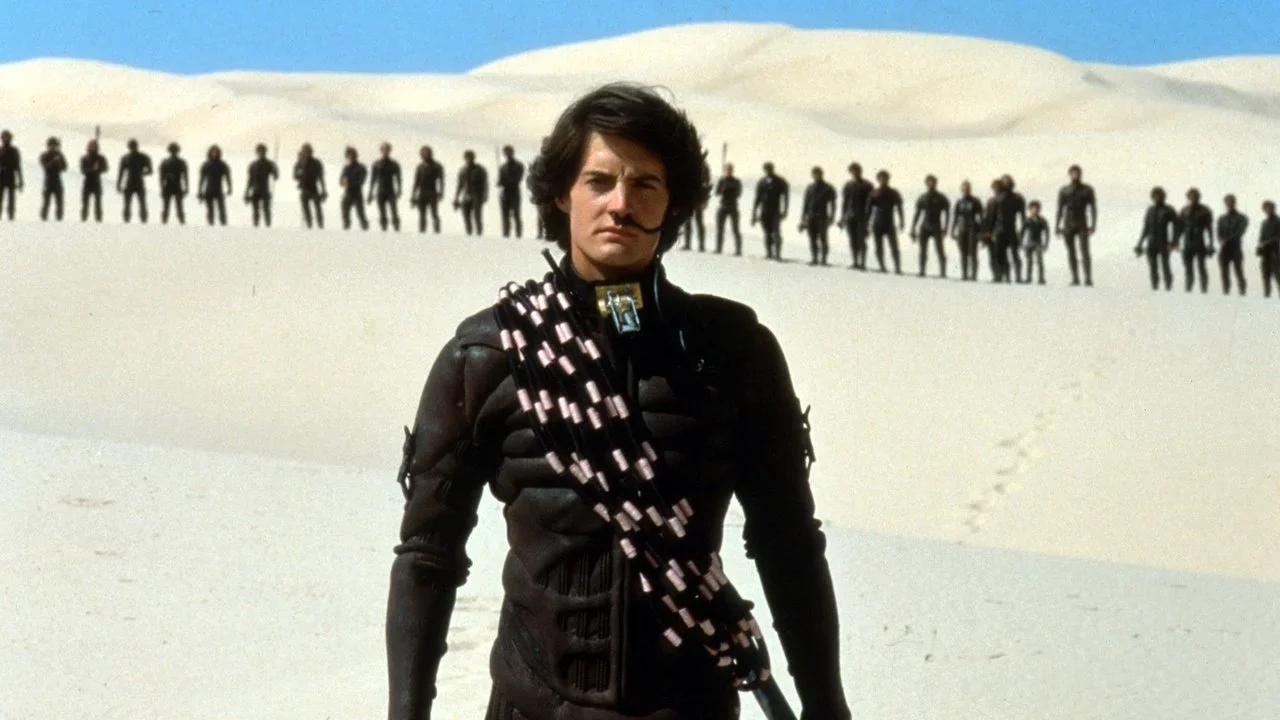
Image Source: MUBI
The 1984 Dune adaption was bizarre, memorable, and a huge commercial flop.
But like House Atreides and House Harkonnen, behind the scenes there was a tale of two men at war. And unfortunately, the only loser was the movie.
RELATED:
“He who controls the contracts controls the universe.”
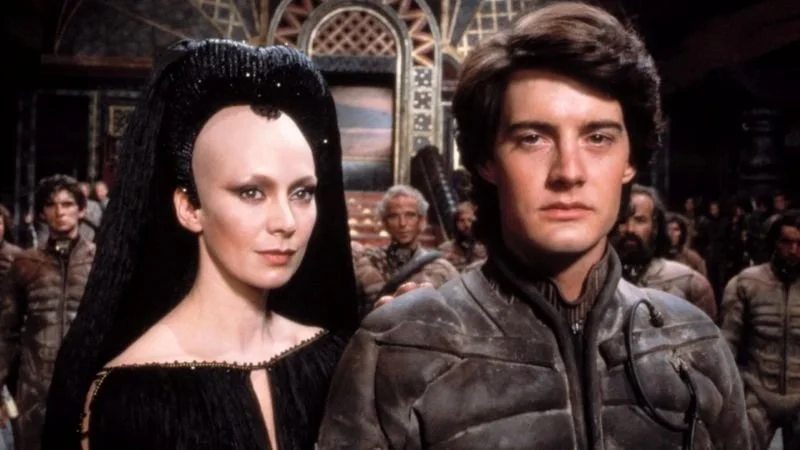
Image Source: Slashfilm
There had been few attempts to bring Dune to the screen since writer Frank Herbert sold the rights. There were several attempts in the 1970s to make a Dune movie. Herbert’s death put a stop to the first script, and another that would have seen Orson Welles playing Baron Harkonnen was shelved due to lack of funding (and the fact the script was ten hours long). Then Italian producer Dino De Laurentiis (Conan the Barbarian) got his hands on the book. He initially recruited Ridley Scott to bring Arrakis to life. Scott originally planned to split the movie into two pictures, but he sensed the Sandworms would be more trouble than they were worth and dropped out.
It seemed as if the adaption was cursed.
Dino De Laurentiis next turned to David Lynch. He’d just received critical acclaim for The Elephant Man and had a very unique style suited to science fiction. But as anyone who’d seen Eraserhead knows, You did not hire Lynch for a straight shoot. Lynch had just turned down Return of the Jedi to work on Dune, believing that George Lucas follows his own vision, not someone else’s.
Initially, Lynch signed on for two movies (as did the stars), and also started to write an adaption of Dune Messiah. But in his excitement he made a mistake in his contract that put the whole movie in jeopardy. He let Dino De Laurentiis talk him into removing the final cut clause.
“So that’s a lesson I knew even before, but now there’s no way. Why would anyone work for three years on something that wasn’t yours? Why? Why do that? Why? I died a death. And it was all my fault for not knowing to put that in the contract.”
He would regret this decision for the rest of his life.
“God created Principle Photography to train the faithful.”
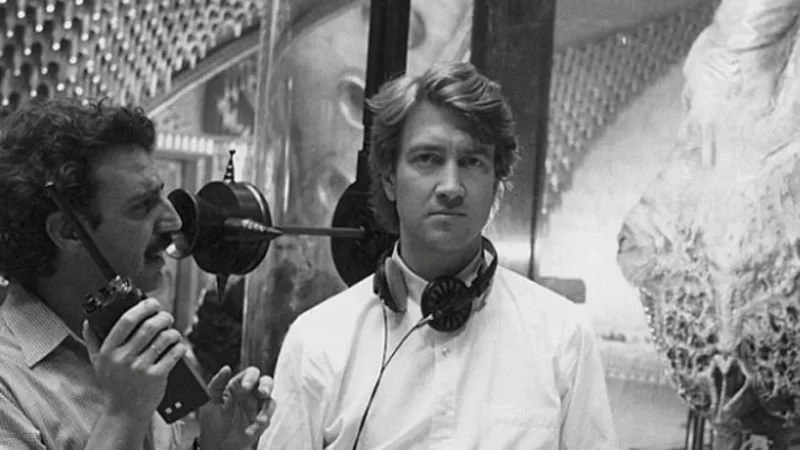
Image Source: Jo Blo
Conflict with Dino De Laurentiis spiraled during the shoot, as he fought him on every single take. According to Francesca Annis, (Lady Jessica).
“David had wanted to make the scenes very dark, all the underworlds very dark and look very sinister. Dino wouldn’t allow it. It had to be lit brightly so that it would transfer well to video, where I think at that time things went down a shade. David and DoP Freddie Francis were constantly being hamstrung and I don’t think David made the film he wanted to make.”
De Laurentiis was so controlling on set, that he refused to let Lynch give Annis a script for Blue Velvet, his next work. To be fair to De Laurentiis, Lynch reportedly hadn’t read the original Frank Herbert books before. The producer didn’t think the initial script that Lynch, Vore, and Bergren came up with wasn’t sympathetic enough, and the second was too long winded. This might have been why relations were already soured by the time cameras rolled. However, despite the fights, props were put into storage in anticipation of a second movie. So, when Dune was put into the can, it was still expected that we would return to Arrakis.
Perhaps that was the bones of a masterpiece were there. The Mexican desert was packed with 1,700 extras for the dramatic battle scenes, and the cast was made up of some of the biggest talents of the time. Dean Stockwell (Quantum Leap), Patrick Stewart (Star-Trek), Francesca Annis (Cleopatra, Krull) and of course, musician Sting. Paul Atriedes was played by Kyle Maclachlan (FallOut, Desperate Housewives, Twin Peaks) and gave a convincing performance. The costuming and set design was impactful, and if it weren’t for the half-baked special effects that were added in post (the shields!) this would be a very good-looking movie. Rock band, TOTO also wrote a stunning soundtrack for the movie which, frankly would be getting a lot more credit if the movie had performed better at the box office.
“Fear is the run-time killer.”
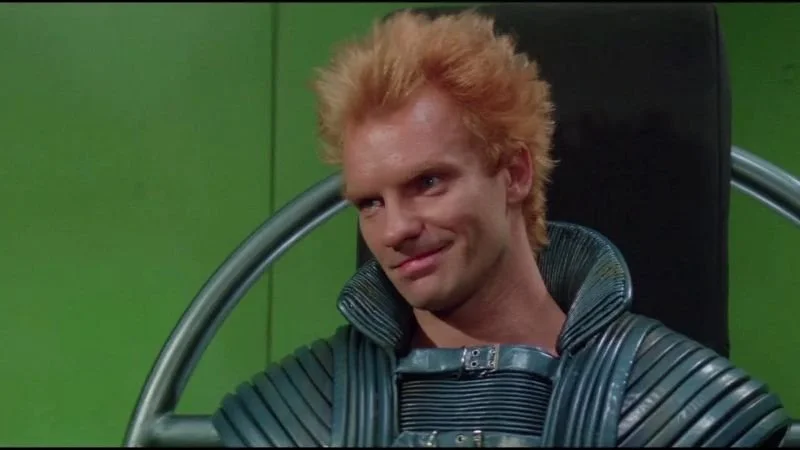
Image Source: YouTube
The visuals and sound do not change the fact that the second act is incomprehensible. It’s widely known that huge chunks were left on the cutting room floor. The special effects done in post also haven’t aged well, and compared to other movies of the day, it feels like they either went cheap or went fast. De Laurentiis and his daughter came in and replaced whole sequences with single scenes and voice overs shot in post-production. What was left bore no resemblance to the original script. The edit took a wrecking ball to this movie, and that’s where the damage was done.
Lynch was originally shooting for a four-hour run time. Dune (1984), fully aware that he wasn’t going to get final cut. Universal were reportedly telling De Laurentiis that they wanted the film to be just two hours. He gave into pressure and the theatrical release ended up being 137 minutes. Trying to crush Frank Herbert into just over two hours made for a confusing plot that needed frequent voice overs for it make any tangible sense. De Laurentiis said in a later interview that he was planning on a three-hour movie, and he regretted taking out the extra hour. And extended cut was released at 1988 in two parts on television and DVD. This is often called the Alan Smithee as a nod to David Lynch, who made them change his name on the credits but in reality, it came about because of De Laurentiis regretting his harsh editing decisions. Lynch was approached multiple times by Universal before his death asking for a ‘directors cut’ but he refused. There’s also a fan edit known as the Spicerdiver cut that’s popular online, and that many feel is closest to the original vision.
Dune cost 42 million dollars to make which was a huge amount of money for Universal to front. To put this into perspective, Indiana Jones and the Temple of Doom cost 28 million and Neverending Story had a budget of 27 million. These films were released in the same year. Dune only grossed 31 million dollars in the US, and as a result all sequel plans were cancelled.
It took Denis Villeneuve to make a commercially successful Dune adaption, and he needed 321 minutes for part 1 & 2. Part 3 will cover Dune Messiah, just like Lynch originally wanted. It seems that Legendary Pictures/Warner Bros have learnt from Dune 1984’s mistakes and are reaping the benefits.
CultureSlate: Made by humans, for humans
Please consider supporting our AI-free content via our Patreon page.
READ NEXT:

Latest News
Featured




• All sizes are adult unisex
• Printed art on the front
• 100% cotton
• Pre-shrunk fabric
• Shoulder-to-shoulder taping
• Culture Slate Exclusive Design
See more products here