
'The Abyss': Real Life Dangers For James Cameron, Cast & Crew
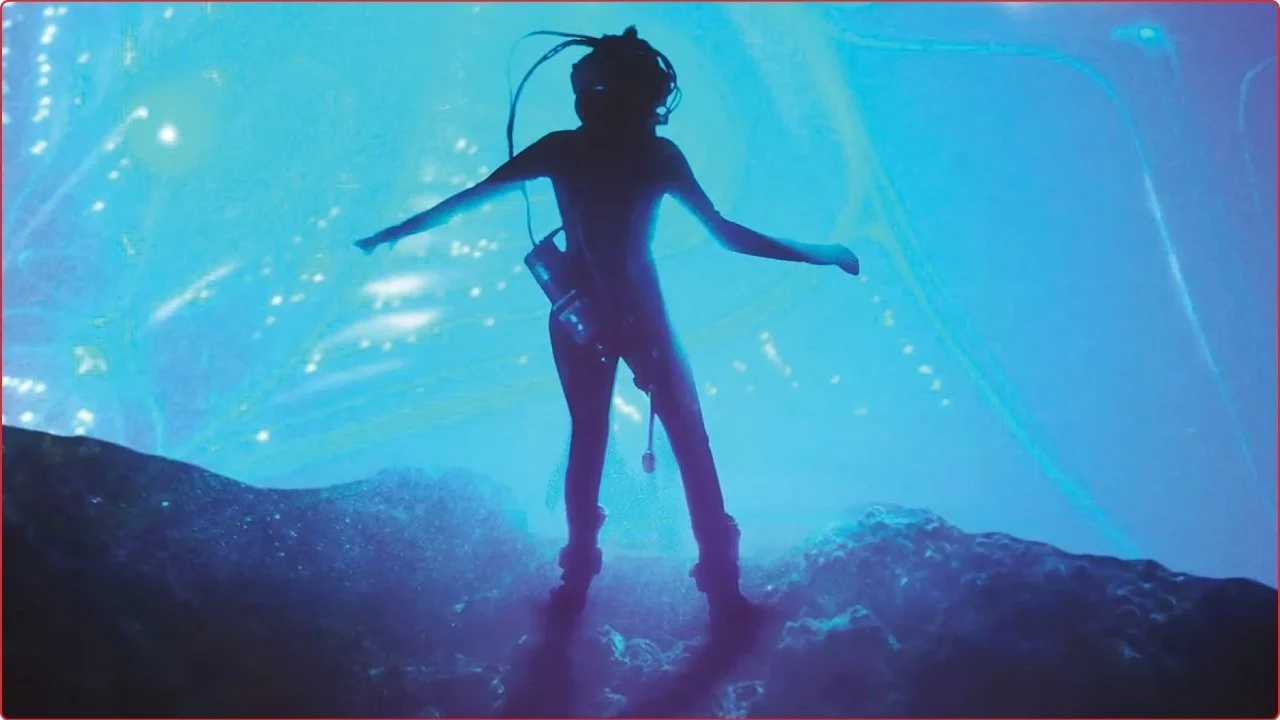
Image Source: Metrograph
James Cameron’s The Abyss (1989) was a revolutionary sci-fi epic. The deep-sea visuals were unlike anything seen in Hollywood, but the ambitious shoot was nearly fatal for the cast and crew.
Pre-production.
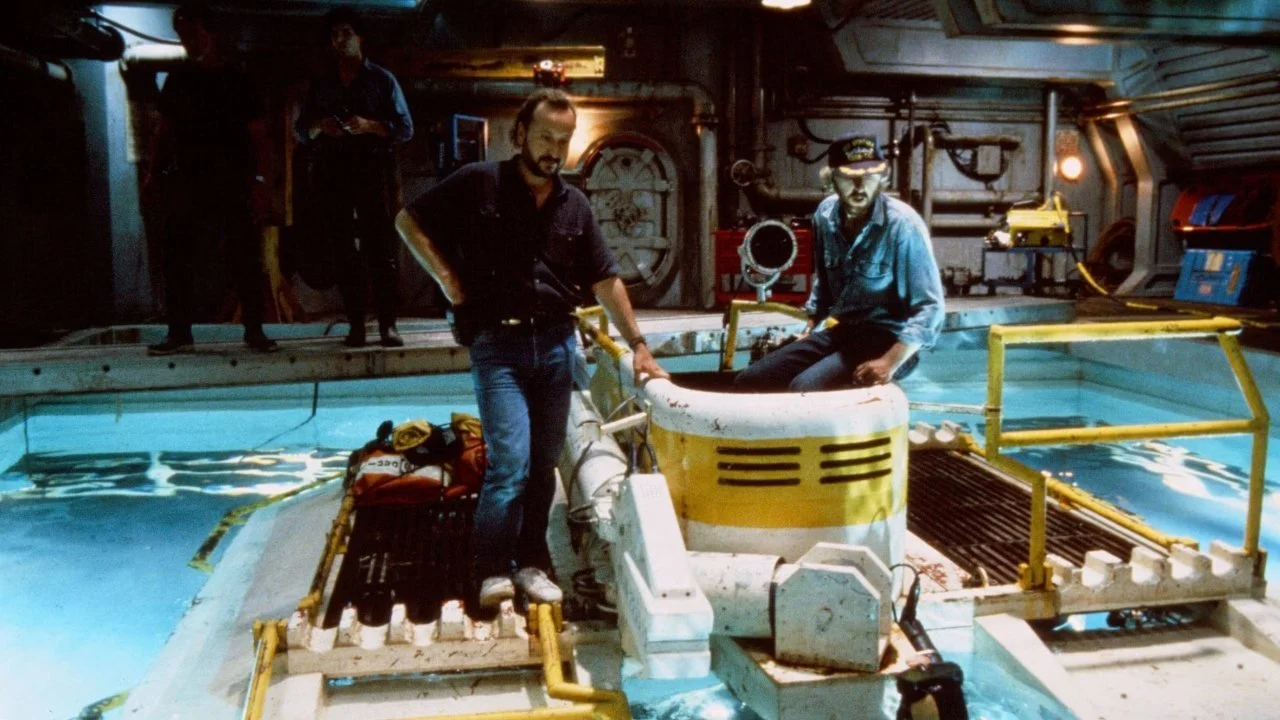
Image Source: SYFY
40% of The Abyss was filmed underwater. Cameron’s production company decided the only venue large enough was an abandoned nuclear power station. The old reactor was converted into (what was then) the largest fresh water filtered tank in the world, a massive 55 by 70 meters and 18 meters deep.
RELATED:

The monumental task of building the underwater set delayed production by six weeks. The delay became so frustrating that they began filling the tank before the construction had finished. The set builders had to race against the rising water.
The cast and crew had taken a week’s worth of diving lessons in the Cayman Islands and another two week’s practice with the specially designed diving helmets (that lit the actor’s faces) in the tank before shooting began.
Conditions on Set
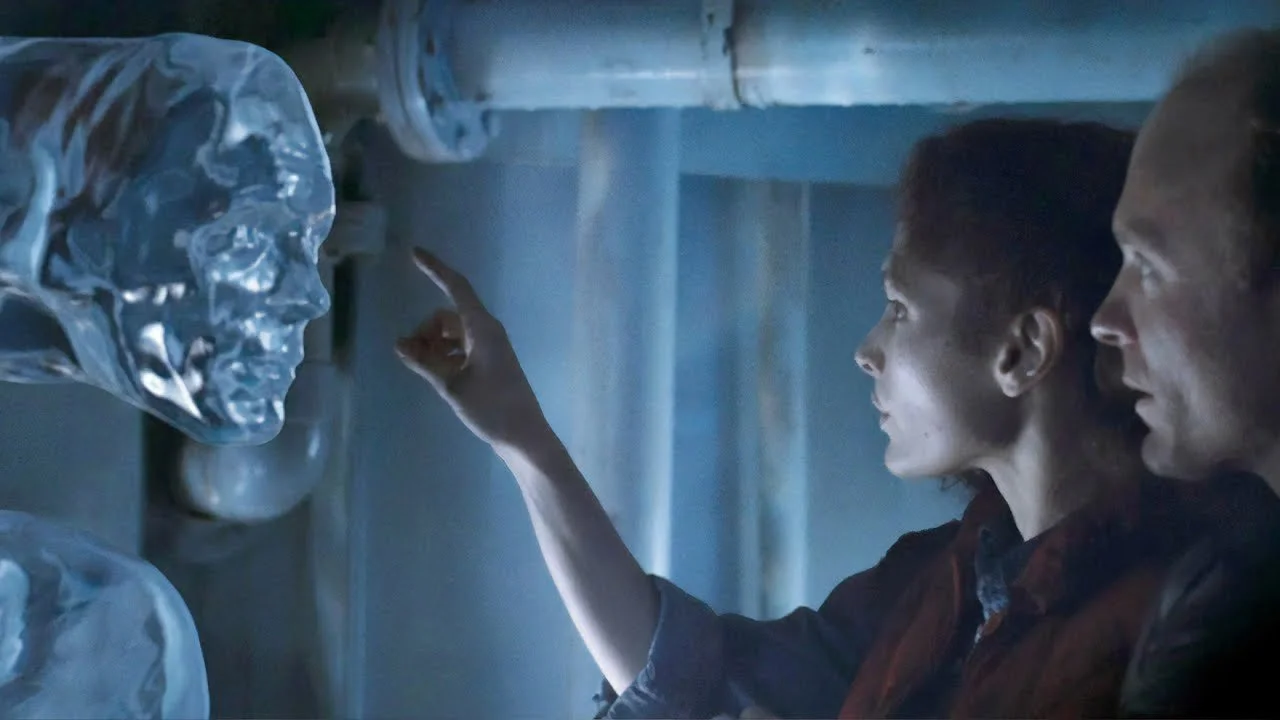
Image Source: Cinephelia Beyond
There hadn’t been time to adjust the PH levels in the water tanks, so to get the water clear enough for a good shot, large amounts of chlorine was added. Initially, crew just had their hair dyed bleach blonde as a result, but after a few days, people complained of chemical burns, body hair loss, and visual issues. They resorted to covering themselves in Vaseline before each dive as a way of minimizing the damage. The depth of the tank didn’t technically require decompression, but it was soon found to be necessary because of the amount of time they were spending underwater. Actors also spent their down-time resting with oxygen masks.
There were long delays between shoots, for a number of reasons. Cameron only had radio links with the actors underwater (the camera operators, and other crew had to use hand signals) so everything had to be meticulously planned before it went ahead. The filtration in the tank, the temperamental electrics and all the other gadgets that Cameron’s team had designed for the film had a habit of breaking (not helped by the wild goats that would wander on set) and needed constant repairs. While this happened, the actors would be stuck underwater without breaks. Often peeing in their wetsuits.
As filming progressed, Cameron had to switch to night shoots. But this became so cold that he had to bring in hot tubs to keep everyone warm between dips in the tank.
Incidents On Set
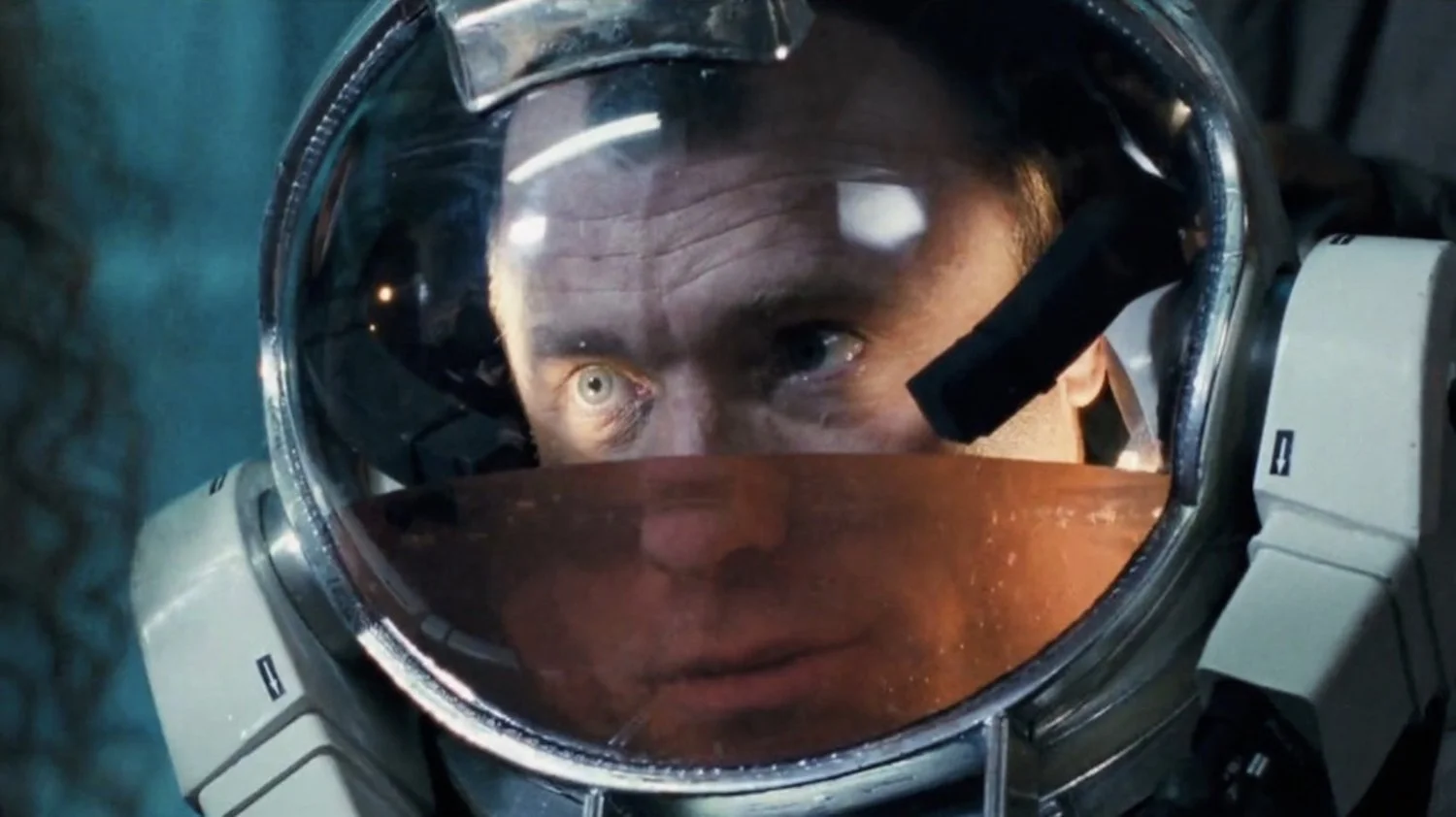
Image Source: Looper
JC Quinn, who played Arliss ‘Sonny’ Dawson found the shoot extremely stressful and asked to be fired after the first few weeks. He reportedly still responds to anyone moaning about onset working conditions, “f**k you, I did The Abyss.”
Mary Elizabeth Mastrantonio walked off set during a scene where she was topless and being slapped awake by Ed Harris. The camera had run out of film, and no one had stopped the action. When Mastrantonio realised Cameron was going to let her lay there naked and get struck for no reason, she called out, “we are not animals” before leaving.
Ed Harris risked his life for The Abyss. The shots where he was appearing to breathe water weren’t not done by any trickery, it was just Harris’ acting. On one occasion, Harris was thirty feet underwater with a helmet full of highly chlorinated water as he was being towed along a rock face. It nearly went horribly wrong. While filming this sequence, his safety diver (divers who had mobile air supplies for cast and crew) got tangled up, so a crew member gave Harris his air regulator upside-down, so Ed took in water. Harris had been holding his breath (to get the shot) for some time by this point and was starting to struggle. Luckily the camera man saw what was happening and pushed the crewman out of the way, so he could give Harris the equipment correctly.
Cameron had his own near-death experience. His assistant failed to check on his air supply. The director was so engrossed in his work, he didn’t notice it was low until it reached zero. Cameron was weighted down, but managed shrug off his gear and get to a safety diver. The safety diver handed a broken regulator, so the director took in a breath of water. Cameron, who had now gone without air for some time, tried to make for the surface, but the diver held him, thinking he was just panicking. To get away and save his own life, Cameron punched the diver in the face. Cameron’s only description of the incident in an interview shows how close he came.
“At that point it was almost check-out point and the safety divers are taught to hold you down so you don’t embolize and let your lungs over expand going up. But I knew what I was doing," he added. "And he wouldn’t let me go, and I had no way to tell him the regulator wasn’t working. So I punched him in the face and swam to the surface and therefore survived.”
Cameron reportedly had a blow up with a Fox executive over budget cuts a few hours later. The incident had left him so rattled that he put a helmet on the executive, sealed it up and made him choke on water.
What Has James Cameron Learned?
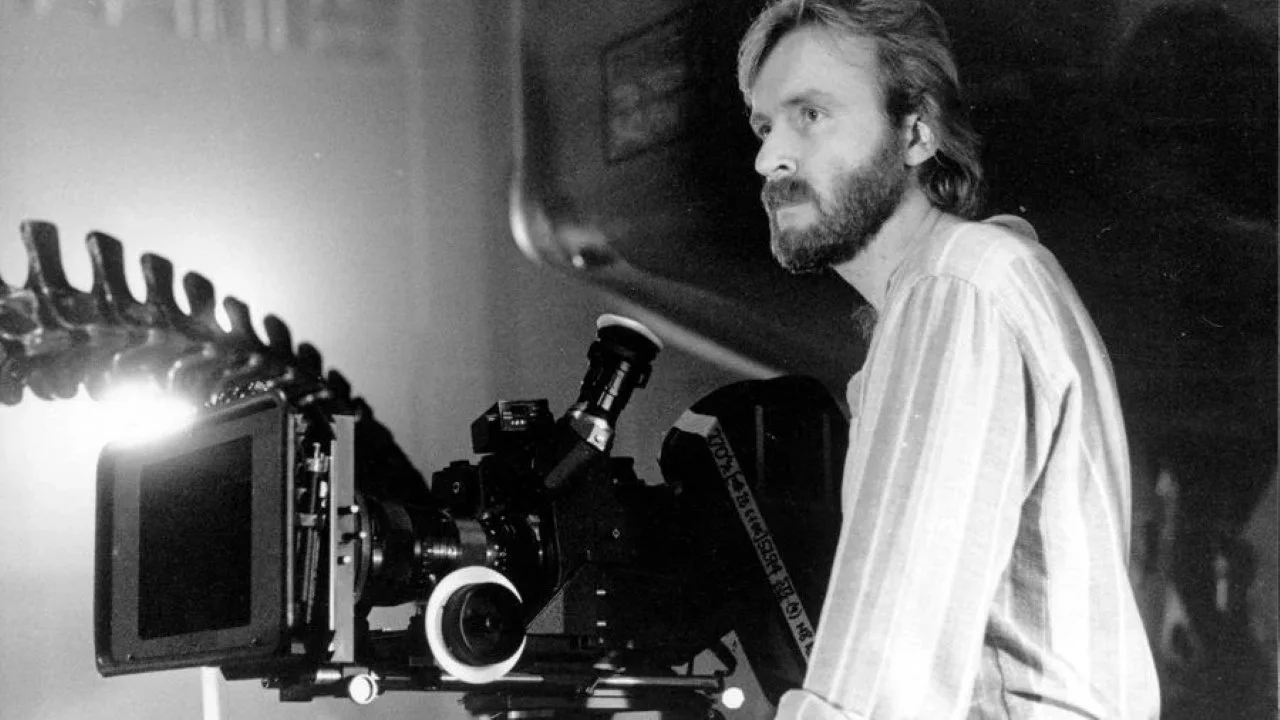
Image Source: Far Out Magazine
James Cameron has a huge imagination. His projects are always on a grand scale. Fox initially assumed that Cameron would use special effects to create the Abyss when he handed in his script. He negotiated for the complicated shoot and may have regretted it. Cameron said, “I knew this was going to be a hard shoot, but even I had no idea just how hard. I don't ever want to go through this again," in the making of documentary. In 1989, there was less technology to back up what he wanted to put on screen and that was why he chose for the realistic approach. Now Cameron embraces tech, however, he did go back to physical shoots in water, for Titanic and Avatar: The Way of Water. It appears that Cameron learned from his mistakes, as for Avatar the actors had six months diving training (instead of a couple of weeks) and in both shoots the tanks were heated comfortably.
The Abyss went over budget by ten million dollars and although it has a cult following, flopped at the box office. The shoot however, will go down in infamy.
READ NEXT:
Latest News

Featured






• All sizes are adult unisex
• Printed art on the front
• 100% cotton
• Pre-shrunk fabric
• Shoulder-to-shoulder taping
• Culture Slate Exclusive Design
See more products here