
Image Source: The Hollywood Reporter
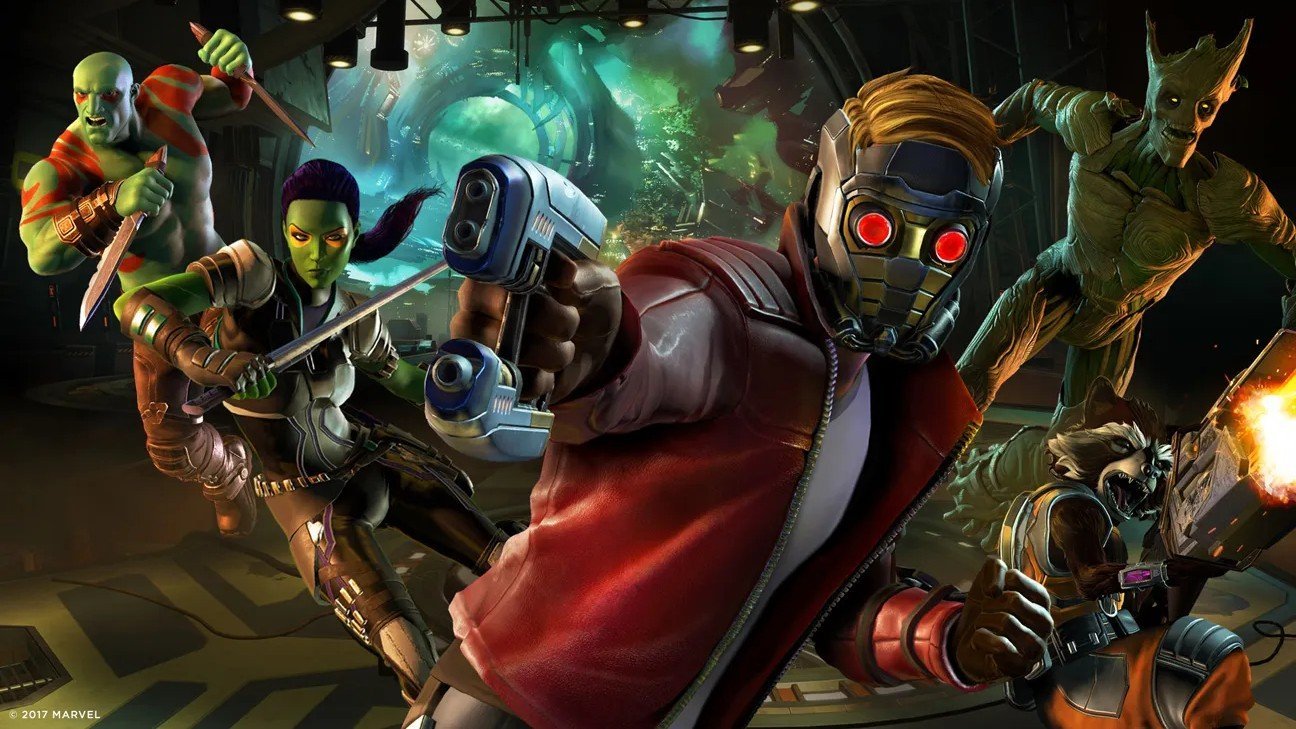
Guardians of the Galaxy is a mainstream comic that, not long ago, one would have been hard-pressed to find anyone who had heard of it. In 2014, the Marvel Cinematic Universe shone a spotlight on this superhero team, but their trilogy came and went in a blink. Like the rock-and-roll band ELO once sang, “It’s a livin’ thing. It’s a terrible thing to lose. It’s a givin’ thing. What a terrible thing to lose.” Yet there is another way to keep tabs on these wisecracking space heroes: video games. This article will look at the 5-episode RPG by Telltale Games and the PS5 level-fighting game by Eidos-Montréal.
One immediate relief is that the characterization is on point. Rocket is an abrasive furball of insults, tech, and explosions. Drax is an unfiltered bodybuilder who just might be on the autism spectrum since he takes everything literally. Gamora is a troubled mean-green-queen. And Groot remains the most thoughtful and supportive team player, the only one of Star-Lord’s followers who is not a problem child.
RELATED:
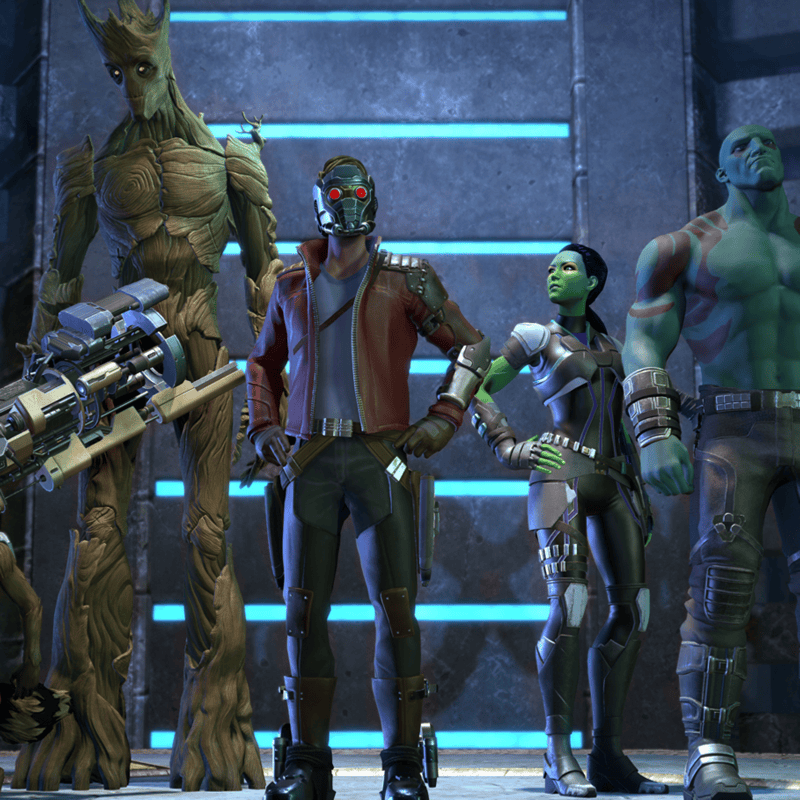
Image Source: IBTimes
There are still differences from how these characters are portrayed. For example, Gamora in the PS5 game has a more excitable, sarcastic sense of humor than the quiet confidence of the films and Telltale game. Mantis is a breathy Valley Girl type who is unapologetically invasive, while her MCU and Telltale counterparts share a naïve lack of confidence. Drax in both games is more serious than the man-child that Dave Bautista portrays. Telltale’s Nebula is a lot like her MCU role as a vengeful cyborg, an intense personality who softens up. Before Lylla appeared in the third Guardians movie, the talking otter who represents Rocket’s buried pureness appears in the RPG first and shares a similar canon event.
Star-Lord might split opinions. The blocky 3D animation by Telltale can appear like a cartoon, especially when compared to the photorealism of the PS5. He comes off as vulnerable and a little awkward, regardless of how exacting the writing is. On the upside, Scott Porter voices him: a Telltale alumnus in that he also plays the likeable survivalist Luke in the award-winning Walking Dead Season 2. His voice is already close to Chris Pratt’s while the PS5 version of the character sticks out. While Jon McLaren may have the coolness down, his voice is hoarse and shouty. Regardless, the games give an emotional intelligence to Star-Lord, something that might surprise a lot of fans who have only seen the films.
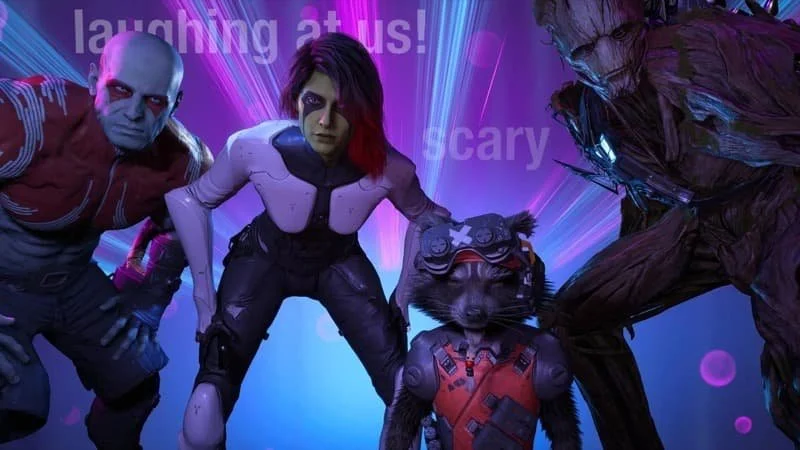
Image Source: Forever Classic Games
Both games also cover the backstory of the crew, yet Telltale is a strong standout. The PS5 Guardians may talk about their trauma in conversations, the earlier-released game takes it a step further by playing through the flashbacks as Rocket… as Gamora… as Drax. Because Telltale is an RPG company with multiple choices set to quicktime selection, playthroughs can mess with emotions because they continuously remind the player of their consequences. It is a delicious dose of drama that can make one lose themselves to the story. It is also an acquired taste because while there is plenty of action, it is through interactive cutscenes and not the parkour traversal found in most action games.
Eidos’ gameplay fits the bill of traditional single-player combat. Control over the other Guardian team members come from Star-Lord shouting commands that inflict special moves befitting the traits of his friends. And while Telltale does a better job at show-don’t-tell, the later-released game has better banter. It is so much of a constant that a lot of the dialogue gets interrupted simply by progressing at a normal pace.
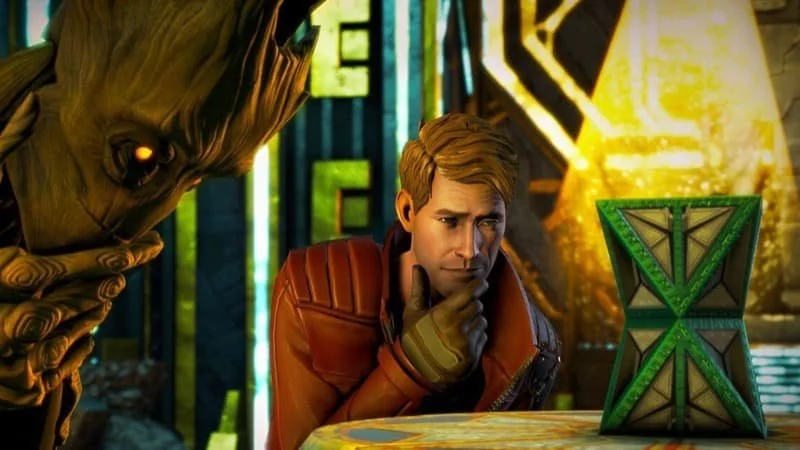
Image Source: PlayStation
What is a Guardians of the Galaxy experience without that 60s/70s/80s rock-and-roll? It has become a sci-fi tradition ever since 2001: A Space Odyssey for a classic soundtrack to act as a contrast to all the futuristic imagery. A cassette playlist is important to Star-Lord, and it is important to the franchise. The games are no exception. The PS5 game has a Team Huddle power-up that lets the player fight with boosted abilities and health—juiced to the beat of a nostalgic pop song. However, the songs are relegated to combat and the main hub of the starship Milano. Telltale may have fewer tunes, but they are acutely timed to their position in the story. It is during these moments in particular that the player can select the best options.
The Guardians are hilarious. Sometimes their biggest challenge is comprehending Peter’s Earthly references. Sometimes it is escaping a ridiculous alien monster. But just when nobody is taking anything seriously, they cover surprisingly deep motivations like unsolvable grief. Both games are about a golden chance to return those who have died. It carries with the question that if any of the heroes could live with past loved ones, would they lose out on the present?
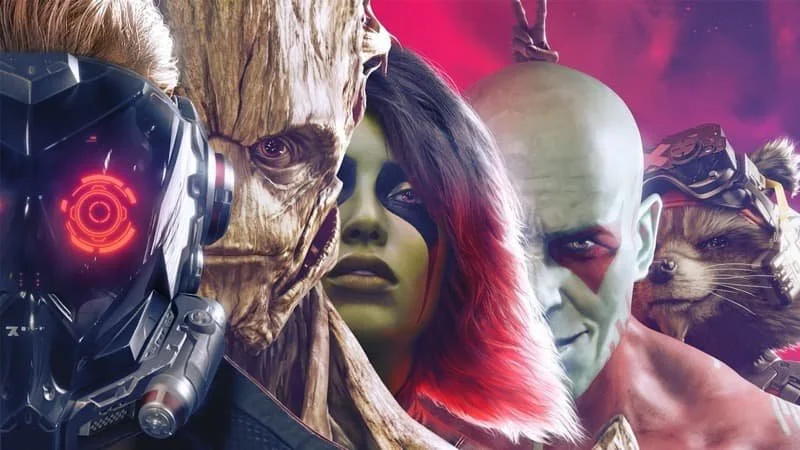
Image Source: PSU
The McGuffins answer that. In the PS5 game, a cult known as the Universal Church of Truth brainwashes planetary civilizations into service by casting hallucinations. Anyone enveloped by “the Promise” relives their old lives. This illusion is cast from the Soul Stone, a gem of elemental power that can manipulate the soul and commune with the dead. However, Telltale takes a step further through the Eternity Forge that can resurrect the dead! The tradeoff to bring back a soul is to sacrifice another, and not all souls who have died want to come back. The games also have villains, Grand Unifier Raker and Hala the Accuser, who have an exposed side to their goals, because they are motivated by the death of a son. It is the finding of these McGuffins that sets off a roller coaster of a playthrough.
The Guardians of the Galaxy video games share vital traits—characterization, gameplay, music, story—that are encapsulated through a single moment. It is this moment that really sells the emotional yet silly storytelling. For the PS5 game, as the galaxy is reeling from misery and the Guardians are trapped inside their rooms, the way out is to get their pet llama to chew the ship’s cords at the beat of “Don’t Worry, Be Happy” by Bobby McFerrin. For Telltale, after finding just the right response to alleviate a tortured Rocket out of his grief, it is immediately contrasted by a low-gravity brawl against space invaders set to “This Town Ain’t Big Enough for the Both of Us” by Sparks. It is drastic tonal shifts like these that fit so well within the Marvel universe.
Jarring, yet cathartic.
CultureSlate: Made by humans, for humans.
Please consider supporting our AI-free content via our Patreon page.
READ NEXT:


Latest News
Featured


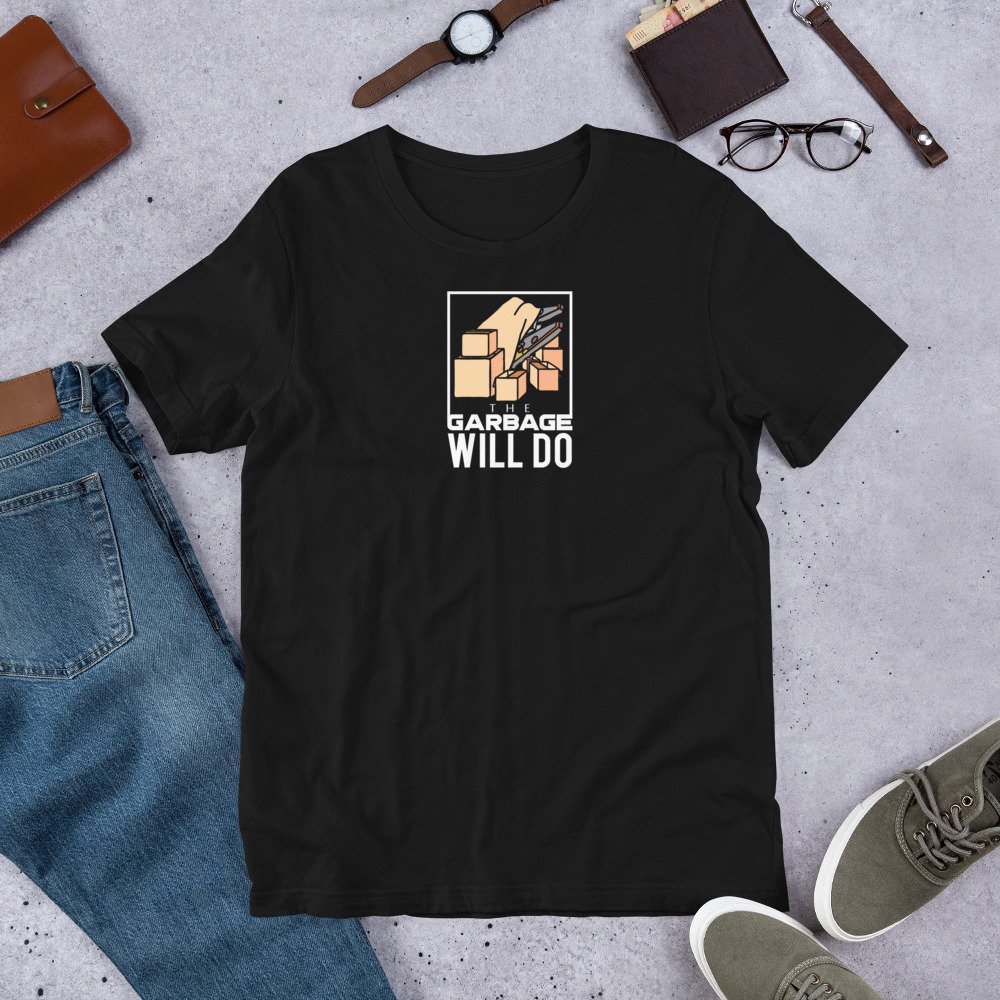

• All sizes are adult unisex
• Printed art on the front
• 100% cotton
• Pre-shrunk fabric
• Shoulder-to-shoulder taping
• Culture Slate Exclusive Design
See more products here