
'Tamagotchi' And 'Digimon': A Tale Of Virtual Pets
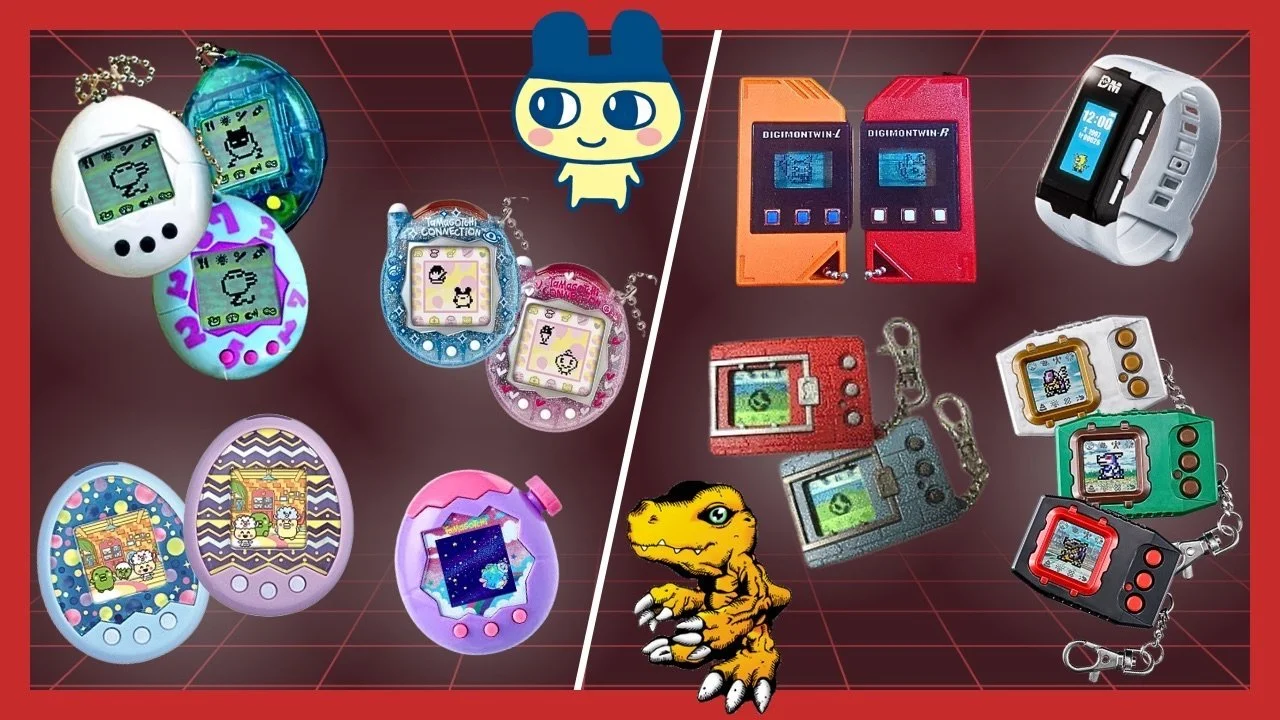
Image source: Cultureslate
Most have probably heard of Tamagotchi, the virtual pet that took the world by storm. Despite the initial fad dying down around 1998, a successful revival in 2004 meant that the line has been going strong in its native Japan ever since, even if its popularity waxes and wanes internationally. Digimon, meanwhile, was a similar line of V-Pets based around battling, but is more well-known for its Anime series by Toei Animation. Though gaining an undeserved reputation as a Pokémon knockoff, it developed a genuine fanbase, and is seeing new entries to this day. Ever wondered where they came from? We have the answers right here.
The story begins with Akihiro Yokoi, a toy executive at Wiz Co., Ltd. in Tokyo, Japan. Reportedly inspired by a commercial in which a kid wasn’t allowed to bring his pets on vacation, Yokoi quickly conceived a portable, virtual pet that was cheap to buy for consumers. Wiz being small, he reached out to Aki Maita of Bandai to produce the toy. The two initially thought of the toy as being worn like a watch, the name being a portmanteau of Tamago (Japanese for Egg) and Watch, they eventually settled on the final design as an egg-shaped keychain device.
RELATED:

The game play of the device was simple: Tamagotchi needed to be fed and cared for, ensuring their survival and “evolution”, but would eventually die. Lore for the device depicted the titular creatures as aliens who fled their home planet (itself a giant Tamagotchi) after it got drunk, and ended up on Earth. When released in 1996 in Japan and the next years internationally, the product proved to be a huge success in Japan of 1996; many news outlets reported owners feeling “depressed” about their pets demise, indicating a connection to these cute little pixels.
Since Tamagotchi was most popular with girls, a counterpart for boys entered the drawing stages. Originally called “Otokotchi”, the name “Capsule Zaurus” was also considered before they settled on “Digital Monster”, Digimon for short. Under the art direction of Kenji Watanabe, the digital lifeforms took on a more “monstrous” appearance compared to the cuteness of Tamagotchi, though blobs were used as baby forms for both. Digimon would inherit many of its parent’s mechanics, including evolution. One unique feature, however, would be the ability to connect Digimon devices together and battle each other, using the metal prong on the top of the device.
The devices would be a hit for Bandai (if not quite as popular as the Tamagotchi lines). However, it was a 1999 anime series that would capture the hearts and minds of its audience. Produced by Toei Animation, Digimon Adventure centered around seven (later eight) children who are suddenly transported to the “Digital World”, and find out that they are at the center of a prophecy to save it and the real world. A huge success, Digimon Adventure would spawn several sequels, while the greater franchise continued with games, toys, and of course more Virtual Pet devices.
While the Tamagotchi fad would die off around 1998, the launch of the Tamagotchi Connection (Tamagotchi Plus in Japan) would revive the brand, and it has continued to thrive, with more movies and a long running Anime tv series. Digimon, though never quite reaching Digimon Adventure levels of popularity, has managed to stay relevant by marketing to nostalgic adults as much, if not more so, than children. If you hear the words “Virtual Pet”, you think of Tamagotchi, and many are nostalgic for both brands. Bandai has kept marketing both Tamagotchi and Digimon, well into the 2020’s and long past their merger with Namco.
READ NEXT:



Latest News



Featured






• All sizes are adult unisex
• Printed art on the front
• 100% cotton
• Pre-shrunk fabric
• Shoulder-to-shoulder taping
• Culture Slate Exclusive Design
See more products here