
Still Burning Bright: ‘The Hunger Games’ Retrospective
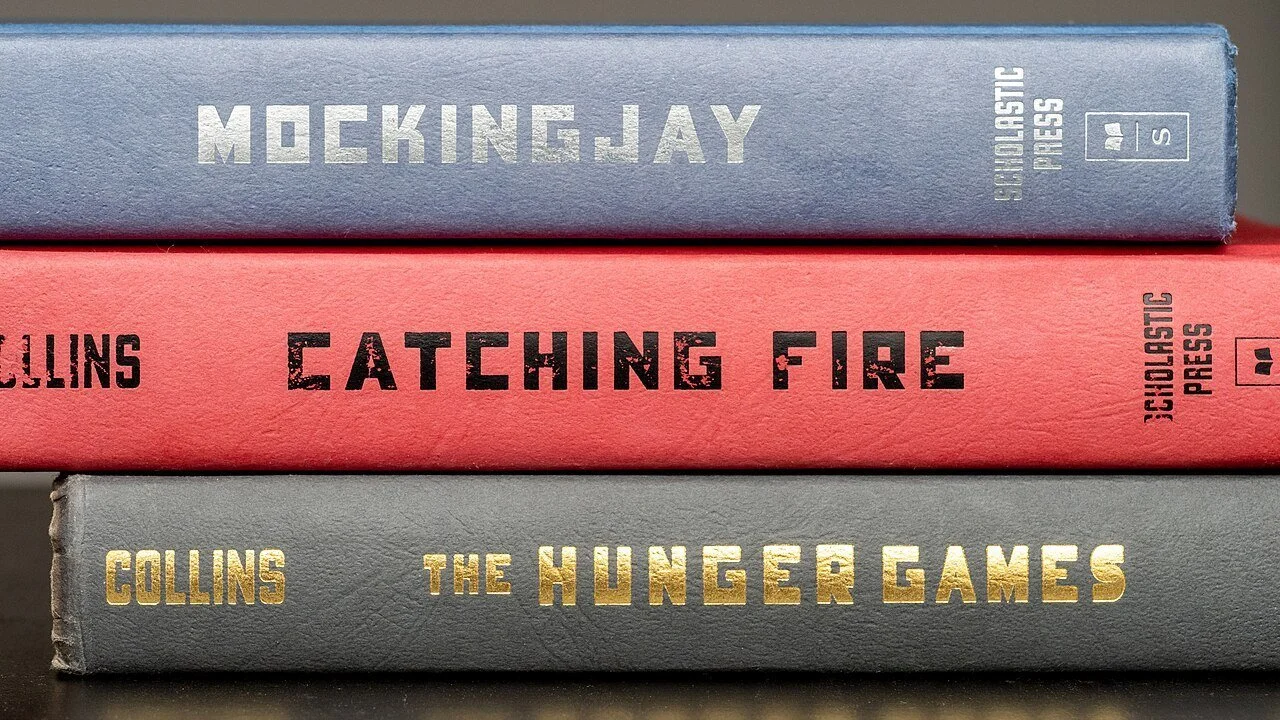
Image Source: Wikimedia Commons
Love them or hate them, in the realm of young adult (YA) novels, there's always a ringleader that kick-starts the trend. For fantasy wizard high school, there was Harry Potter. For supernatural teenage romance, there was Twilight. And for teenage dystopia, there was The Hunger Games.
Released in late 2008, Suzanne Collins’ novel kickstarted a gripping trilogy that took the world by storm. The story of a young girl’s inadvertent defiance in a dystopian United States of America and her traumatic rise as a symbol of rebellion captivated the world over, selling more than sixty-five million US copies over the course of the original trilogy, producing two prequel novels, and five movies.
RELATED:
Even before The Hunger Games, Collins had had experience detailing teenage trauma and overturning the Chosen One trope by diving into the horrors of war and the effects that would have on a child turned messiah. The Underland Chronicles, published in 2003, was the first of her works, featuring a young man named Gregor who becomes an unwilling lynchpin in a war between a hidden kingdom of underground dwelling humans and giant sentient rats.
Collins would fully lock in on this emotional and mental aspect with The Hunger Games, citing her father's experiences in Vietnam and his life-long struggle with Post Traumatic Stress Disorder (PTSD) as major sources of inspiration, along with stories from Greek mythology such as that of Theseus and the Minotaur.
Plot and Themes
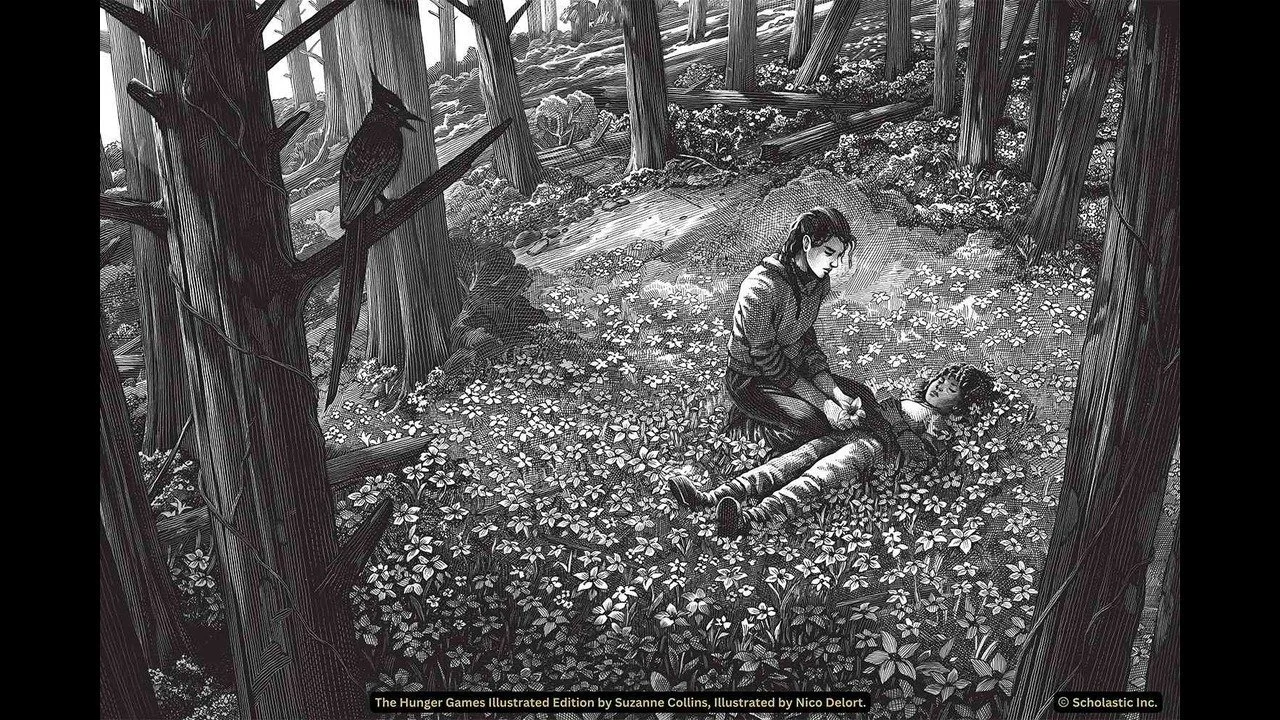
Image Source: People
The Hunger Games series follows the perspective of Katniss Everdeen, a teenager living in the poor mining-dependent District 12, located on the east coast of a once war torn United States, now renamed Panem. Life is rough, hard and bleak: the poorest citizens scrounge and barter, and even some of the wealthiest citizens of the district pale in comparison to the distant, looming Capitol. With a father dead in a mining accident and her mother emotionally and mentally distant with grief, it falls to Katniss to provide for herself and her young sister Primrose, often by illegally hunting outside of the District's boundary fences. Even still it is not enough, and in turn she is often forced to take out tessera grain rations, with each lot further increasing her odds of being picked for the annual Hunger Games.
The result of a failed previous rebellion, the titular Hunger Games were meant as punishment and threat to the people of Panem. Every year two children between the ages of twelve and eighteen would randomly be chosen from each District through lottery. These tributes would then be taken to the Capitol in a parade of pageantry and celebration, dolled-up and interviewed, and finally placed in an arena to fight and die until one child was left standing.
It is this horror that the citizenry has been watching for seventy-three years, and it is this horror that Katniss finds herself volunteering as tribute for when her sister is chosen against all odds for the 74th Hunger Games.
The series explores Katniss’ ever-present sense of fear and defiance, as well as the messy fallout of small and large scale war, first through The Hunger Games, and then sequels Catching Fire and Mockingjay, when she and fellow tribute and love interest Peeta Mellark's attempts to survive the arena have the inadvertent consequence of resparking rebellion throughout the Districts. Katniss finds herself struggling with survivor's guilt, PTSD and depression, even as various factions attempt to use her as a symbol of war.
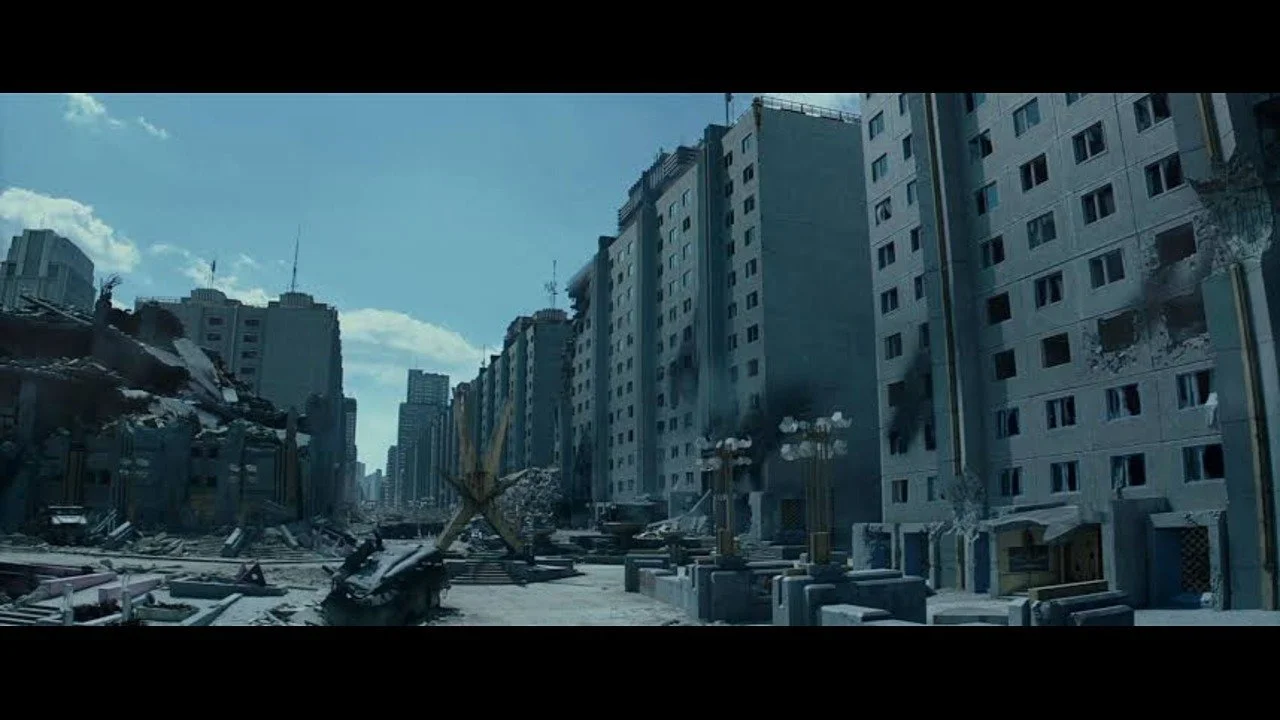
Image Source: The Hunger Games Wiki
Collins lays out the parallels of her father's service and oft unspoken effects of gladiatorial conflict throughout the novel in detail, from the brutality of conflict, to the instability of young adults being forced into nightmare-inducing circumstances, to torture by the state for “the greater good” to the sheer dissonance that people are fighting, dying and killing each other for people's entertainment.
Mockingjay especially is far more introspective in regards to morality in war. Katniss bucks against her role as the Rebellion's Mockingjay, giving speeches encouraging Districts to rise up and rebel, encouraging people to fight and die in her name, while also being too valuable herself to be risked on the battlefield. Her old friend Gale, who has always been a fighter at heart, becomes distant and continues to showcase darker and darker characteristics and a penchant for cruel and deadly weapons. And President Coin, the Rebellion's leader, comes to show that even among the “good guys” power corrupts, betraying a willingness to turn Katniss into a martyr for the cause, lest the Mockingjay's voice grows louder and more powerful than her own.
There is no happy ending to the trilogy, not in the traditional sense. The scars, the wounds, the loss…they are not erased or forgotten, only managed. The characters are, as far as we can see, content, and sometimes that's all one can hope for. The next generation may one day fight their own battles and endure their own horrors, but all one can really do, besides cement the lessons and sins of the past, is ensure that such horrors are the rarity and not the norm.
Katniss EverSue?

Image Source: Vanity Fair
Now it wouldn't be remiss to acknowledge that the book and it's protagonist definitely faced some controversy. Beyond the inevitable banning by some parents and libraries for everything from violence and incitement of rebellion to accusations of occultism and satanism, the character of Katniss herself gets drawn into question.
To many, Katniss is hardly a source of inspiration, or an example to follow. She's selfish, manipulative, and sometimes cruel. She knowingly strings along Peeta, understanding that she has leverage over him by virtue of his feelings. Other times she's seemingly deliberately obtuse regarding the quiet rivalry between Peeta and Gale over her affections, pretending not to see that she is attractive to them. And of course, she is hailed as a hero despite constantly stumbling into her success and survival.
And I say: that's the point.
The Games are cruel, deliberate violence so well-crafted that it swings back around to mindless. The Career Tributes, those born in Districts closer to the Capitol who are both financially better off and exposed even more to Capitol propaganda, train for years for the chance to join the Games, deluded into believing their involvement is an honor.
But all of that doesn't really matter. There is no honor, no glory, only chance, brutality and pity. Even success is a poisonous gift; Victors of the Games tend to find themselves mysteriously made orphans and widows upon their return. Some are pimped out, their bodies purchased for the night by wealthy Capitol patrons.
Katniss is jaded, short and mistrusting because she lives in a society where she has been taught that is the only way to survive. Her mother has failed her. Her community has failed her. Her nation has failed her. And to make matters worse, against her own interests: she does care. She is empathetic.
img
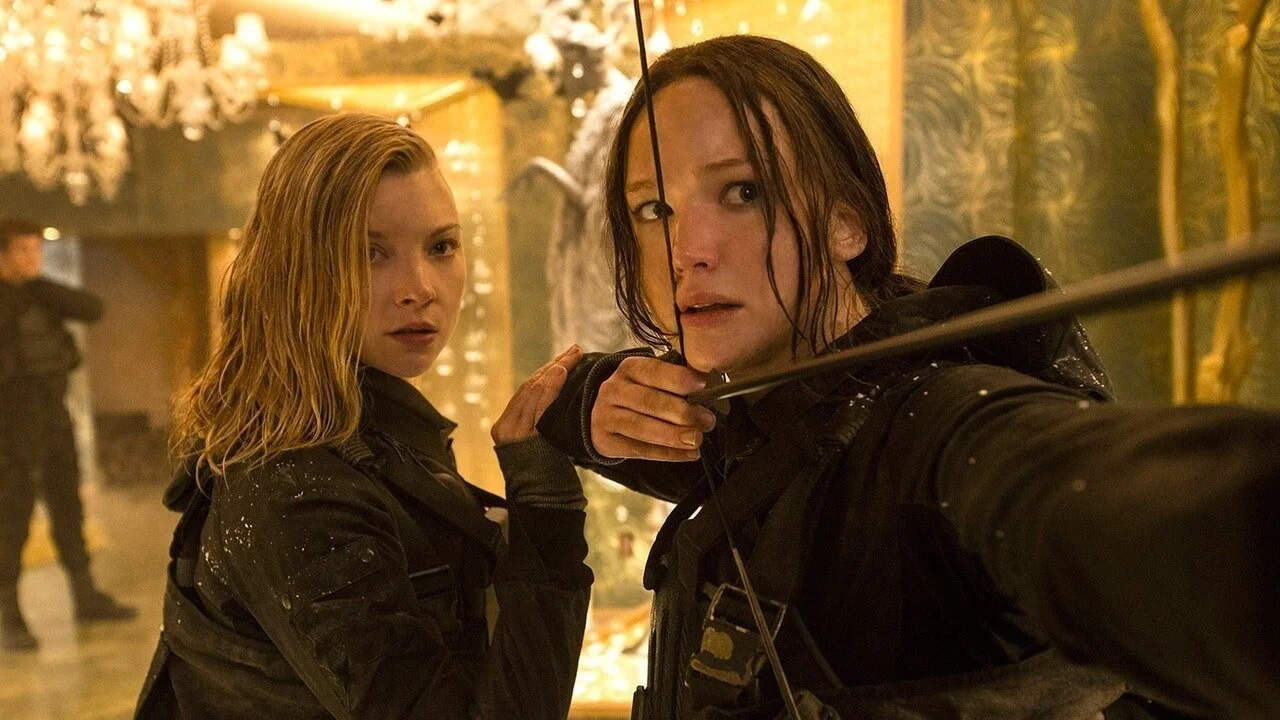
Image Source: Penn Moviegoer
She makes no secret of her love for her sister. But she doesn't have to save Peeta, not once, but multiple times. She doesn't have to care for, protect and later sing the youngest Tribute Rue to her final sleep. She doesn't have to step in when Gale's brother is being brutally whipped. She doesn't have to push for political immunity for those she barely knows.
But she does. Because against all logic, against her own sense of self-preservation, that which she prides herself upon, she is still a good person.
Katniss Everdeen is a survivor, not a hero. But being a survivor does not mean you are not still achingly human.
Battle Royale
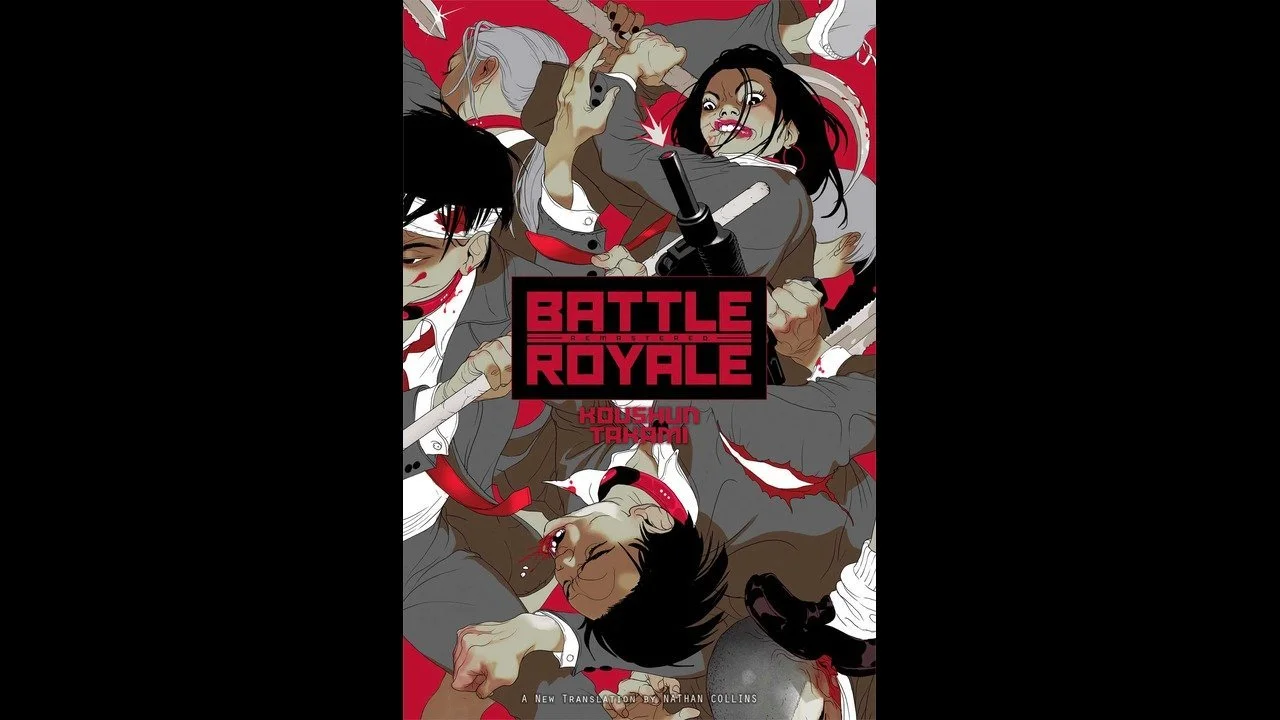
Image: Simon & Schuster
It is worth it to touch briefly on one of the original stories with this sort of dystopian, child murder premise: Battle Royale.
Long before it was a Fortnite gameplay mode, Battle Royale was a Japanese novel by Koushun Takami turned manga and film. It follows teenager Shuya Nanahara as he finds himself, along with his class, kidnapped by the totalitarian Japanese government, fitted with an explosive collar, and released onto an island to either kill or be killed by his peers until one remains.
It's easy enough to see where the similarities lie: a government forcing children to kill each other in a closed environment until only one lives? It would not be remiss to assume that Suzanne Collins read the novel and was inspired to make her own, American-based, version.
Except, Collins has said and continues to maintain that until it was brought to her attention, she'd never even heard of the novel. This has triggered some debate over the last decade and a half as to whether this is a falsehood, with some citing that the similarities between Tamaki’s novel and Collins’ series were too prevalent to merely be a coincidence.
While there are many similarities, I'd argue that the differences makes …well, all the difference.
World War 2 and the subsequent bombing of Hiroshima and Nagasaki, as well as the forced public apology and recrimination by then Emperor Hirohita triggered a massive cultural shock for the Japanese people. Battle Royale takes place in a universe in which the second World War was indeed won by Japan, yet the culture persists in its evolution, much to the dismay of the state. While the Royale is a shock to its unwilling contestants, it's not too surprising to them that the Republic of Greater East Asia as it is called in the novel, is willing to go that far. The students are never completely deluded in the belief that personal freedom would ever truly be a factor in the government's decision making. The image of strength, above all, is what matters, and if that means that children die and sadists are fulfilled, so long as it is for the glory of the country, so long as any hint of independent thought or criticism is stomped out, then anything is justified.
Where The Hunger Games differ is again rooted in the history of the author and environment. The Vietnam War was a devastating failure of United States military and economic interests—what made it all the worse was a federal and social push towards denial. Dissenting voices were silenced and ridiculed, sometimes forcibly. The federal missives that various operations were a success persisted despite the reality the public was seeing: brutal combat, broken soldiers coming home, and constant protests.
That is the world of the Panem and the word of the Capitol: everything is fine. You have free will and true, noble citizens will devote that will towards the betterment of the country. Those that dissent are dangerous radicals who don't have your best interest in mind and only wish to sow chaos. There's no king, there's a President, and with that title the implication of the people's voice.
That's what makes the Games so utterly sickening. It's not simply state-sponsored murder but the illusion that people's voice will matter. Sponsors are pushed to send care packages to popular Tributes in the Arena. Peeta and Katniss’ gambit to kill themselves rather than each other works because the people (especially within the Capitol), entranced by their somewhat fictional love story, protest their destruction and the Capitol capitulates rather than reveal the iron fist beneath the velvet glove too often. It doesn't work, as we see in Catching Fire and Mockingjay, but it is a fascinating dichotomy between Takami’s portrayal of overt strength fueled by fear and paranoia and Collins’ discussion of human value as it is dependent on perception.
Overall, it's doubtful that there was inspiration or copying or whatever other accusations levied against Collins occuring. Rather, we see a thread of parallelism between two people ruminating on their childhoods following war and their observations that death, nationalism and society had on its most vulnerable population: the young.
Legacy
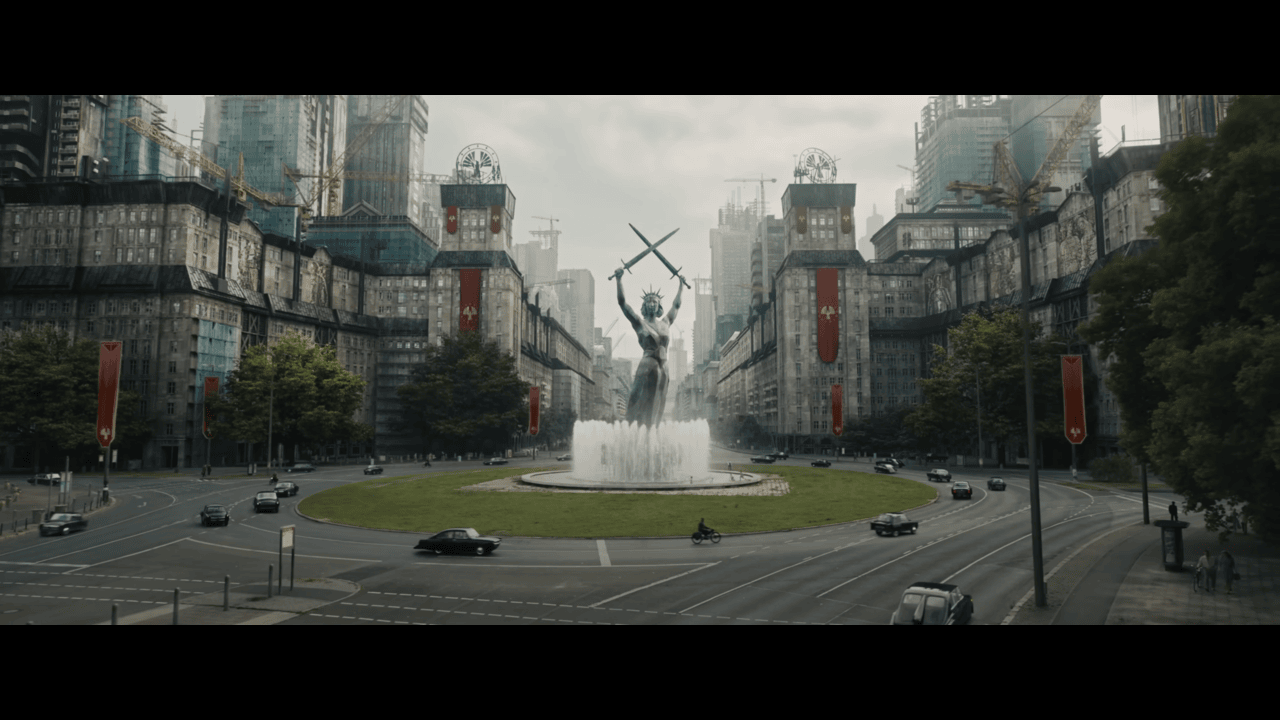
Image Source: The Hunger Games Wiki
Following the original series’ release, a four-part movie series would follow in 2012, starring Jennifer Lawrence and Josh Hutcherson as Katniss and Peeta respectively. Collins would later release two prequel novels: The Ballad of Songbirds and Snakes (2020), which followed the youth of the villainous President Snow and Sunrise on the Reaping (2025), which detailed the Games in which future Tribute Mentor Haymitch Abernathy would be forced to compete in. The former was given a movie in 2023 starring Tom Blyth and Rachel Zegler, and a movie adaption of the latter is set to release late 2026.
In terms of books, as mentioned previously, The Hunger Games triggered a wave of teen dystopian series, each with various levels of success. Some stand-outs included The Divergent series, while other previously published dystopian novels—such as The Giver and Fahrenheit 451—saw a resurgence in popularity.
Despite the years, it’s clear and pleasing to see this series is still going strong, encouraging reading, contemplation and reflection in the young and old, hopefully for years to come.
READ NEXT:
Latest News
Featured




• All sizes are adult unisex
• Printed art on the front
• 100% cotton
• Pre-shrunk fabric
• Shoulder-to-shoulder taping
• Culture Slate Exclusive Design
See more products here