
The World Of 'Warhammer 40K': Chaos
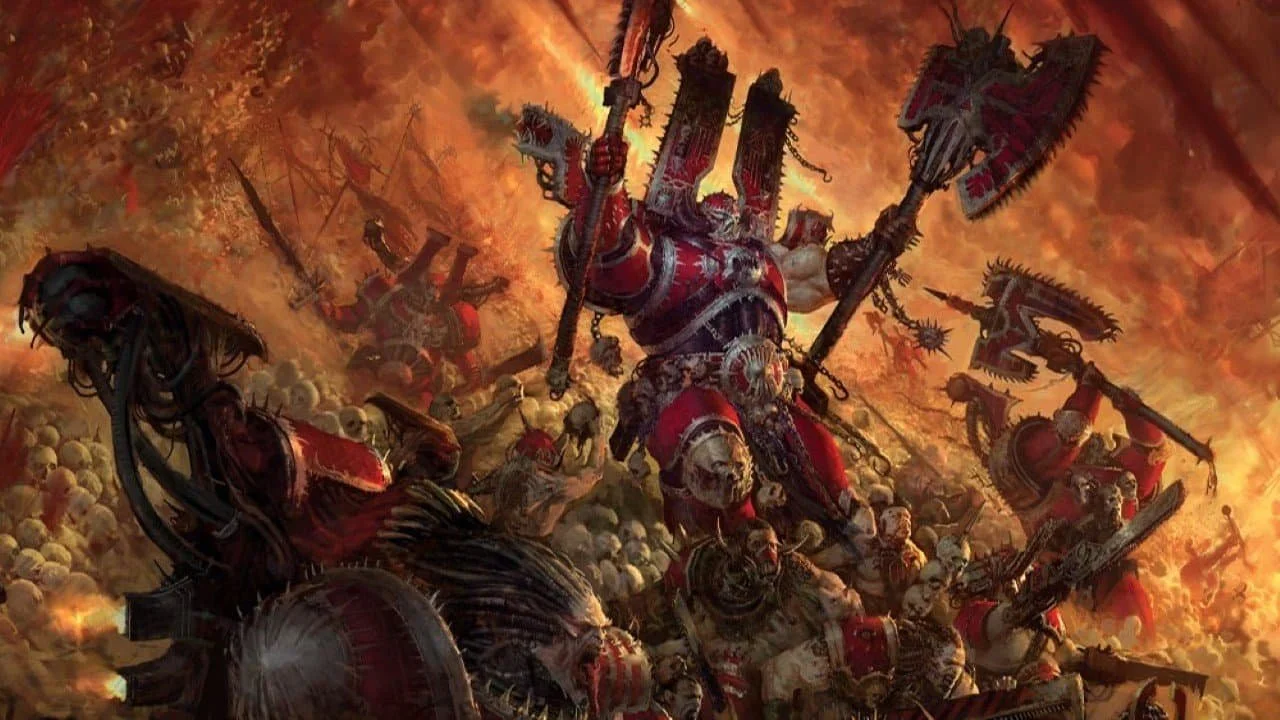
Image Source: Warhammer-Community.com
Standing in opposition to the other galactic powers, the warriors and creatures of Chaos are a threat that has been able to gain a great deal of power in the recent decades of the 42nd Millennium. This faction is made up of unfathomable beings drawn from a parallel realm to the physical plane alongside warriors and adherents who have been corrupted by such forces. They relentlessly campaign against the Imperium of Man and other powers as the Great Rift keeps the modern galaxy of Warhammer cut in two. Today at CultureSlate, we give a summary of the tabletop factions of Chaos.
What Is Chaos?
Before we can explain the different factions of Chaos, we first need to explore what Chaos is. Chaos is a manifestation of the energies found within the Warp, which is also called the Immaterium. It is an alternate dimension through which many ships of the 40K universe must navigate to achieve interstellar travel. The Warp is a timeless realm, sometimes causing paradoxes as ships technically arrive at a destination at an impossible time and date from when they first departed. Ships can also become lost in the Warp, stranded for centuries by the count of realspace before they are spat out into the material world with no time having passed onboard. The Warp is changed by the emotions of living beings, meaning acts that elicit strong emotions generate Warp power that can lead to entities of Chaos spawning into the material plane. Some rituals can be conducted to summon these beings.
RELATED:
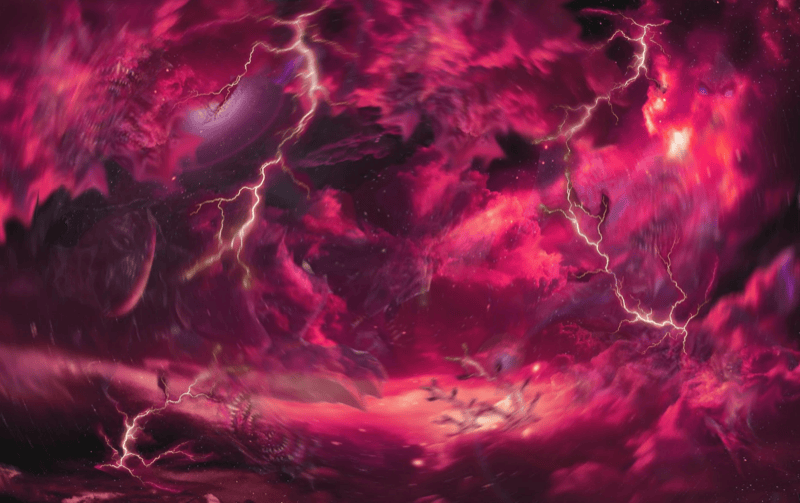
Image Source: Warhammer 40K Wiki
These manifestations appear as daemons and other creatures and are innumerable in their areas of focus and in their abilities when they enter the material world. The Warp is “headed” by four major Chaos Gods, but there are countless other lesser Chaos beings who have carved out their own kingdoms within the Warp.
The four main Gods, Tzeentch, Slaanesh, Khorne, and Nurgle, engage with each other in constant conflict, alliance, and betrayal, while also occasionally interfering in the material plane of the 40K galaxy. However, it is rare for these four beings to directly interact with anyone in the galaxy, with all manner of subordinate daemons often serving the will and nature of their great patrons instead. In the modern setting, all four Chaos powers, and even a rising and possible fifth power known as Vashtorr the Arkifane, are active across the galaxy in a wide variety of ways.
Chaos Space Marines
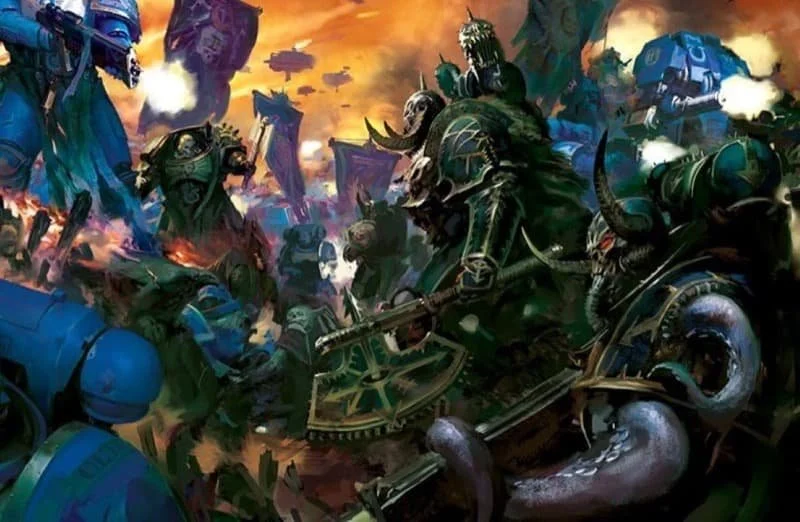
Image Source: Warhammer-Community.com
Traitors to the Imperium of Man, the Chaos Space Marines are largely made up of the 9 Legions that fell to the powers of Chaos during the Horus Heresy. While initially many followed Warmaster Horus’ rebellion for reasons unaffected by the powers of the Warp, the deprivations of war, the trickery of allies and Warp entities, and desperation for survival drove many to follow the Chaos Powers. After the failure of the Horus Heresy, the 9 Legions fragmented into hundreds of warbands, which scattered across realspace and the Warp.
They found homes on worlds resting in the Warp, though also enemies in each other and demonic forces. Over the past 10,000 years, they have been joined by Chapters of Space Marines who have fallen to Chaos and corruption. While these forces often fight each other and other threats, they also leave the Warp to raid the wider galaxy. What follows is a description of five of the most notable groups of Chaos Space Marines.
The Emperor’s Children

Image Source: Warhammer-Community.com
The former 3rd Legion of the Imperium of Man came to worship the god Slaanesh due to a slow, gradual decline into decadence, indulgence, and a belief in their superiority over everyone else. Slaanesh, born from the hedonism of the ancient Aeldari Empire, is a prideful being that demands perfection from their worshipers and commands the exploration of every sensation in the name of pleasure and excess. This is done regardless of cost or harm, and has manifested itself in the Children through such horrors as the Noise Marines.
These warriors are devoted to auditory stimulation, to find the beauty in music and sound. However, this has evolved into the production of sounds both cacophonous and heinous, capable of killing unprepared or unarmored listeners. The Emperor’s Children are led by the Daemon Primarch Fulgrim, who transformed during the Heresy, and is a master duelist. While fairly inactive following the Heresy, he has recently been seen abroad in the modern 40K galaxy.
The World Eaters

Image Source: Warhammer-Community.com
Once the 12th Legion, the World Eaters are a tragic story. Originally a conventional Legion, the discovery of their Primarch Angron was an unhappy one. Inflicted with a horrific torture device that pushed him to be violent and savage, almost the entire Legion allowed the same device to be implanted into themselves to follow the example of their Primarch, corrupting them into ravening berserkers even before the Horus Heresy.
They were easily corrupted to the worship of Khorne, the Blood God, who demands war and conflict in the name of strength and power. Angron was transformed into a Daemon Primarch during the Horus Heresy and has been one of the more active Primarchs in the wider galaxy ever since. Recently, he lost a duel to his brother, the returned Loyalist Primarch Lion El’Johnson. As a daemon, though, like most of his fallen Primarch brethren, he is simply thrown back into the Warp to regenerate and regain his strength when defeated before he emerges again.
The Death Guard
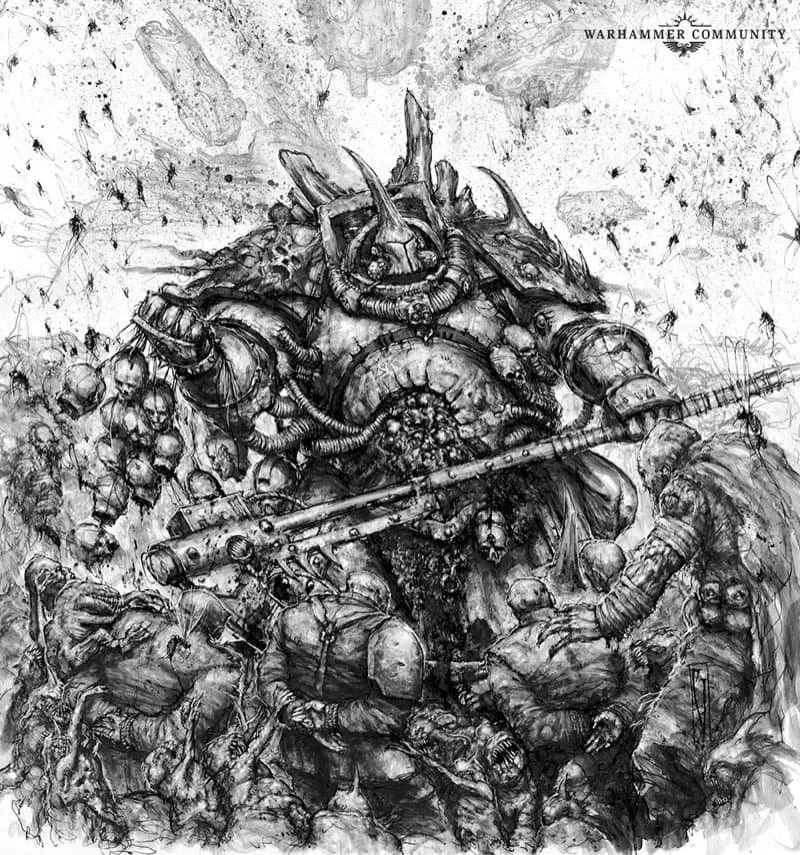
Image Source: Warhammer-Community.com
The former 14th Legion was once methodical, unwavering soldiers who resisted the corruption of Chaos until they were betrayed by one of their own. Becalmed in the Warp during the final push on Terra during the Horus Heresy (becalmed meaning unable to advance through the Warp, equal to a ship trapped without wind in its sail, hence the terminology), they were beset by diseases and ultimately succumbed to Nurgle’s blessings. They became fetid, bloated beings bringing plagues and death with them wherever they went, while also being capable of surviving immense amounts of physical trauma.
Nurgle is a god of decay and time within the Warp, and is a strangely loving Chaos god who is called Grandfather Nurgle by his daemons and worshipers. The Death Guard are led by the Daemon Primarch Mortarion, who is beset by visions of the future that make him sometimes struggle to lead his forces. He is also one of the more reluctant Chaos-corrupted Primarchs.
The Thousand Sons
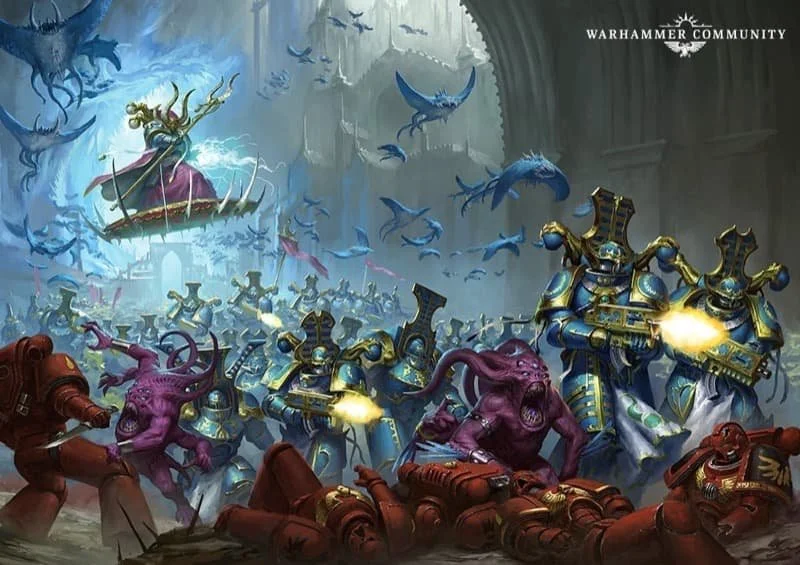
Image Source: Warhammer-Community.com
The 15th Legion actually once might have saved the galaxy, had fate not dealt them a bad hand. Many of the Legion were gifted psykers, and their Primarch Magnus the Red ruled a world deeply focused on discovery and knowledge. Also gifted in the psychic arts, Magnus realized that Horus was falling to the corruption of Chaos, and tried to intervene. But when Horus failed to listen to him, Magnus raced a psychic projection to the Emperor of Mankind, which devastated an ongoing special project and caused daemons to emerge on Terra. Horus then manipulated the response by the Imperium so that it was a devastating slaughter of Magnus’ Legion rather than the simple arrest the Emperor had really wanted.
With his Legion being butchered by their former enemies, the Chaos god of fate Tzeentch made bargains and deals, converting the Legion to his purposes but also saving them and Magnus. The Thousand Sons are still led by Magnus today, but are limited in number due to a terrible flaw in their geneseed. An attempt to cure this flaw failed, so the Legion is technically understrength, though the sorcerers of the Thousand Sons use constructs and automatons to pad out their numbers. This Legion recently played a notable role in the hit video game Space Marine 2.
The Black Legion
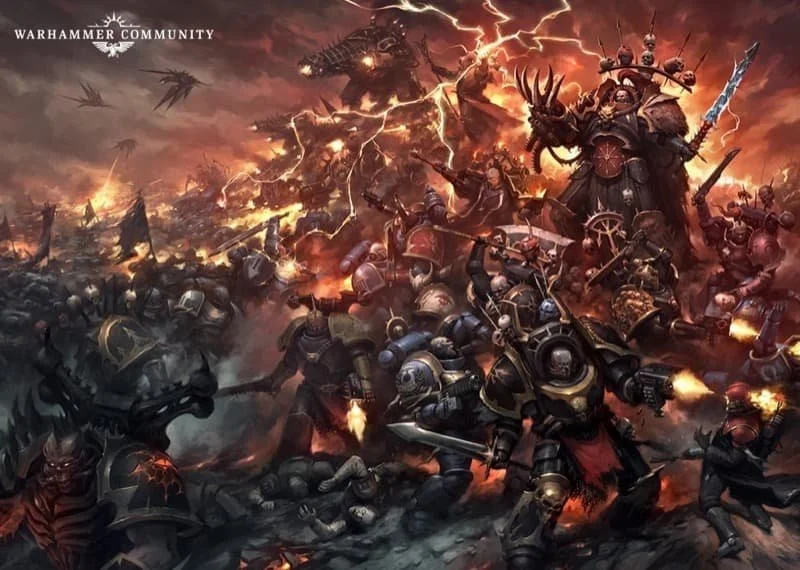
Image Source: Warhammer-Community.com
The Black Legion are technically the remnants of the 16th Legion, the Lunar Wolves, and the Legion once led by the Warmaster Horus himself. However, after the failed rebellion, the other Traitor Legions all turned on the 16th and relentlessly hounded these figures who had led them to failure. The 16th’s attempts to bury their Primarch were ruined, and no leadership was able to emerge from their ranks to help them defend themselves…until Abaddon the Despoiler stepped in.
He began a long-term campaign of revenge to see his now-dead Primarch’s vision come to pass. He was able to rally other Chaos warbands under his banner or form alliances with other groups to help him achieve his goals. The Black Crusades, 13 in total, gradually destroyed pylons of a unique substance called Blackstone that kept the Warp from breaking out into the wider galaxy. In the final battle of the 13th Black Crusade, Abaddon destroyed the world of Cadia, causing the Great Rift to cut the galaxy in two and putting half the Imperium out of contact with Terra. The Black Legion remains under Abaddon’s leadership and works to spread the Rift and devastate the surging forces of the Imperium that look to prevent the collapse of their millennia-old empire.
Chaos Knights
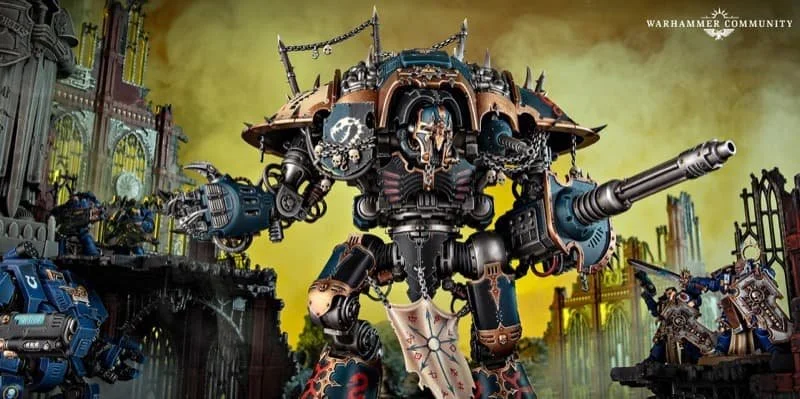
Image Source: Warhammer-Community.com
Chaos Knights and, by extension, Chaos Titans, are towering machines of the Imperium of Man corrupted by the Warp to serve various Chaos powers. As a reminder, Knights and Titans are huge robots built millennia in the past for various reasons, which can no longer be replicated by the modern Imperium. Those turned to Chaos often did so because their pilots did so, with Traitor Knight Houses an unfortunate element of the Heresy who often swapped sides in the least honorable way possible. Titan Legions, meanwhile, often turned traitor due to the choices of the Forgeworld that they came from.
Both forms of machine were also vulnerable to corruption by scrapcode, a form of malicious Warp-infused hack of mechanical systems, as well as forceful demonic possession, even when the pilot inside had no desire to join the powers of the Warp. Such possessions would often significantly alter the machine spirit of the robot into a murderous mech bent on destruction. However, just like their Loyalist counterparts, Chaos Knights and Titans need an enormous degree of resources to maintain themselves. Chaos Titans are thus rarer than Chaos Knights, and the Dark Mechanicum, that faction of the Mechanicus of Mars that joined with Horus during the civil war, are often responsible for that maintenance.
Chaos Daemons

Image Source: Warhammer-Community.com
Chaos Daemons are myriad entities that can burst forth from the Warp intent on some devastating task that often involves death and mayhem. There are many known types, some specific to each major Chaos power, others more general and common, and then there are the few that are singular and unique forces for the Chaos Gods. Here is some information on the daemons specific to the four main Chaos powers:
Slaaneshi daemons take on forms that are as sensual and salacious as they are malicious and vicious. Often appearing androgynous, Slaanesh’s hosts are made up of speed-focused forces like the Steeds of Slaanesh led by vain, scheming courtiers like the Keepers of Secrets, all equally as capable of seduction as they are of savoring the suffering they will inflict on their enemies.
Khorne’s hordes are red, rage-filled beings bearing arms and are unique for their almost complete rejection of Warp magics. No sorcerers rest within their ranks, as instead, from the Bloodletters to the Bloodthirsters, martial prowess and raw physical might are all that are respected. They battle until they die or defeat their foes, all in Khorne’s name.
Nurgle’s daemons take on physically thick, heavy, putrid forms and tend to wield weapons of a similar category, if any at all. Many of his daemons also share his joyful demeanor, cheering each other on. Whether they be creatures from Nurgle’s garden, like the Plague Toads, or the bundles of disease-infested elation like the Nurglings, Nurgle’s daemons often just want to make their Grandfather proud by spreading his blessings across the galaxy.
Tzeentch has a unique aesthetic for his daemons, favoring tendrils, eyes, and other eldritch imagery, alongside that of birds. His forces also heavily favor Warp-based sorcery, and so from the humble Horrors to the devastating Lords to Change, the channeling of Warp power is a common sight.
A Rising Power
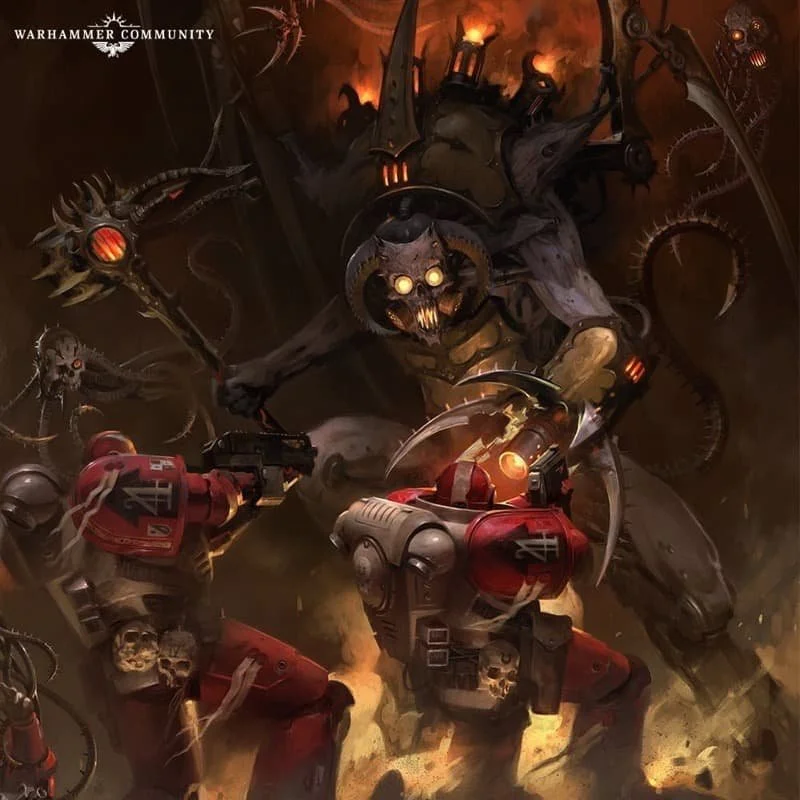
Image Source: Warhammer-Community.com
As mentioned earlier, other powerful entities within the Warp have a great deal of their own power. One of these is Vashtorr the Arkifane, a being with dominion over technology and said to gain his power from every dangerous, profane, or limit-breaking experiment conducted by mortals. Deaths due to technology are also his domain, so he’s been well fed over the millennia. The Dark Mechanicus are a large part of his following, and their many terrible experiments with daemons and technology are pulled right out of Vashtorr’s playbook. It is his forges that produce the daemon engines used by other Chaos factions for their conflicts, meaning he is considered a neutral party between the four major Chaos Gods. In the modern age of 40K, though, he is looking to change this.
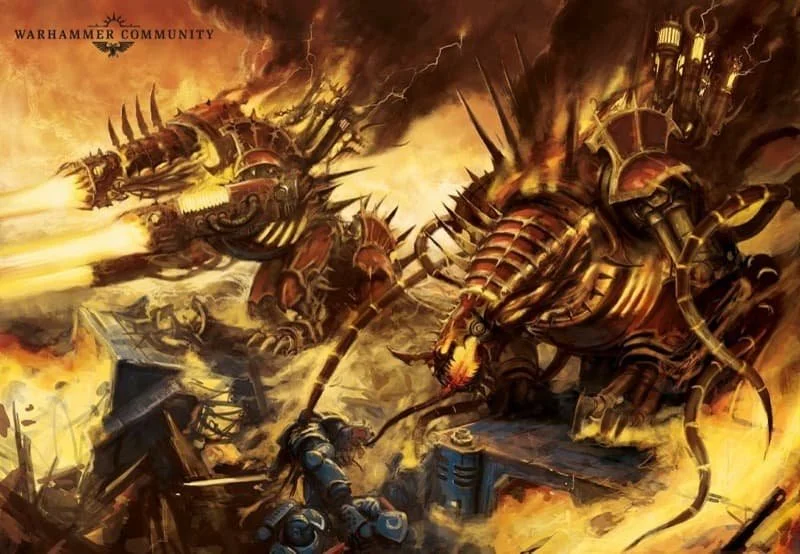
Image Source: Warhammer-Community.com
Vashtorr is on a quest to gain certain powerful artifacts that would help him ascend into a fifth Chaos God, conducting significant actions in the mortal realm to make it so. He approached Abaddon the Despoiler and enlisted his aid, creating great spacehulks (ships and debris smashed together in Warp that are sometimes spat out into realspace) called Arks of Omen to send Chaos warbands out on quests for key artifacts Vashtorr needed. Many of these missions ultimately succeeded, with Vashtorr able to construct an ancient device to tunnel into the Webway, a realm of passages for faster-than-light travel, different from the Warp crafted millennia ago.
He then left RealSpace, burrowing into the Webway, bursting out into the Pariah Nexus across the galaxy from his entry point. A site of conflict between the Necrons, the Imperium, and other forces, the use of ancient and terrible superweapons allowed Vashtorr to attack and bring his forces to bear. For now, this narrative is ongoing, but the strong introduction of Vashtorr and the visceral detail of his forces, backed by the Dark Mechanicum, have many fans hoping that his faction becomes a playable part of Warhammer 40K. The Dark Mechanicum already exists in a limited capacity in the Horus Heresy sub-brand of the tabletop, but only time will tell what we might see!
READ NEXT:
Source(s): YouTube [1], [2], [3], [4], Warhammer 40K Wiki
Latest News


Featured


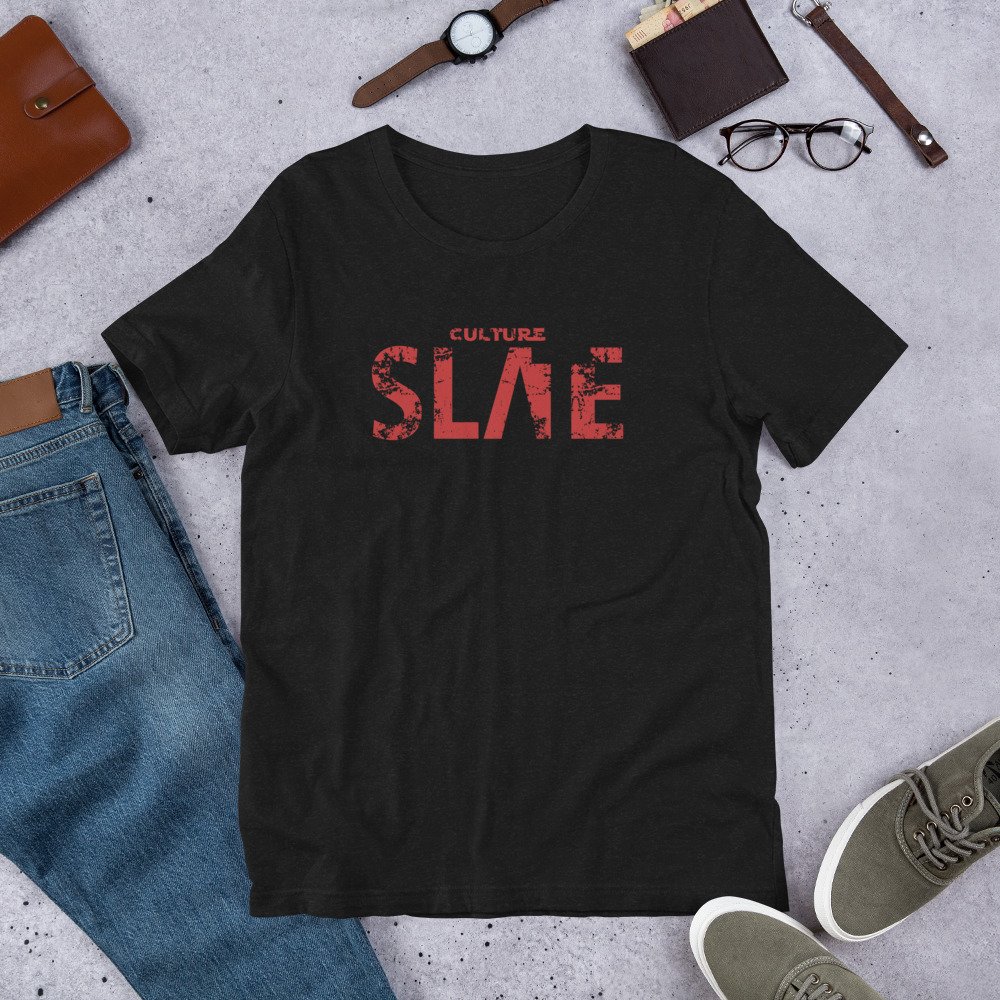


• All sizes are adult unisex
• Printed art on the front
• 100% cotton
• Pre-shrunk fabric
• Shoulder-to-shoulder taping
• Culture Slate Exclusive Design
See more products here