"You" Series Finale-Joe Caged Was Foreshadowed In The Beginning

Image Source: YouTube
Warning: Contains Spoilers
Love is a funny thing, but for Joe Goldberg it’s his rationalization to himself and the audience as to why he kills the people who wrong him or his latest obsession. While it can be argued that some of his kills were for the “right reasons”, many victims were collateral damage toward his definition of love. From Beck to Louise/Bronte, Joe was on the search for a woman who could love and accept every facet of him. With each woman, Joe lurked in the shadows learning their routines, interests, and modeling himself into the man of their dreams. Joe’s actions are never done from a place of genuine love. His deeds are transactional; each good thing he does is meant to prove he is the one who knows his “love” best, resulting in them relying on him and making him the center of their universe. Love to Joe means being needed, but to Joe, him being needed by someone was never enough.
Starting from the first season, Joe deified those around him, especially women. Moments into meeting Beck, Joe creates a profile of her assumed personality analyzing her taste in fiction, fashion, and how she walks. Intelligent and a lover of books, Joe internally reads his love interests, their friends and family, and other acquaintances subconsciously placing them into tropes. While the majority of people Joe comes into contact with are tropes within themselves, this becomes more reductive when it comes to the woman Joe falls for. Beck fell under the trope of being a fellow literature lover, but trapped in the shadow of her influencer friends. Love was humble rich girl only to be revealed as a wolf in sheep’s clothing—something that disgusted Joe.
RELATED:
Marienne was a down-on-her-luck artist who Joe felt needed him the most given her struggles of gaining custody of her daughter, being in recovery, and a victim of the system. Kate was Joe’s chance of living a good life given her connections and ability to erase Joe’s past criminal behavior, something Joe and her bonded over. Louise/Bronte is the romanticized past, the place Joe came back to—something warm and familiar.

Image Source: YouTube
Louise/Bronte is an amalgamation of the best parts of the previous loves of Joe’s life. Having learned about them from extensive research, Louise knew how to come across to Joe not only to save her life, but to also gain closure. Meeting at the place where Beck first met Joe, Louise purposefully curated the image of Bronte, a young literature buff similar to Beck and Marienne. Bonding over Emily Dickinson as Joe believed her to be an intruder in the book store he would (most likely) kill with an Emily Dickinson bust, Bronte was someone who challenged Joe to step into the darker side of romance and appeared to be the one who truly understood his demons. While Kate was someone who knew about them and had the means to keep them from the public eye, Bronte was someone who knew the deeper meaning behind his crimes.
Stepping inside the cage willingly was the moment Louise (as Bronte) got Joe to confront his need for control and admit he enjoys the act of killing those who cross his path. Given how the cage locks from the inside, willingly entering the cage gave Louise the edge of gifting Joe control over her and allowed Joe permission to break down his walls. Given how Joe took the cage with him when living in California with Love, to London when he was a professor, a storage unit, and back to the bookstore, Joe always had his darker self looming under the surface. His control is arguably his most coveted possession. According to Louise, the cage has the power to leave the person inside at their most vulnerable. When Joe tries to show the cage to streamers online in an attempt to clear his name, his trauma bubbles to the surface leaving him a sobbing mess. His bravo and lack of controlling the narrative crumble and expose him as someone who craves a love in his life to keep his darkest self at bay. This task ends in bloodshed every time.
Louise slowly revealing her connection to Beck and her true identity was Joe’s ultimate test in controlling his bloodlust. While her first lie of being Bronte and catfishing Joe made Joe call of her his “greatest regret”, her gesture of telling police that him killing Clayton was done in self-defense brings Joe to rethink his infatuation with her. Her confession that Beck was her writing mentor and TA years before symbolizes Beck’s return into Joe’s life. While her memoir was present in the first season finale and made sporadic appearances in the fifth season, Beck’s memoir wasn’t fully hers. Joe wrote in it as well throughout the book. When she read Beck’s memoir published after her death, Louise was smart enough to know what Beck wrote versus what Joe wrote in her place. Her ordering Joe to erase himself out of Beck’s book took away his “romantic gesture” of giving Beck a voice after death. Without the guise of romance, Joe was stripped to his barest self—a murderer.
Alone in isolation with the next love of his life, Joe thinks he has everything figured out. He still holds tight on the belief that he and Louise will live a rom-com life out if the country in a castle where she can write and he will have full custody of his son, but Louise is privy to the fact that Joe is trying to make her dependent on him. Fighting the love she developed for him, Louise remembers the words Marienne told her when they met by chance when Kate and Nadia locked Joe in the cage. Marienne brought to light how carefully Joe used his actions as a means of manipulation to show how he cared for her (albeit in a twisted way) and made her lose sight of herself. Marienne being the one who brings this to light is also important; she escaped yet lives in fear of Joe finding her again and the cycle continuing through her daughter. She becomes Louise’s inner voice, monologuing her plan to escape and bring Joe’s actions to light.
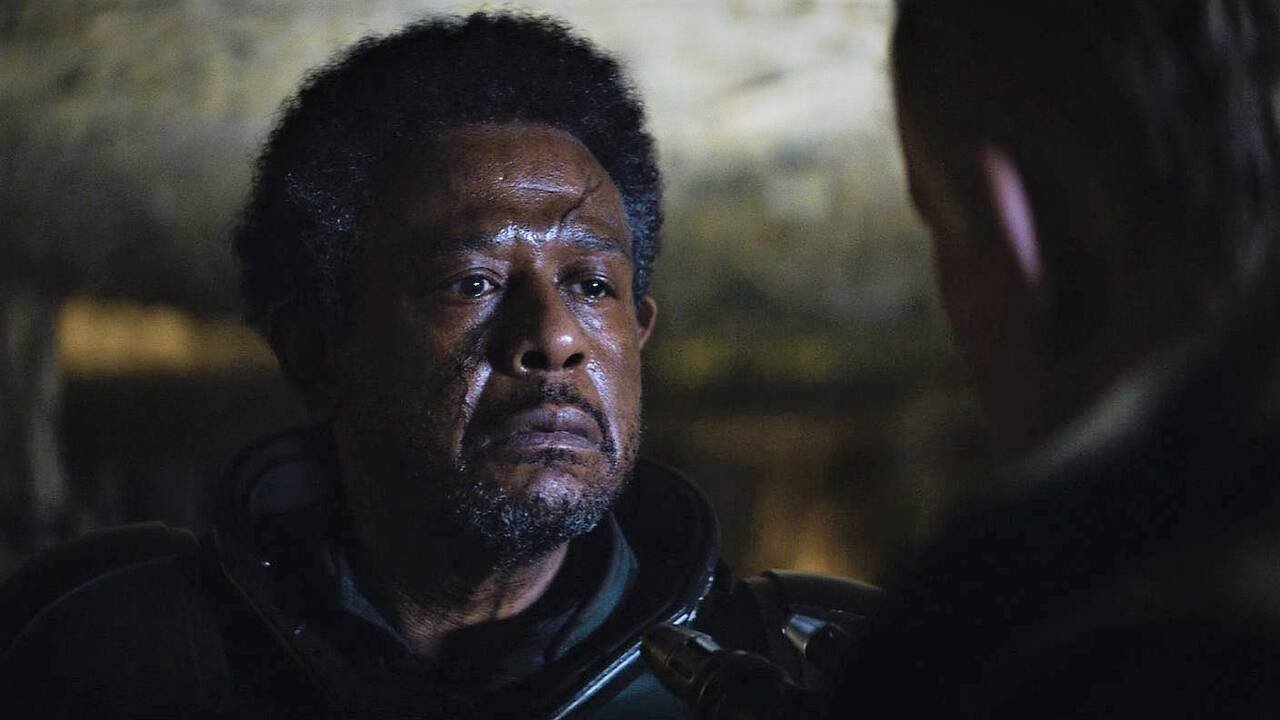
In the final episode, Joe is free to become the monster that he was. Mentioned by Love in the third season, it would only be a matter of time before he discovered Joe’s crimes. Given how his last moment with Henry is done through hacking into his game to talk to him, Joe cannot manipulate his way into Henry’s good graces. Henry, Joe’s last connection to his humanity, is taken away with Henry’s final words declaring Joe to be the monster he is. Without this, Joe is reduced to tears. The Joe Goldberg he curated for each love interest is gone and he has no one. As a result, he begs Louise to kill him. He’d rather be killed by the woman who catfished him into admitting his crimes than face his life alone. This pathetic display shows Louise and the audience that Joe was hardly ever human; his monstrous self was never too far behind as he shows no qualms of hunting Louise down eager to show her firsthand how he killed Beck. When he thinks he’s killed Louise, he says goodbye to Bronte. He killed a person that never existed, allowing Louise to emerge and be the one who puts Joe into a cage of his own making.
Joe going to prison and the media attention coming with it is not only the end of Joe’s crime spree, it’s the start of a life he cannot control. The media attention his trial received was the chance for Louise, her friends, and his previous victims to regain control. While their narratives dove into different extremes, Joe’s mask was finally removed in the public eye. Cameras everywhere, his face on newspapers with the “murderer” headline, and being sent to prison stripped away Joe’s chance of happiness with anyone in the outside world. With no choice to accept he is in a cage of his making, Joe instead reverts back to placing the blame of every outside force he can, including the audience themselves. Society, the new “You”, and whoever sends him a deranged fan letter are to blame for the blood on his hands.
Outside of Joe pointing out a valid double standard of fearing and sexualizing serial killers, there was little chance of Joe living a simple life. The audience knew Joe was going to end up in jail because he cannot love anyone in a standard way. He has a compulsion to kill to prove his dedication. His last moments prove that the next object of his affection would serve as a temporary fix. Joe’s verdict served justice for the victims, and granted him the punishment of being alone. His only means of companionship are the letters he receives from “fans” who know his crimes, yet don’t care. Joe gets a wish, yet remains trapped with himself. Like Beck said, Joe was “the bad thing” he should’ve killed. Yet, it wasn’t Joe that killed the bad part of himself—it was each love of his life who destroyed Joe’s facade. If one desired a simple life, they’d have one. Joe desired control and unconditional affection; the only way he could achieve that was deranged admiration behind bars.
Final review: 6.8/10
READ NEXT:

Latest News



Featured