
Defending Your Real Life: A Lookback At The Films Of Albert Brooks
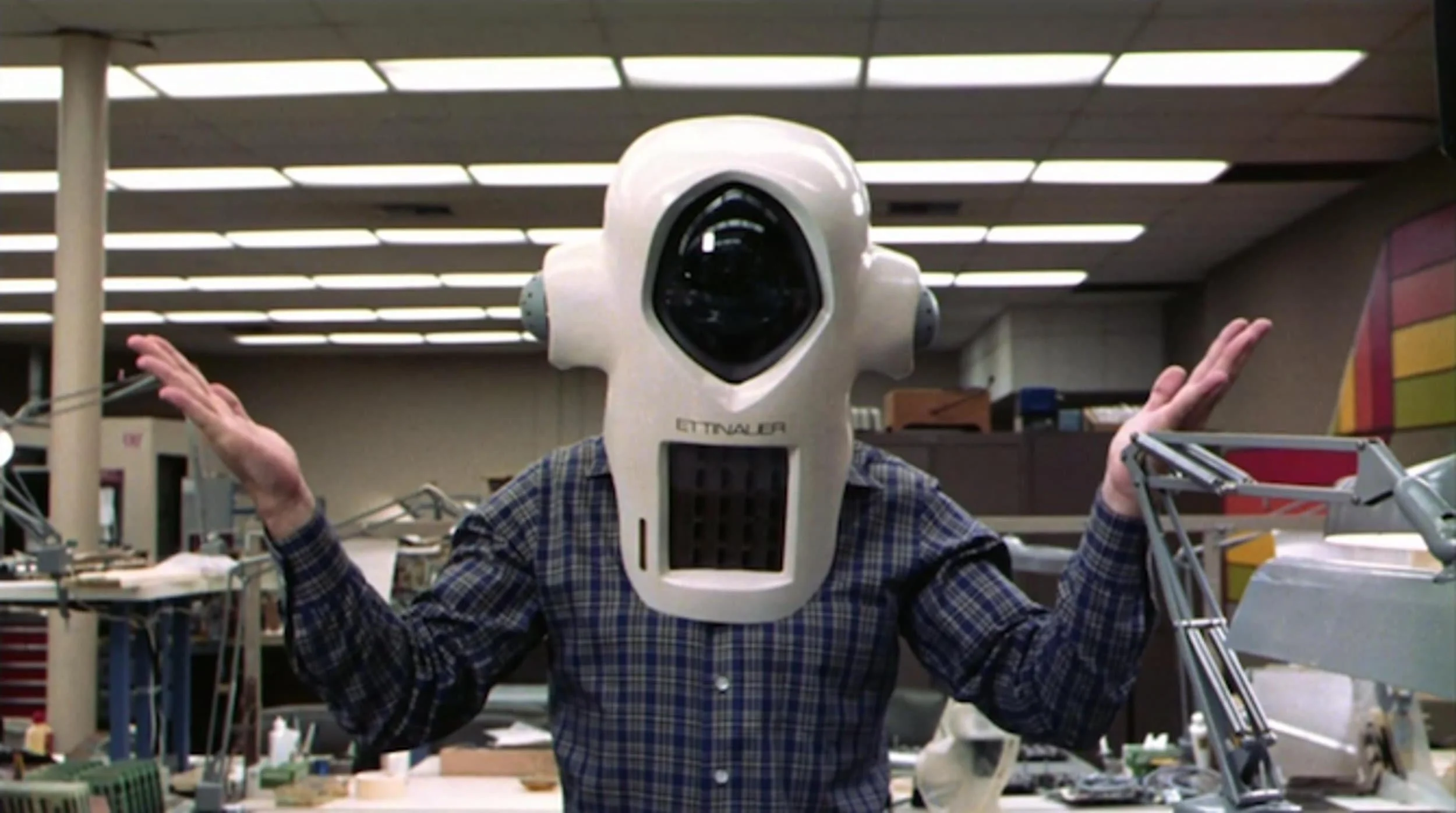
mage Source: Los Angeles Review of Books
On July 22nd, 1947, Albert Einstein was born. Yes, that’s his birth name. Little did his parents know that Albert Einstein would go on to become one of the most influential comedians of all time. While his birth name was taken by the other guy, he would change his name to Albert Brooks. At the start of his career, Albert Brooks became a fixture on late-night variety and talk shows, including what would become thirty appearances on The Tonight Show with Johnny Carson. After leaving the stand-up life behind, Brooks would get into filmmaking, starting with short films during the first season of Saturday Night Live. Brooks was such a comedy powerhouse that SNL producer Lorne Michaels and NBC exec Dick Ebersol originally wanted Brooks to host every episode. It’s because of Brooks’ suggestions that every episode has a different host and that we have filmed content in between sketches. Without Albert Brooks, there would be no Robert Smigel cartoons, digital shorts with Andy Samberg, or Please Don’t Destroy sketches. So basically, we have Dick in a Box thanks to Albert Brooks.
In addition to a storied comedy career, Albert Brooks has had a successful film career, starting with the role of Tom in Martin Scorsese’s Taxi Driver. Other prominent roles in Brooks’ filmography include (but not limited to): Aaron Altman in James L. Brooks’ Broadcast News, which earned him an Academy Award nomination for Best Supporting Actor, Richard Ripley in Steven Sodenbergh’s Out of Sight, Bernie Rose in Nicholas Winding Refn’s Drive, Andrew Walsh in J.C. Chandor’s A Most Violent Year, and Cyril Wecht in Peter Landesman’s Concussion. Or maybe you know Brooks for his many one-off characters in The Simpsons, such as Hank Scorpio or Russ Cargill in The Simpsons Movie. However, many people my age or younger probably know Albert Brooks primarily for his role as Marlin in Andrew Stanton’s Oscar-winning Pixar film Finding Nemo and its sequel, Finding Dory.
But it’s not just his acting we’re talking about today.
RELATED:


Image Source: Hammer To Nail
To get into the good stuff, Albert Brooks has directed seven films: Real Life (1979), Modern Romance (1981), Lost in America (1985), Defending Your Life (1991), Mother (1996), The Muse (1999), and Looking for Comedy in the Muslim World (2005). To illustrate the admiration and influence of Brooks' work, some of the most renowned comedy legends inspired by his films include Steve Martin, Conan O’Brien, David Letterman, and Sarah Silverman. He has also influenced other comedians-turned-filmmakers, including Chris Rock, Jon Stewart, and Ben Stiller. Having four of your movies in the Criterion Collection probably doesn’t hurt either.
The basic set-up for an Albert Brooks film is as follows: A man (always played by Brooks himself) finds himself dealing with a problem. A filmmaker who has to deal with his documentary falling apart (Real Life), a man coping with jealousy after breaking up with his girlfriend (Modern Romance), a man who throws caution to the wind to travel across America with his girlfriend (Lost in America) a man who literally has to justify crossing over into the afterlife (Defending Your Life), or a recent divorcee dealing with writer’s block while repairing his strained relationship with his mother. (Mother). If there’s a problem, there’s a 99% chance the main protagonist did it to himself. And that’s the beauty of Brooks’ filmography. As I made my way through the seven films Albert Brooks has directed since 1979, I was struck by how thought-provoking they were, and also how comedic they were. The age-old mantra that comedy derives from misery is very apparent in Brooks’ filmography. A sign of a true auteur is the thematic throughlines in their work. Hitchcock and mistaken identity, Spielberg and the broken home, Scorsese and moral ambiguity, and Lee and racial tensions, to name a few. If there is any thematic throughline in Albert Brooks’ films, it can be easily described as “Flawed people doing flawed people things and the humor and tragedy that comes with them.”

Image Source: The Atlantic
This is best represented by the film I consider to be his masterpiece, Defending Your Life. After dying by running into a bus, Daniel Miller is sent to Judgement City, where he (as the title says) defends his life. After he falls in love with a woman named Julia (played by the incomparable Meryl Streep), Daniel comes to learn that he has seldom made the right choices in any of his past lives. His other films deal with similar concepts, without the fantasy elements and Shirley MacLaine cameos, of course. Many viewers at home can relate to the idea of regretting lost love, your creative endeavors not quite panning out, or dealing with the consequences of your own actions. Albert Brooks’ films say it’s ok to laugh at your own pain. Even if it means admitting that you messed up big time.
A little peek behind the curtain before we get into the good stuff. Initially, this article was going to be a simple retrospective of Albert Brooks’ directorial efforts. I was originally going to go film by film and write a brief guide on which films you should watch first. However, over the last week, the world has gone freakin’ nuts, even more so than it already has. Social media discourse was flooded this week with people who say with their full chests that entertainment media has no place in political protest or real life in general. In less graceful terms, a lot of people have been circle-jerking themselves about how they think calling everything they don’t like “slop” makes them sound smart. All this does is send the message that people can’t learn anything from movies or television. That it is somehow shameful and worthy of mockery if people’s moral compasses are inspired by media they love. So I scrapped the nearly finished article and started over. So, the thesis of this article evolved into a simple question: What can Albert Brooks teach us about life.
Albert Brooks' films hold a mirror to the audience so we can see the neurotic and impulsive parts of ourselves and encourage us to laugh at them. We as human beings are a flawed race who, when left to our own devices, will make the wrong choice pretty much every single time when the options are placed before us. Are any of us truly well-adjusted enough to cope with jealousy, heartbreak, unfulfilled creative ambitions, loneliness, and regret effectively? The answer to that question is no. And you know something? That’s perfectly ok. We’re not built to make the correct decisions all the time. If we did, we probably wouldn’t be exciting people now, would we?
Cinema can be a powerful tool to help us discover things about the world, our loved ones, and ourselves. Seeing ourselves in characters who frequently make the wrong choice can be therapeutic in a way. Movies can inspire, movies can make us feel, movies can make us feel pretty pathetic sometimes. The importance of media in our modern times cannot be overstated. As we continue to lose our grasp on reality in an increasingly bleak world, we need movies like those by Albert Brooks to help us remember who we are as people. Every day, it feels like our relationship, both on and offline, can fizzle out at any moment. It’s very easy to feel jealous and lonely daily. Albert Brooks tells us that there is humor to be had in our own loss. We can spend our time crying, kicking, screaming, and regretting our life choices every second of every day. But all that can come with the territory of newfound friendship, rekindling love, and the rush of creative drive. The films of Albert Brooks aren’t just comedies that make you laugh; they’re films that make you think. The power of cinematic comedy is a necessity to the medium itself. Without it, we’ll be sad sacks 100% of the time. But until we find exactly what we’re looking for, it’s good to remember to laugh through the pain.
Though what do we do when we get to Judgement City? Your guess is as good as mine.
READ NEXT:



Latest News


Featured






• All sizes are adult unisex
• Printed art on the front
• 100% cotton
• Pre-shrunk fabric
• Shoulder-to-shoulder taping
• Culture Slate Exclusive Design
See more products here