
The Beatles Animated Series Retrospective
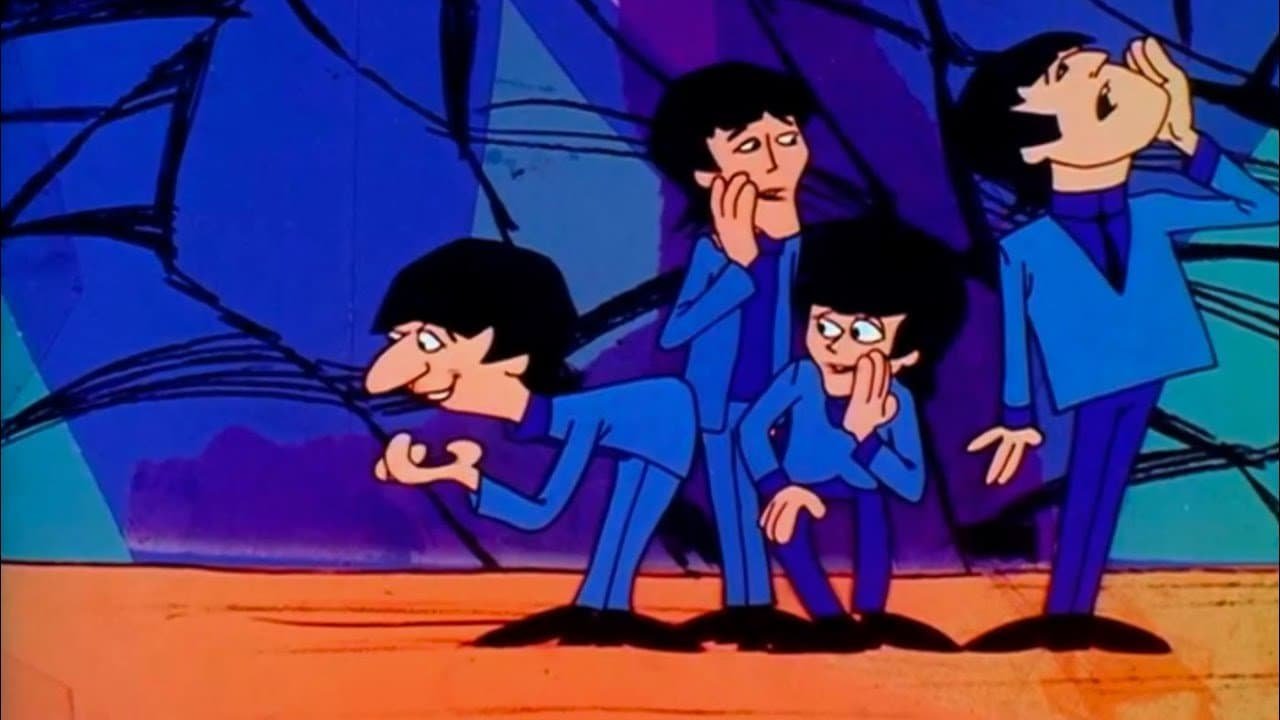
Image Source: YouTube
The Beatles were innovators in several areas of popular music. However, did you know they were indirect innovators in animation? This isn’t even just talking about the 1968 animated film Yellow Submarine. That was not The Fab Four’s first foray into the world of paint and celluloid, but rather, their 1965-1967 Saturday morning cartoon, The Beatles. Although it’s nothing too impressive, animation- or story-wise, it holds the title of being the first cartoon series based on real, living people. As it celebrates its 60th anniversary, let’s take a look back at the zany world of and surrounding The Beatles cartoon.
In 1964, The Beatles were the number one band in the world. Their appearances on The Ed Sullivan Show broke US viewing records, and their albums and singles were topping the charts. They also crossed over to the silver screen with their debut film, A Hard Day’s Night, and the film not only brought in more success and fame to the group but also gave fans more of a chance to see them when going to a concert wasn’t an option. Their names and likenesses were attached to several products, including Beatle dolls, lunchboxes, hairspray, bubblegum, a board game called Flip Your Wig, and even nylon stockings. Naturally, the next avenue was television, and an animated series seemed to be the best way to explore/exploit The Beatles’ brand, given their madcap personalities and Liverpudlian cheekiness.
RELATED:
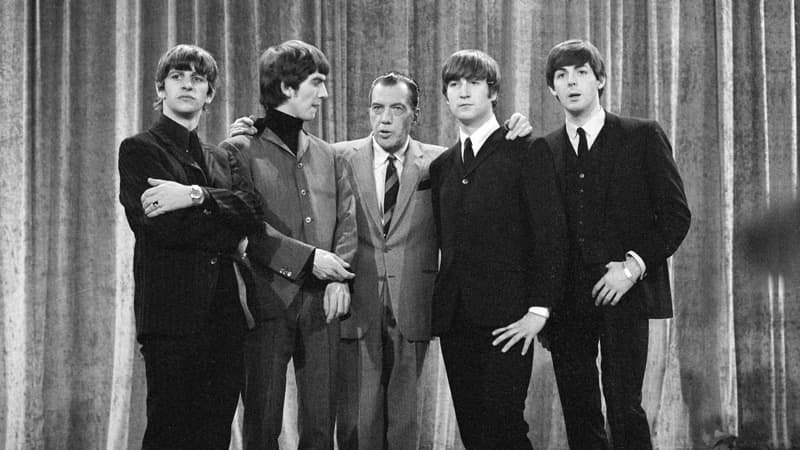
Image Source: Louder Sound
This was the thought of American Film and TV producer Al Brodax of King Features Syndicate, in addition to cartoonist Edwin Feldman, after watching the group perform on The Ed Sullivan Show. Feldman approached King Features with a preliminary sketch of the group and pitched a syndicated newspaper comic based on the group. King Features, but he was turned down due to them not thinking the group would last. Brodax caught wind of this and allegedly followed Felman into the men’s room to make a deal with Feldman to use his idea for an animated series. Brodax was no stranger to animation, having previously produced a series of Popeye shorts earlier in the 60s, though fans consider them a blemish on the franchise due to their low quality. He also produced a revival of Krazy Kat in addition to Cool McCool, Beetle Bailey, Snuffy Smith, and Casper the Friendly Ghost segments for The New Casper Show.
Brodax approached the band’s manager, Brian Epstein, and he agreed to let Brodax produce the show for ABC, but he did not allow the show to be broadcast in the UK, as he felt the silly depictions of the band and the cheesy plots wouldn’t be received well across the pond. Furthermore, The Beatles themselves were not involved in the production aside from their music, as it would not have been feasible for them to voice themselves, given their hectic tour schedule.

Image Source: TV Insider
So, American voice actor Paul Frees (known for his work in several Rankin/Bass holiday specials, Doris Badenov in The Rocky and Bullwinkle Show, and several MGM and Disney theatrical shorts) voiced John Lennon and George Harrison, and British actor Lance Percival (would later voice Old Fred in Yellow Submarine) voiced Paul McCartney and Ringo Starr. Of the two, only Lance Percival gets anywhere close to the actual voices of their respective Beatles, with Frees voicing Lennon with more of an upper crust British accent and Harrison with something close to an Irish or European accent. This was actually intentional on Brodax’s part, as he was worried that children wouldn’t be able to understand the group’s Liverpudlian accents.
The quartet’s personalities are also highly exaggerated. John was depicted as the group’s leader. He uses cheeky and sarcastic humor and often acts maliciously toward George and Ringo, but he does genuinely care about them.
Paul is the second-in-command and is depicted as the most poised and stylish Beatle. He shares John’s sense of humor and is very much his follower. Paul is also cynical towards George and Ringo but is willing to help him and others out.
George often cracks witty jokes, but also succumbs to peer pressure. He and Ringo are often seen working for John and Paul, acting as the group’s pack mules on some episodes. George is fascinated by other cultures and is sometimes superstitious..
Lastly, Ringo is often the butt of the joke. He is the band’s resident goofball and is often the victim of several pranks. Ringo is very naive, which leads him to often have terrible luck. Still, he is often cheery and makes bad puns that only he laughs at (with his trademark “Huh-huh yeah” laugh).
The stories of each segment are very loosely inspired by a Beatles song. For example, in the first segment of the first episode, “A Hard Day’s Night,” the band is being hounded by the public while trying to rehearse, so they find a castle in Transylvania, where they encounter some “monstrous” visitors. Each episode has two segments, and in between each is a sing-along segment, where Ringo acts as the “prop man,” setting up the scene with comical misunderstandings.
The Beatles cartoon was a hit among kids, with it capturing a 51.9 % share of the audience upon its premiere. Also, despite the show’s limited animation and budget, it still managed to capture the band’s physical features quite well (thanks to the character designs of then 19-year-old Peter Sander). Chris Cuddington, one of the series’s animators, recalled that “It took about four weeks to animate each film, and I enjoyed it immensely. The characters were easy to draw, and the stories were simple and uncomplicated.”
In fact, production was rather quick and haphazard, particularly in its first season. Production was done at several studios, including the main studio, TVC Animation in London, UK, Artransa Park Film Studios in Sydney, New South Wales, Australia, and even in Hollywood. Production was so fast that one animator was admitted to a mental hospital.
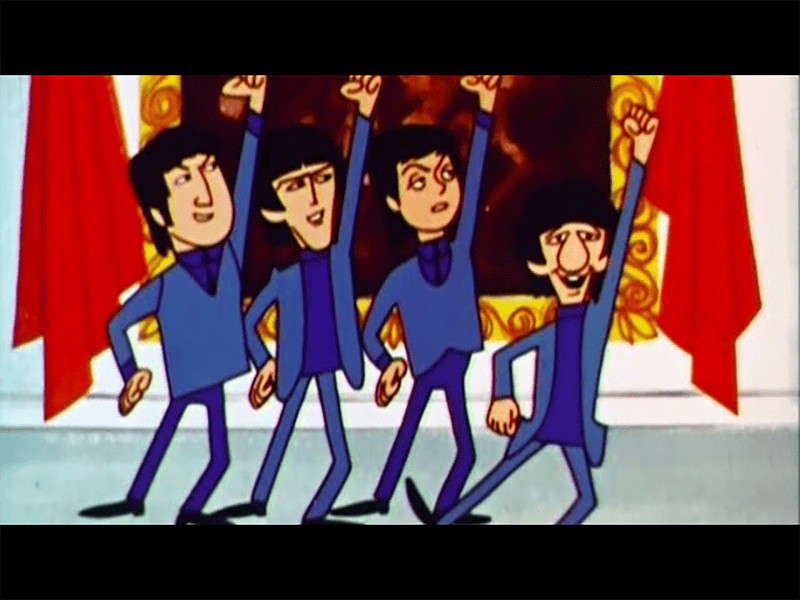
Image Source: YouTube
The Beatles cartoon ran for three seasons, and though it was successful in its first season, its popularity gradually declined. Season 2 was still rather popular, but changing attitudes in styles and subjects of cartoons inspired by the 1966 Batman series, John Lennon’s “more popular than Jesus” comments, and The Beatles themselves changing while their cartoon counterparts remained the same, signaled changing tides for The Beatles cartoon’s fortunes. By season three, the audience who had originally watched the cartoon in 1965 were now older and not necessarily watching cartoons. The show was moved to noon on Saturday before being moved to 9:30 am on Sunday to languish and die, which it did. It continued to be rerun on ABC until 1969 and was syndicated in the 70s. The series aired on MTV in 1986 and 1987 and on The Disney Channel in 1989.
The Beatles themselves, however, were initially mixed on it. They seemed to like the cartoon itself, but didn’t appreciate how they were depicted. In fact, during the first screening of the show to the group, Ringo Starr commented to Paul McCartney that he’d “been made into a dummy,” while McCartney thought that his voice was too high. Ironically, Lance Percival, who voiced both of them, was sitting behind them awkwardly and commented to Ringo that it wasn’t his fault but the scripts he was given. John Lennon thought that they turned the group into The Flintstones. They also complained about the lack of a “red bouncing ball” during the sing-along segments. This disdain for the cartoon caused them to initially not want to be involved in the 1968 film Yellow Submarine, which was also produced by Brodax. However, when they saw the film was of a vastly larger scope than the series, they agreed to appear in a cameo at the end.
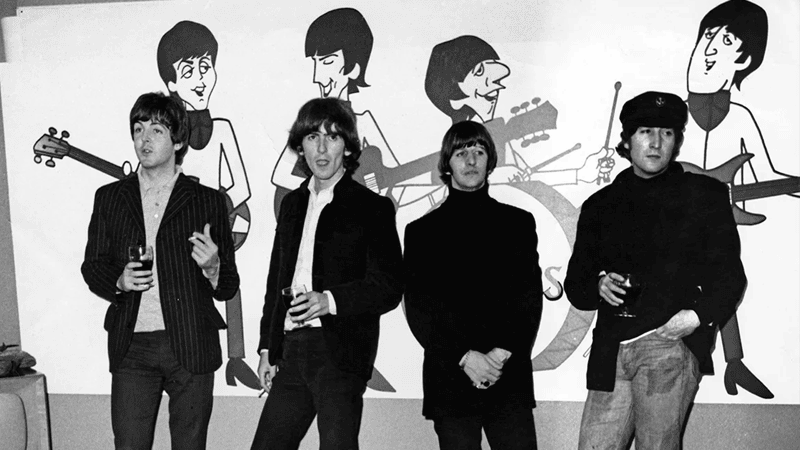
Image Source: Woman’s World
As the years went by, though, The Beatles softened a bit toward the cartoon. John Lennon admitted in 1972 that he still got “a blast out of watching the Beatles cartoons on TV.” George Harrison said in 1999 that “I always kind of liked [the cartoons]. They were so bad or silly that they were good, if you know what I mean, and I think the passage of time might make them more fun now.”
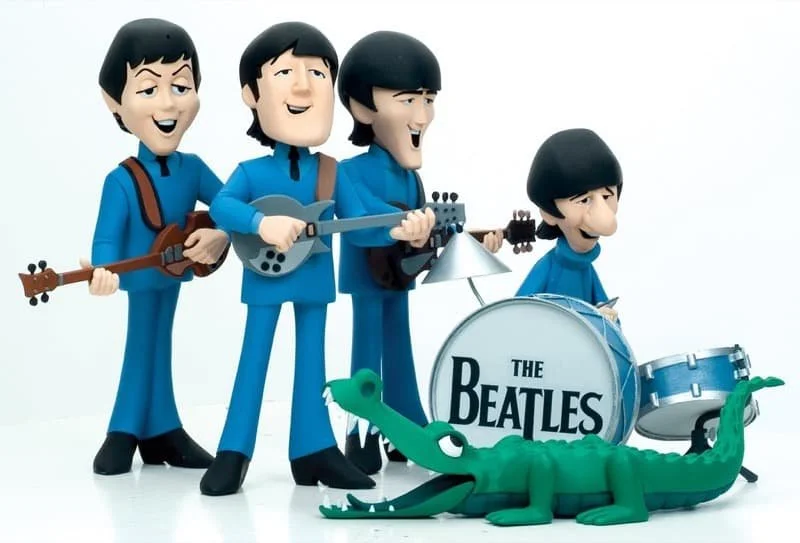
Image Source: McFarlane Toys
The Beatles cartoon has garnered a cult following on the internet in recent years over its “so bad it’s good” qualities. It’s also taken on a life of its own on sites such as Tumblr. Despite this, the series has never been officially released on home video or streaming. Bootlegs have circulated for years, and some fans have taken it upon themselves to restore certain episodes for which they could acquire the original film reels. McFarlane Toys released a line of figures based on The Beatles as they appeared in the cartoon. Apple Corps currently holds the rights to the cartoon, and there has been a huge demand for it to be released officially. Whatever the case may be, it hasn’t happened. Hopefully, one day, it can be released and properly preserved.
READ NEXT:
Sources: Wikipedia, Go Retro, Beatles Wiki, YouTube

Latest News
Featured



• All sizes are adult unisex
• Printed art on the front
• 100% cotton
• Pre-shrunk fabric
• Shoulder-to-shoulder taping
• Culture Slate Exclusive Design
See more products here