
The Virtual Boy: Unmitigated Disaster, or Failed Experiment?
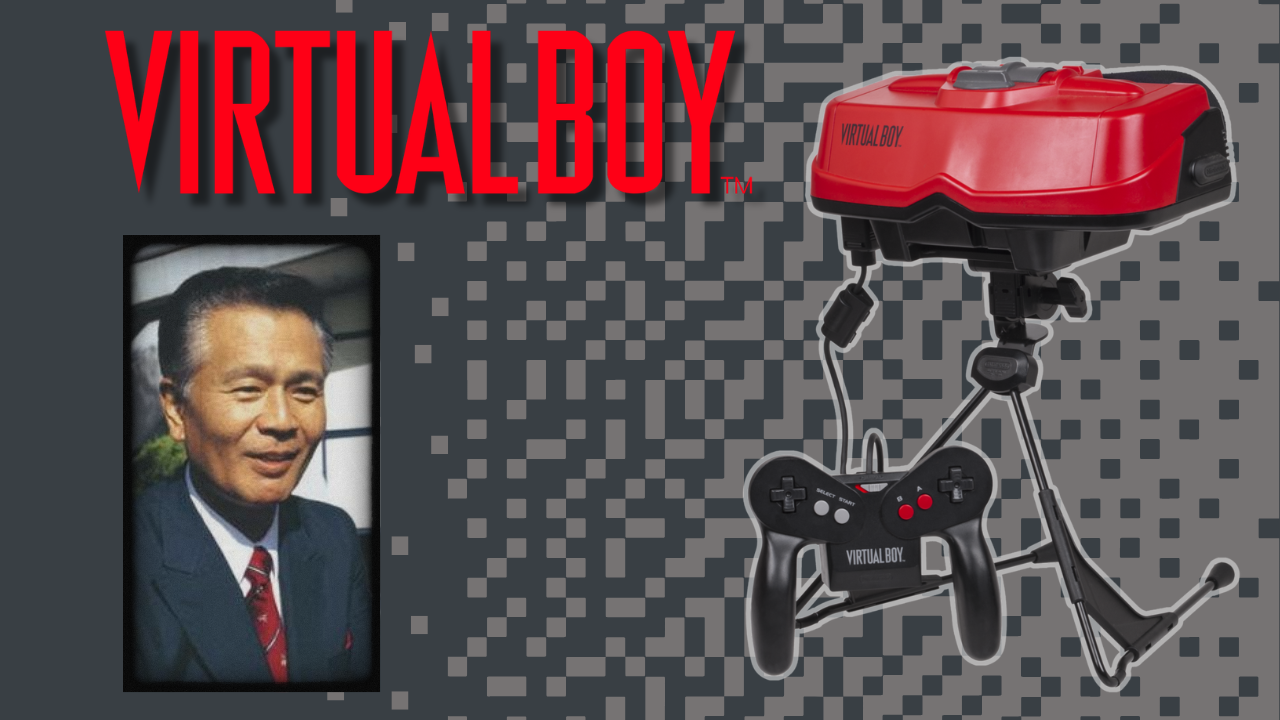
The Virtual Boy and Gunpei Yokoi
Image Source: Culture Slate
As Nintendo entered the 90’s, Gunpei Yokoi, the man who brought them here, was feeling dissatisfied. He felt that the gaming industry was in a bit of a rut, focusing on graphical prowess and processing power over new ideas, a battle he felt Nintendo could never win.
Meanwhile, games were becoming more complicated to make and play, leading to a dedicated audience that was ever shrinking. Though president Hiroshi Yamauchi was eyeing him as a successor, Yokoi was planning on leaving Nintendo behind to found his own small company. He would, however give Nintendo one last project as a parting gift, one which would hopefully bring gaming back to its roots.
RELATED:
Meanwhile, as the 90’s rolled on, Virtual Reality was gaining traction. With specialized headsets appearing on the market, Yokoi got an idea about making his own. He began thinking about all the new possibilities for the gaming world: imagine taking a system outside, and the time of day influencing what game you could play. He then pitched the concept of the VR 32, a vr gaming system that would be Nintendo’s next big thing. Eventually getting the approval of Yamauchi, Yokoi oversaw development on what he expected to be his final gift to Nintendo.
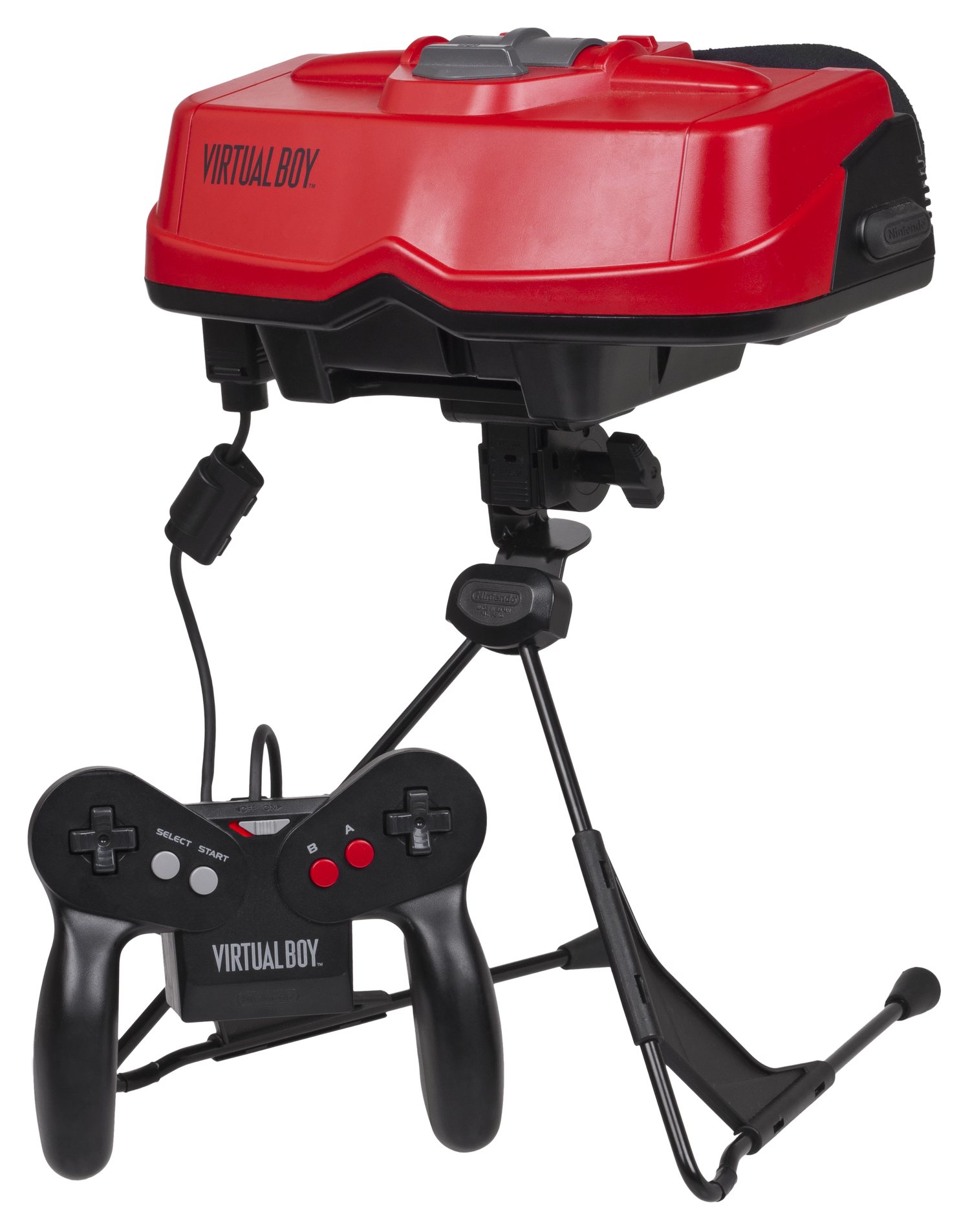
The Virtual Boy
Image Source: Wikipedia
For the VR 32, Yokoi envisioned a portable system that you could wear like a pair of sun glasses, with motion tracking tech and Stereoscopic 3D. Unfortunately, that would not be the system released by Nintendo. Due to regulations, the portability of the system was severely scaled back, resulting in a bulky headset with a stand that couldn’t really be taken on the go. This made it seem less like a portable system, and more like a weird home/portable hybrid. This would be regarded as one of the biggest missteps in the system, but at the time Yokoi was at least somewhat confident about its success.
At Famicom Space World 94, the VR 32, now called the Virtual Boy, was shown off. There were three games demoed for the public, Teleroboxer, Galactic Pinball and Mario VB. Yamauchi praised the console’s innovation and affordability, at around $200, it was half the price of other 32 bit systems. While press is often remembered as negative in hindsight, at the time reviews were more mixed, with some outlets expressing hope for the system’s success. Still, it was clear that not everyone was onboard with the Virtual Boy.
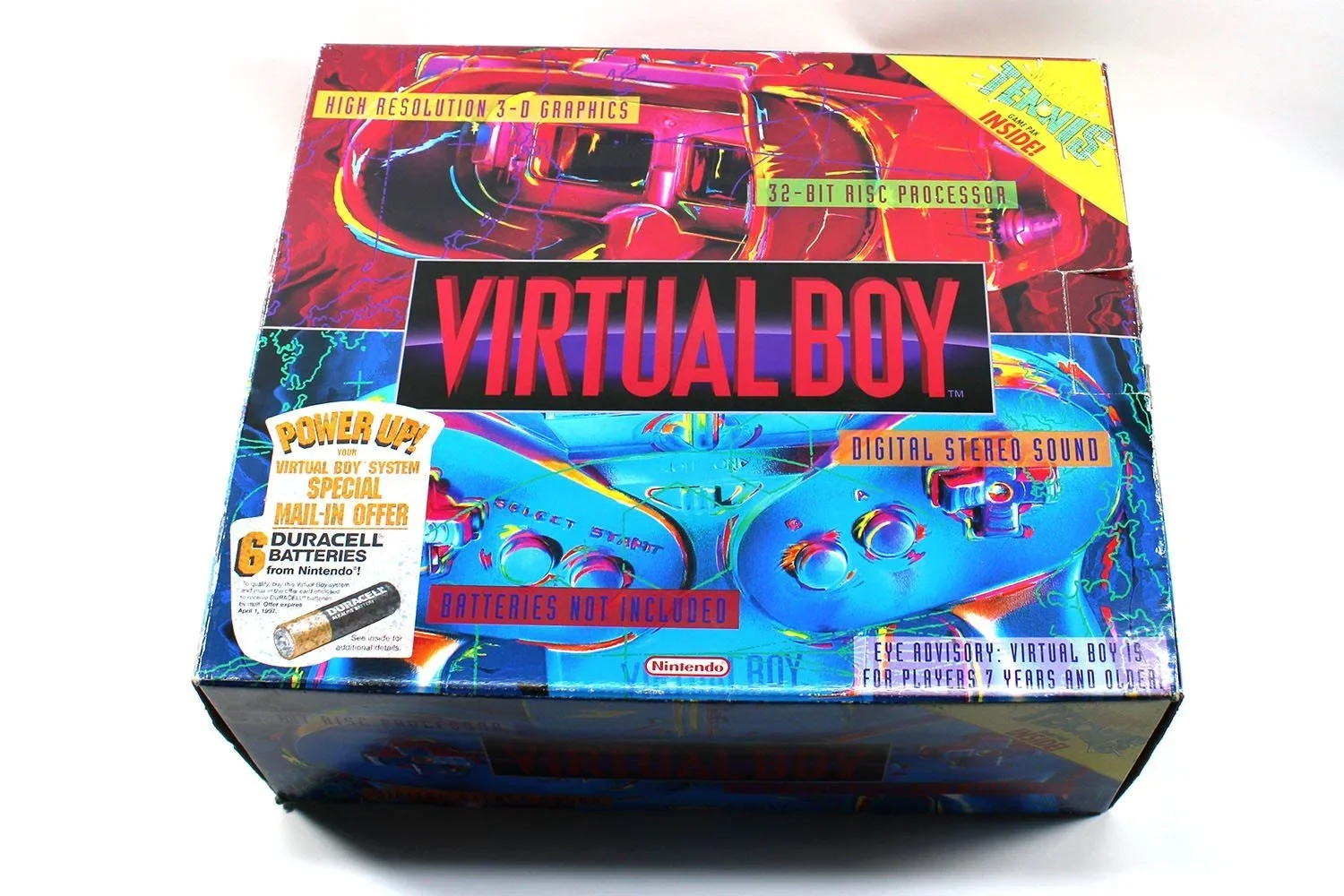
Virtual Boy Box
Image Source: Lukie Games
Now it’s time for some specs. Like the Game Boy, the Virtual Boy had a limited color scheme of black and red, this infamously caused some eye strain. There was a planned link cable to address complaints about the solitary experience of the VB, but this never came out. The controller was universally praised (even by the Virtual Boy’s biggest critics) for “being innovative”, comfort factor and dual d-pads. It also featured a widescreen display a decade before it was the norm for consoles, though it was not as wide as them. The audio of the system was high quality, essentially a Super Game Boy with two speakers and six audio channels.
The Virtual Boy launched on December 22, 1995 in Japan, and in August 1996 in North America. There were four launch titles in total: Mario's Tennis, a sports game, fighting game Teleroboxer, shoot em up Red Alarm and Galactic Pinball. These games were reviewed relatively well, and showed off the Virtual Boy’s capabilities. They weren’t exactly system sellers, however, as the system proved to be a tough sell, especially since, while Yokoi wanted to avoid the main gamer market, that’s exactly what Nintendo was marketing the Virtual Boy towards.
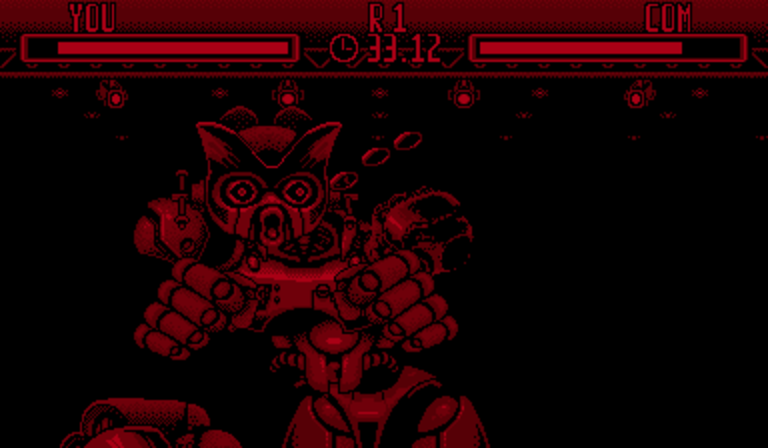
Teleroboxer Gameplay
Image Source: Wikipedia
The Virtual Boy undersold throughout its time on that market, leading Nintendo to pull the plug on it in Japan. Surprisingly, it actually did a bit better in North America, to the point that Nintendo actually considered extending support on the system there. However, this never came to pass, and three finished games were left unreleased. Yokoi would leave Nintendo after creating the Game Boy Pocket.
Despite its disappointment, Virtual Boy wasn't that much of a failure. It had a strong library, and it sold better than Satellaview and Nintendo Power combined. Still, Virtual Boy has never quite thrown off its bad reputation, though it is getting better.
CultureSlate: Made by humans, for humans
Please consider supporting our AI-free content via our Patreon page
READ NEXT:

Source: YouTube

Latest News

Featured





• All sizes are adult unisex
• Printed art on the front
• 100% cotton
• Pre-shrunk fabric
• Shoulder-to-shoulder taping
• Culture Slate Exclusive Design
See more products here