
Gunpei Yokoi: The Engineer Of Nintendo
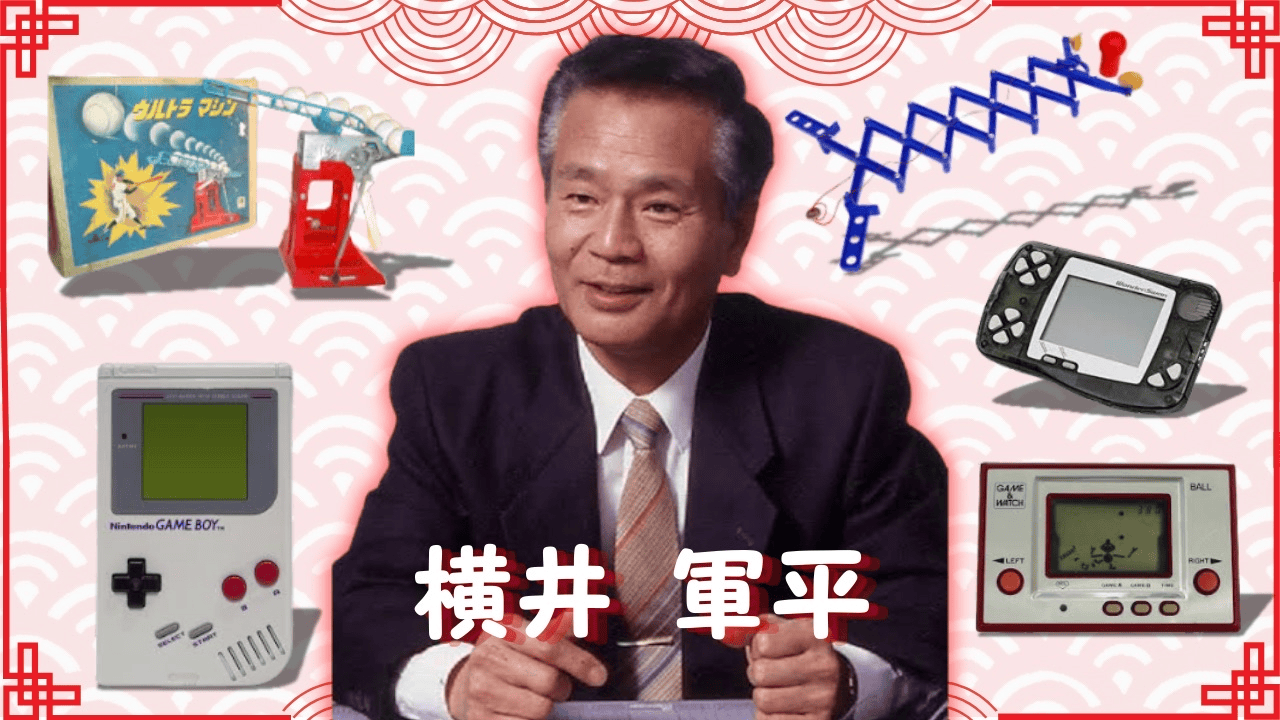
Image Source: CultureSlate
Several names are associated with Nintendo: Shigeru Miyamoto, Yoshio Sakamoto, and Satoru Iwata. One name, however, stands above them as being the man who helped make Nintendo what it is today. When Gunpei Yokoi joined the company, it was a small playing card company. With his help, it would become a, if not the, gaming giant. But how did he join Nintendo? When did he make all those toys, games, and directional pads? And what happened when he left, after that infamous bomb? We have made a short biography to answer all these questions and more, as we take a look at the life of Gunpei Yokoi.
Yokoi was born on September 10, 1941, in Kyoto. As a result of the post-war environment he grew up in, Yokoi’s family couldn’t afford big toys, so the young Gunpei often found himself tinkering. As he grew older, he would find himself getting various other hobbies, including ballroom dancing, but tinkering remained his main hobby. After graduating from Doshisha University, Yokoi applied to many of the large electronics firms, but was rejected by all. Only Nintendo, a playing card company based in Kyoto, would hire him, and even then, only because of a new law passed.
RELATED:
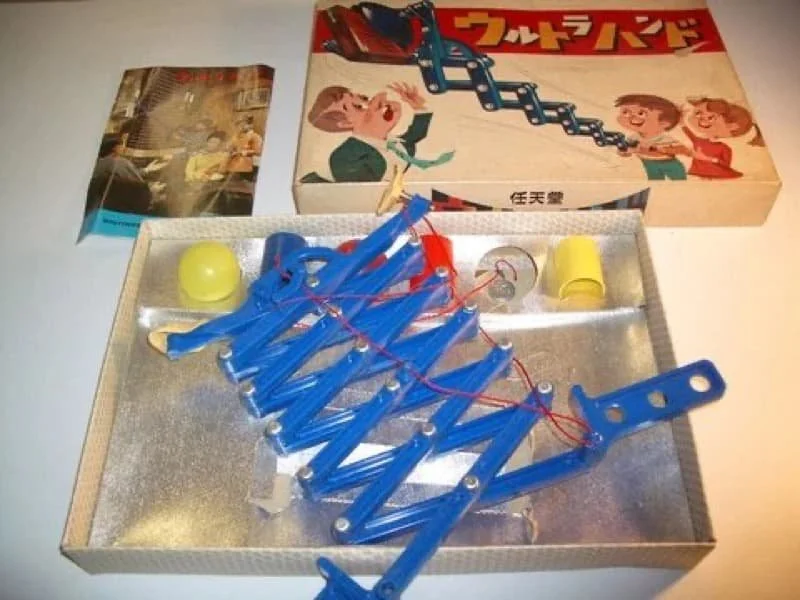
Image Source: Nintendo Wiki
Due to the peculiarities of his job, Yokoi often found himself with nothing to do. This led to more tinkering, and eventually he made an extendable plastic grabber. Nintendo CEO Hiroshi Yamauchi discovered him at one point. To Yokoi’s surprise, Yamauchi decided to mass-produce the grabber, adding some plastic balls to market it as a game, not a toy. This was done so that Nintendo wouldn’t have to compete with established Toy manufacturers. The UltraHand, as it was called, was a hit and led Nintendo to establish a Development Department, with Yokoi as its head and first employee.
With the new development department, Yokoi found himself making several new products, with various inspirations. A friend of his enjoyed baseball? He made the Ultra Machine, a device that pitched small plastic balls. He accidentally detected his own electrical charge with a polygraph? He made the “Love Tester”, which claimed to detect people’s romantic compatibility if they hugged, and it “worked better” if they kissed. After a series of light gun games and an end to a bowling fad, Yokoi would create his most ambitious project yet: Laser Clay, a large-scale light gun gallery, which achieved success in the early half of the 70’s.
However, this initial success was short-lived. An economic recession, followed by an earthquake at Nintendo HQ, wiped out much of their earnings. With these new times ahead of him, Yokoi began to think up new inventions. Among others, these included a tumbler puzzle that Yokoi couldn’t actually solve, alongside a host of home light gun games. These were not as successful as Nintendo had hoped, but success was right around the corner.
Before we discuss this success, however, we need to bring something up. Throughout his career, Yokoi was developing a philosophy of 枯れた技術の水平思考 (Kareta Gijutsu no Suihei Shikō), often translated as "Lateral Thinking with Withered Technology"; thinking outside the box with mature, reliable, and cheap technology. One analogy he used to illustrate this was a microwave, where the developer would add some features, thinking it would only raise the price a little bit, but soon it ballooned into overcomplicated and overexpensive microwaves nobody would buy. A better microwave, in this case, would be a cheap, simple one that got the job done. This philosophy would prove instrumental in the success of Yokio’s next invention, one which would set Nintendo on the video game path.
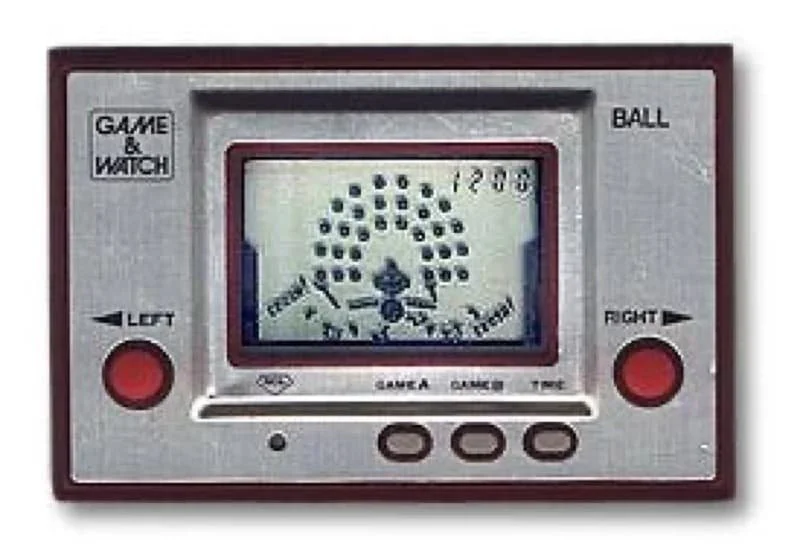
Image Source: Nintendo Wiki
On a train ride around 1980, Yokoi spotted a salaryman playing with his calculator. This gave Yokoi some ideas. After a stroke of fate, Yokoi was driving Yamauchi and brought up his idea for the Game & Watch, a series of portable games using LCD screens like the ones on calculators. It just so happened that Yamauchi was going to meet with electronics manufacturer Sharp. The Game & Watch proved to be a huge success for Nintendo, and led to an expansion of what had now been known as R&D 1. Nintendo has been expanding, but Yokoi wasn’t sure he could handle the pressure.
Still, Yokoi proved to be a benevolent boss, encouraging ideas and nurturing several key game designers. One of these was Shigeru Miyamoto, who, after an arcade game bombed in 1981, was asked to create a new game for Nintendo’s American branch. Together with Yokoi, he would create Donkey Kong and thus begin his own path as a game developer. Yokoi would also work on the game’s Game & Watch conversion, where he would unveil another invention: the Cross-Shaped D-Pad, which would become a staple of video game controllers everywhere. This would be used on most of Nintendo’s consoles in the future.
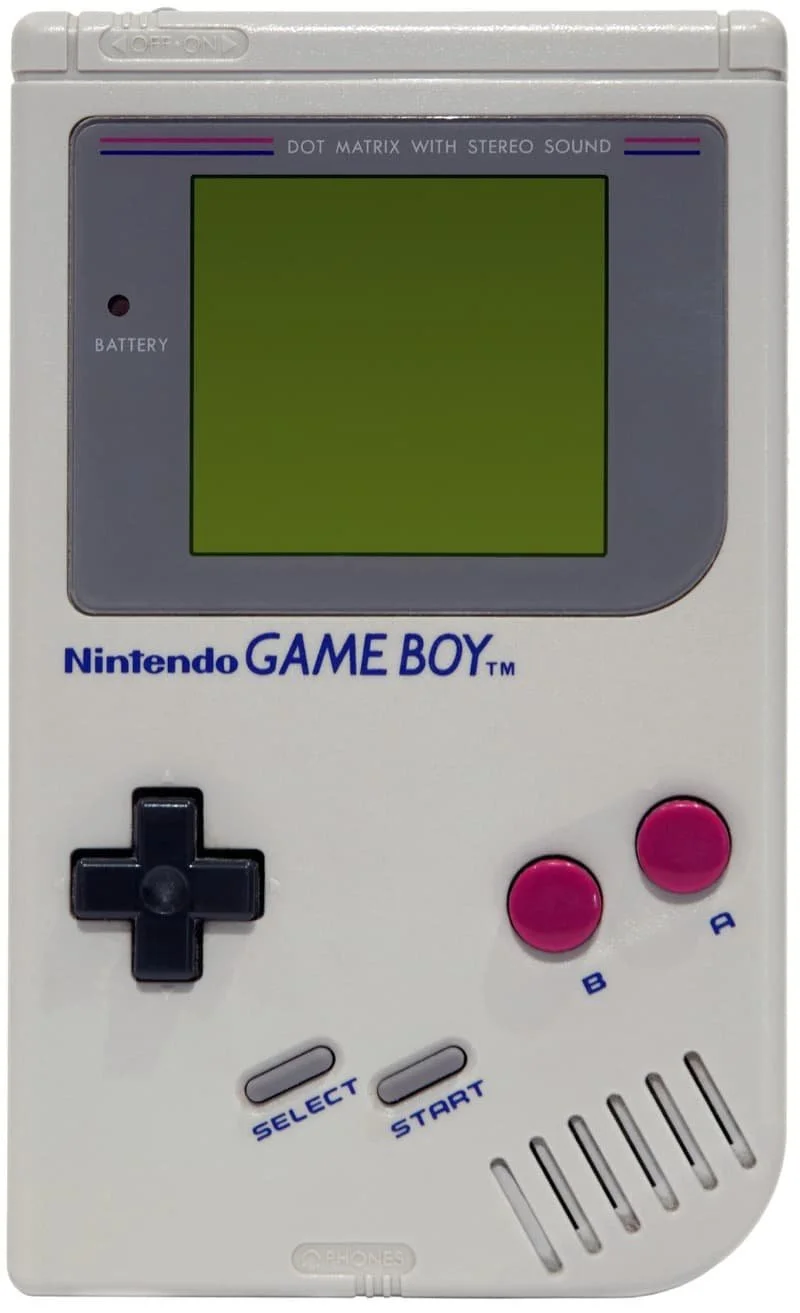
Image Source: Nintendo Wiki
Though Yokoi assisted in the creation of the Famicom/NES and created what would be known as ROB, the Game Boy is the most well-known of his creations. It should be noted that the actual patent belonged to Satoru Okada, who clashed with Yokoi over the direction the handheld would take. Though Okada won out in making it a “Portable NES”, Yokoi still had a say in the device's creation, including the decision to make the device monochrome. A problem with the display nearly caused its cancellation, sending Yokoi into a depression. However, he was able to get out of it and complete the project, which could be a story for another time.
As Nintendo entered the 90s, Gunpei Yokoi grew tired of the gaming industry. He felt that the manufacturers, Sega and Nintendo, were focusing too much on graphical processing power in their new systems, and that gaming as a whole was becoming too complicated. He decided to retire from Nintendo on his 50th birthday, but not before he left the company with one last invention, one that would provide a new way to play games. It didn’t quite work out that way, and it would lead to rumors about his departure.
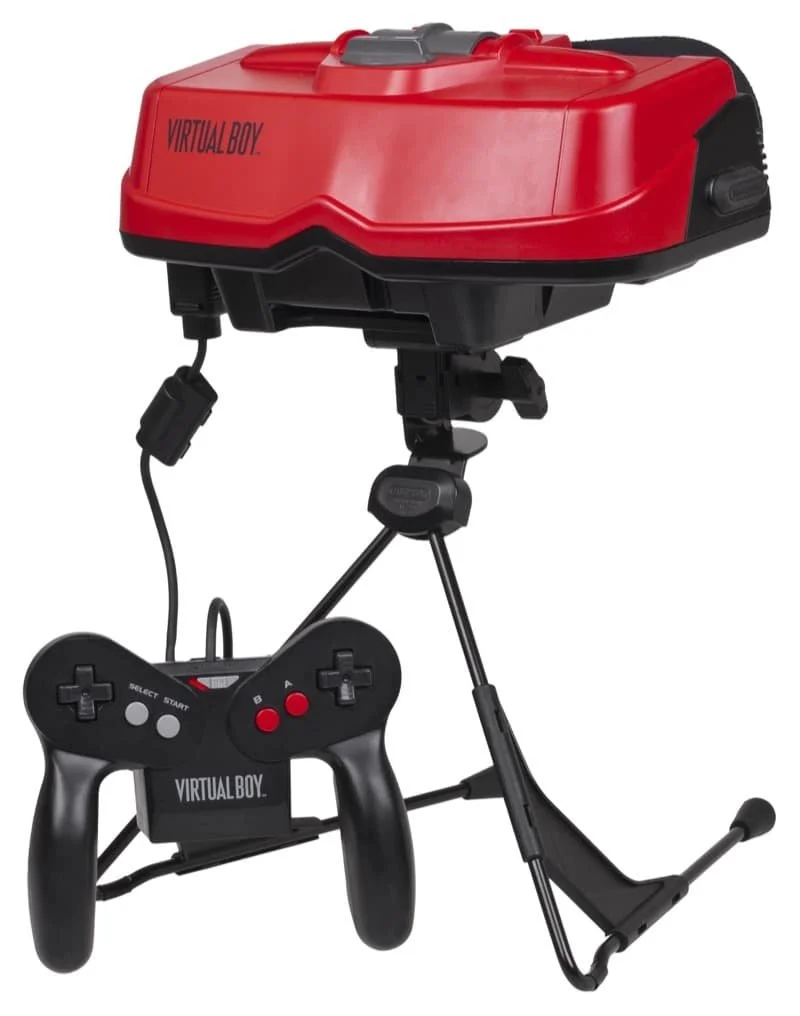
Image Source: Nintendo Wiki
The Virtual Boy was intended to be Yokoi’s swansong for Nintendo, a new virtual reality console. Unfortunately, various factors meant that it underperformed Nintendo’s expectations. Yokoi stayed for a bit longer to work on the Game Boy Pocket, but after that, he was finally ready to leave. He packed up his things and was ready to leave. He later released a biography around this time, refuting rumors that he left because of the Virtual Boy. As stated before, he was already planning on leaving, and had to stay a bit longer so it wouldn’t look like an admission of defeat.
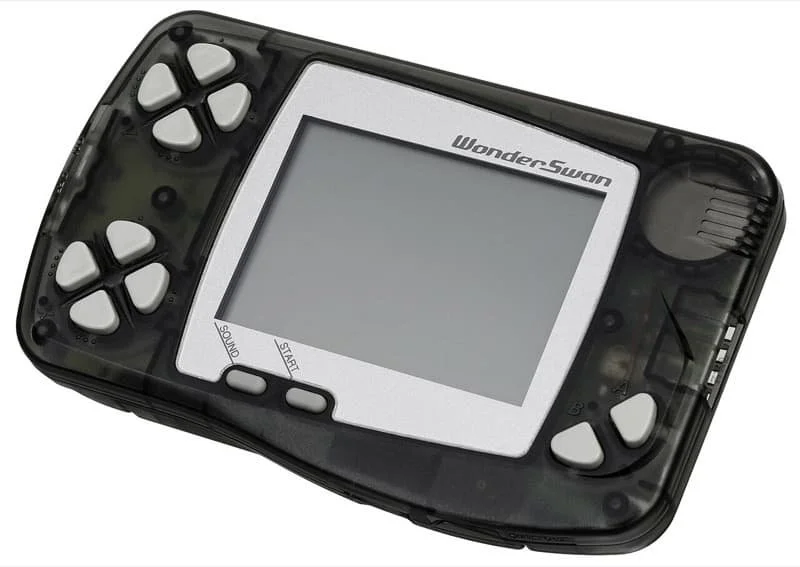
Image Source: Wikipedia
After leaving Nintendo, he founded Koto Labs. He intended to go back to the roots of gaming, with a smaller studio. One of their first projects was the Wonder Swan, a new handheld with a unique ability to change screen orientation. The project would later be picked up by Bandai, which would manufacture the handheld. However, tragedy would strike on October 4, 1997. Yokoi was riding with Etsuo Kiso on the Hokuriku Expressway when their vehicle rear-ended a truck. As they got out to investigate, another vehicle came and hit Yokoi. Two hours later, Gunpei Yokoi was officially dead. His tombstone was designed by Miyamoto.
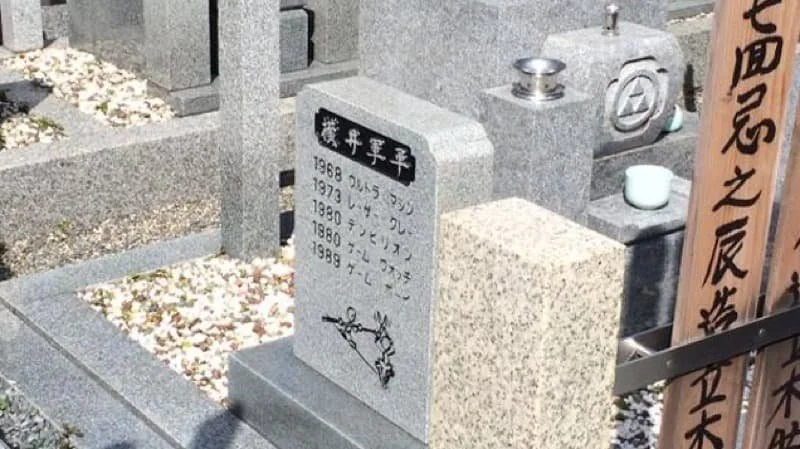
Image Source: Zelda Dungeon
Yokoi himself left behind a legacy as the man who made Nintendo what it is.
READ NEXT:


Source: YouTube
Latest News


Featured






.png)


• All sizes are adult unisex
• Printed art on the front
• 100% cotton
• Pre-shrunk fabric
• Shoulder-to-shoulder taping
• Culture Slate Exclusive Design
See more products here