
Sith Vs The Jedi Order: Two Sides Of The Same Coin
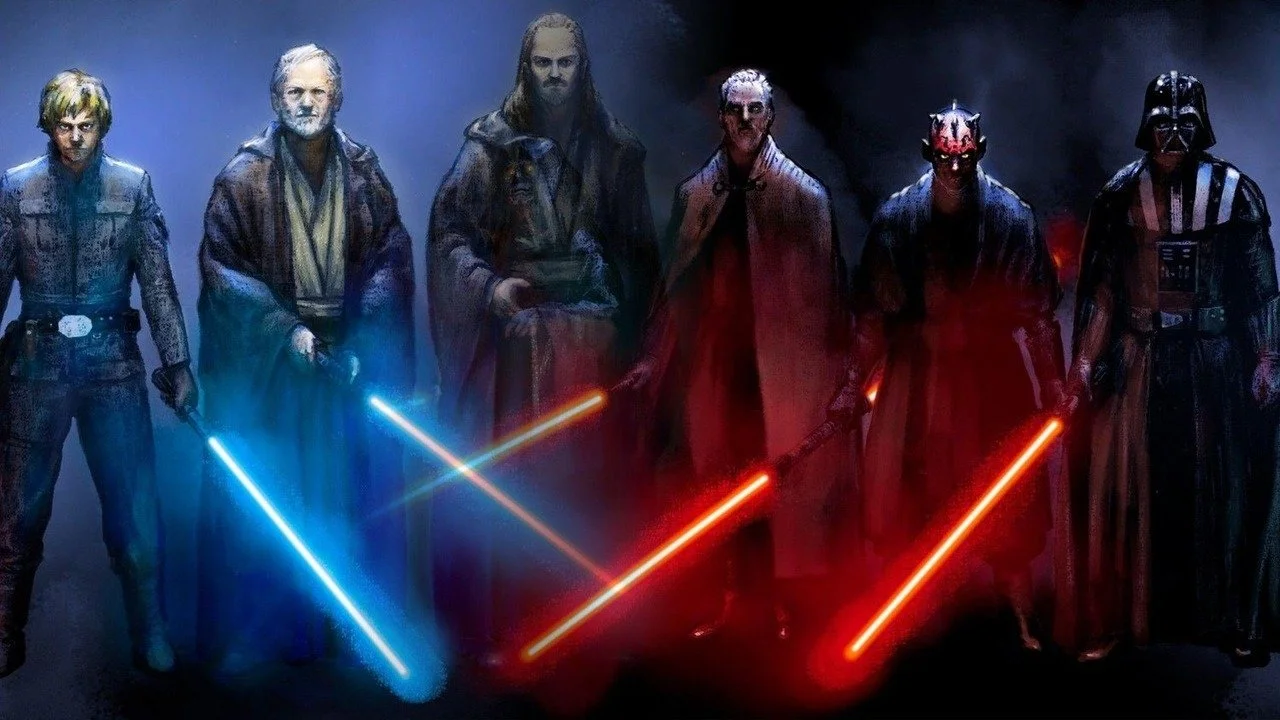
Image Source: wallpapercave.com
In its simplest form, the battles between the Jedi and the Sith represent the fight between good and evil. The Jedi, symbolizing the good, embody the Light Side of the Force whereas their lifelong enemies the Sith embody the Dark Side. The Sith’s extensive use of the Dark Side gives them strength, but corrupts their souls inside and out. The Force is all about balance, affected and created by all living things while simultaneously binding the galaxy together.
As explained by George Lucas in an interview, everyone in the Star Wars universe has the ability to learn how to use the Force, but that only the Jedi "take the time to do it." In contrast, Star Wars works show the Sith “also took the time to train.” Further supporting the Jedi as the “good guys” and the Sith as the “bad guys” are the stances they take regarding life and philosophy.
RELATED:

A Black and White Beginning

Image Source: YouTube
The first image of the contrasting views of the Jedi and Sith are established in A New Hope when those aligning with the Jedi beliefs are slaughtered and Darth Vader makes his first appearance. Stepping over the bodies and Force choking one of his admirals reminding him of his place, Darth Vader embodies the early days of the Sith just being evil. Lusting for power and absolute control, Darth Vader and Emperor Palpatine have no qualms with destroying any planet attempting to fight against them. The Death Star was the original marvel of destruction striking fear in the hearts of the Jedi. Fear and sadness were palpable when Admiral Tarkin forced Princess Leia to witness the Death Star destroying her home planet Alderaan.
The rigid distinction of “good” and “bad” labels between the Jedi and Sith within the original trilogy was made clear as George Lucas first intended. There was little hope that thew Star Wars films would become the juggernaut success it was. Upon its success, the dynamic of the Jedi and Sith were granted the validation in establishing why the Jedi were supposed to be seen as the good guys and the Sith as evil. The Jedi were saving planets, not freezing people in carbonite, and teaching their Padawans how to use the Force for good. Not to mention their use of green and blue Lightsabers whereas the Sith’s iconic red Bleeding Lightsabers.
This Bleeding according to ScreenRant was a result of Sith utilizing “rage, hate, pain, fear and all of what makes a Sith of Sith to bend the crystals to their own will.” This manipulation further proved the Sith as evil; using the Force against what it was “intended” for and disrupting the natural balance. What wasn’t taken into account was how this Balance of the Force would result in the darker side of the Jedi being brought to light.
The Deconstruction and Destruction of the Jedi
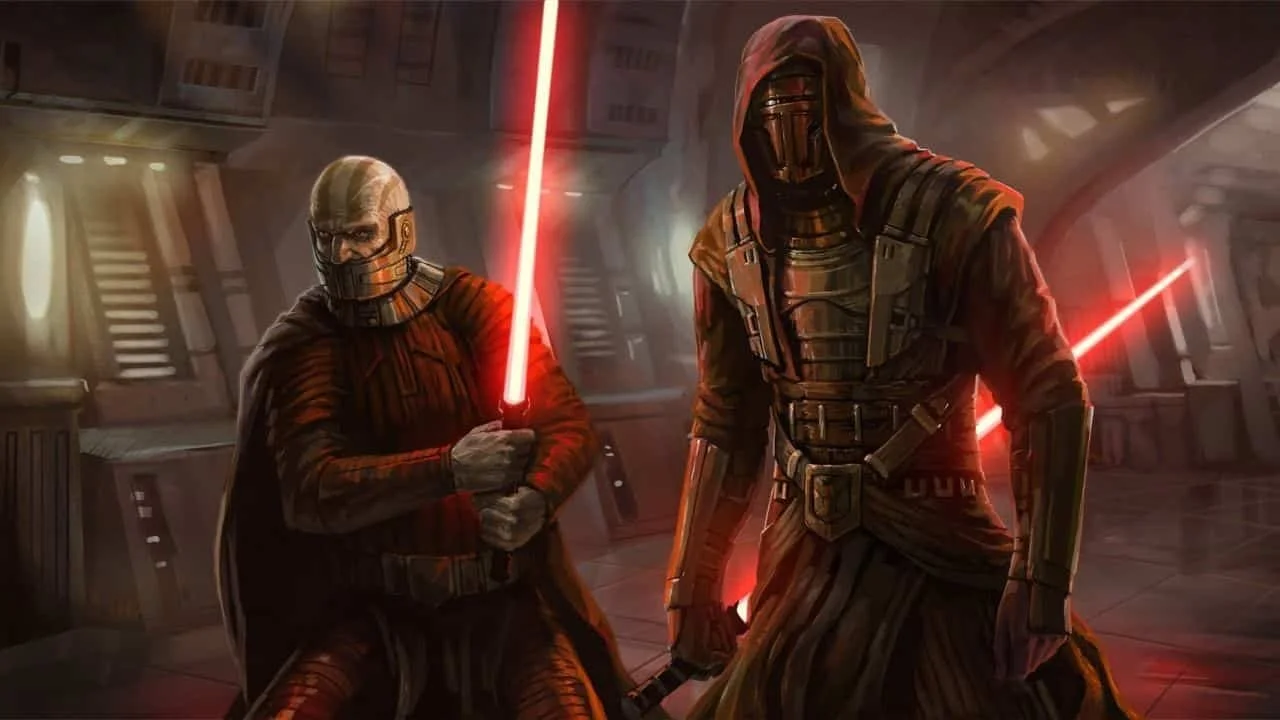
Image Source: thegamemachine.it
Ancient philosophers stated that “Good can exist without evil, whereas evil cannot exist without good.” In simpler terms, the presence of good confirms that there is an evil that had to be classified as “evil” by their objective opposite. One conclusion that can be drawn from this is the notion that Sith and Jedi create one another. Diving deeper into this sentiment, the Jedi’s recruitment methods were looked upon from the perspective of a Sith in Knights of the Old Republic.
Having to ponder the nature of morality from the mindset of someone from the “evil side” confronts the bias the player has against the Sith. One of the most uncomfortable moments to process as it is done by the Jedi was programming the once Sith Lord Revan with a new identity as a loyal soldier to the Galactic Republic. This overall concept remains significant within philosophical discourse as it prompts us to ponder the nature of morality, the human condition, and the intricate balance between good and evil within the world.
While the Jedi did save Revan, Revan and the player are still forced into situations testing their loyalty to the Jedi Order and the Force. Revan as a soldier for the Galactic Republic meets various others helping him on his quest and even develops a Force bond with Bastila Shan. As Revan is “continuously confronted” with moments testing his loyalty to the Jedi Order and the light side of the Force, memories of his former life begin to bubble back up to the surface. In the end, Revan rejects the Dark Side completely in favor of the light side, despite the brainwashing and subsequent attempts of the Jedi Order's lead Masters to suppress Revan’s past life.
Had it been the Sith repressing the memories of a Jedi with amnesia and brainwashing them to join the Dark Side, it would be seen as on par with their goal of having complete control over the Galactic Republic. The revelation of the Jedi taking part in morally questionable actions for the sake of “goodness” forces the player to confront how the Jedi are not immune from using the light side of the Force for morally questionable (at best) actions. This unveils a difficult truth—both the Sith and Jedi have knowledge of their power, but one is more demonized.
Anakin and Ahsoka: How the Jedi Failed Them
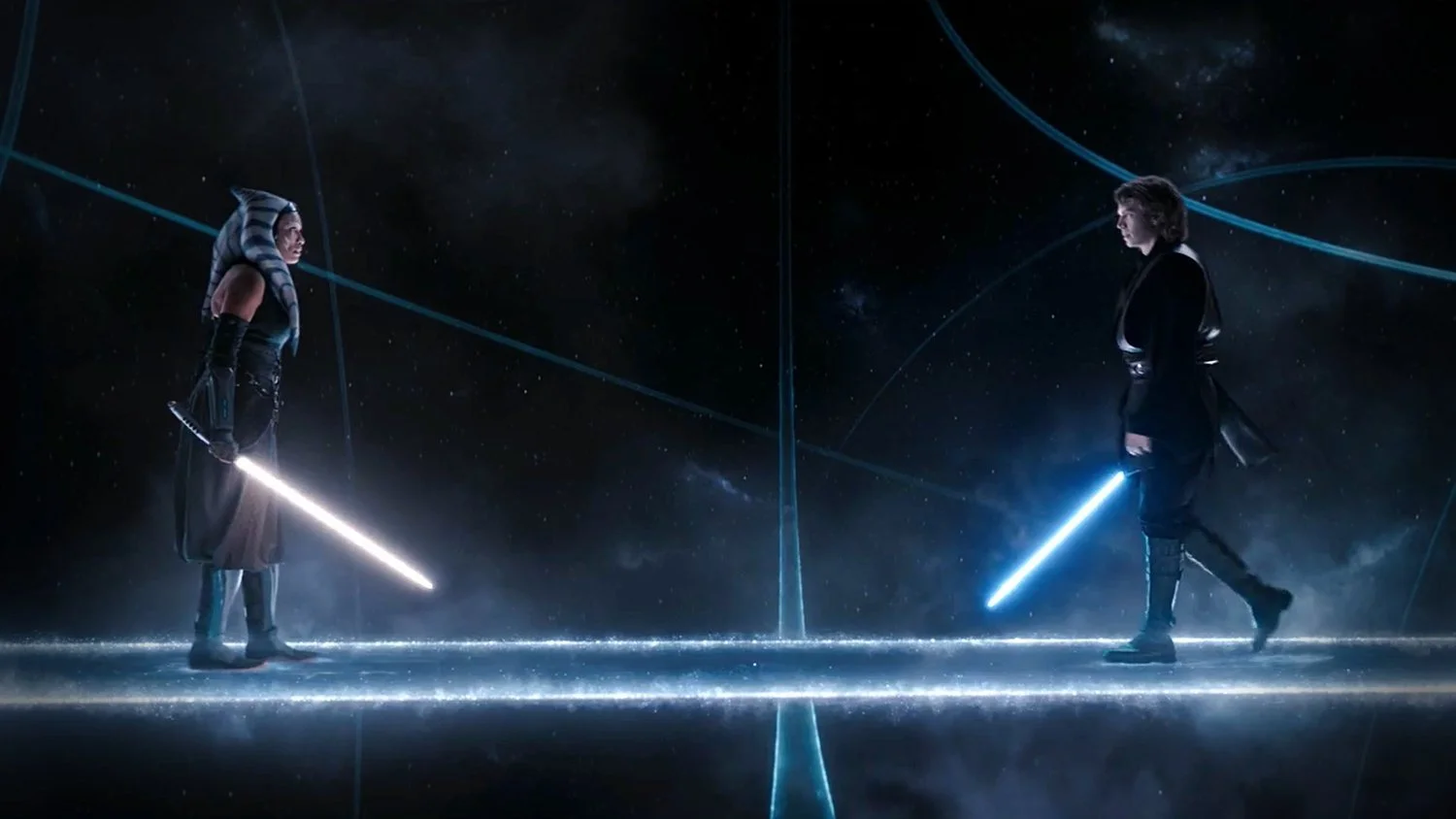
Image Source: wallpapercave.com
Perhaps one of the greatest failures of the Jedi philosophy were Anakin and his Padawan Ahsoka. Where Knights of the Old Republic started to shine a light on the morality of the Jedi, shows like Clone Wars and Rebels confronted viewers with the harsh truth of the Jedi being capable of villainy. One of the greater recent examples of the Jedi and their Code interfering with what is objectively right are the choices they made regarding Ahsoka and Anakin.
What made Anakin a different teacher to Ahsoka than previous Jedi Masters and their Padawan’s was how strong their bond was. Going against the Jedi Way of forming attachments, Ahsoka was a reflection of how Anakin was—nippy, hardheaded, and wild. According to CheatSheet, George Lucas revealed the creation of Ahsoka’s character was to show how Anakin went from a cocky teen in Attack of the Clones to the established Jedi Knight in Revenge of the Sith. Both balanced each other; Ahsoka teaching Anakin responsibility and Anakin honing Ahsoka’s skills in the Force in ways that eventually showed her how to prepare for upcoming strikes and escaping captivity. Unfortunately, Ahsoka being a mirror of Anakin foreshadowed his fate.
Both were Jedi who were taken in as reluctant Padawans. Had Qui-Gon not been killed by Darth Maul, it can be speculated that Anakin would not have been taken in by Obi-Wan. Meanwhile, The Jedi Council assigned Ahsoka to Anakin as his Padawan despite him not yet achieving the rank of Jedi Master. Nonetheless, they succeeded as a team. Sadly their success was for nothing. In the fifth season Ahsoka is falsely accused of bombing a Jedi temple that killed Clone troopers. Despite evidence proving Ahsoka’s innocence, the Jedi convinced themselves of her guilt.
Only Anakin believed her pleas of innocence. Making Ahsoka’s ordeal worse was after the culprit was found, Ahsoka doesn’t hear apologies from the Jedi Council. They instead commend her for showing “great strength” and “true signs of a Jedi Knight.” Translation: “What didn’t kill you made you stronger.”
All of the moments Ahsoka put her life in danger and the lives she saved with Anakin by her side were so easy to throw out just because of an action she happened to be in the vicinity of by bad luck. Had she accepted the chance to return to the Jedi Order despite their non-apology, Ahsoka would have been knighted and Anakin would have been given the rank of Master.
This is a direct violation of the first tenet of the Jedi Code: “There is no ignorance, there is knowledge.” Suppressing knowledge under the guise of (possibly) retaining harmony and inner peace did the opposite.
Turning their backs on her was akin to turning their backs on Anakin. By Revenge of the Sith, Anakin had been given the recognition of his peers, but not in the way that mattered most. Anakin sought knowledge from the Dark Side to save his wife Padmé, only for this knowledge to seal his fate into joining the Dark Side. The Dark Side, specifically Emperor Palpatine, was the one who recognized his skill, strength, and power. Palpatine was giving Anakin the praise and answers that appealed to his human nature, something the Jedi Code represses, especially when it comes to love. Obi-Wan turns away his true love, but his Force Bond is deemed okay.
The bond between a Sith Lord and their apprentices are one and the same. Yet, none of them appear to be any better than their enemies. Jedi and Sith are capable of betraying their own kind under the guise of their separate philosophies. Both have the capacity of good and evil. The difference lies in the light and dark side of morality.
Balance and Similarities
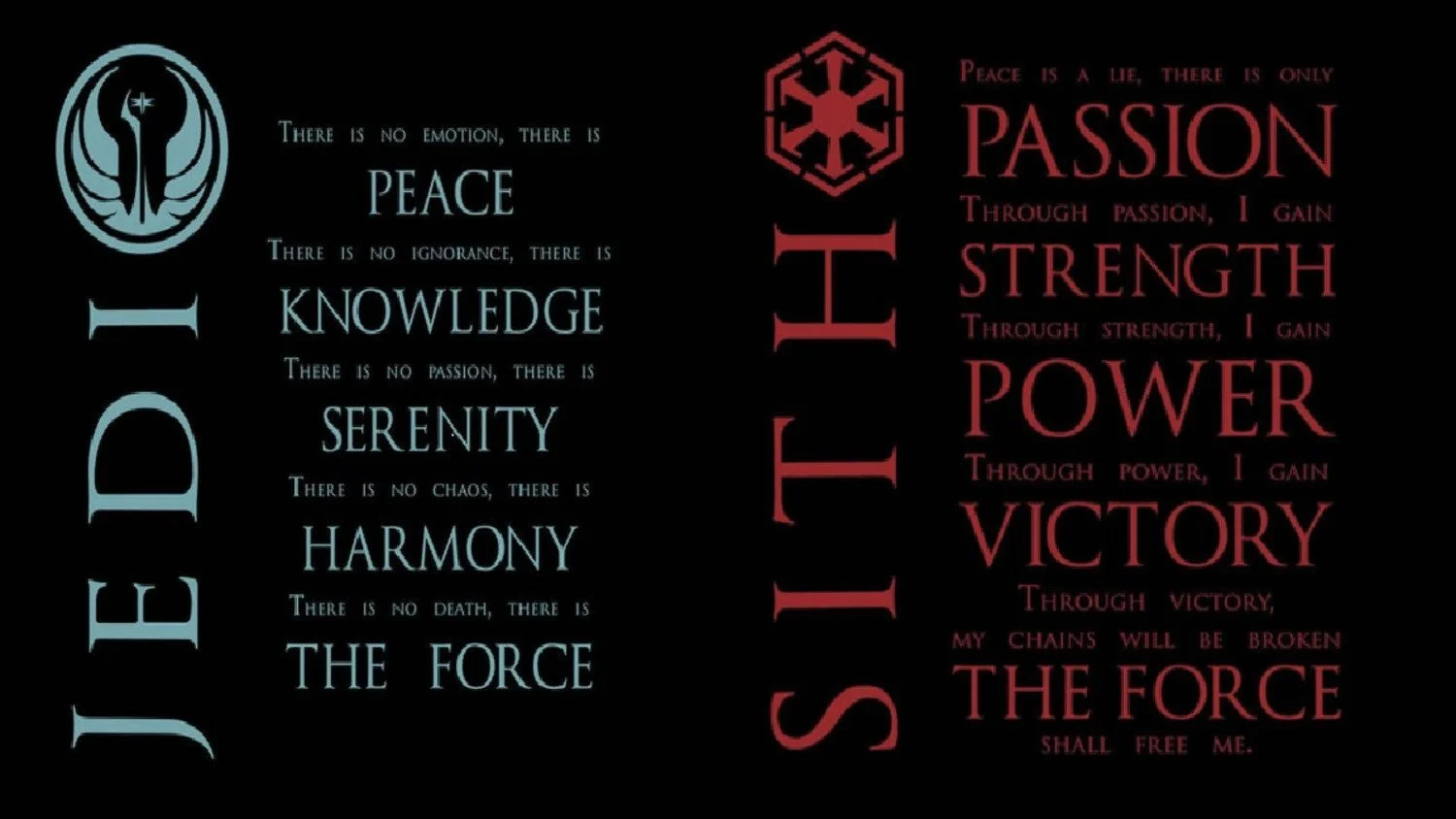
Image Source: wallpapers.com
The Jedi and the Sith are forever intertwined in a battle of good and evil; against each other and within themselves. In these battles, there are victors. For every victory the Jedi gains, the Sith are guaranteed a victory down the line. One will always come back and triumph over the other to create balance in the Force. When Anakin was prophesied to “destroy the Sith” and “bring balance to the Force”, he did albeit in a twisted way. He killed Count Dooku, and later killed Mace Windu.
One Sith and then one Jedi. Balance.
Darth Vader killing Obi-Wan only to meet the same fate later on brought balance. Luke is never considered to be objectively evil for killing Darth Vader on account of Vader’s past actions, but Luke had to confront the darker aspects of his humanity. It’s vital to his journey to becoming a Jedi.
According to Luke, his use of the Force “is not a power you have. It's not about lifting rocks. It's the energy between all things, a tension, a balance, that binds the universe together….Warmth. Cold. Peace. Violence….Balance. An energy. A Force.” A Force allows the Jedi and Sith to live not in true harmony, but to show others how each have their own darkness. Light is never just Light. Dark is never just Dark. Betrayal and death occur on both sides, though one might be more upfront about it. Both recruited Force sensitive children (slave and free) in their pasts, but one will make it known that only one will good enough to live to be an apprentice. Both use Lightsaber forms akin to their fighting style. Both adapted their connections to the Force, physical strength, and desire to learn more than one form to gain the upper hand when necessary. Both are fighters.
Conclusion

Image Source: Reddit
There is no good and bad only. There are actions that have good and bad intentions, but the consequences resulting from said actions can bring the opposite effect. The Jedi saving lives bring happiness, but the Jedi cannot and do not save everyone. They are capable of seeing injustice and sitting back and doing nothing just as much as a Sith.
Both are human; both are needed in the world to various degrees. Knowledge of the Sith’s philosophy doesn’t equate to converting to Sith. Knowledge is knowledge and it’s best to know your enemy than place them in a box and stick with it. After all, if only a Sith deals in absolutes, than a Jedi’s pursuit of knowledge means nothing.
READ NEXT:

Latest News
Featured






• All sizes are adult unisex
• Printed art on the front
• 100% cotton
• Pre-shrunk fabric
• Shoulder-to-shoulder taping
• Culture Slate Exclusive Design
See more products here