
The History Of The Lightsaber
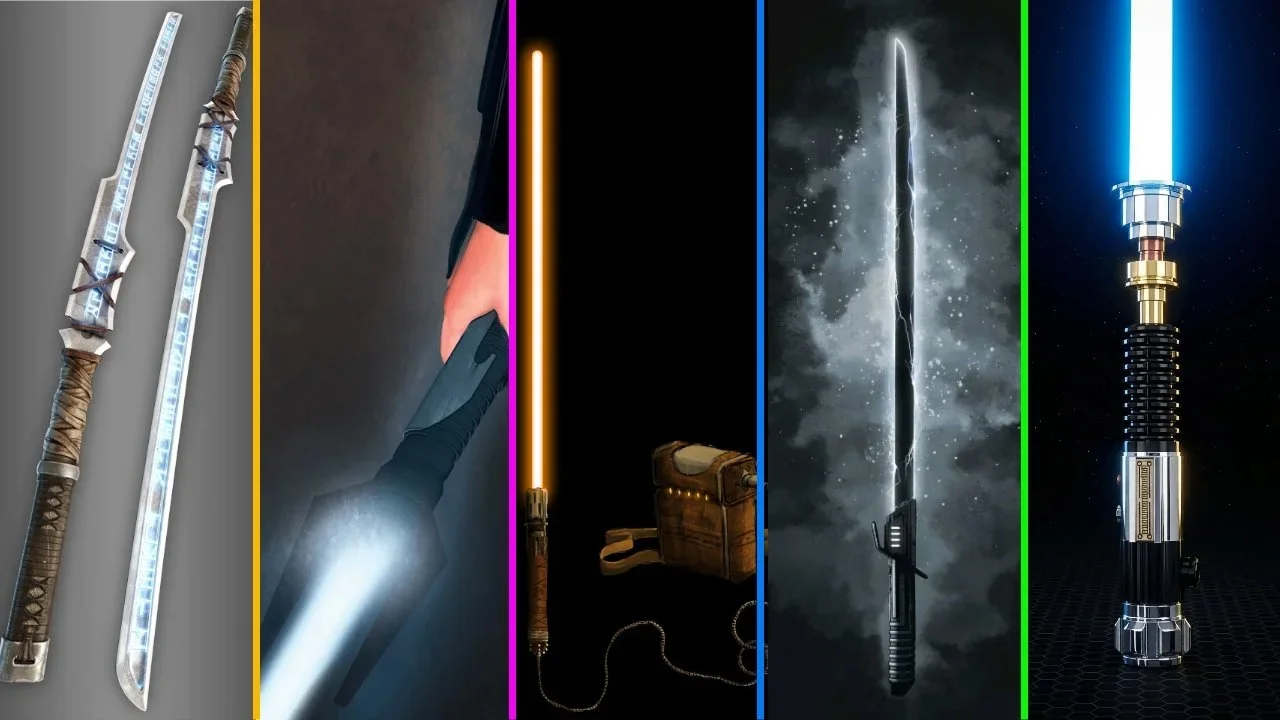
lightsaber variants
Image source: Cultureslate
Star Wars is full of iconic sights and sounds that even people who have absolutely no connection to the saga whatsoever will instantly recognise: The mask of Darth Vader and his breathing, or Yoda and his backwards-talking, or R2-D2 and his chirping, or Chewbacca and his roaring…
Or the blade and the (ignition-) sound of a lightsaber.
No matter if you call it this or are George Lucas and say “laser sword”, the tubular hilt that emits a green, blue, purple, or (in the case of Darksiders) orange or red energy blade is as deeply engraved in the lore of Star Wars as the characters mentioned above.
But how did lightsabers come to be?
As is the case with most technology in the galaxy far, far away, those weapons evolved rather slowly. The lightsabers that were used by the Jedi and the Sith during the time of the Old Republic (5000 years before the Battle of Yavin) looked more or less the same as those that Obi-Wan Kenobi, Luke Skywalker, or Rey wielded millennia later.
RELATED:
But Star Wars history goes back way further than just a few thousand years, and taking these periods into account, this “elegant weapon from a more civilised time” has changed massively.
The only “problem” is that we have to look at Legends material, as current Star Wars canon doesn’t offer much information about the history of the lightsaber. But on the other hand, there is little in current lore that explicitly contradicts the evolution of the lightsaber as defined in the former Expanded Universe.
And this evolution can be divided into several distinct eras, each marked by significant innovations and cultural shifts.
The Age of Force-Imbued Blades (c. 36,000 BBY)
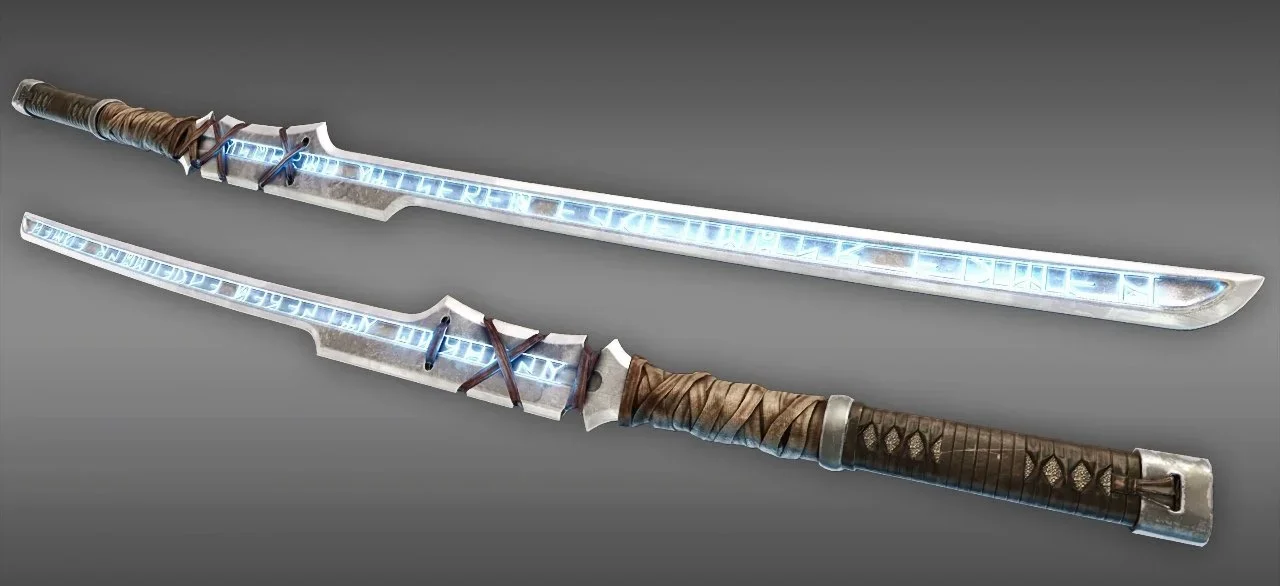
Image source: Saber Council
Long before energy-based weapons existed, the ancient Je’daii of the planet Tython wielded physical swords known as Force-Imbued blades. The creation of these weapons was a deeply ritualistic and physically demanding process. An initiate would select a bar of high-carbon metal, typically durasteel, and hammer it into a blade while channeling the Force into its molecular structure.
This process reconfigured the metal into a reinforced lattice, simultaneously hardening the blade and sharpening its edge. Once forged, a crystal was placed into the hilt, and the wielder would enter a state of deep meditation to spiritually and physically unite the blade and crystal. Finally, energy was channeled through the crystal to permanently infuse the weapon with the Force, causing it to glow. These blades were exceptionally strong and sharp, capable of cutting through most materials with ease. They served as the signature weapons of the Je’daii during the Force Wars between the light-side Ashla and the dark-side Bogan, remaining in use until the First Great Schism and the rise of the Sith Empire.
The Rakata Force Saber (c. 24,000 BBY)
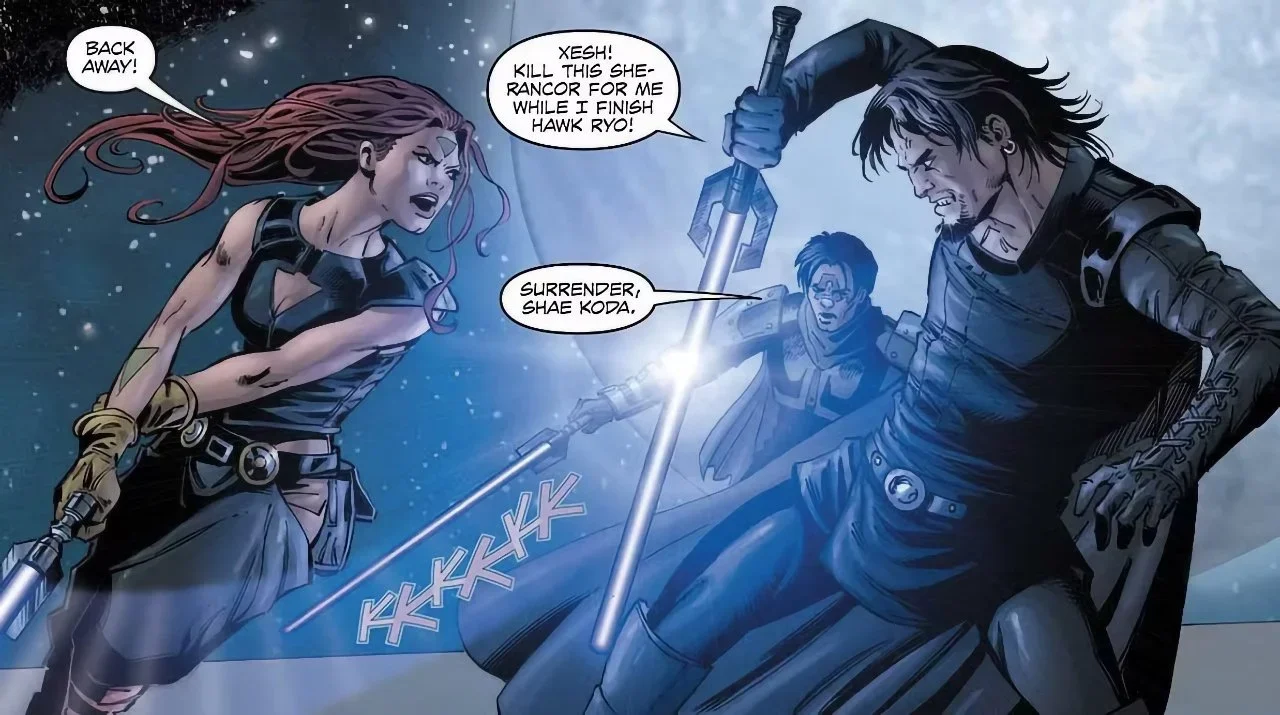
Image source: ScreenRant
The first true energy-based blade, the so-called Force Saber, was not invented by the Jedi (or their ancestors), but by the Rakata, an advanced amphibious species that founded the Infinite Empire. Prolonged exposure to the dark side of the Force had corrupted Rakatan society, turning them into a ruthless, expansionist civilization that used their Force-powered technologies to conquer and enslave other species. Their Force sabers channeled Dark Side energy through laboratory-grown Ebon crystals and were ignited much like later lightsabers. So-called Force Hounds, slaves of the Rakata who had a deep connection to the Dark Side, were required to construct Force Sabers.
While standard Force sabers resembled traditional lightsabers, those wielded by Rakata themselves were often longer, pike-like variants. Available in multiple colors, these weapons were inherently tied to the dark side, posing a constant risk of corrupting any Jedi who used them. During the Rakatan invasion of the Tython system, the Force saber acted as a catalyst for the Great Divide, deepening the ideological split between Jedi who embraced the weapon and those who feared its dark influence.
The Proto-Saber Era and Early Instability (c. 16,000 BBY)
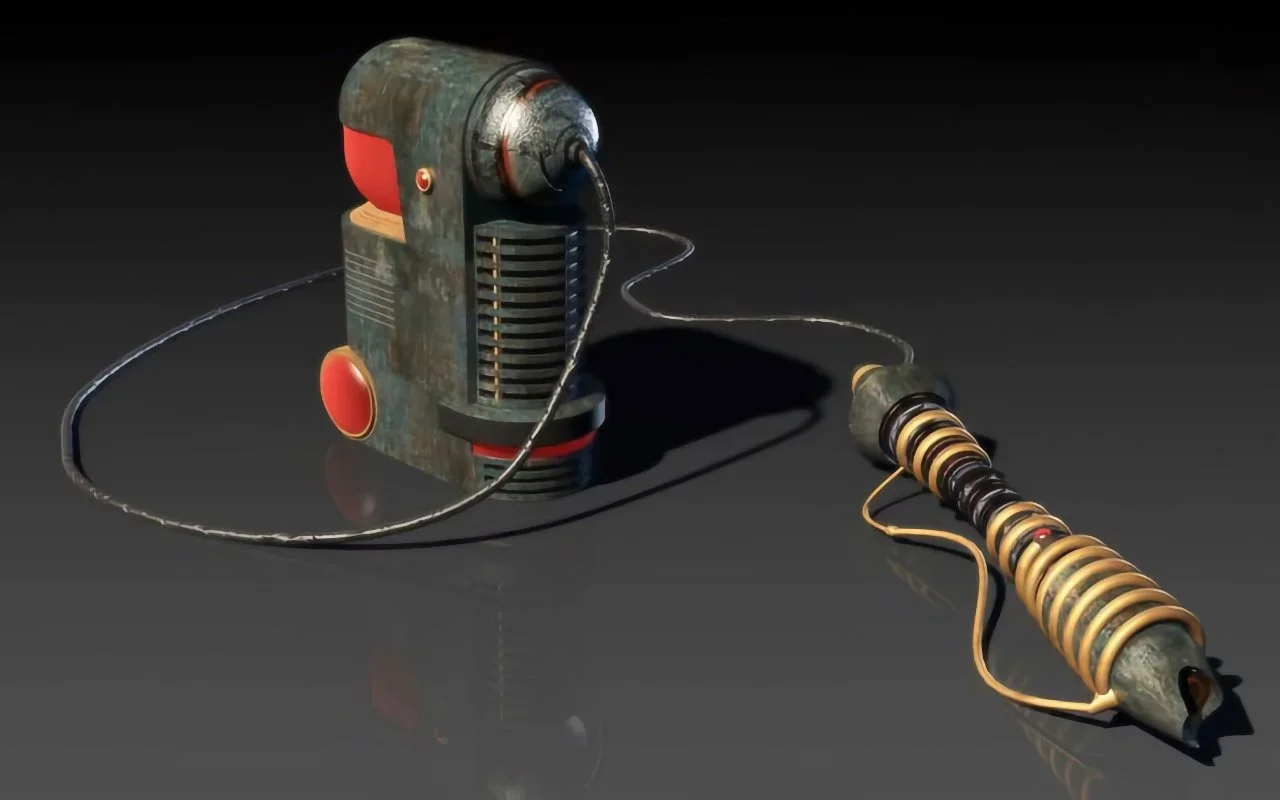
Image source: Pinterest
By 16,000 BBY, Jedi researchers studying frozen blaster technology achieved a breakthrough that led to the creation of the proto-saber. This early energy weapon generated a focused beam that arced back to its source, forming a controlled energy circuit. However, these initial designs were highly unstable and inefficient, requiring bulky, belt-mounted power packs.
They could only be operated for short bursts before overheating, which relegated them primarily to ceremonial use. Over time, proto-sabers became more stable, but they still suffered from severe energy consumption issues and restrictive power cables connecting the hilt and the battery pack, which hindered mobility and prevented Force-enhanced combat techniques like saber throws. Despite these limitations, they proved highly effective against heavily armored opponents and were extensively used during the Hundred-Year Darkness and the Second Schism.
Proto-sabers have been brought over into current canon.
Sith Innovations and the Birth of the Modern Lightsaber
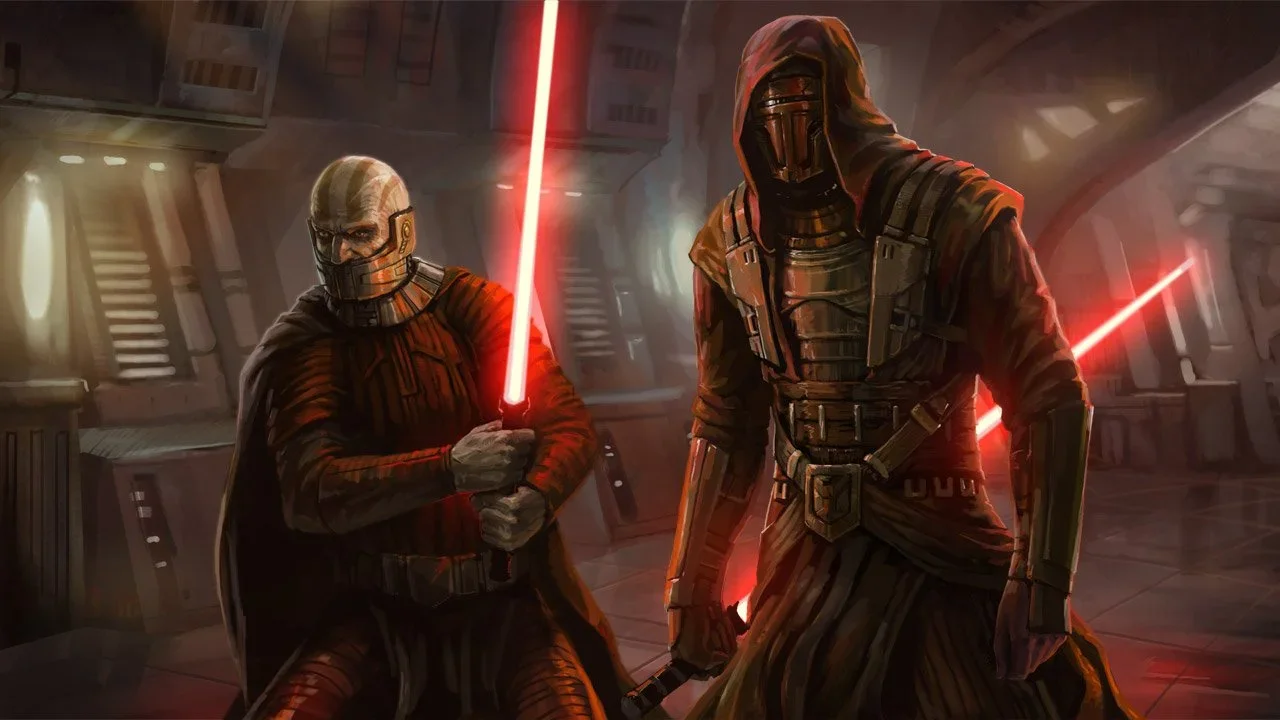
Image source: Reddit
The Sith pioneered the critical advancements that transformed proto-sabers into the modern lightsaber. They replaced the external power pack with an internal power cell and introduced a superconductor that redirected the returning energy loop back into the cell.
This mechanism only drew power when the energy circuit was broken, such as when cutting through material, effectively ending the need to carry an external energy source. The Sith also designed the schematics for the first double-bladed lightsabers and established the tradition of using synthetic red crystals, a practice followed by nearly all subsequent Sith Lords, like Malak and Revan. During the Great Hyperspace War (around 5,000 BBY), Jedi began adopting these improved designs, and after the Sith’s defeat, modern lightsabers became nearly universal within the Jedi Order by 4,800 BBY.
In current canon, Dark Side users start with a “regular” kyber crystal when constructing their lightsabers, which they then “torture” by brutally applying the Force until it turns red, a process called “bleeding”
Specialized Developments and Cultural Shifts
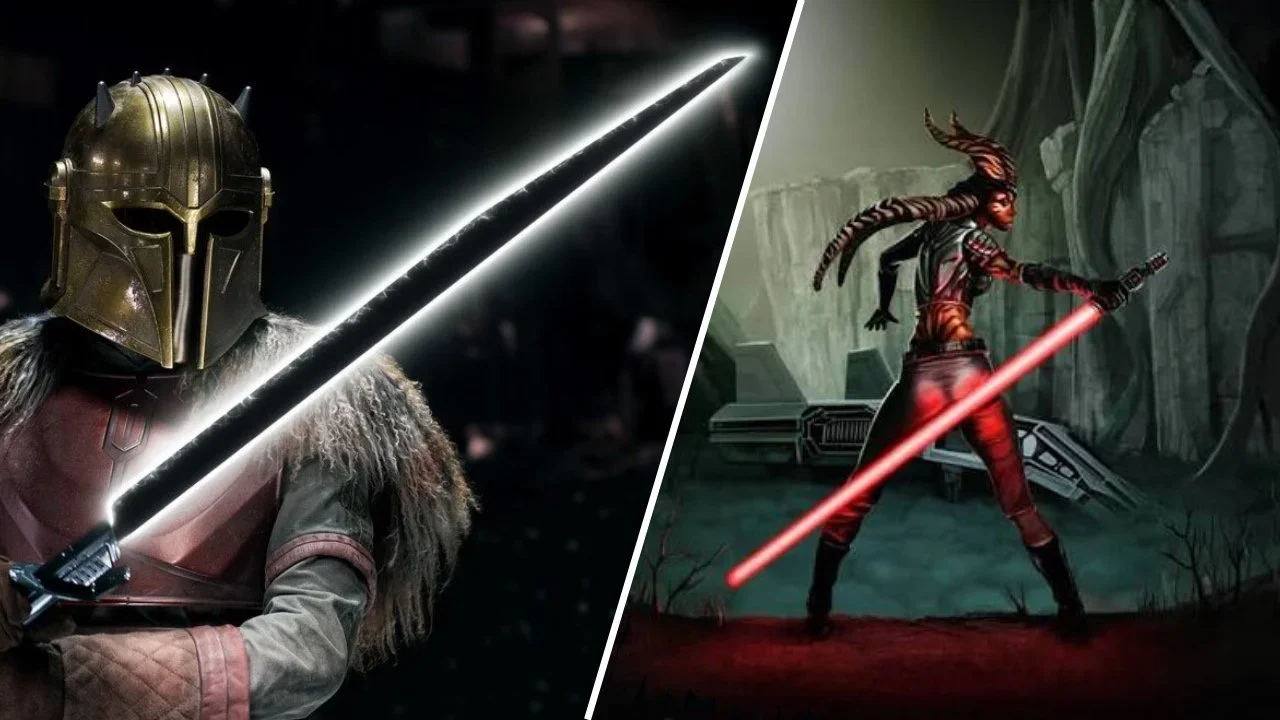
Image source: Cultureslate
The centuries following the Old Republic era saw further specialization. During the Great Sith War, the fallen Jedi Exar Kun redesigned his weapon into one of the earliest double-bladed lightsabers using instructions he found in a Sith holocron, thus introducing the design to broader Jedi use. Around this period, the dual-phase lightsaber was also likely developed, utilizing two power crystals to allow the blade length to be adjusted in mid-combat - a design later famously used by Darth Vader. In 1,050 BBY, Tarre Vizsla, the first Mandalorian Jedi, forged the unique Darksaber.
This black-bladed, sword-like weapon became a powerful symbol of Mandalorian leadership. By the Clone Wars era, it had become a standardized ritual for Younglings to travel to the ice planet Ilum to find the kyber crystal that spoke to them and would become the energy source for their lightsabers, thus drastically reducing the variety of lightsaber colors to predominantly blue and green. Also during that time, Jedi Master Kit Fisto developed a bifurcating cyclical ignition-pulse modification that allowed lightsabers to function underwater, a feature that became essential during battles on aquatic worlds such as Mon Cala.
The Great Jedi Purge and Enduring Legacy
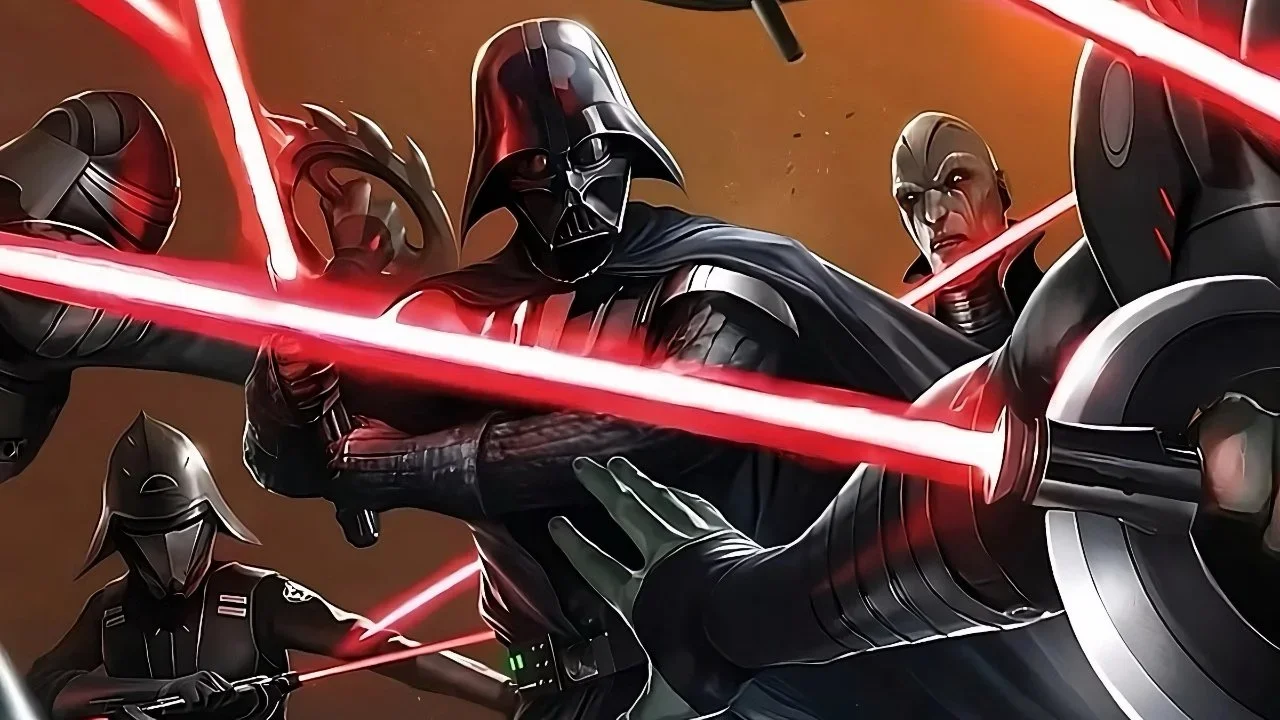
Image source: ScreenRant
Following the Great Jedi Purge in 19 BBY, lightsabers were declared contraband by the Galactic Empire. Jedi were forced to conceal their weapons or avoid drawing them entirely to evade Imperial detection, with the notable exceptions of Darth Vader and the Inquisitors.
Most lightsabers of the fallen Jedi Order were either destroyed or locked away, and only a few remained by the time of the Rebel Alliance, like Anakin Skywalker’s weapon that Obi-Wan took with him from Mustafar to hand over to the son of the Chosen One.
Despite this suppression, the lightsaber’s technological and cultural legacy endured. Over millennia, it evolved from a spiritually forged metal sword into a sophisticated energy weapon, shaped by Jedi spirituality, Rakatan dark side experimentation, Sith engineering, and centuries of galactic conflict. And no matter what tales future Star Wars stories set far beyond the end of the First Order are going to tell, chances are that there will be Force users who ignite a lightsaber either for defense or for attack.
CultureSlate: Made by humans, for humans.
Please consider supporting our AI-free content via our Patreon page.
READ NEXT:

Source: SaberCouncil
Latest News

Featured





• All sizes are adult unisex
• Printed art on the front
• 100% cotton
• Pre-shrunk fabric
• Shoulder-to-shoulder taping
• Culture Slate Exclusive Design
See more products here