
The Real World Events The Ghorman Massacre In 'Andor' Season 2 Will Draw From
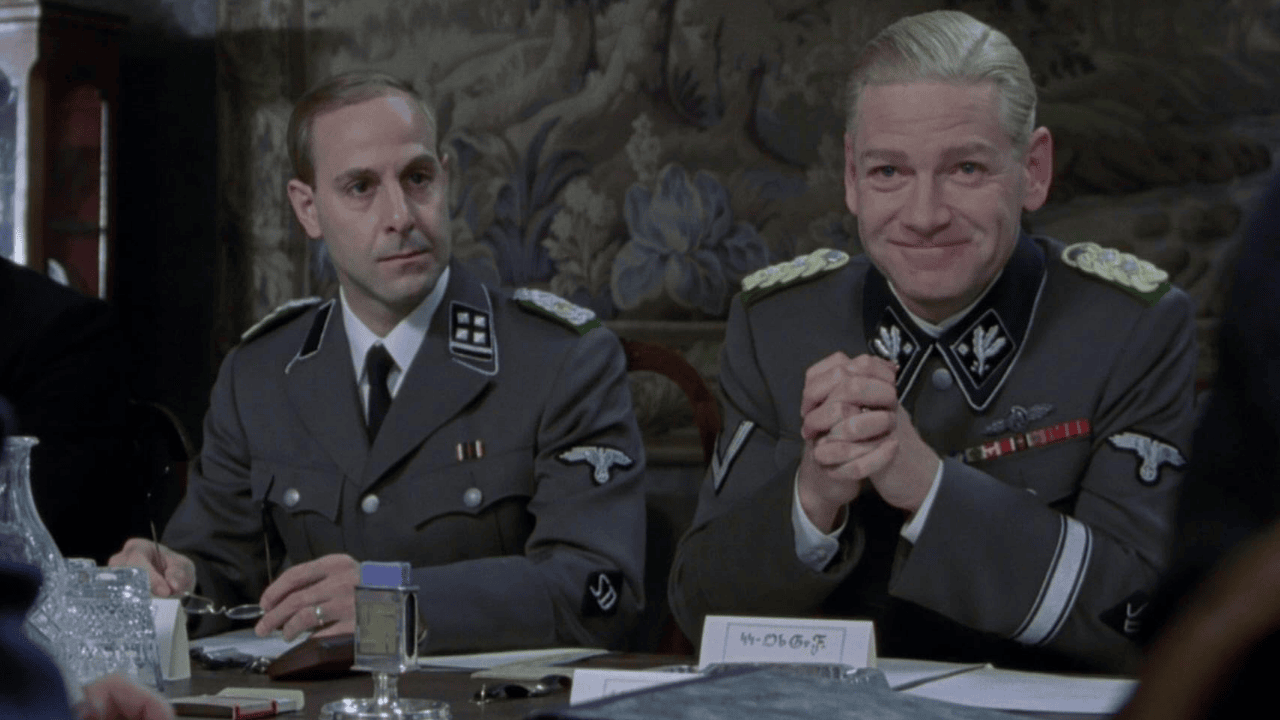
Image Source: IMDb
We won’t beat around the bush with this one: it's the Holocaust, the Final Solution crafted by the Nazis to exterminate the millions of Jews remaining under their jurisdiction as the ongoing World War began to shift the lines of battle. Will its expression in Star Wars be different? Will the details and exact methods of cruelty take on different forms? Maybe, given the specific context of the Empire’s plan for Ghorman. But even so, we shouldn’t try and hide that strong influence from what we are going to be seeing in Andor Season 2. CultureSlate is here to explain how we know this, and then how or what could happen to really make these moments hit home for an audience who has already been directly confronted with the horror of fascism in Andor’s Season 2 premiere.
WARNING: This article contains major spoilers for Andor Season 2.
Wannsee
The biggest, and technically sole, indication that the Ghorman Massacre will be like the Holocaust is thanks to Henry Gilroy’s frankness around the influences on the Massacre. When speaking with The Hollywood Reporter a few weeks ago, he cited the Wannsee Conference as the inspiration for the meeting Krennic runs in Episode 1 of Season 2. For the uninitiated, Wannsee was a meeting called in January 1942 by Reinhard Heydrich, a top Nazi official deeply involved in the intelligence sector, to decide on the Final Solution to the Jewish Question. This was not a debate about if the Solution would take place, but instead, how to do it. Heydrich chose a villa near Berlin overlooking a lake called Grosser Wannsee as the place to hold this meeting, and invited an array of other Nazi officials. These men were not Hitler’s inner circle though, but instead members of the bureaucracy and experts in their field, who were coming together to plan the logistics of the Solution.
RELATED:
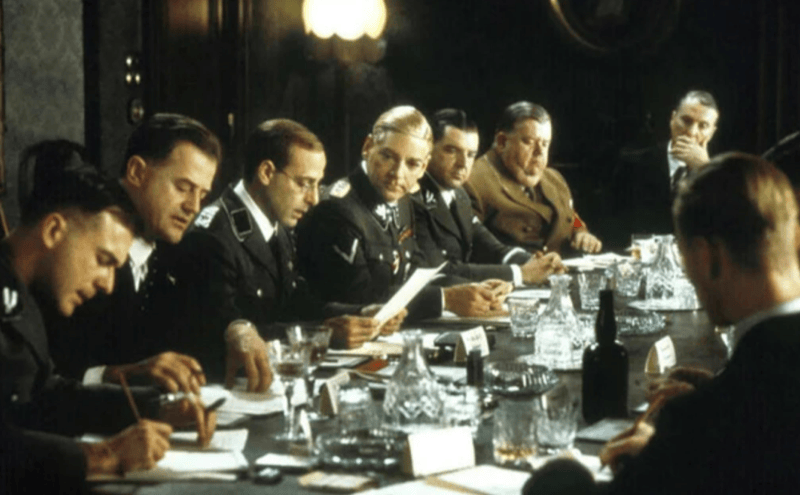
Image Source: IMDb
The meeting was very short, and began with Heydrich opening the discussions by noting both Hitler and Göring had given him the task of organizing this effort. Official statistics were presented by the Nazis regarding the population numbers of Jews and half-Jews across Europe, and then they discussed what would be done with them. They planned the elimination of millions either by immediate death because they were not usable as laborers, or through working them into the grave, without much fuss except for differing opinions on how to get it done. The meeting ended after about an hour and a half, followed by the meeting participants breaking into smaller groups to discuss the Solution between each other, before gradually everyone trickled out.
But, they knew what they were planning was wrong. The minutes, files and records of the meeting were meant to all be destroyed, but there was a mistake made by one of the Conference members. Unable to destroy his copies by the time World War 2 ended, the Allies later located them, and learned of the Conference. Without that one paperwork mistake, we wouldn’t know about this horrific, coordinated attempt to speed up and better coordinate the ongoing Holocaust.
Other Historical Influences

Image Source: Wikipedia
Gilroy didn’t just reference Wannsee though, and also mentioned several examples of when propaganda has been used to manipulate public opinion. We’ll go over each briefly, to fully explain what Gilroy is drawing from.
Gilroy first mentioned the Reichstag fire, an event when, shortly after the Nazis gained a lot of political power, the German parliament building burned down. At the time, the Nazis blamed a Communist arsonist, and invoked emergency powers to secure their hold on power. In the years since this event, the historical consensus has wavered between the Nazis setting the fire themselves, to the arsonist genuinely being the culprit, to the entire event being an accident. Regardless of the truth, the Nazis exploited the event for all it was worth to gain as much power as possible, and shaped the narrative of the event how they saw fit.
Then, Gilroy discussed the “Remember the Maine” campaign of William Randolph Hearst. The background is that Cuba, then one of the last Spanish possessions of their colonial empire, was revolting against Spanish control. The Spanish forces set up concentration camps to keep thousands of women and children prisoner, resulting in a number of deaths, and led to the American press expressing outrage. Then, the American warship Maine, which was anchored in Havana Harbor, blew up. Newspaper magnates like Hearst relentlessly blamed Spain for the ship’s destruction, and the public uproar was so intense, then-President McKinley U-turned and ultimately pushed for war with Spain resulting in the Spanish-American War. Today, historians generally believe there was no foul play, but this was yet another event weaponized and turned into propaganda to accomplish wider goals (in America’s case, getting stronger influence over Cuba).
The last event Gilroy mentions is probably one much better known in American history, the Gulf of Tonkin incident. This exaggerated incident saw a small attack by North Vietnamese ships against one American vessel to justify greater American involvement in the Vietnam War. There is also some question as to if America tried to deliberately provoke an attack from the North Vietnamese on their naval ships, though this is less certain. This last example again shows where Gilroy’s thinking is at when it comes to Andor.
Star Wars And The Ghormans

Image Source: StarWars.com
Those who have watched the first episode of Andor Season 2 know the parallels between Krennic’s meeting, and Wannsee. A shortlist of those parallels include a meeting meant to have no notes, Krennic using the authority of the Emperor himself to ensure compliance, a diverse group of experts and officials in attendance, and the use of coded language around both the Death Star and certain elements of their relocation efforts with the Ghormans. It all fits. So, what does it mean for Season 2?
For all the parallels to Wannsee, there are a few differences. The biggest is that the killing of Ghormans is not an ongoing process. Yes, they are undergoing a repression by the Galactic Empire, as the Ministry of Enlightenment openly admits to manufacturing a story around the death of an Imperial official the previous year when there were issues with Ghor shipping lanes. But that is not the same as the systematic killing the Nazis were already implementing when it came to Jewish populations across their domains prior to the Conference. We ultimately think, though, that Dedra’s suggestion of planting operatives within what can only be the Ghorman Front (mentioned in Andor Season 1), will help the Empire justify a rapid shift in that direction.
The events shown across multiple trailers vividly depict the Empire eventually becoming quite indiscriminate with their violence against the Ghor as the result of some inciting incident in the capital city of Palmo. In the aftermath of that inciting violence, we think we will see camps. We think we will hear Imperials justifying their actions by using the same language as the Ministry of Enlightenment guests to the Conference of the Maltheen Divide mentioned as preparing for the Imperial push against this human population. We will see the full horrific might of the Empire brought down on Ghorman to ensure they get that rare mineral, and we will see them lie about why all of this had to happen.
Mon Mothma won’t buy it though, and many parts of the galaxy might not either. The Ghorman Massacre is the event that will bring most Rebels of the galaxy together in opposition to the Empire, and with the event mirroring the Holocaust, that will be a powerful moment. We hope we see it on screen, but if not, rewatching Rebels Season 3’s Secret Cargo will have a lot more weight added to Mothma’s actions.
READ NEXT:

Latest News


Featured




• All sizes are adult unisex
• Printed art on the front
• 100% cotton
• Pre-shrunk fabric
• Shoulder-to-shoulder taping
• Culture Slate Exclusive Design
See more products here