
'One Battle After Another' Review
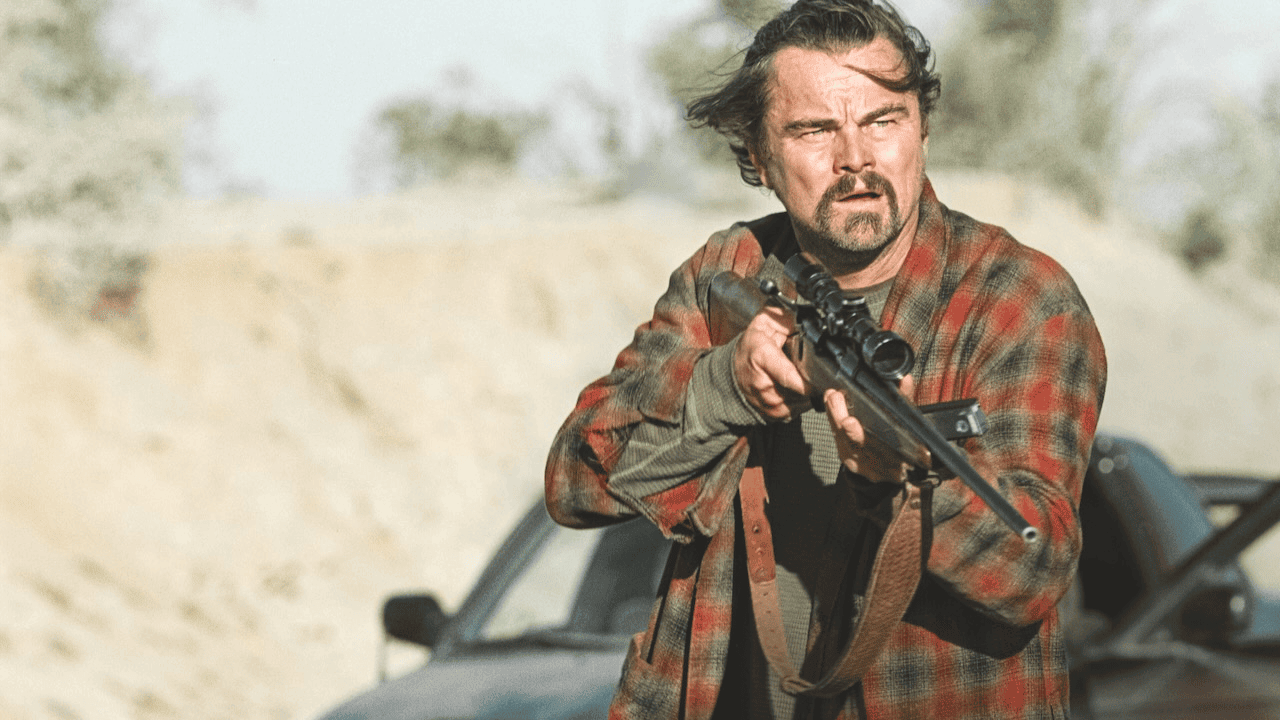
Image Source: Wallpaper Cave
It’s not unreasonable to say that Paul Thomas Anderson is one of the most accomplished directors of our time. After making his feature directorial debut in 1997 with Hard Eight, Paul Thomas Anderson’s filmography is filled with back-to-back winners. Boogie Nights and Magnolia specifically quickly cemented PTA as a must-see auteur filmmaker. Since then, his films, including There Will Be Blood, The Master, and Phantom Thread, are considered among the greatest films of the 21st century and of all time. Punch-Drunk Love is also a fan favorite in his filmography. While Inherent Vice and Licorice Pizza may have very loud detractors, they also have their defenders. You can say many things about Paul Thomas Anderson’s work, but nobody can say there is a shortage of discussion about it. And now, we’re here for PTA’s 10th feature film, which is also his most ambitious and, dare I say, his best film yet.
One Battle After Another, which is loosely based on Thomas Pynchon's novel Vineland, is by far the biggest film of Anderson’s career to date. This is not only due to its budget, cast, and scale, but also because of its themes and emotional depth. While Anderson has tackled significant themes in his previous work, he has never approached them on such a grand scale as he does in this film. Paul Thomas Anderson frequently visits themes of regret, dysfunctional family, destiny, and responsibility; he visits them all here, and he does so by tackling one of the most challenging concepts of them all: modern society. One Battle After Another can be boringly described as “a film that meets the current political moment”, but it truly does feel like the perfect film for what can be described as our current hellscape.
RELATED:
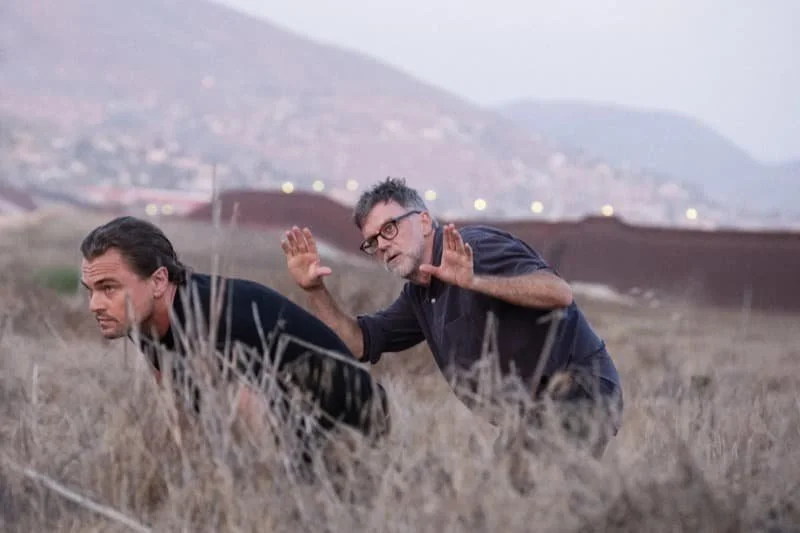
Image Source: Rolling Stone
The danger of creating art in times of political turmoil is that it risks dating your work or coming across as preachy. One Battle After Another, under the direction of a lesser storyteller, could feel like a nearly three-hour lecture about why society sucks. Instead, Paul Thomas Anderson’s precise focus on how society treats our main characters makes the film feel both intimate and timely without ever boring the audience. Thanks to Paul Thomas Anderson’s deft direction and writing, One Battle After Another is a sprawling epic that provides just as many emotional gut punches as it does laughs. And to my surprise, Paul Thomas Anderson also knows his way around a good ass action scene. His signature use of long takes lends itself perfectly to creating some of the most gripping and intense action sequences I’ve seen in a film this year. Makes one wonder if Paul Thomas Anderson will make his mark on other action-heavy projects in the future. However, suppose there is a scene, or a stretch of scenes, that is the highlight of the film. In that case, it’s a nearly half-hour sequence involving Bob (played by Leonardo DiCaprio) trying to get to the rendezvous point to find his daughter, only to be told he won’t get the coordinates unless he remembers a password. Anderson’s balancing act of humor and tension is expertly crafted.
It’s not just the breathtaking action and consistently funny humor that Paul Thomas Anderson nails; it’s the film’s more hard-hitting scenes that Anderson really shines in. What the film’s central themes are can be up for debate, but it’d be hard to argue that one of them isn’t the concept of failure. Our main protagonist, Bob, after spending his younger years as a member of a gang of revolutionaries, slowly turns into a paranoid, overprotective, and hopeless man who, per his own admission, lost his years to drugs and alcohol. When he’s called back into the game after his daughter Willa (played by newcomer Chase Infiniti) becomes a target of an old enemy, Bob has to remember that there are things worth fighting for. In our current times, it’s easy to ask ourselves, “How are we still fighting the same battles our parents did decades ago?” Even now, we can sense that we’re fighting a losing battle and passing our failures on to the next generation. It’s very easy to lose our fighting spirit and sense of rebellion. However, it’s also possible to keep that spirit alive. Bob may not understand the world, whether it be through his overprotection of his daughter or messing up something as simple as a teenager’s pronouns, but when he has to get back into the swing of things, he gets going. Anderson’s screenplay makes sure we believe in our highly flawed characters. As much humor is mined from Bob’s anxiety, mistakes, and frustrations, the script ensures that we still hope he and Willa end up okay.
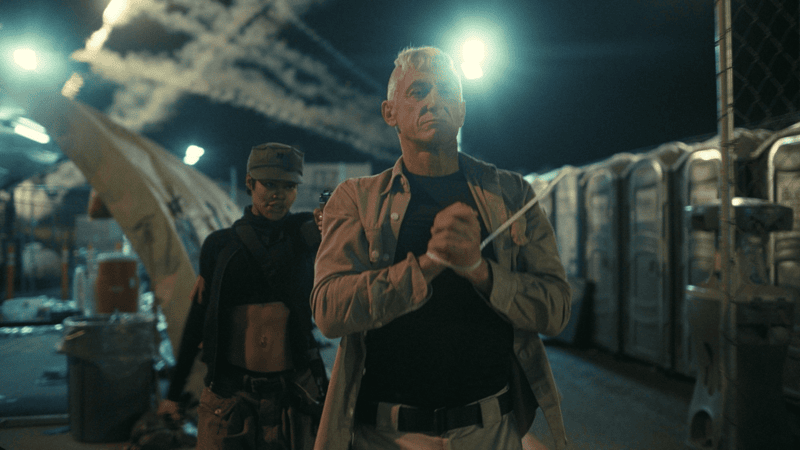
Image Source: Wallpaper Cave
The shining highlight of the film, beyond Paul Thomas Anderson’s direction and writing, is the cast. Easily the most star-studded cast Anderson has had since Inherent Vice in 2014, everyone gets a chance to shine here, regardless of the length of their screentime. While many film fans continue to debate as to what actors are and aren’t movie stars, to me, Leonardo DiCaprio remains our best leading man. The last 15 years have yielded some of his most outstanding performances of his career, including his turns in Inception, Django Unchained, The Revenant, and Once Upon a Time in Hollywood. Leo hasn’t been very active in the 2020s, only appearing in Don’t Look Up and Killers of the Flower Moon before he appeared in One Battle After Another. His performance here is another remarkable turn from him. Even in comedies like Don’t Look Up, DiCaprio isn’t often given material where has gets the most laughs. As mentioned earlier, the script ensures that we root for Bob to succeed, even in scenes where he’s down on his luck. DiCaprio nails the more emotional scenes in his sleep, but it’s not to see a film that utilizes his strengths in physical comedy.
Sean Penn also delivers what is easily the best performance of his career since his Oscar-winning turn in Milk. Playing the main antagonist of the proceedings, Penn’s portrayal of a military officer hellbent on finding every member of the French 75 is nothing short of brilliant. His character, Col. Steven J. Lockjaw, is a racist military officer who develops a sexual obsession with one of the members of the group he’s assigned to find. As a trans woman who is also Puerto Rican, the concept of being fetishized and sexualized by men who claim to hate you hits very close to home, and Penn’s performance really does help paint the picture of how pathetic these kinds of men truly are. Speaking of Puerto Ricans, Benicio del Toro also turns in a memorable supporting performance as Sergio St. Carlos. Much like his performance as DJ in Star Wars: The Last Jedi, del Toro makes the most of his limited screen time, often serving as a mouthpiece for some of the film’s central themes. Teyana Taylor also makes magic with her performance as Perfidia Beverly Hills. Words cannot describe how good it feels to see a mainstream Hollywood movie actually include a messy and flawed woman as a driving force of the story. A messy and flawed woman of color, no less. While there will be some debate as to whether or not the very white Paul Thomas Anderson was the right storyteller to create a Black woman who is obviously a flawed human being, at the very least, Anderson did his best here. If there’s any major knock I can give this movie, it’s Regina Hall being given so little to do. While the quality of her performance matches everyone else’s, you will likely find yourself wishing she were in the movie more.
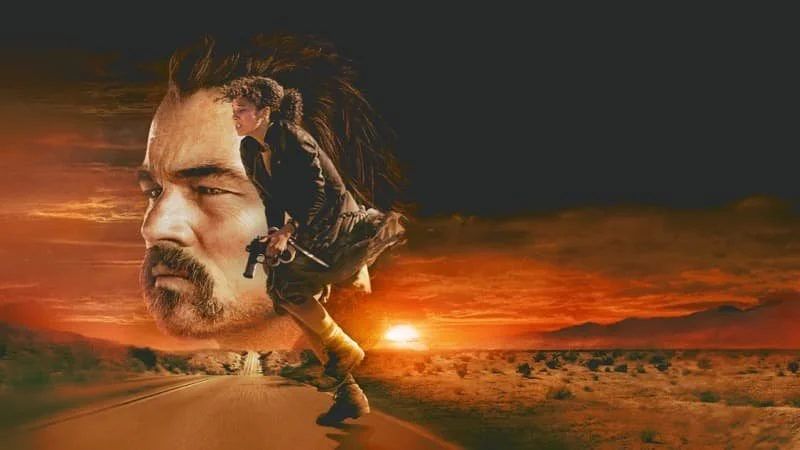
Image Source: Wallpaper Cave
As far as actors go, the movie belongs to Chase Infiniti. In her first major movie role, Chase Infiniti already exudes movie star-level charisma, chops, and talent in ways some actresses who have been acting longer don’t possess. As Willa, a bi-racial teenage girl born with the same fighting spirit her parents once had, Infiniti excels in every scene she has. Whether it’s an emotional scene with DiCaprio, an action sequence, a more intense scene with Sean Penn, or a simple scene of her crying, Chase Infiniti is incredibly magnetic in this. As she’ll become film circles’ new go-to for constant comic book movie fancasts, whatever Chase Infiniti decides to do next, I’ll be there.
It’s tough to talk about how much I love this movie without sounding like a fangirl. Paul Thomas Anderson has been one of my favorite directors for a long time, and this film has quickly become my favorite of his. And as someone who has loved many movies this decade, including some that have become some of my all-time favorites, One Battle After Another has surpassed all of them. It is challenging to describe the feelings of anxiety I felt while watching this movie. It is challenging to describe how often this movie made me laugh, cry, and cheer in the span of nearly three hours. Once you allow yourself to be swept up by Paul Thomas Anderson’s engaging direction and layered writing, the remarkable performances, the gorgeous cinematography, and Jonny Greenwood’s heart-pumping musical score, One Battle After Another is as breathtaking as it is timely.
In a cinematic landscape where the only auteurs to get massive budgets to make whatever they want are named Nolan, Villeneuve, Cameron, and Coogler, Paul Thomas Anderson proves with his big studio debut that he can hang with the best of them. Anderson doesn’t treat the audience like we’re stupid. It could’ve been insanely easy for Anderson to be given hundreds of millions of dollars to say “Society bad!” and call it a day. I won’t name names, but there are some directors who just this year spent more time fence-sitting than actually making a point about our modern times.
If you’re looking for a big-budget studio film that is equal parts thrilling, emotional, humorous, and thought-provoking, you can’t go wrong with this film. For as long as Warner Bros. continues to give talented filmmakers the room to create large-scale stories that are also meaningful, like they did with Christopher Nolan once upon a time, the landscape of blockbuster storytelling is in insanely good hands. A masterpiece in every sense of the word, One Battle After Another is not only the best film I’ve seen this year, it’s also the best film I’ve seen this decade. See this movie now. Like now. PLEASE! We need more movies like this! I’M BEGGING YOU!
Rating: 10/10
One Battle After Another is now playing in theaters everywhere. Rated R
READ NEXT:
Latest News
Featured


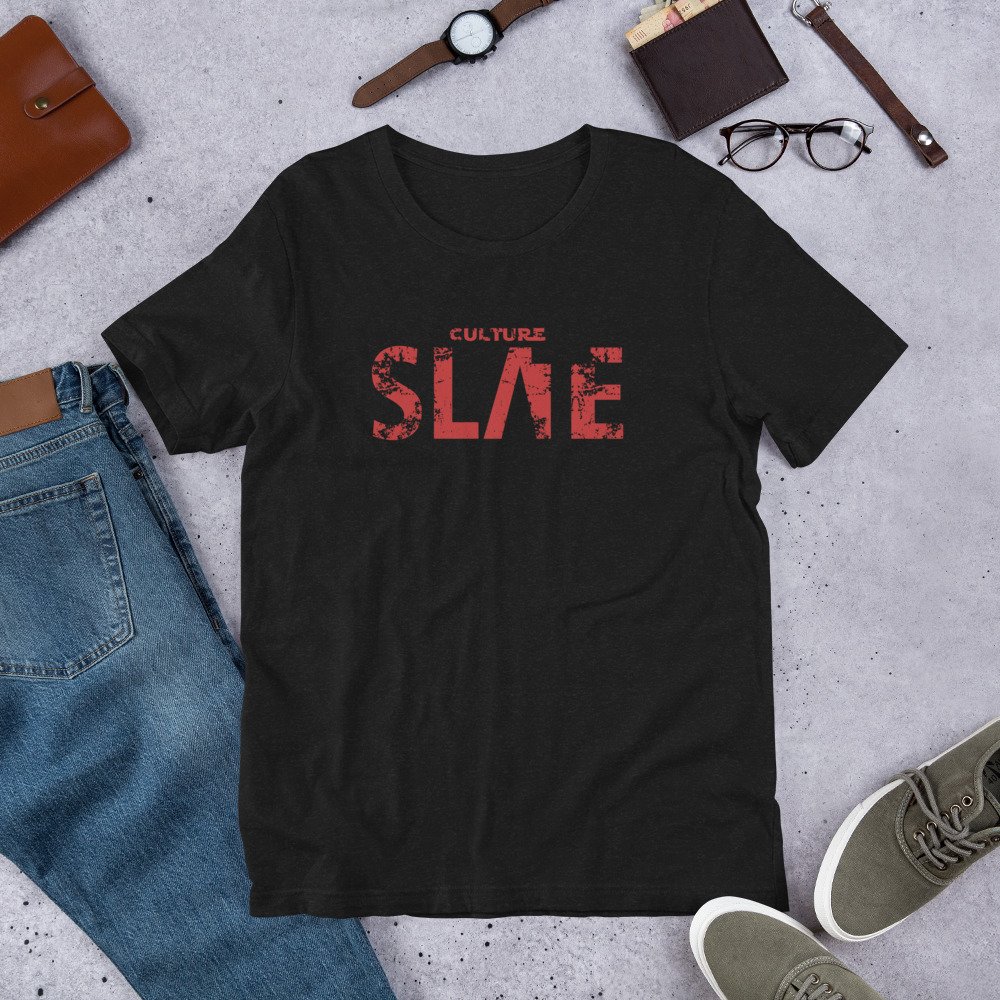
• All sizes are adult unisex
• Printed art on the front
• 100% cotton
• Pre-shrunk fabric
• Shoulder-to-shoulder taping
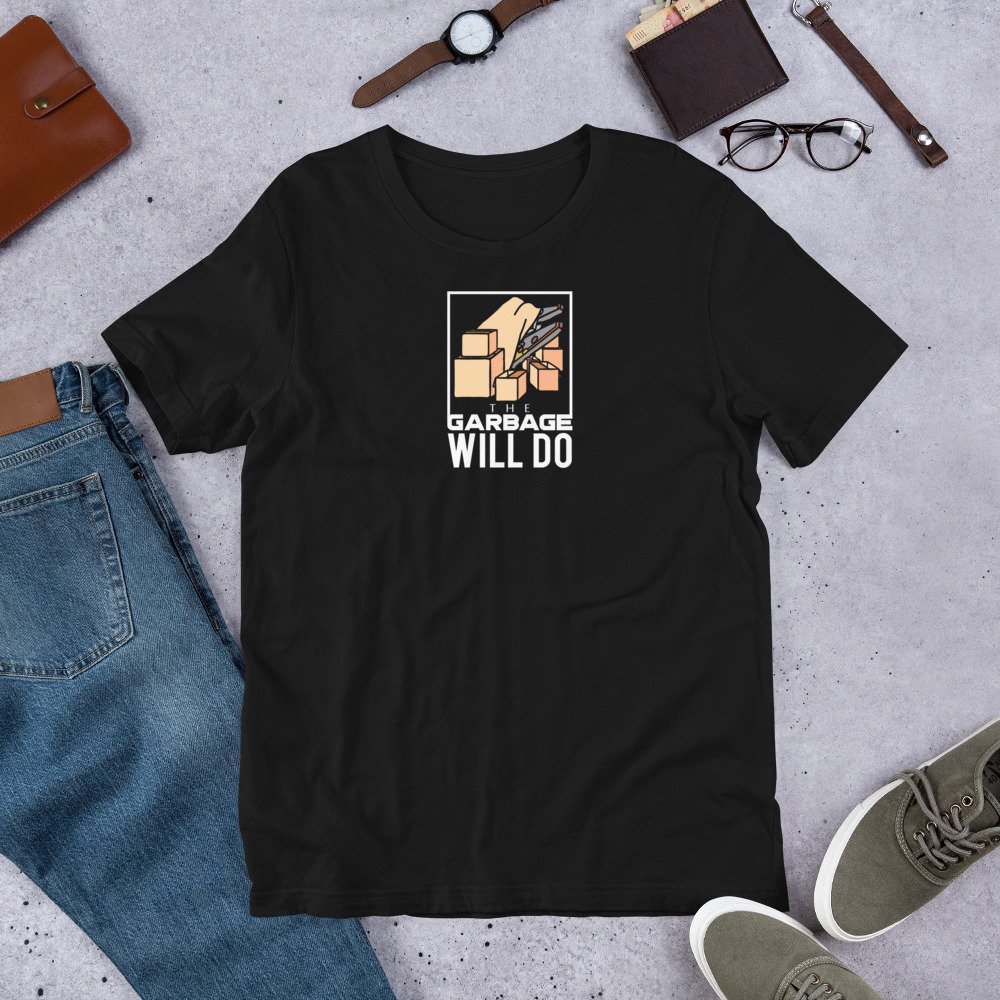
• Culture Slate Exclusive Design
See more products here