
'Andor’s' Legacy: How Season 2 Could Redefine Star Wars TV

Image Source: Kotaku
During the press tour leading up to the release of Andor season two, Tony Gilroy said that there will never be another Star Wars show like this and that the possibilities and the degree of freedom the cast and crew were given are based on the success of The Mandalorian and Ahsoka.
Everyone who has watched Andor will likely agree that the show is special in various ways, and (to quote another Star franchise) has "boldly gone where no one has gone before".
RELATED:
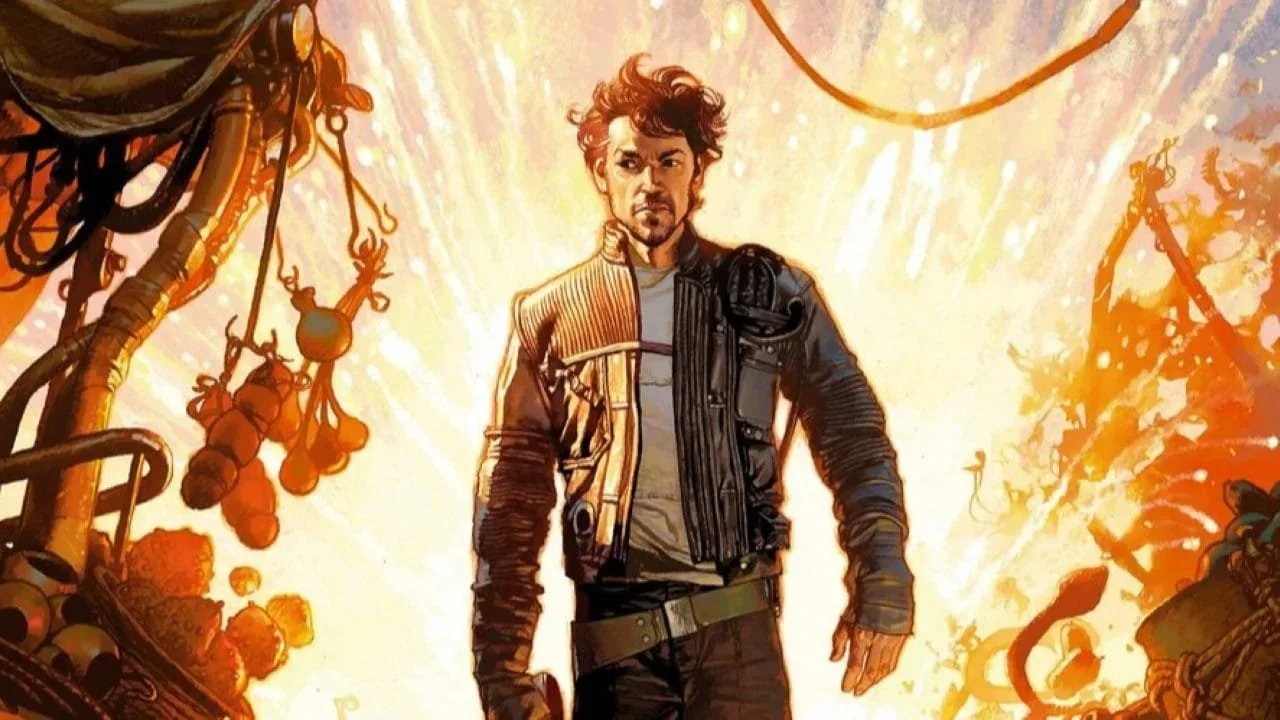
And while there will never be another show exactly like Andor, the way Gilroy and his team, both in front and behind the cameras, have approached this project could (and very likely should) become a blueprint for future Star Wars projects.
Music for the Masses
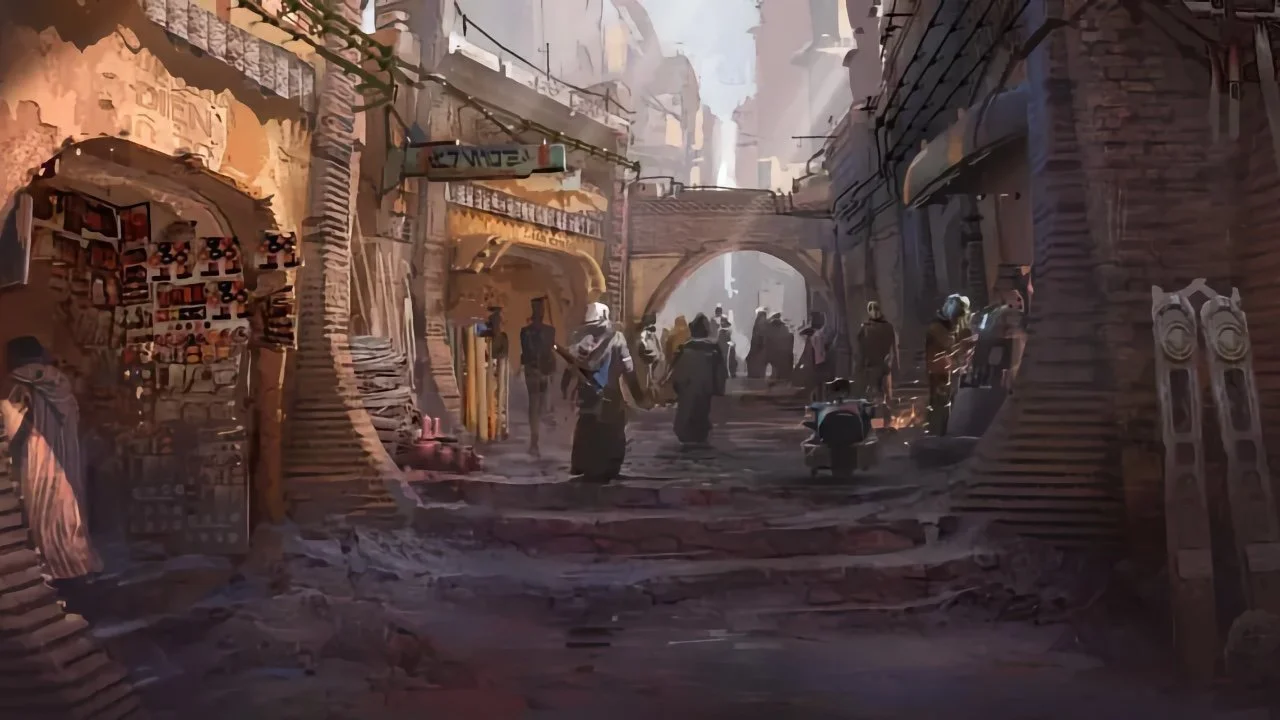
Image Source Variety
Andor was not so much a "Star Wars Story" as a story set in the Star Wars universe. Call it a spy thriller or a show about political intrigue, it would not take too many changes to have the show take place here on Earth, with New York or London instead of Coruscant and rural Nebraska instead of Mina-Rau. Andor did feel "less Star Wars" than most of its predecessors, and we are not even talking here about brick walls, zippers on jackets, or very earth-looking air conditioning in the lower levels of Coruscant.
While this may bother some, it also gives Andor a much bigger appeal and an easier entry point for casual viewers. You don't have to be a hardcore Star Wars nerd to follow along, you arguably don't even have to know anything about the Empire, Yavin IV, or the mechanisms of the Senate. What you need to know, the show tells you.
This is in stark contrast to the shows of Dave Filoni and Jon Favreau. To follow Ahsoka, it is massively helpful if you have watched The Clone Wars and Rebels before, and even a relatively small show like Tales of the Underworld basically requires having read a novel from 2015, otherwise, you are probably rather confused about why, how, and when Asajj Ventress had died.
Having a more or less cohesive continuity between the various shows is surely a good thing (Marvel's MCU is built on this principle, after all), but it also requires a lot of homework, and not everybody might be willing or able to go the extra mile.
Disney+'s last Star Wars show, Skeleton Crew, was self-contained as well and didn't require this homework, but it suffered from another problem (we will get to this).
If Lucasfilm and Disney want to build on the success of Andor for future shows (and this holds true for movies as well), they have to put out shows that are accessible and enjoyable for a general audience.
Which brings us to the next point:
Not Another Space Opera
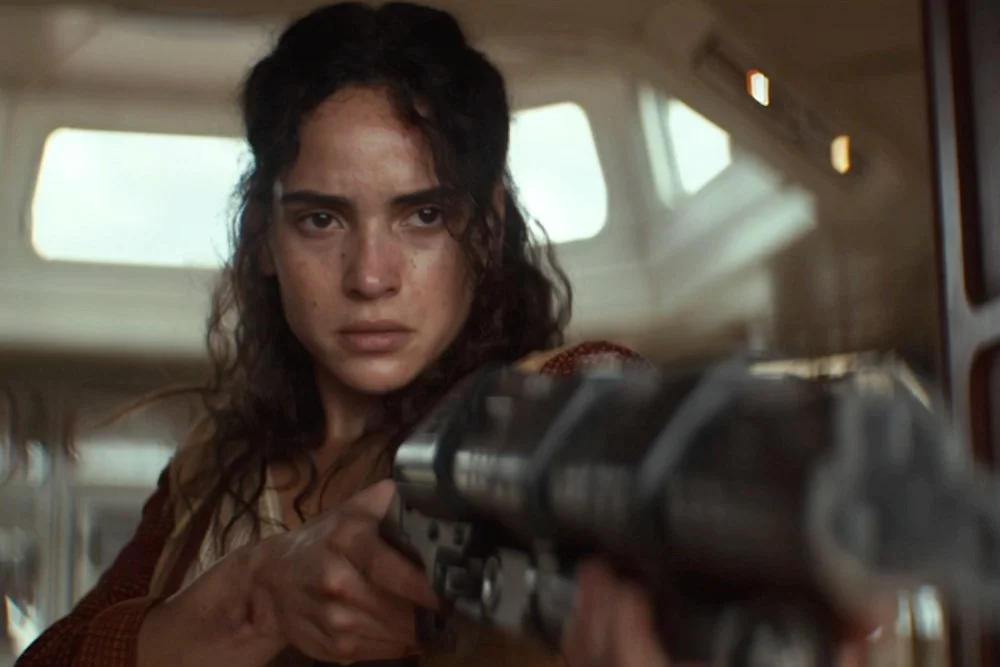
Image Source: Variety
In one of the interviews, Gilroy also suggested that Lucasfilm could or should take the franchise into other genres and even hinted that they could be developing a horror show set in the Star Wars universe.
Andor, even less than Rogue One, hardly included any elements of a space opera, and still worked very well, so there is no reason why a show dealing with ghouls, monsters, or the supernatural set in the galaxy far, far away should not find its audience. The same is true for a dark detective story, set in the lower levels of Corscant. The former Expanded Universe toyed with various genres over the years.
Probably aside from screwball comedies (it is called Star WARS after all), there is hardly a genre that would not work within the context of the Star Wars universe, if the story and the writing are good.
Not Your Typical Fanboy
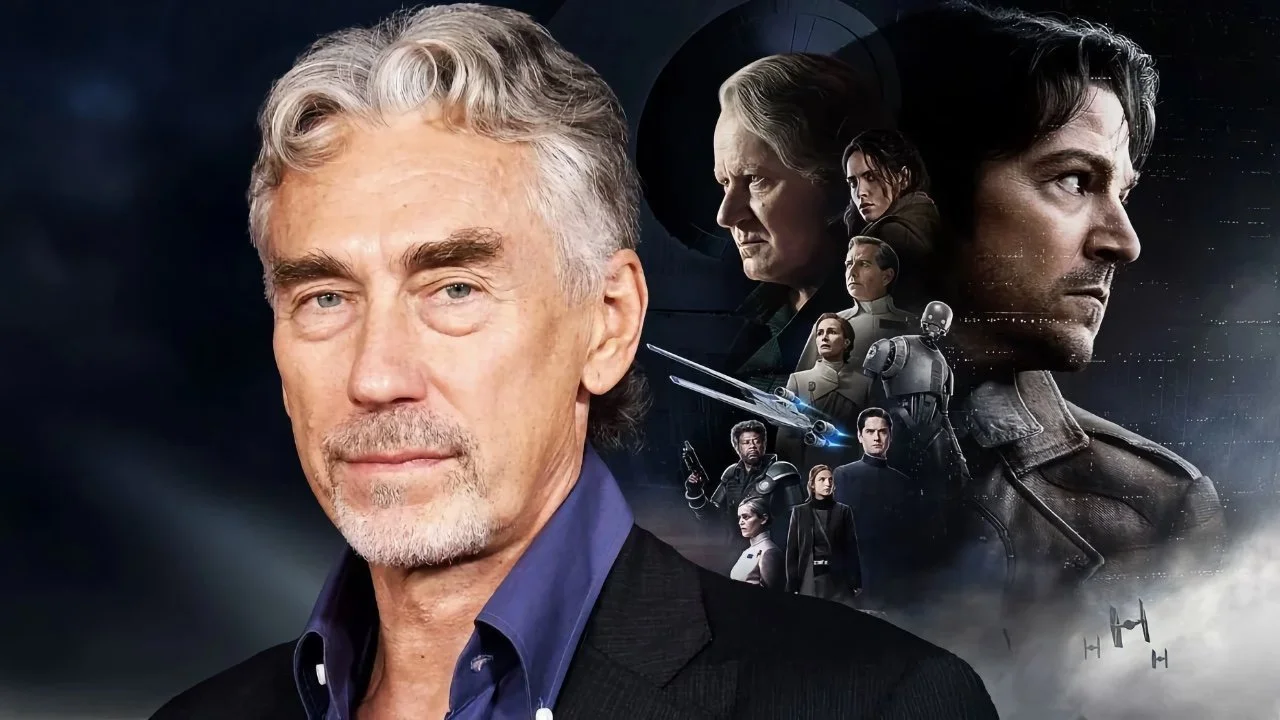
Image Source: Reddit
There is a saying that you have to be a Star Wars fan to "get it" and to create good Star Wars content. This is another point that Tony Gilroy has proven wrong with Andor. The showrunner has never been one of those kids who claimed that they wanted to work in the film business after leaving the theatre in 1977, having watched Star Wars. In fact, Gilroy learned what he knows about Star Wars when working on Rogue One. And he seems more enervated than delighted by the guardrails the Lucasfilm story group had implemented to not break canon (which he did nevertheless, with the first encounter of Cassian and K-2SO, which contradicts the events of a Marvel comic from 2017).
Gilroy did not write all the scripts, nor did he direct any of the episodes, but he is a great storyteller and knew exactly where he wanted to take the story, despite not being an expert in Star Wars, nor a real fan.
Lucasfim has been rather relcutant to work with people who are not too familiar with the franchise, probably just because they are afraid that those people don't "get Star Wars" and while a certain knowlage of and love for the the things you are working on certainly help, Tony Gilroy proves that it is no absolute prerequisite to have been a fanboy all you life, to deliver a top-notch Star Wars story. All it takes is to be a good storyteller.
Moving Out
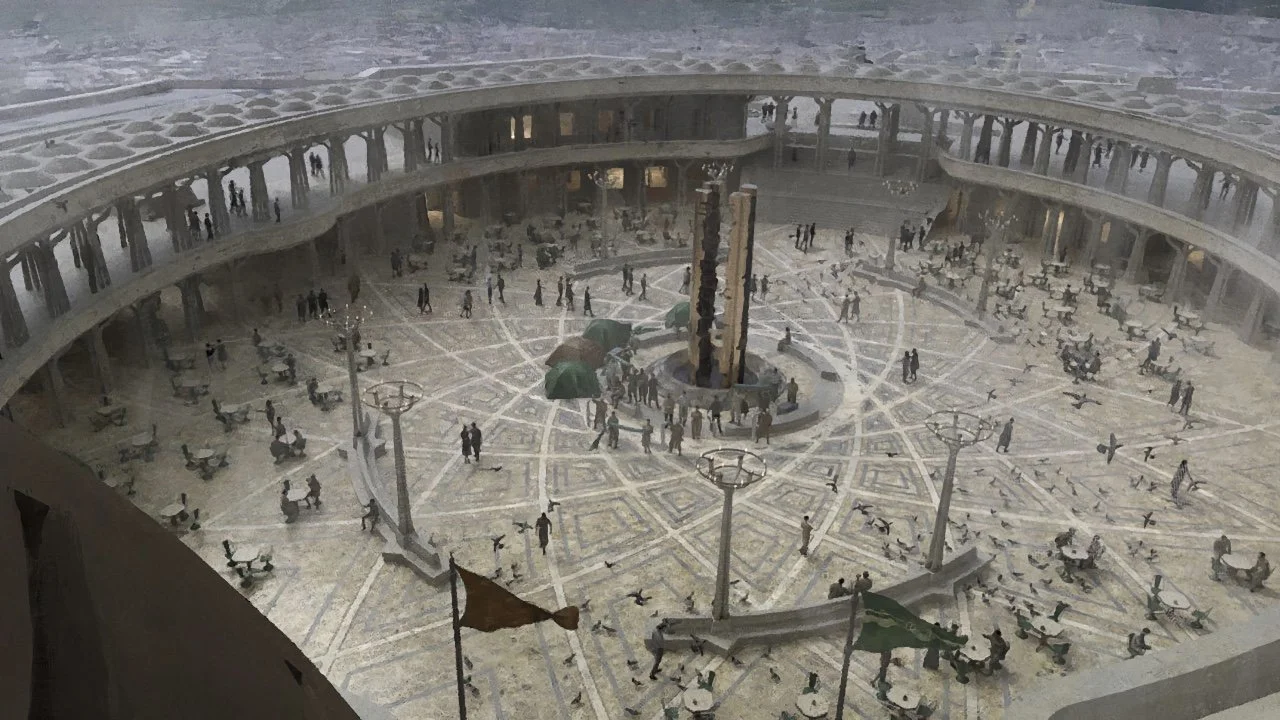
Source: StarWars
Over the last years, the Volume has become a great and flexible tool for filmmaking, giving cast and crew much more context on their surrounding than just shooting in front of of grenscreens, where a tennisball or a stick are the only hints of where someone or something will be, once the special effects are completed.
Still, the space within the spherical Volume is limited, and the locations of Andor showed the clear advantages of shooting outdoors or on a large sound stage. Scenes like the impressive marketplace in Ghorman's Palmo Plaza would not have been possible within the rather confined space of the Volume, and as much as this technology has progressed in recent years, it is still no match for filming in a real landscape with real buildings.
Going forward, Lucasfilm could and should decide to use the Volume only when there is no other option and instead shoot in real environments whenever possible. Even if this makes the show more expensive.
Which brings us to the next point:
Less is More
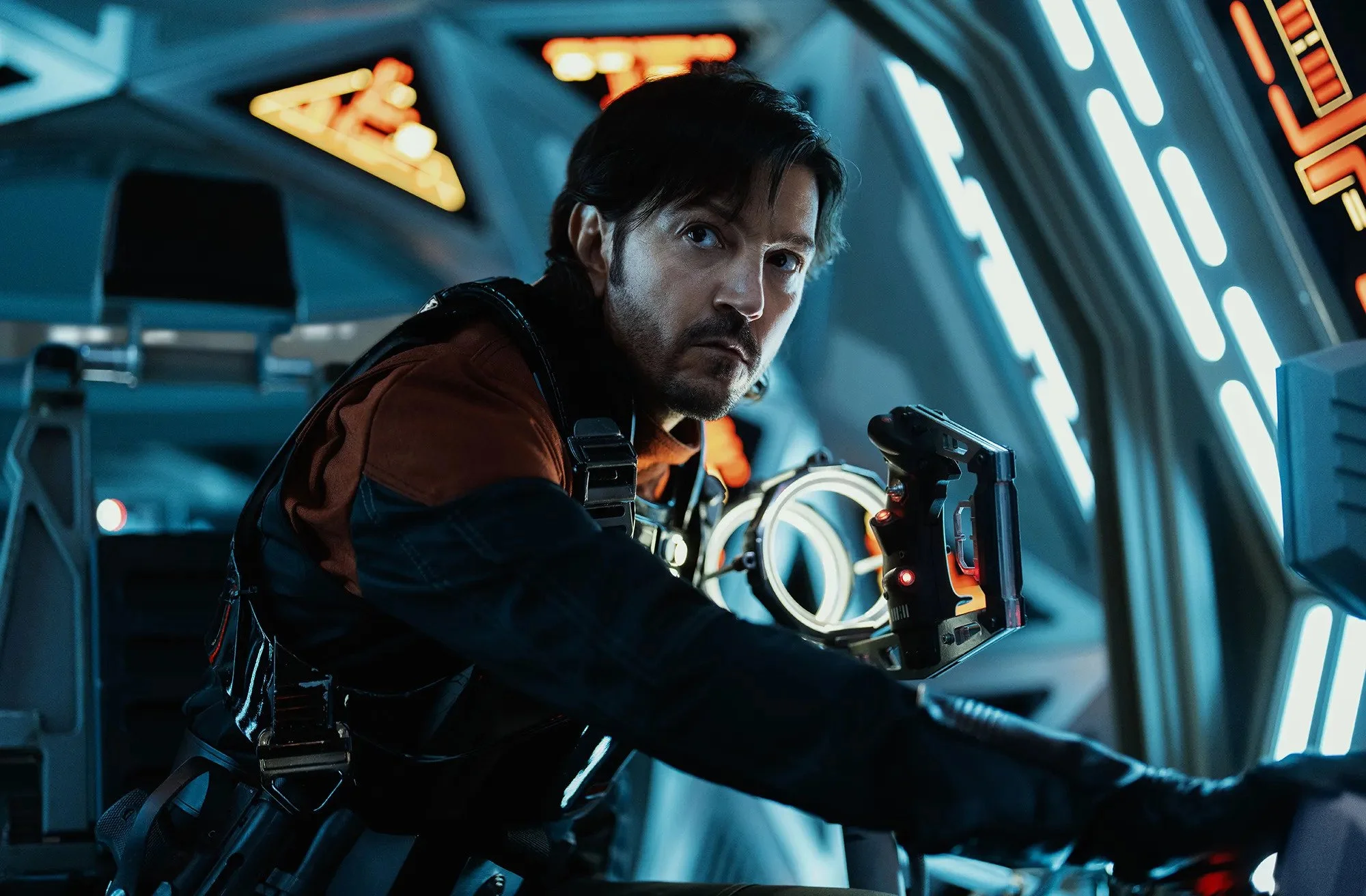
Image Source: Vanity Fair
For a long time, each release of a new Star Wars movie has been quite an event, probably due to the relatively long timespan of three years between each of the movies of the Original and the Prequel Trilogy (not to mention the hype before Episode I).
The advent of Disney+ brought what seemed like a dream come true for many fans: new Star Wars content throughout the year. But this also led to a kind of saturation and the loss of the "specialty" of a new Star Wars show.
Disney's CEO Bob Iger seems to be committed to putting more focus on theatrical releases than new shows for the streaming service, and Lucasfilm has not announced any plans for live-action Star Wars shows beyond season 2 of Ahsoka, which could be released in the second half of 2026.
Reducing the quantity of new Star Wars shows (by ideally raising their quality) to let's say not more than one per year could help make these shows real events again, and would allow the company to spend more money on them, instead of pushing as much "cheaper" content out as possible.
Season two of Andor surely was not cheap, but every dollar was spent well.
Let's Get Loud
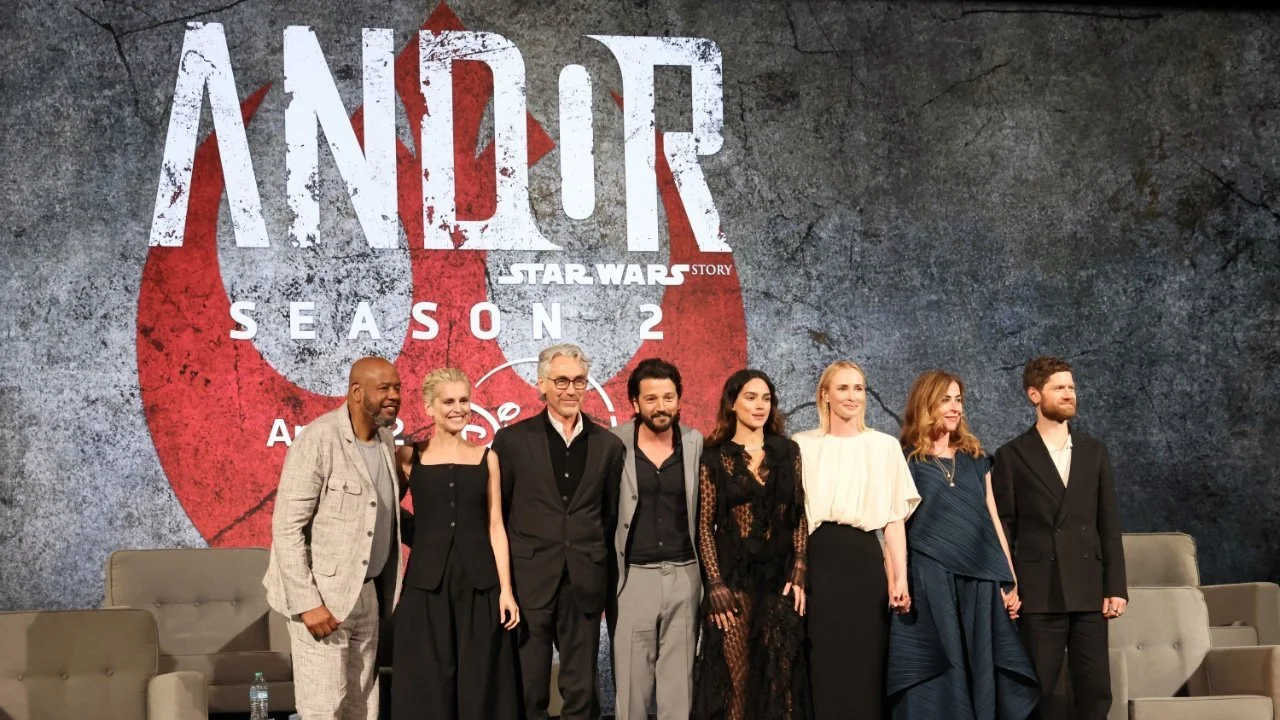
Image Source: The Week
Another thing the second season of Andor did brilliantly was its marketing strategy. It is common for the cast and the creators of a show to go on a press tour and talk with various media outlets before its premiere, but the marketing push for Andor didn't stop after the first three episodes were released. Tony Gilroy constantly gave interviews and talked about each of the four story arcs, explaining why and how he did the things he did (and what he couldn't do). Lucasfilm released clips and interviews with the main cast and even little behind-the-scenes featurettes on all of their social media channels, keeping the show in public consciousness for weeks.
Of course, the rave reviews for Andor season two didn't hurt either.
By comparison, Lucasfilm's previous Star Wars show, Skeleton Crew, got good reviews too, but its marketing push was so weak that it nearly completely flew under the radar with even its (supposed) target audience of teenagers, barely noticing that the show even exists.
It is good to see that the company has learned from its prior mistakes and allowed Andor the spot in the limelight it deserves.
All in all, future Star Wars shows could learn from the success of Andor by setting the treshold for their veiwers not to high and appeal not only to hardcore Star Wars fans but to a general public, by epanding into different genres, investing time and money into complex stortelling and character development, by using real world locations and by making sure that everyone knows that the show is available and a must watch.
READ NEXT:

Latest News
Featured




• All sizes are adult unisex
• Printed art on the front
• 100% cotton
• Pre-shrunk fabric
• Shoulder-to-shoulder taping
• Culture Slate Exclusive Design
See more products here