'KPop Demon Hunters' - More Than Just Catchy Songs And Fighting Demons
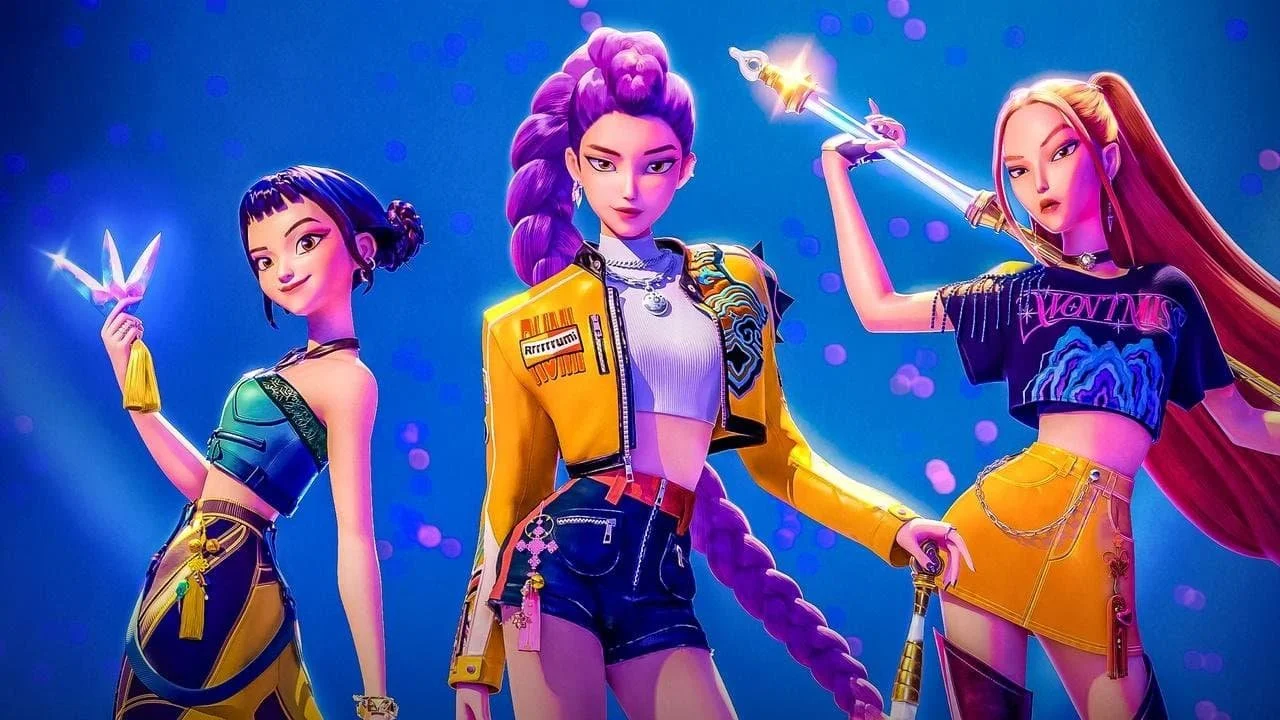
Image Source: thedirect.com
Notice: Contains Spoilers
A Netflix movie that quickly rose to the number one spot and took the world by storm, KPop Demon Hunters created legions of fans replaying their favorite songs. “Golden” became the most-streamed song on Spotify, and influencers on TikTok began cosplaying HUNTR/X, the Saja Boys, and lip-syncing to the soundtrack. Behind the stunning animation, fight choreography, and the budding romance between Jinu and Rumi is a story about three girls broken from their past coming together to heal themselves in order to save humanity. What should have been a campy, outlandish premise rapidly grew into a movie beloved for its depiction of idol worship, themes of self-identity, pains of regret, and the power of friendship.
Those that rewatched the film “upwards of 50 times” like 11-year-old Lori Anne Porter according to MSN, might know all of the words to the film’s songs, there is “plenty more to discover about KPop Demon Hunters” like understanding the darker aspects of human nature, references to Korean mythology, and how KPop Demon Hunters tapped into the need to tell an original story without toning aspects of it down under the guise of worrying about whether or not it was made for certain audiences.
RELATED:
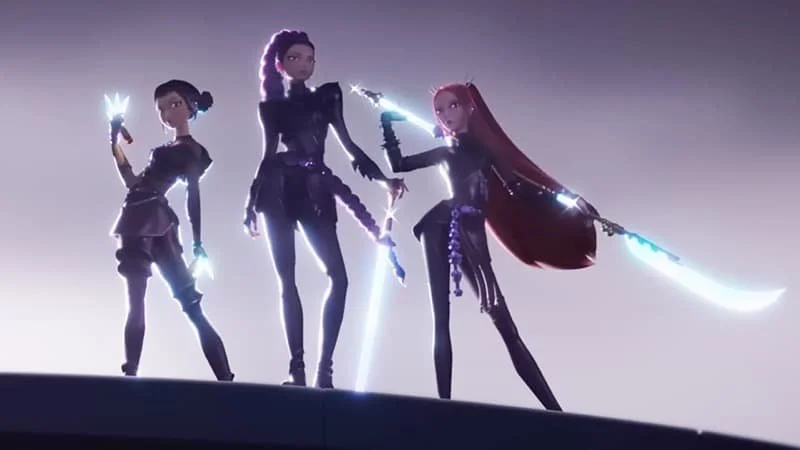
What Rumi’s Past Might Have Been Like
Born from a human mother and a demon father, Rumi’s existence is repeatedly called a mistake. Forced to conform and hide the patterns marking her a demon, Rumi, living a life as a demon hunter and idol, was meant to give her a purpose. Beginning early in her life, viewers witnessed a young Rumi learning the demon hunter’s song as her aunt Celine—once a demon hunter as well—does her hair and enforces the importance of Rumi hiding her demon lineage. Somehow, Rumi being half-demon didn’t appear to hinder her from becoming a demon hunter. What can be ascertained from the time of the film’s events and Rumi’s childhood is how Celine could have already set up Rumi to become a demon hunter to “fix” Rumi.
Having Rumi learn the anthem of demon hunters was the first of many steps Rumi took to one. Finding a purpose as a hunter and new friends, it still doesn’t shake the shame of Rumi putting all of her worth in her voice. Her voice was taught to be her greatest asset and the ticket to curing her of her demon heritage. Without it, Rumi is trapped by the decisions her mother made to love a demon, unable to fully trust herself to be honest around Zoey and Mira, and suffocated by the expectation to never show weakness. As a result, her emotional crash out causes the destruction of the very thing she was told to protect: the honmoon.
Celine And Gwi-Ma: Two Sides Of The Same Coin
Shame is a natural human emotion. A powerful and vulnerable feeling with the ability to cause people to make choices and commit actions one may not have had the forethought to do beforehand. Certain actions driving the plot of KPop Demon Hunters brought not only shame for someone else’s choices, but also allowed it to fester into desperation. Perfect for Gwi-Ma and an unfortunate consequence for Celine. She reminds Rumi, “Our faults and fears must never be seen.” This sentiment made Rumi place all of her focus on being a demon hunter to the point of being deemed a “workaholic” and a person surrounded by walls, according to friends Zoey and Mira. Celine became that (misguided) internal voice in Rumi’s head, telling Rumi her worth and identity were tied to her voice and “all of her” could not be accepted. On the other side, the one who accepted the worst parts of oneself was Gwi-Ma.
Understanding one’s shame is one thing, but Gwi-Ma takes it a step further by making the demons under his control relive their consequences and renounce hope of betterment. Reliving the trauma and being surrounded by the sounds of that trauma breeds guilt and feeds into the shame of demons until their humanity is gone. When Jinu is first introduced, Gwi-Ma makes it known how he “allowed” Jinu to keep his voice. Additionally, Gwi-Ma and Jinu appear to have a master/apprentice-like relationship as Gwi-Ma approves of Jinu’s plan to disguise himself and the other Saja Boys as a boy band to consume souls and commends Jinu for his plan to reveal Rumi as part demon. What separates Gwi-Ma from Celine is how he refuses his subjects' agency.
When Jinu starts to feel hope, let alone any form of positive human emotions, Gwi-Ma forces Jinu to relive the worst moment of his life (abandoning his mother and little sister to stay with the emperor) while subtly twisting the truth to fit the narrative that Jinu’s choice is beyond redemption. Gwi-Ma keeps his subjects trapped in their same, makes them believe in the truth enough to slyly distort the reality of their situations, and as a result, their humanity is stripped away bit by bit.
Symbolism Of The Saja Boys
With one song, the Saja Boys went viral and created a fanbase within hours. With carefully curated images and personalities, the Saja Boys go deeper than being a colorful boy band disguised as demons. Each member represents what it means to be a KPop idol. Jinu, the only one with an actual name, has the standard look of a male KPop idol. Film creator Maggie Kang was inspired by the “elements” of K-pop boy bands like BTS, Monsta X, BIGBANG, ATEEZ, Tomorrow X Together, and Stray Kids, and the creation of the Saja Boys was “more of a love letter to boy band personas.”
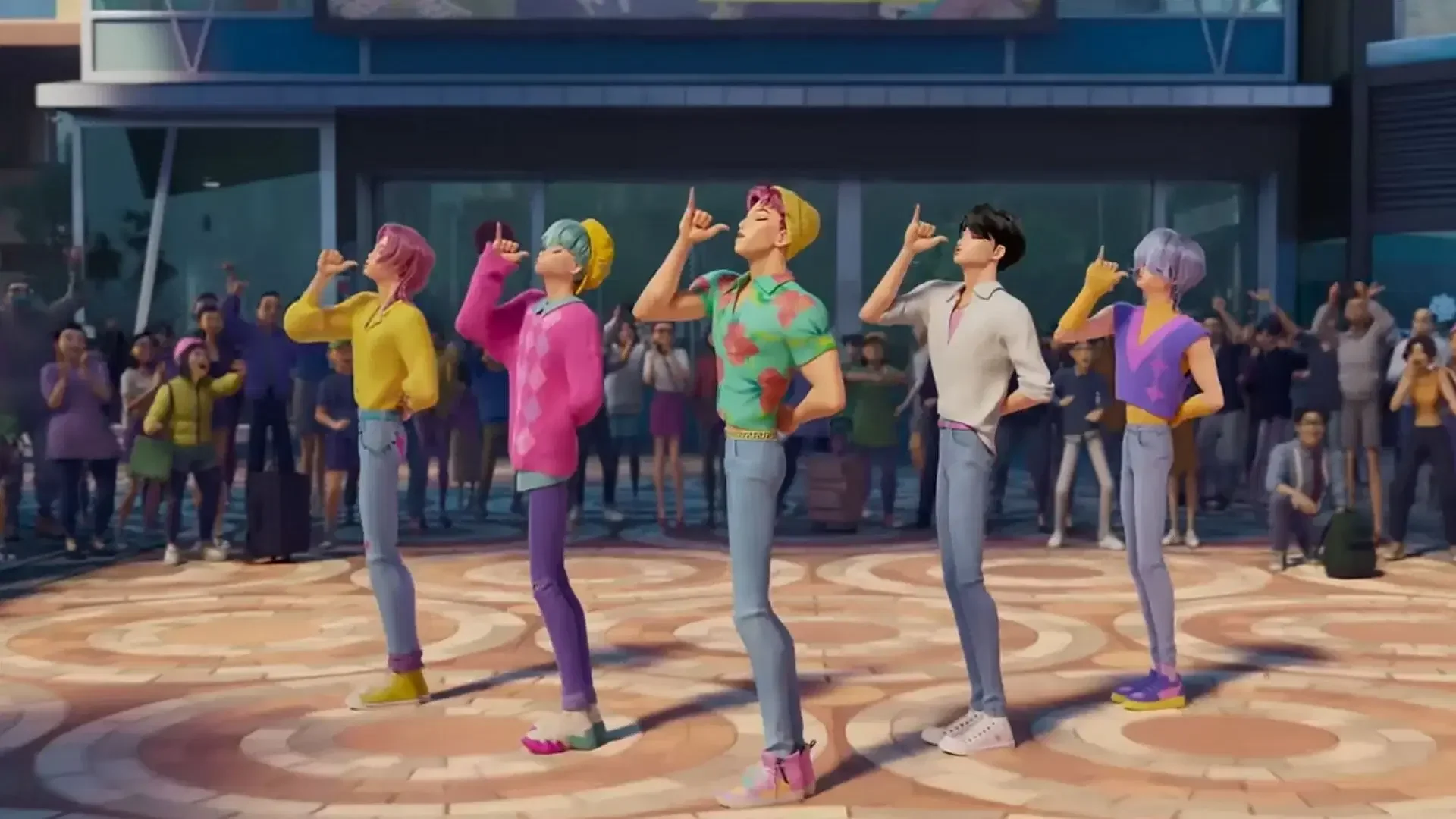
Image Source: sportskeeda.com
These “personas” of boy band members are what the other members of the Saja Boys represent. Mystery represents the concept of male KPop idols hiding their true selves and showing limited parts of themselves. Baby and Abby are the darker aspects of KPop idol culture—Abby is the objectification and sexualization of idols, given how his undersized clothes as meant to show off his body, whereas Baby is the infantilization of KPop idols. Baby, despite his youthful appearance and oversized clothes, has the deepest voice and the same abilities as the other Saja Boys. Similarly, Romance represents the feverish “fanservice” seen in KPop. He is affectionate with fans (and Mira, much to her anger), thus creating the illusion of a relationship fans have with them. This allows the Saja Boys to more easily consume souls. Easier to steal the soul of someone who already believes they are connected to them.
The Importance Of Mira And Zoey
Alone, Rumi would not have been able to seal the honmoon. Had it not been for Mira and Zoey, Rumi’s strength and voice alone would not have been enough to defeat Gwi-Ma. Mira and Zoey were more than Rumi’s fellow hunters; they became the family support she needed and never had growing up. As stated in the song "Golden", Zoey grew up in two different households and cultures and never felt like she belonged anywhere. Mira was the black sheep and “problem child” in her family, who viewed her abrasiveness as a liability. Zoey having to “play both sides” mirrors Rumi living with being part demon. On the other hand, Mira’s strength and “wild” side were channeled into something more productive and were accepted by those she loves. The were three broken girls who made each other whole.
Prophesied by Healer Han, “To treat the part, you must understand the whole.” Rumi already had her walls, but Mira and Zoey had yet to come to terms with how their pasts affected them. Zoey was eager to please everyone at the detriment of her happiness, and Mira had yet to be fully vulnerable about how her temper protected her. The songs they sang brought them together, but they only brought them together as hunters. As friends, they remained separated. Unable to fight as one, they were isolated. When the two learned about Rumi’s secret and her conspiring with Jinu, their hurt and betrayal stemmed more from Rumi lying to them than anything. Suddenly, the fear of no one loving them fully seemed true enough for them to be under Gwi-Ma’s influence. It took breaking “into a million pieces” and using those pieces to sing their truth to unite them, which bonded them as hunters, friends, and family. Thus, their voices were stronger and able to seal a new honmoon.
Songs That Propel The Story
When a film has songs in the film, it is the duty of the songs to not only fill in the run time of the film, but also to propel the plot of the film. The songs from KPop Demon Hunters are no exception. Ian Eisendrath, the movie's music producer, recounted, “We were always writing for the narrative of the film, but we wanted to make sure that they could be stand-alone records.” Drawing inspiration from the famous opening of West Side Story, "How It’s Done" introduces its main trio. The viewers learn their names, see how they fight, and their status as hunters. "Golden" is each of their backstories and Rumi’s private revelation of being part demon and her hopes of removing that part of herself. With how much "Golden" is emphasized as HUNTR/X’s as the ticket to seal the honmoon, the pressure causes Rumi’s voice to shake. This hindrance is made worse with the introduction of their nemeses, the Saja Boys.
Where HUNTR/X songs center around their backstory and love for the fans, the two Saja Boys songs are an addictive poison masquerading as catchy and sweet earworms. Their debut song "Soda Pop" reels in fans with its infectious melody. Between the lines, "Soda Pop" states how their fans and their souls are “sweet” for consumption, and they are “all [the Saja Boys] think of” as they “drink up.” Fans are the Saja Boys’ Soda Pop, but for more than they think; they are objects for the Boys’ means, not the other way around. This theme is on full display with arguably the best song of the film, "Your Idol".
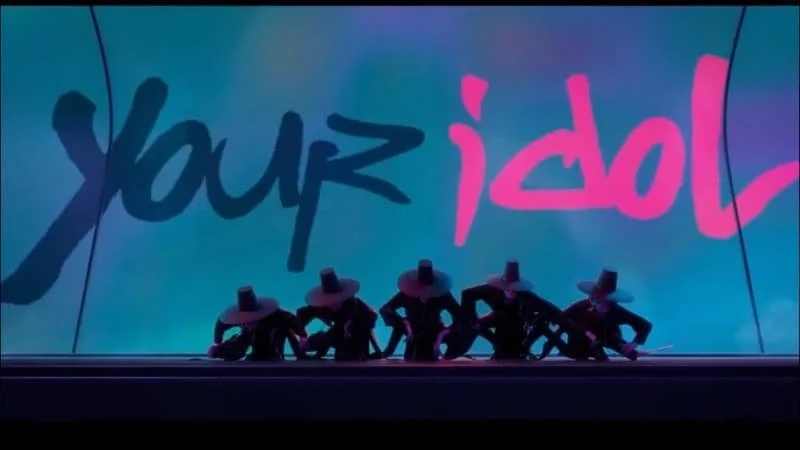
Image Source: YouTube
"Your Idol" brags about the victory of the Saja Boys’ plan for dominating the human realm. The Saja Boys were the key to Gwi-Ma being welcomed into the human realm, and "Your Idol" makes light of the dangers of worshipping false idols; so willing to give up their souls for a group of musicians (demons) who couldn't care less about their humanity. All of the progress Jinu made, wishing for hope and his soul with Rumi in their ballad "Free" earlier in the film is stripped away. Conversely, Rumi faced a similar conundrum when demons disguised as Mira and Zoey used their latest song Takedown to reveal Rumi’s demon patterns. Given how little Rumi sings it and her discomfort with the song, "Takedown" is one of the few songs that HUNTR/X sings that isn’t their song. Like "Your Idol", it’s made to be a weapon, but Rumi didn't expect it to be used against her.
The last thing a song should be is a weapon. Outed as part-demon and without the support of her friends, Rumi bares her heart and soul to Gwi-Ma. No more hiding her patterns. “Nothing but the truth now,” as Rumi admits to her lies and apologizes to once possessed Zoey and Mira for thinking that they wouldn’t be by her side. Suddenly, Zoey and Mira join her, admitting they shouldn't have hidden parts of themselves and allowed them into the “light”. This light made them stronger, a unit that brought them back together and united their fans. Their light also became Jinu’s soul as he sacrificed himself to help Rumi defeat Gwi-Ma. Heart and strength were the key to “the song [HUNTR/X] couldn’t write”.
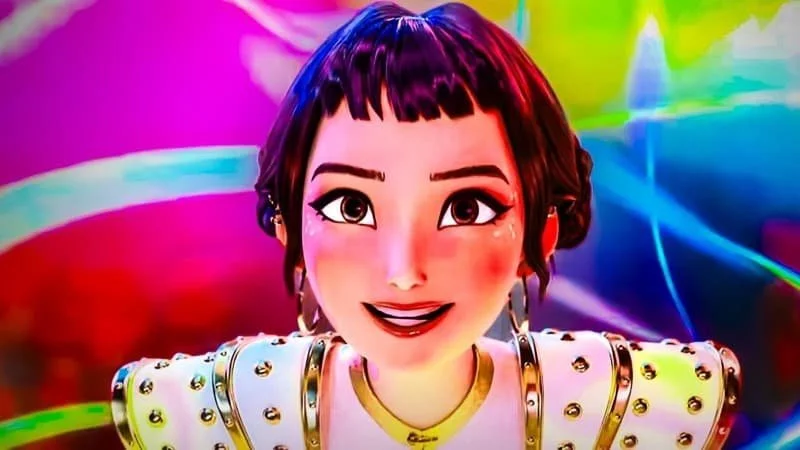
Image Source: The Direct
Conclusion
KPop Demon Hunters became a global phenomenon expressing the importance of identity, hope, self-acceptance, and deconstructing idol worship. Every line and mark on the body are part of us. Healing the honmoon healed HUNTR/X, gave Jinu his soul back, and allowed the fans the opportunity to return the strength that HUNTR/X gave them back. Together, their world was healed.
Friendship and love saved not only the bond between Rumi, Zoey, and Mira, but allowed them to break away from the trauma that kept them from being their most authentic selves. Rumi’s plan to use the honmoon to erase her demon heritage was a long shot. Her friends were going to find out. While heartbroken, they did what Celine never could: accepted her. This acceptance made Rumi break down her walls and made HUNTR/X a stronger team. They are idols with universal fears and insecurities, and their stories are stories reaching beyond a child audience. Bobby and Maggie Kang have every right to be proud of “their girls”.
READ NEXT:

Source(s): The Direct, MSN, CBC, YouTube, Kpoppost.com, kpop-demon-hunters.fandom.com

Latest News

Featured