
Look Back At 'Avatar: The Legend Of Korra'
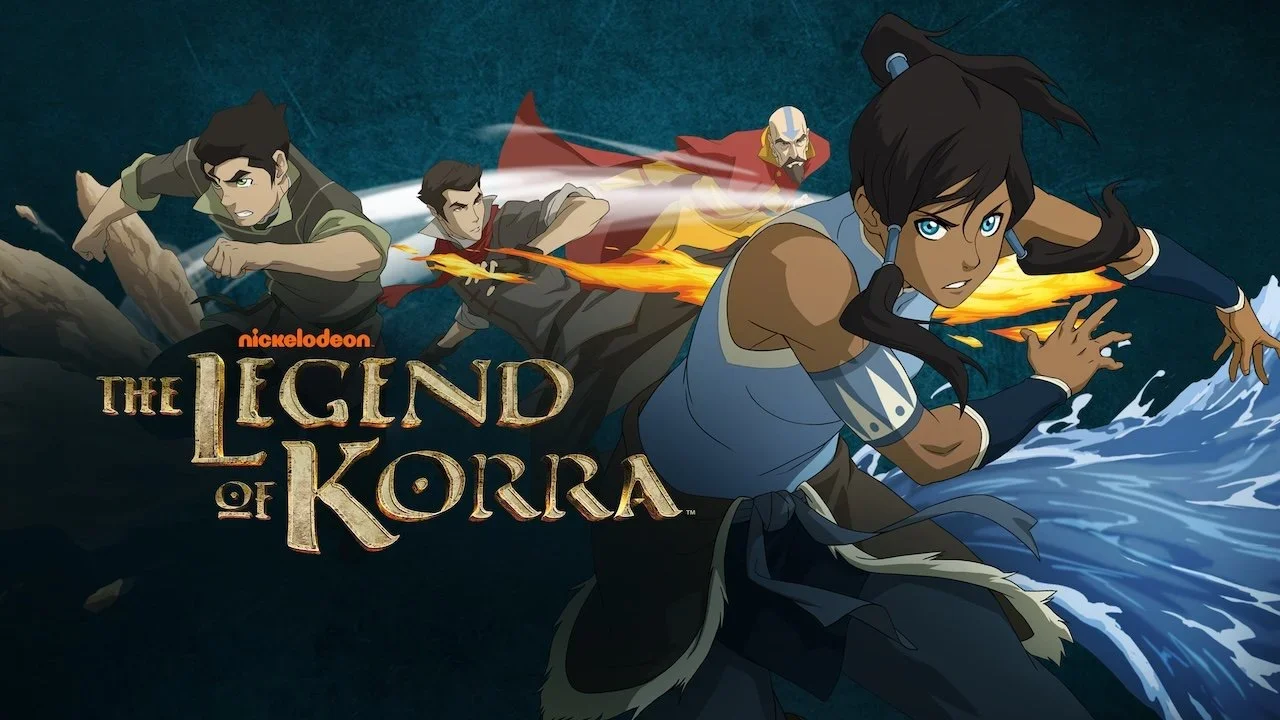
Image depicts Korra and her friends and mentor with the Korra logo.
Image Source: Amazon
This article is about a year late, as we’re now approaching 11 years since the show went off the air, but if you’re a fan like me, Korra’s impact continues to live on. The messages of the show resonate with so many people, and the themes it tackled were prescient and relevant and perhaps, eerily, an allegory.
All of this for what is technically a kid’s show.
Why talk about this now, after 11 years? Because Avatar: The Last Airbender is back. The franchise’s first feature-length movie will release on January 20, 2026, titled The Legend of Aang. A year later, the next show will premiere in 2027, titled Avatar: Seven Havens and it takes place after Korra’s time as Avatar. The original creators of the show founded their own studio and signed a deal with Nickelodeon a couple years back, with new ideas and stories to tell for the fans of their beloved franchise.
RELATED:
Looking back on Korra’s time as Avatar, she was a controversial Avatar, both in world and out. As I mentioned, the show tackled some pretty heavy themes for young people. That tracks, though, if you look at it developmentally. Avatar: The Last Airbender ended it’s run in 2008, and Korra began in 2012. That puts about a 4-5 year age gap on the fans of the original show, which would make them at the age to really tackle sociopolitical concepts and issues.
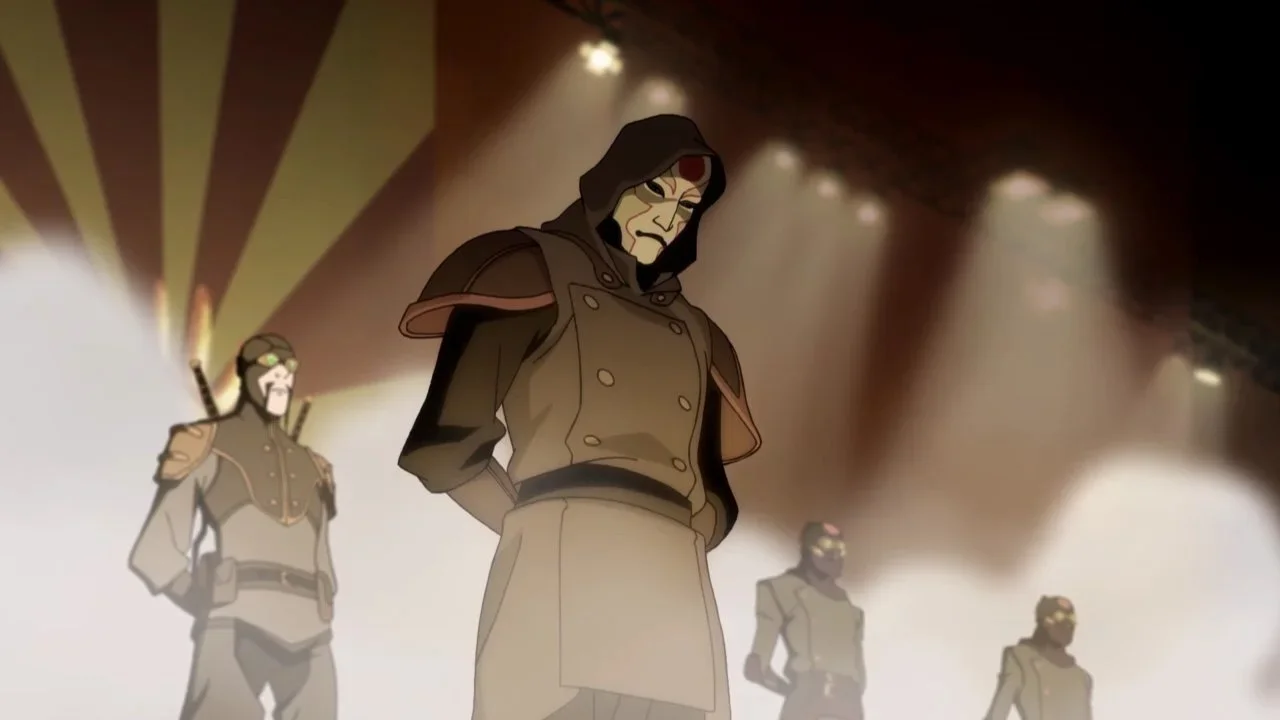
Image depicts Amon and his henchmen from Korra
Image Source: Multiversity Comics
The show did not shy away from that. Season one dealt with things like racism and prejudice with Amon and his anti-bending movement. It brought up issues of things like populism and demagoguery and politics to fans, drawing on historical situations like the rise of Nazi Germany in the wake of economic collapse. Konietzko and DiMartino did an excellent job portraying how desperate people are for someone to stand up and fight for them, and how easily they can be blinded by the gilding on the top, ignoring the rotting beneath.
Season two, three, and four didn’t pull punches either. They tackled issues of things like religious nationalism, violent extremism, poverty, democracy, and the coup de grace of a finale that took on fascism.
Not only dealing these sociopolitical issues, which are eerily relevant now, but Korra also tackled strong emotional and personal journeys and character development. Korra herself is the first that comes to mind. She’s older and went through the established Avatar identification and training process that Aang had missed out on, but she still retained some of his youthful naiveté. She’s brash in her handling of things, and takes a literal beating during her journey and dealing with things that Aang did not have to address, but he was also sort of responsible for in their creation. She made hard decisions that affect the lives of everyone, highlighting the responsibilities of things like power.
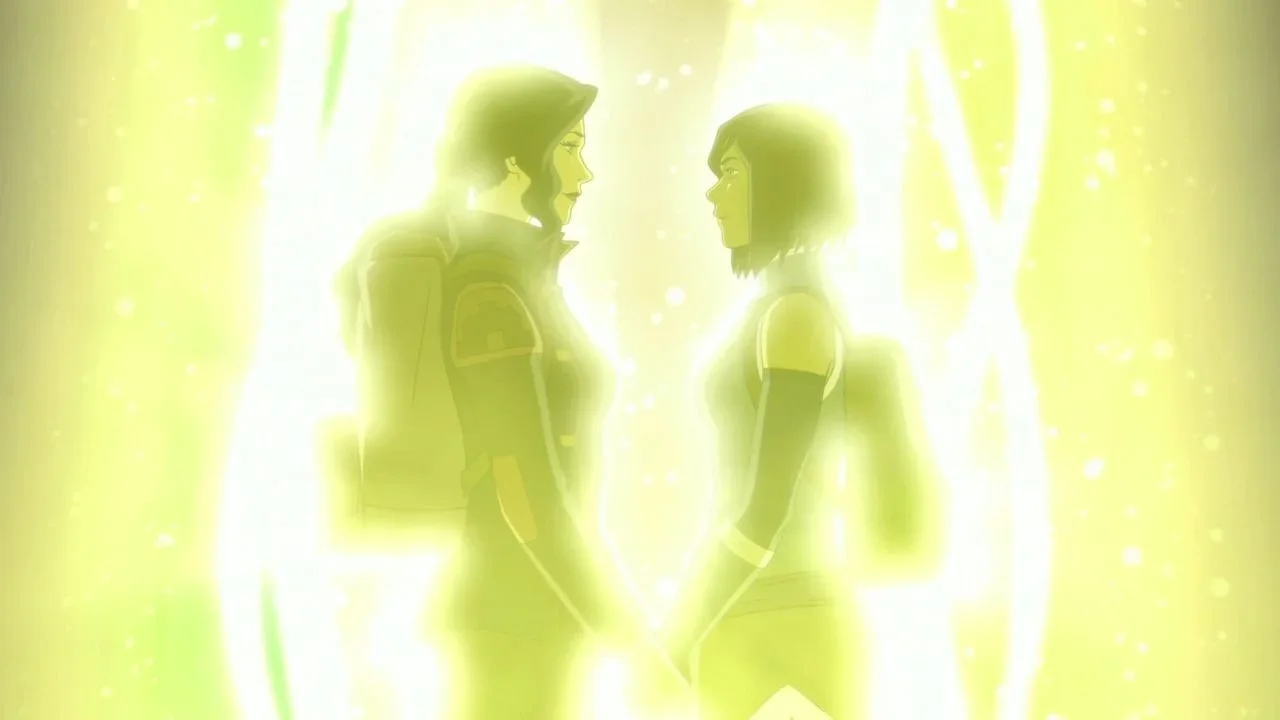
Image depicts Asami and Korra holding hands and entering the spirit world.
Image Source: Them.us
This, I think, will be the impetus of the new show. According to the information that’s been released, something catastrophic happens to the planet, and Korra seems to be at the center of it. People seem to hold the Avatar responsible, but if Korra and ATLA taught us anything, it’s that people often make judgments without all the information. Korra made some heavy decisions (destroying the block between the spirit world and the living, thus integrating the spirit world with the living world), and change doesn’t come easy. Whatever happened, I am sure we’ll find out it was not an easy decision for Korra, or it was something she couldn’t stop, but sacrificed herself to accomplish.
That’s what I think is why this show and it’s universe resonates with so many people. It’s relatable. Either from the things Korra has to deal with like fascism, or relationships, fans see themselves in the characters. Like any work of art or storytelling, what really draws us in is the connection we can have with the characters, and Korra helped a generation move from the silly antics of a young airbender to the chaotic and emotional years of the late teens and early adulthood. It helped people who feel marginalized be seen, and with that final scene of Korra and Asami holding hands and journeying into the spirit world, it was a rubber stamp of a statement that I think helped establish the show as iconic.
READ NEXT:
Source(s): Fandom

Latest News


Featured





• All sizes are adult unisex
• Printed art on the front
• 100% cotton
• Pre-shrunk fabric
• Shoulder-to-shoulder taping
• Culture Slate Exclusive Design
See more products here