
Mass Effect: A Retrospective
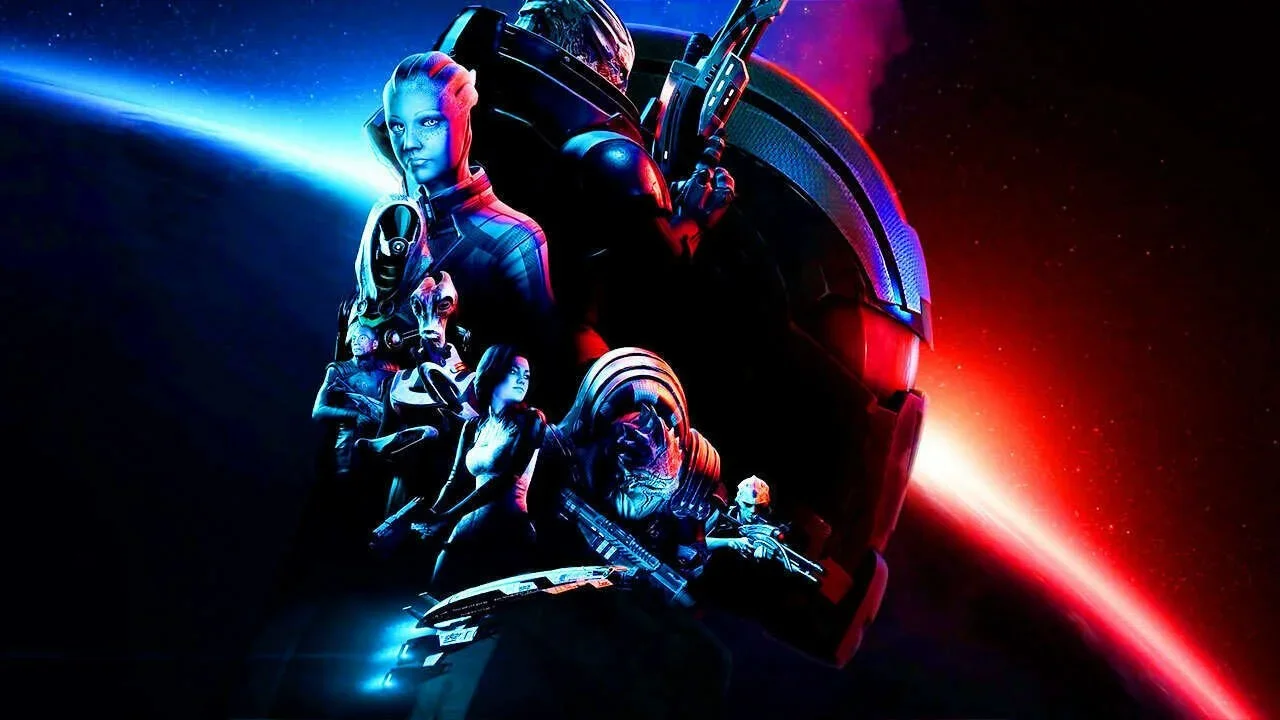
Image source: GameSpot
The original Mass Effect trilogy is one of the most beloved group of sci-fi adventure games in all of gaming. With a solid story, rich universe, fun gameplay and deep characters, it’s clear that a lot of love and care went into the series, and they remain highly beloved among the gaming community to this day. but how well do they hold up? The last game in the series came out in 2012, and since then we’ve only gotten the lukewarm reception of Andromeda.
A fifth game is in the works for a time probably three or four years from now, so until then, we can look back on the games and how they hold up. I replayed the entire trilogy for this article, so I have fresh thoughts. For reference, I played the Legendary Edition on Steam, which occasionally goes on sale for around five dollars, so keep an eye out on that if you’re looking to pick it up. Also, I played as female Shepard, as I like Jennifer Hale’s performance better, so I’ll be using female pronouns here. With all of that out of the way, let’s get to it.
RELATED:

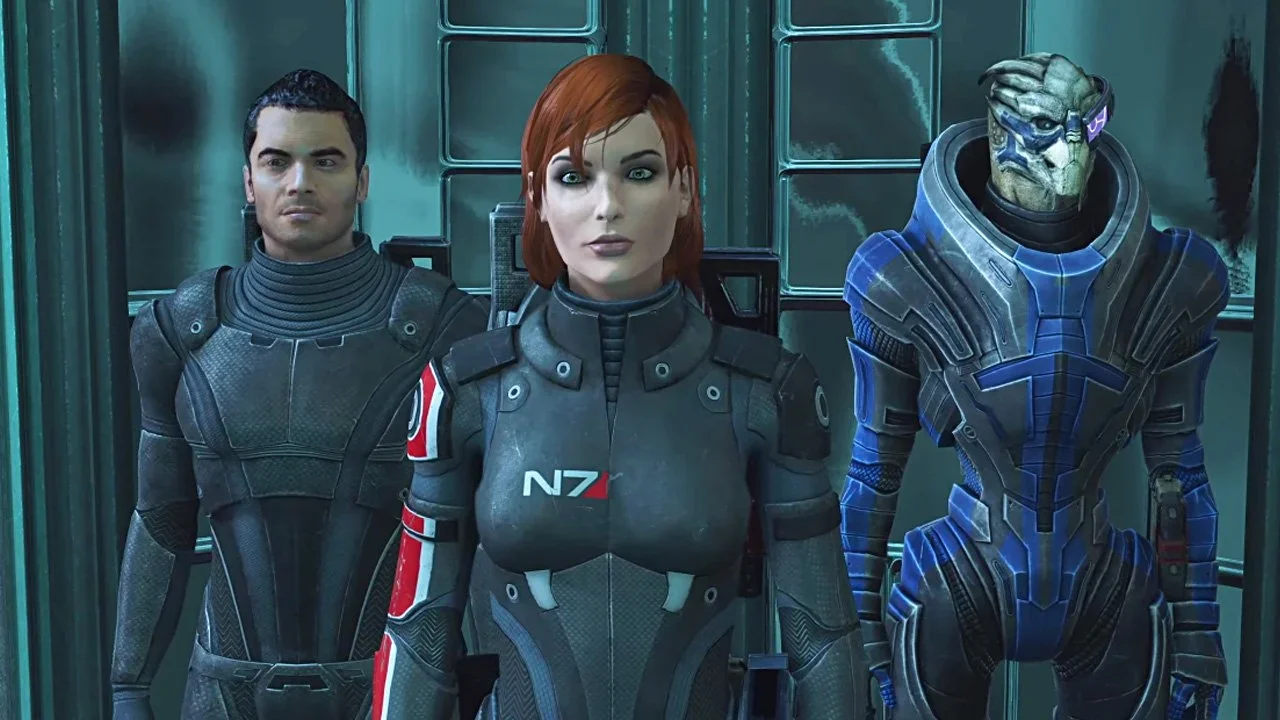
Image Source: WCCFTech
The first Mass Effect game, released in 2007 for Xbox 360, follows Commander Shepard (named for American astronaut Alan Shepard, the second person and first American to go to space) a human military commander. The game is set in 2183, in a universe where space travel is common for humans as they have recently joined the galactic community. They’re seen as newcomers and don’t have much respect among the alien races, though they’re slowly starting to gain it. The council races have decided to test Shepard out as a SPECTRE, a soldier who answers to the council and can more or less do what they see fit to accomplish a mission. It’s something granted to only the best of the best. When Shepard’s first mission goes awry, she must stop the open threat while learning about something much worse on the horizon.
It’s easy to say that, on the whole, the game holds up super well. I’ve played through it probably half a dozen times, and I have a blast every time. The story grabs you right away, and you never feel overwhelmed by the rich universe of the game. The galactic politics are complex, but simple to understand for first time players. The story itself isn’t terribly complicated, but that’s hardly a detriment. The most important hurdle that the game developers had to overcome was Shepard’s character. She needed to be distinct, while at the same time being enough of a blank slate that the players would be able to have her go down whatever morality path that they want. They passed with flying colors. A big part of the game is the morality system. You’re given action or dialogue prompts where your character can take the “paragon” route, or the “renegade” route. Part of the genius of the writing is that either one feel like they could be in character for her. It’s important to note that the choices aren’t like the Knights of the Old Republic games where red means bad guy choice and blue means good guy choice. Sometimes the renegade option is completely valid, and not what I’d call villainous.
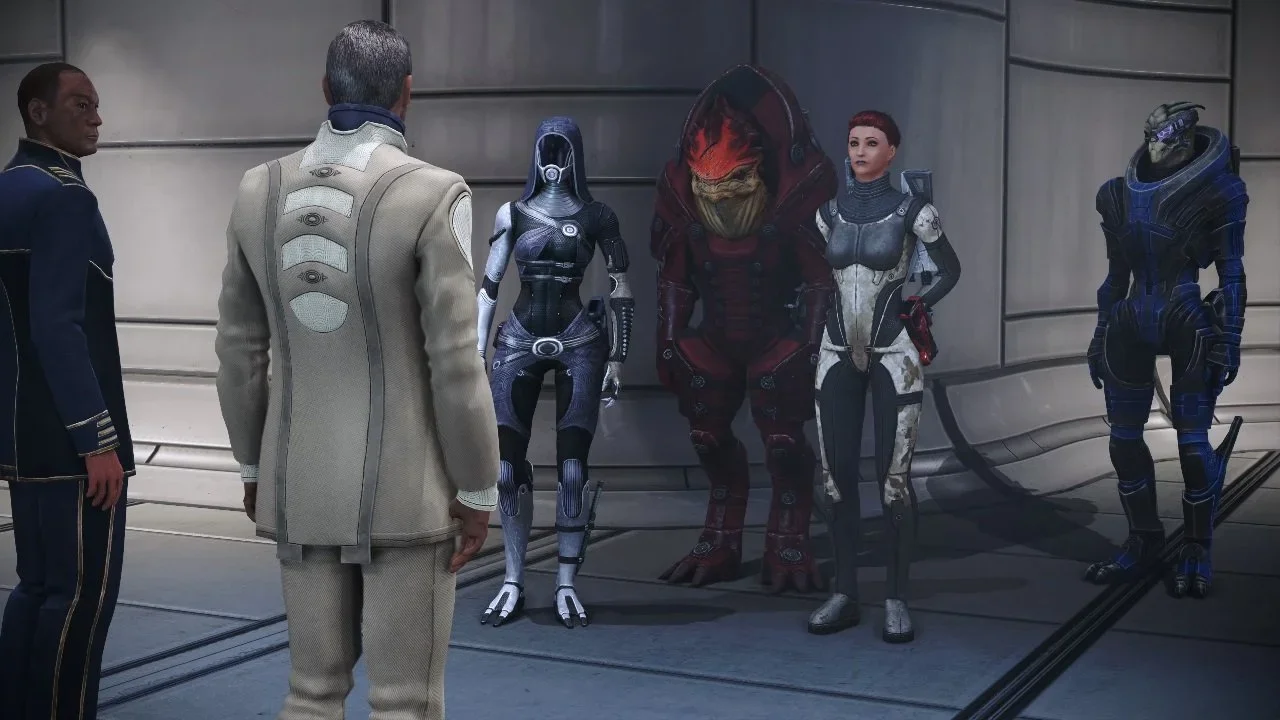
Image Source: Shacknews
The cast of characters around her, big and small are also very solid. From the non-squad characters like Anderson and Joker to the colorful cast of characters that make up your squad, it’s a great group, and it’s a lot of fun walking around the Normandy and talking to each of them. I even don’t hate Ashley as much as a lot of other fans seem to. For my money, I like Liara, Tali and Garrus the best.
The gameplay holds up really well, though I did notice something during my latest playthrough: repetition and a bit of slog. You spend a ton of time exploring planets and doing side quests on them. This wouldn’t be a huge issue, except that every planet has basically the same terrain, and the same three or four buildings. They’re all just a copy/paste of each other. If you cut those out, the game would be almost half as long. That’s a major ding against it. You could skip those and just do the main story, but the side quests especially are usually interesting enough. Not always. Most planets you land on are “drive around, try to drive over rocks, find some collectables, leave.” You could skip it, but any completionist is going to have a bit of a rough time.
One of the main draws of the game is the choice system, and how a choice in one game can effect the other. For the most part they’re simple choices. To kill or not to kill a member of your party? That would be bad and completely change future games. Don’t do that. But some of them don’t have a good option. There’s no real “right” answer. When you first play, you never know what the effects of everything are going to be, and that adds real weight and stakes to the choices.
Overall, the story, characters, plot and gameplay still definitely hold up. While there is more busywork than I’d like sometimes, it’s still a really fun time.
Mass Effect 2 had some big shoes to fill when it came out. The ending of the first made it very clear that more was on the way, but gamers would have to wait three years to finally get to play it. Right from the get go, you’re hooked. Shepard and the Normandy are attacked by a giant ship piloted by a race called the Collectors. Most games would have you escape by the skin of your teeth and kick off the action that way. This time, that’s not what happens. The Normandy is destroyed and Shepard is actually killed. She’s resurrected by the human supremacy group Cerberus, led by the mysterious Illusive Man. He tasks Shepard with defeating the Collectors, who are kidnapping whole colonies of humans for an unknown purpose. To that end, Shepard gets a new Normandy, a familiar pilot, and several dossiers of companions to help you on your mission.
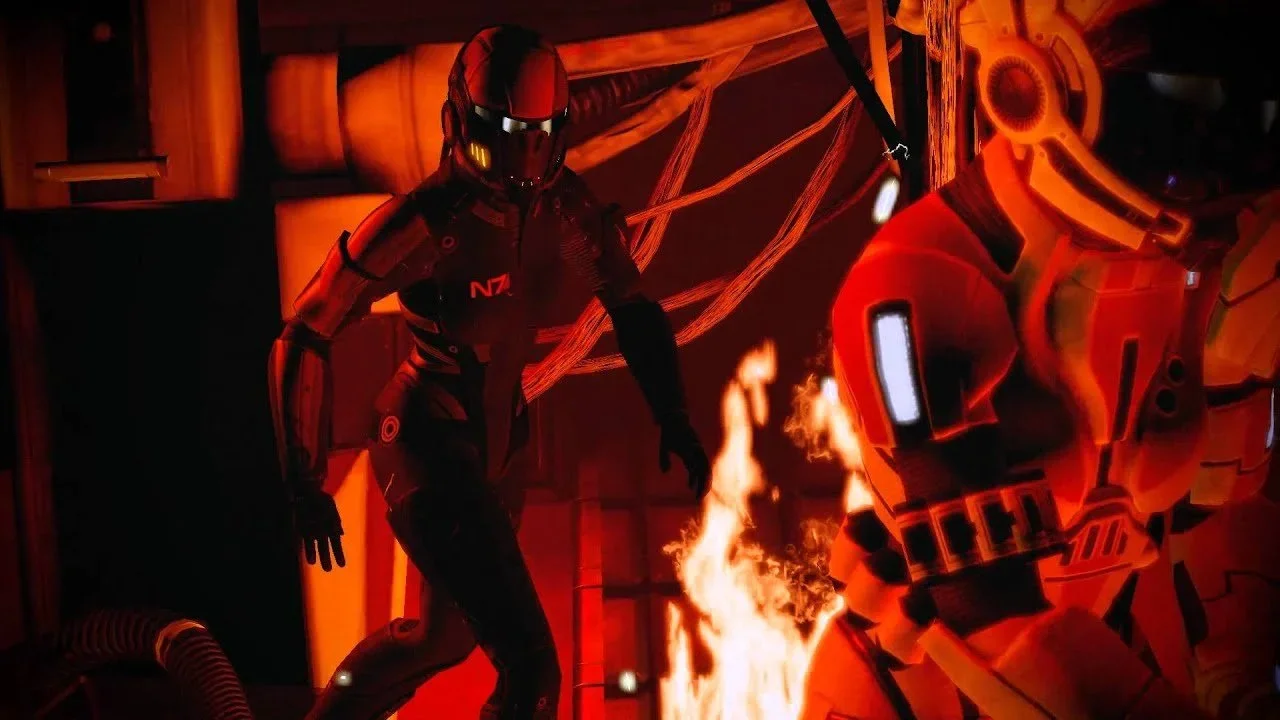
Image Source: CBR
Once again, the story is great. From the shock of Shepard’s opening death, to the fact that you’re working with Cerberus before even though you fought them multiple times in the first game, to the threat that the Collectors present, there’s tons to get you invested right away. The combat is pretty much the same as the previous game, with a few tweaks, but it’s still smooth and fun to play. Like the sentient Geth from the first one, the Collectors present an actual threat to take seriously.
Like the first game, the cast of supporting characters is great, from the new faces to the old. Garrus and Tali are always a delight, but new squadmates such as the repentant assassin Thane, the psychotic biotic Jack, the fast talking scientist Mordin, and the tank born krogan Grunt are also really fun. An interesting portion of the game is that you spend time doing “loyalty missions” for each of your squadmates. Not only are they generally pretty fun, Tali, Grunt and Jack have standout ones for my money, but you’d better do them if you want your squad to survive the game.
A great aspect of the game is how morally gray it is. Cerberus is an evil organization led by an evil man. Full stop. The game explores the morals of working with someone clearly bad to fight an even worse threat. A “the enemy of the enemy is my friend” sort of thing. You run into several characters that are wary of you now that you’re working with Cerberus, even though you’re trying to fight a bigger evil. Based on some of the things that you stopped Cerberus from doing in first game, it’s hard to blame them. Despite your trepidation in working with the Illusive Man, it’s hard to ignore the fact that Cerberus benefited greatly from how you helped them in this game. You have to question how strong they’d be in the third game if you didn’t work with them in this one and took the Collectors down on your own. You couldn’t have, but still.
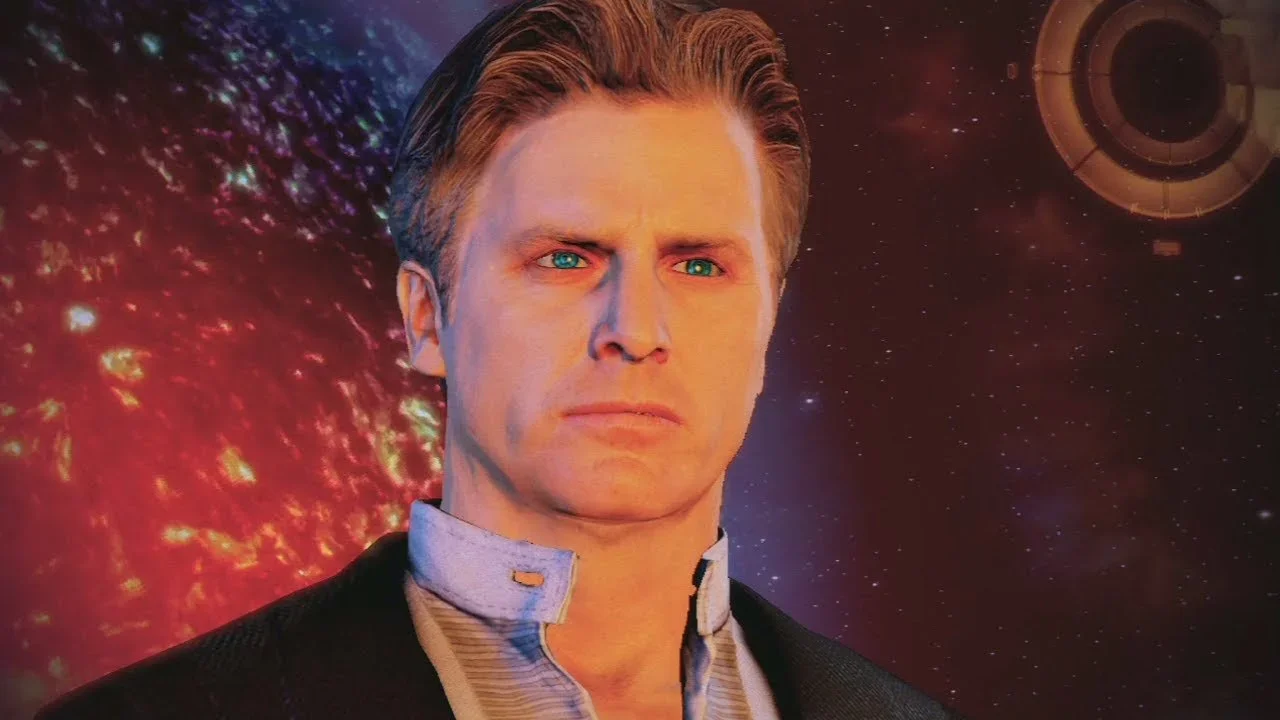
Image Source: YouTube
Out of any of the Mass Effect games, this is the one where your choices most impact both this game and the subsequent one. At the end you have to go on a suicide mission in the Collector base, and it’s a delicate balance and takes careful strategy if you want your team to survive. Don’t have full loyalty from Miranda because you took Jack’s side in an argument? She’s much more likely to die. This is also the game out of the two that has the most impact on the third game. You almost have a completely different game if you make the right or wrong choices. Whole subplots of the third can be wiped out if you make the wrong choice in this one. Again, it’s excellent at adding stakes to the story and gameplay.
Speaking of, we need to talk about the largest ding against this: surveying planets. Playing through again, it felt like half of my game was spent traveling from galaxy to galaxy shooting probes into dozens of planets hoping to find enough of whatever resource I needed to create the latest project. The worst part about it is that it’s a necessary part of the game. Harvesting resources allows you to upgrade the Normandy, and if you don’t, the suicide mission leads to casualties from your team from the start. You don’t want Garrus to die just going through the Omega 4 relay? Time to line up those probes and search for as much Element Zero as you can. It pads the game to a ridiculous degree, and if there was a way to just scan every planet or shorten the searching time, it would be much appreciated.
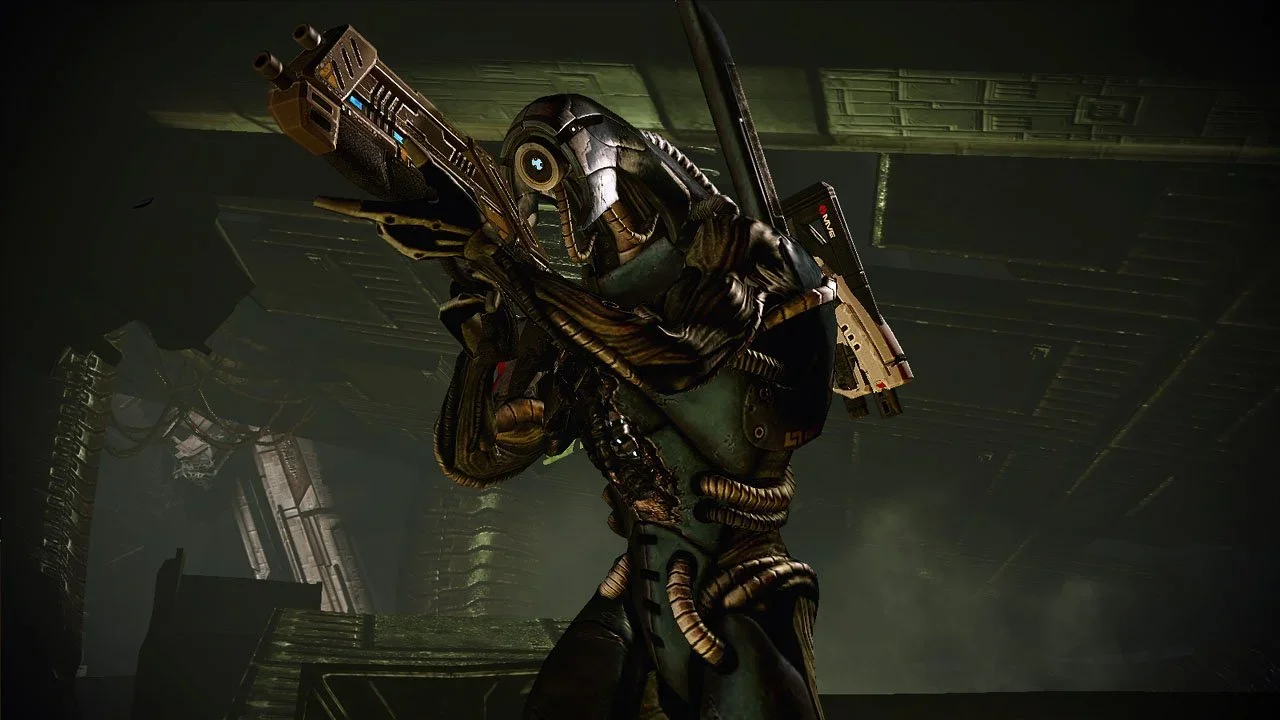
Image Source: Bit-Tech
Incidentally, there are mods you can download that do just that.
Overall, this one is really solid, too. Is it better than the first? Eh, personal preference. The second game has far more idle busywork, and that’s a huge ding against it. Put that to the side, though, and you have a really great game.
Then you have the third game, which can simultaneously be the strongest of the three, and the weakest. The game starts with the Normandy grounded and Shepard in a bit of trouble for working with Cerberus, but all of that is put aside when the Reapers finally make it to the galaxy and invade Earth. From there it’s up to you to get help for Earth, but the other races have been attacked at the same time, thus nobody is safe or in any position to help Earth. Meanwhile, plans for a device called the Crucible are discovered, and it may just be the only hope for the galaxy. Shepard has to find more information about the Crucible and the Conduit that powers it, while playing diplomat and warrior at the same time, while also foiling Cerberus’s plans.
Firstly, the good stuff. The stakes have never been higher, and that comes across really well. There’s a constant feeling of tension throughout the game, as if one wrong move will doom the galaxy. Because one wrong move will doom the galaxy. The game does a really good job of highlighting the hopelessness of the situation, as more and more refugees are seen flooding the Citadel seemingly every time you go there. Nobody has the upper hand on the Reapers. The main enemies you have to fight other than Cerberus are the twisted mutations of the species that they’ve harvested. It adds a level of tragedy to every fight. These aren’t just mindless husks, the monster you’re shooting was once a normal human with hopes, dreams, maybe a family, and that was all stripped away to be a foot soldier for a genocidal race of AI creatures. You can see pretty much every race portrayed, showing how thoroughly the Reapers have taken over the galaxy. As it turns out, Cerberus hasn’t been so great to its soldiers either, fusing them with Reaper technology so that they’re barely more than husks themselves. It’s a war where the enemies are mindless monsters, but they weren’t always that way.
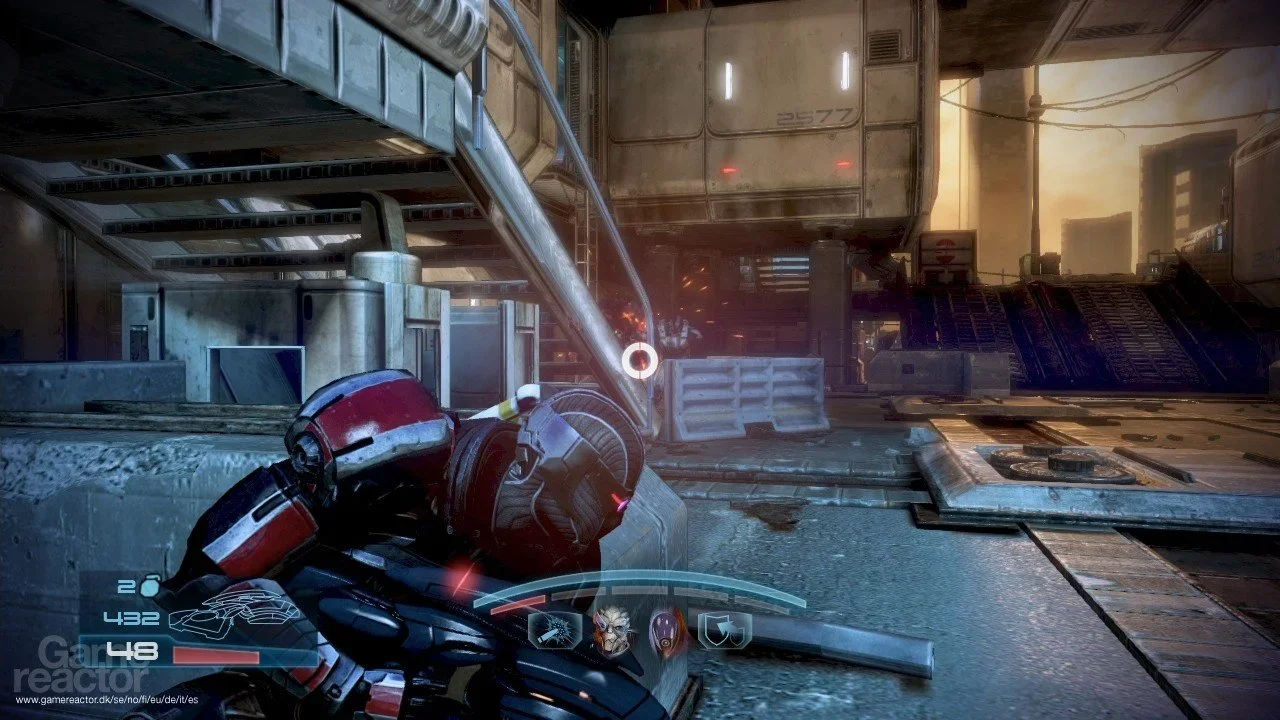
Image Source: GameReactor
Another benefit is that the game has massively cut down on the mindless searching through the same four planets. You still go to a bunch of solar systems searching for resources or doing fetch quests and the like, but this time you have a scanner on the Normandy, so you don’t need to check every single planet to see if there is anything interesting. There is a downside, though. If you scan too often, you’ll alert the Reapers, who chase after you to destroy your ship. While it makes sense story-wise, it’s often frustrating. You’re looking for the one last interesting thing, but whoops, you scanned one too many times, and now you can’t go back to that system until the next level is over, or the Reapers will automatically attack you. Again, it makes sense for the story, but for fun gameplay, it gets old really fast.
I must also say that some of the companions aren’t as solid this time around, especially James. You meet him in the opening scene, and he’s not given a lot of character beyond “stereotypical buff space marine.” You never really get time to know him unless you talk to him between missions, so he’s not particularly interesting. Plus, he doesn’t have much impact on the plot, so if you cut him out, you’d lose pretty much nothing.
Cerberus can be a bit hit or miss as well. More than one mission is “you go to place looking for a thing, Cerberus has gotten there five minutes before you did, they take the thing you want, and you get a few bits of important information that leads you to next thing.” It’s a storytelling mechanic that pretty much never works, and it makes my eyes roll instead of adding tension and making me feel like Cerberus is this huge threat. I already know that they are without needing to dip into past well worn story beats. The assassin Kai Leng is the physical manifestation of this. It’s pretty much his only role in the game, and it’s made worse by the fact that he’s not a particularly compelling character. Having said that, the Illusive Man is still a fun character, though he’s not as interesting as he was in the last game.
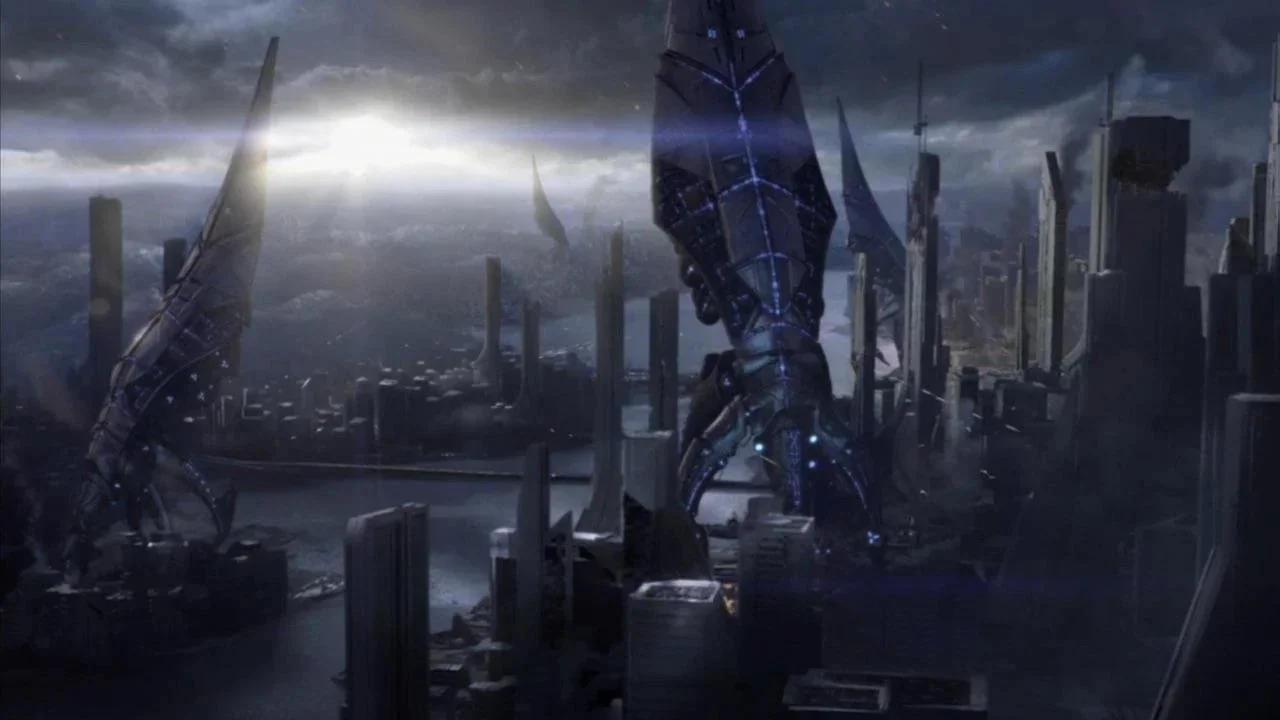
Image Source: Reddit
But… you can’t analyze the third game without talking about… the ending. One of the most reviled endings to a video game that I can think of. Since choice is so vitally important in this game, you would think that it would apply to the ending. But that’s not the case. Nothing you do actually matters in the end. You get the same ending whether or not you were a paragon who never let a squadmate die, or a renegade who tanked the suicide mission from the second game and got half of your squad killed. You still end up in the same room with the stupid AI who gives you the same choices, regardless of what you’ve done throughout three entire video games. It’s bad. Really bad. It’s made worse by the fact that the game seems to be building up to something better, but nope. All roads lead to the same destination.
Putting that huge black mark aside, the game is still very fun. Yes the story besides the ending could have had a few things ironed out. Yes scanning three times just to summon the Reapers is annoying. The stuff that works, works really well. Whenever I replay the series, as I have more than once and in fact did for this article, I have no regrets playing the third game. It’s very, very good. It was almost great.
Having played through the trilogy again, it definitely holds up. While there are some definite cracks in the gameplay, characters and story, the great thing far outweigh the quibbles, even after you’ve added in the ending to your list of grievances as I have. If you’re in the mood to fire it up again, you’re in for a fun time, especially if you get the Legendary Edition, which often goes on sale on place like Steam for a song. The Mass Effect series earned its reputation, and people will keep enjoying it. We’re getting both a TV series and a fifth game, so we’ll have to see what those are like. Regardless of the quality of those, we know what came before is great.
READ NEXT:

Latest News

Featured





• All sizes are adult unisex
• Printed art on the front
• 100% cotton
• Pre-shrunk fabric
• Shoulder-to-shoulder taping
• Culture Slate Exclusive Design
See more products here