
The Rise Of Eldritch Horror In Video Games
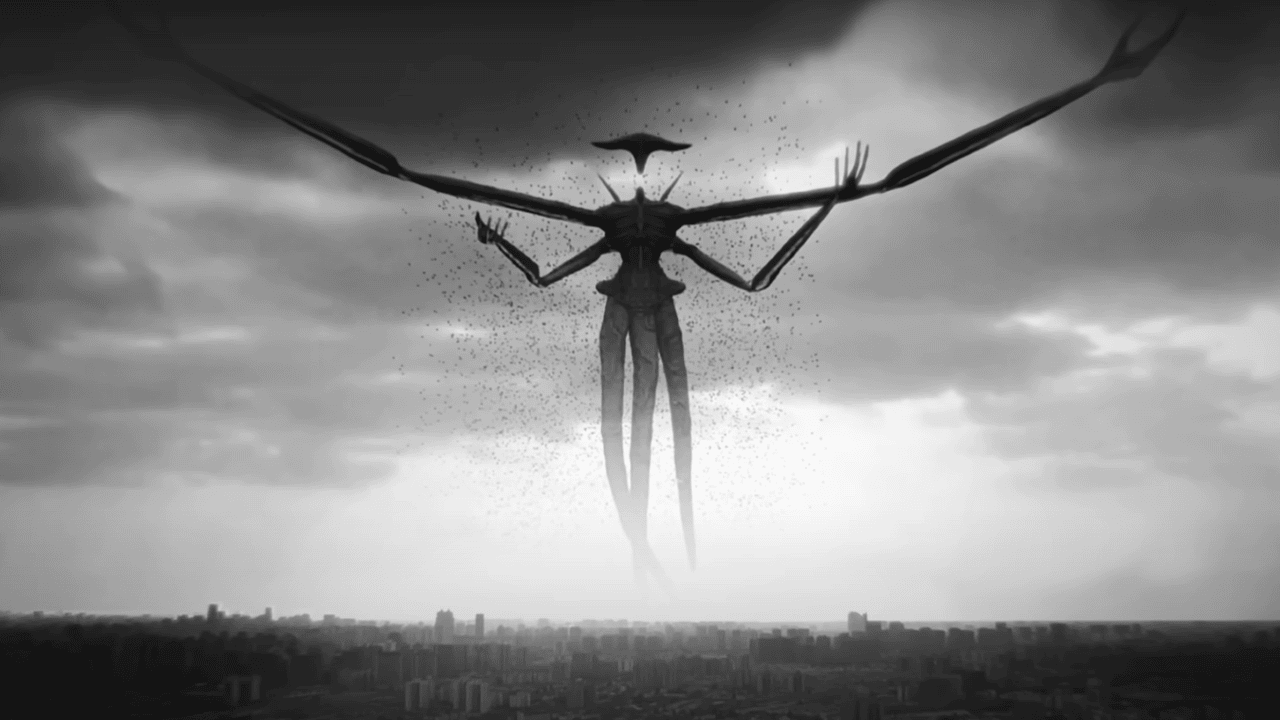
Image Source: insolitum.
You know it, you love it, it's eldritch horror. The tentacles, the vast unknowable universe suddenly crashing down onto the individual in such a way that they crack despite their heroic quest to save the day…certainly, eldritch stories abound across written fiction, and some are even making a comeback in recent films. Franchises are also including their own eldritch narratives and messages, such as Star Wars with the fear-inducing Nameless in The High Republic.
But, CultureSlate is here to argue that there has been a significant uptick in eldritch horror in the realm of video games over the last few years. We’ll run down some of the core ideas of eldritch horror, some examples of recent games, and then end on the big question: why? Why has eldritch horror taken off in gaming recently?
RELATED:
What Is Eldritch Horror?
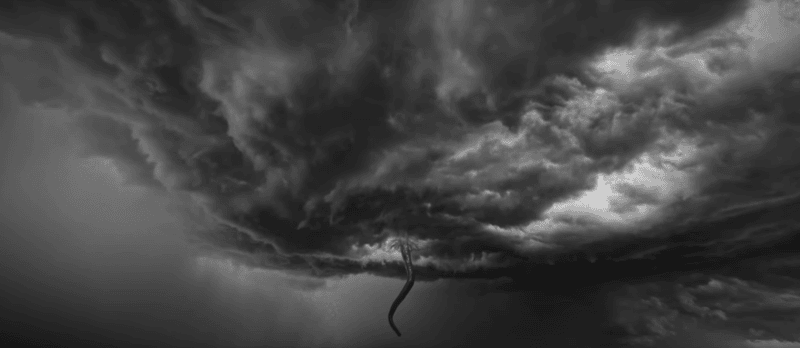
Image Source: insolitum.
Eldritch horror, also known as cosmic horror or Lovecraftian horror, is a genre of horror well known thanks to a range of traits, aesthetics, and themes that help keep it distinct. Here are just a few of the core ideas behind eldritch horror, and ones many readers will find themselves familiar with.
The complex and rich lore of the genre is both ever evolving, yet also anchored by several core beings. The most prominent of these is Cthulhu, a huge yet dormant god with a tentacled face who has had contact with humanity for thousands of years. Alongside this immense mythos are explorations of how there are powers beyond our world that most mortals cannot comprehend, the insignificance of humanity in the face of such beings, complex occult rituals and practices, and the after-effects of contact with these beings of immense power, which often takes the form of gear.
Eldritch horror often has a lot of social commentary, with some of the older works unfortunately extremely racist and xenophobic, which many modern adaptations seek to avoid or make part of their wider narrative. Despite this, the genre is still full of discussions of class, politics, local culture, and regional folklore as it relates to populations being against each other, or in tackling the spread of corruption.
While outright gore is not unheard of in eldritch horror, the focus instead often falls onto horrific or startling imagery, the unholy union of different forms together, or bodies so heavily warped that they cannot be viewed for long without a visceral negative reaction. Transformation also factors into these stories, often physical but often mental as well, taking a simple protagonist and putting them through the absolute ringer or seeing them corrupted by the very thing they fight against. The question of sanity also comes up frequently, and if characters are accurately seeing things as they really are or if they are hallucinating.
There is a great deal of commentary about science in eldritch horror works, often playing on the idea that modern science does not have all of the answers to the problems or threats caused by eldritch beings. There is the other, complementary idea, that modern knowledge lacks critical old truths and information now long lost that might help it in the present. This often meshes into the social commentary, with certain groups possibly having greater knowledge or awareness of certain subjects due to isolation or some unique status.
Eldritch horror has an incredibly distinct visual aesthetic. Imagery and terminology involving the sea is often a heavy focus, alongside tendrils, altered eyes, the aforementioned body horror, the color purple, dreams, as well as places like asylums and ancient ruins or cities. There are also subcategories of imagery and terminology as it relates to the complex lore of specific entities such as the King in Yellow.
Recent Games
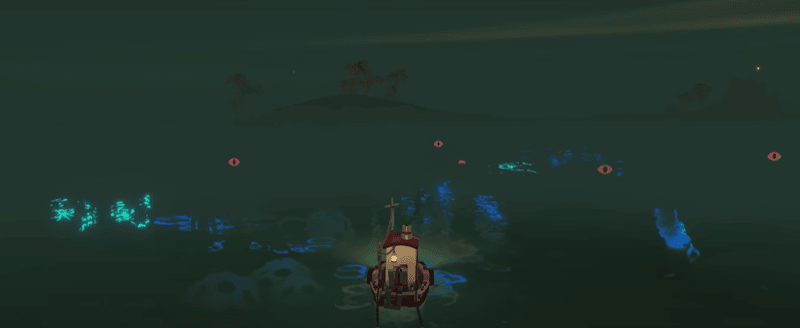
Image Source: YouTube
Eldritch stories have never been absent from gaming, but recent years have seen a significant increase and diversity of genre and presentation for eldritch-influenced games. One of the best examples of this is Dredge, a 2023 game about fishing and exploration, yet with a strong eldritch aesthetic that makes the game a point of discussion for this list. Its eldritch elements adds complexity to the experience, since one day, you’ll be catching fish as normal, talking to normal citizens and doing business to sell your fish and upgrade your boat, and the next you’ll be escaping from a warped sea monster and hauling up horrifically mutated creatures, fundamentally altered by eldritch elements. These elements don’t clash, they instead heighten the creepy, terrifying, and mournful moments of eldritch storytelling by contrasting them with the normal world within the game that is unaware of such horrors or struggles to understand them.
Another example of eldritch storytelling in gaming is found in 2024’s The Legend of Zelda: Echoes of Wisdom. While much of the game has a cute, toy-like aesthetic with fun NPCs, great combat, and excellent freedom of exploration, the ultimate villain is a being called Null. Imprisoned within the crust of the world that Hyrule calls home, he is a being from before the dawn of time who hates life and constantly snuffed out its fledgling emergence in the void before his imprisonment. Null has the ability to manipulate his mortal foes through the creation of copies of people to replace them, while his greatest enemies are faeries called the Tri that constantly repair the damage he does to the world in his escape attempts. But, he has steadily been imprisoning them and probably claiming their power in the process.
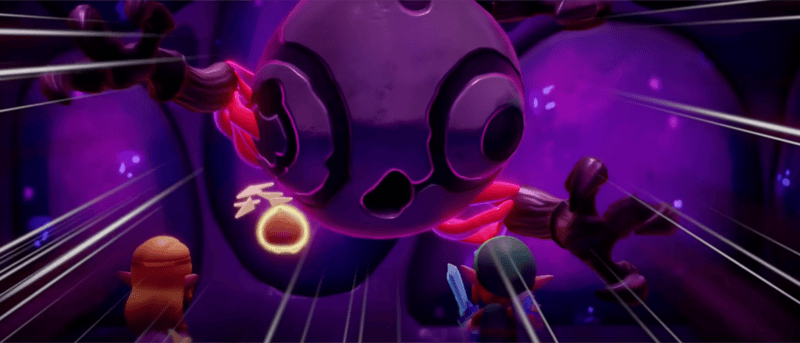
Image Source: YouTube
By the end of the story, he has taken on a form that appears like a blob of matter with multiple limbs, desperate to obtain the ultimate power that would allow him to destroy the world and return everything to the primordial void. While he is certainly more active than other colossal eldritch beings, his imprisonment under the surface, the prevalence of purple within his realm and body, and his hunger for the living would appear to fit well with many ideas of eldritch entities.
A final example of recent eldritch storytelling making its way beyond the normal confines of the horror genre is from the game Destiny 2. Destiny as a franchise has always had horror elements, and like many live service titles, its content cycle demands constant theming and aesthetic change to give players a wide variety of options in cosmetics, armor, and weaponry. But in the most recent season of Destiny 2 content, Episode: Heresy, the eldritch elements were turned up to 11.
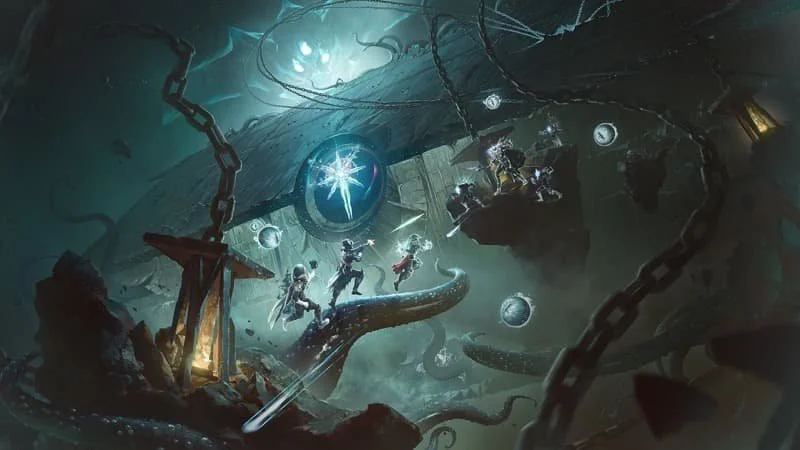
Image Source: X.com
A returning destination was heavily altered by the appearance of tendrils, eyes, and dark globules across the map alongside an increase in sea-based language in the surrounding plot. The largest of these newly emerged eyes can inflict a debuff called Suffocating Terror on anyone who looks at them too long, which can kill a player if they let it build up too much.
Hello, World!
The eldritch vibe also extended to the enemies with the Dire Taken, a new tendril-sprouted version of a familiar enemy faction, taking a prominent role alongside the revelation of a new Taken entity stirring in another realm. Willed into being by the willess Taken, it has now begun to gather new forces and siphon away those that should be obeying others with the power of controlling the Taken.
Why The Rise?

Image Source: YouTube
The three examples above are just a drop in the ever-expanding ocean, though. As further examples, 2024 had the early access launch of Worshippers of Cthulhu, an eldritch lore-inspired city builder (which is truly a unique concept), and there was Still Wakes the Deep, a game about eldritch happenings on an oil rig. Then, released in March of 2025, we had Do No Harm, a game about a doctor providing medical help to a sleepy rustic town, only some of the ailments he treats are absolutely not natural. Next, there’s the 2025 early-access launch of the survival-crafting game Stygian: Outer Gods, where the protagonist finds themselves shipwrecked on a dreary island full of eldritch horror. Lastly, set for a 2026 release, we have Cthulhu: The Cosmic Abyss, a psychological thriller game where the protagonist will need to dive into the depths of the ocean to explore R’lyeh, a labyrinthine prison of a city where Cthulhu is held at bay.
But we come to the big question: why all of this eldritch horror? And why all of it now? The genre has a wide range of stories to draw from for adaptations or inspiration, alongside the eldritch mythos that such stories have helped craft, but it may be due to some of the more serious topics eldritch horror covers that have struck a chord with modern creators. The sense of an individual’s isolation, of insignificance in the face of vastness, and the horror and fear of that unknown surely speaks great volumes to creatives who were through the COVID-19 Pandemic. Eldritch storytelling might also have connections to anxieties post-pandemic in topics like the failures or struggles of science against a problem, the clash of different, seemingly insane beliefs with science, the struggles of society and government since that event, and the literal transformation human brains have undergone because of the COVID infection. The timelines of video game production mean that there’s ultimately a high chance this specific event and its aftermath impacted the creative influence of many of these titles.
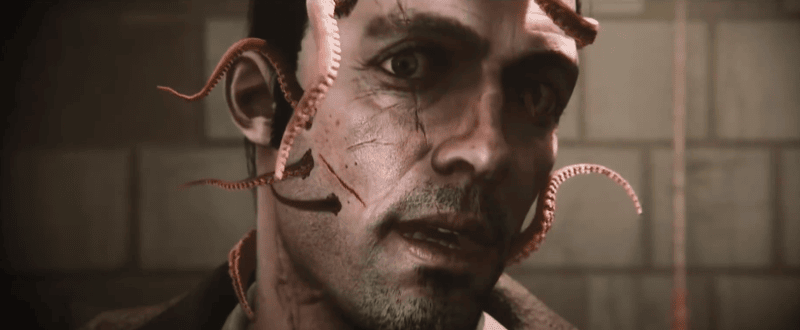
Image Source: YouTube
There is also the simple factor of cycles of interest in different media. Back in the late 2000s to mid-2010s, we had the teen dystopian fiction renaissance, hundreds of books with similar protagonists in a whole range of horrible societies and social orders. Films have seen the heyday of half a dozen genres, the western one of the most notable for how it is almost completely dead in the modern day. Video games have seen their own popular topics, as aside from eldritch horror, the history of Japan has been incredibly prominent in recent years through various titles, with the most recent expression of this interest being Assassin’s Creed Shadows. The turn toward eldritch horror as a new, deep well of inspiration for video games is not a surprise, especially since the realm of video games has only become more immersive over time, and storytelling regarding questions of sanity, strange entities, and terrifying scenarios can create fascinating gameplay opportunities.
As we finish writing this, a brand new eldritch-influenced project, Void Sails, is set to release in May of 2025. Combining eldritch lore with aerial ship-to-ship combat, it looks to be a fun exploration of the subject matter. We encourage our readers to keep an eye on the gaming space to see how this turn toward eldritch horror is received (because it sure isn’t slowing down), and what unique ways games continue to incorporate it into their stories!
READ NEXT:

Latest News
Featured


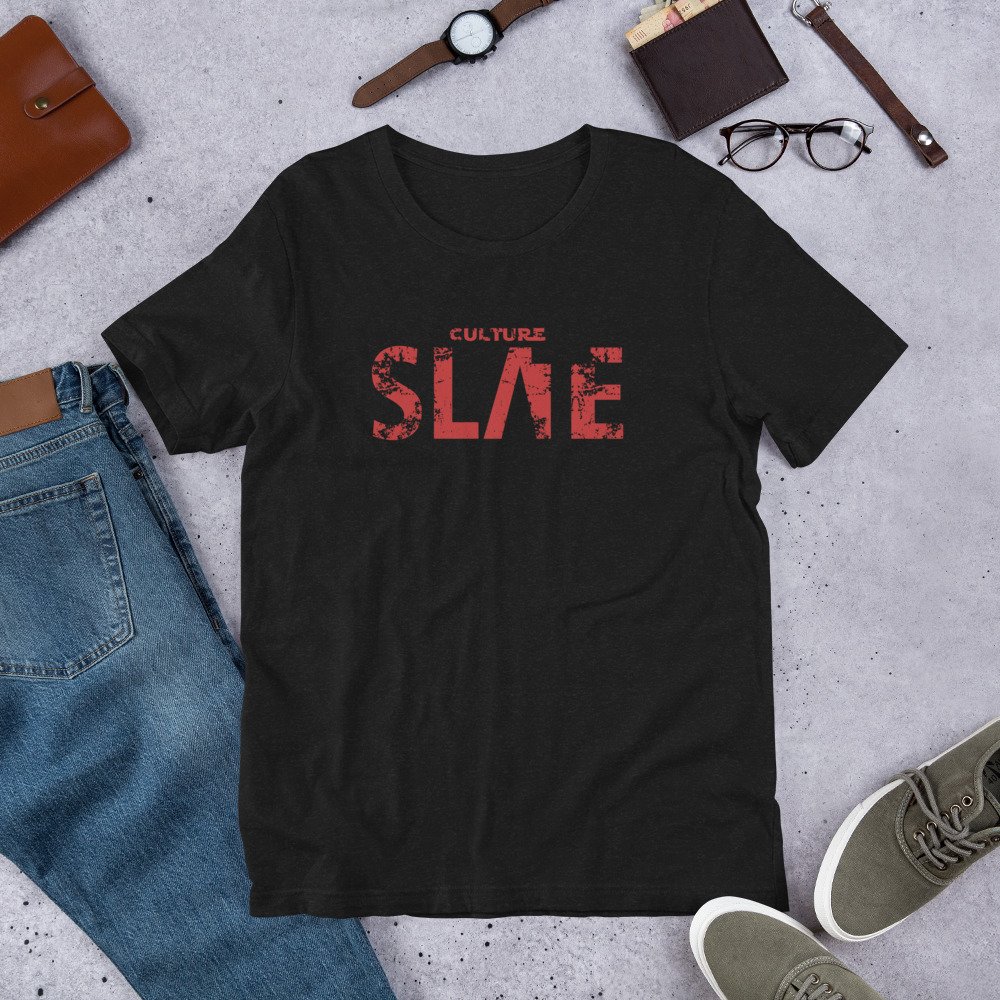


• All sizes are adult unisex
• Printed art on the front
• 100% cotton
• Pre-shrunk fabric
• Shoulder-to-shoulder taping
• Culture Slate Exclusive Design
See more products here