
Bela Lugosi: The Face (And Voice) Of 'Dracula'

Image Source: CultureSlate
“Listen to them. Children of the night, what music they make!”
You know his face, even if you haven’t seen him. Whenever you think of the word “vampire”, you think of his accent. Bela Lugosi is the man behind Hollywood’s most iconic vampire, Dracula. Of course, there is more to his story than that, from his life in a pre-World War Hungary, to his early days in theater and silent cinema, to his final days and partnership with Ed Wood, one of cinema’s most infamous directors. The story of Bela Lugosi goes back many years and is as interesting as the best of his films.
Lugosi was born Blaskó Béla Ferenc Dezső (in his native name order) in Hungary on October 20, 1882. Raised in the town of Lugos (now Lugoj, Romania), Bela was the youngest of four children. The young Bela preferred acting to his schoolwork, much to the dismay of his baker father. Eventually, Bela would pursue his dreams, landing a position at the National Theatre of Hungary under the Lugosi name. There, he would play a variety of roles and would even enter the silent film industry. However, this would not last long, as World War I was just around the corner.
RELATED:

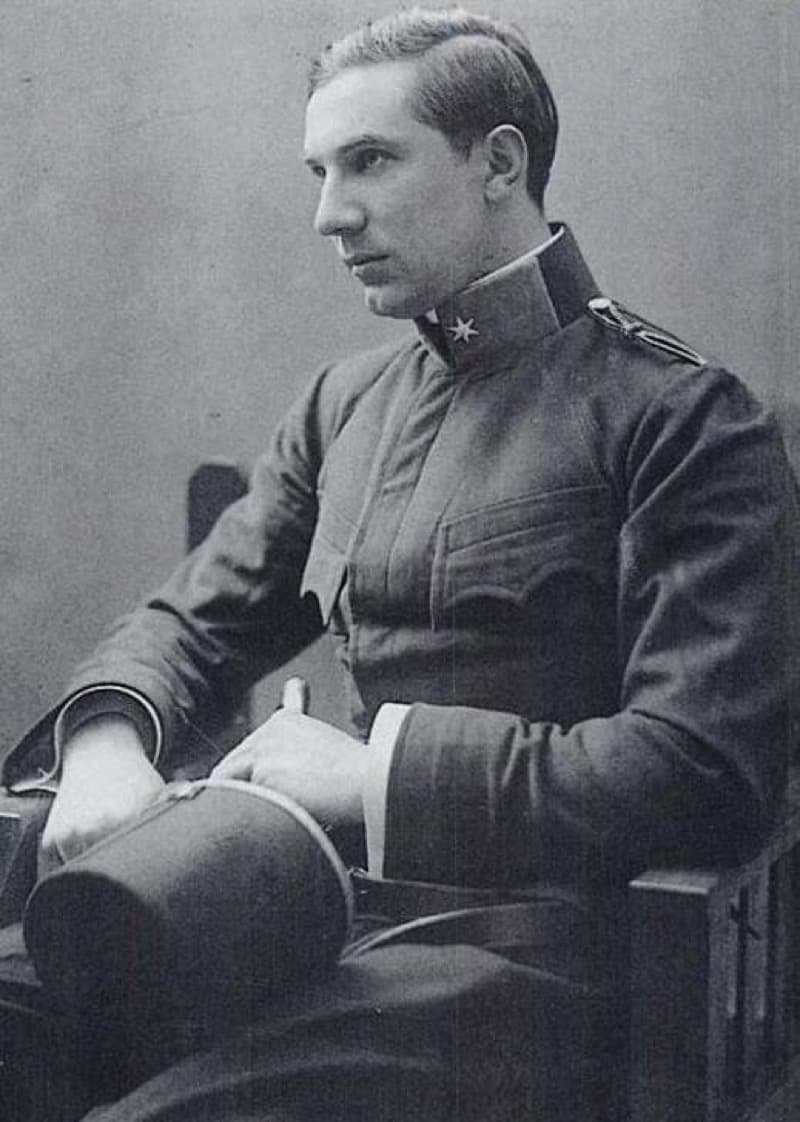
Image Source: Wikipedia
Lugosi’s acting career protected him from the draft, but he would enlist in the Austro-Hungarian Army himself, serving in a couple of battles on the Russian front. When the war was over, Austria-Hungary had split, and there was a revolution going on in Hungary. It wasn’t successful, but Lugosi contributed by organizing an Actors’ Union. This forced him to flee Hungary, ending up in Austria and Germany, where he appeared in local silent films. After some personal losses, he found work on a merchant ship, which brought him to New Orleans in the United States, the country he would spend the remainder of his life in.
During his time in North America, Lugosi would go to New York and become a naturalized citizen. There, he would form a Hungarian language stock company and gradually learn English through his theater work, giving him a distinct style of speaking and accent that would stay with him throughout his life in the States. He also found work in the local cinema, appearing in a variety of silent film roles. One noteworthy performance, in The Silent Command, made use of his eyes in a significant shot; this would become a recurring trend for the rest of his career.

Image Source: Wikipedia
One play would come to define Lugosi’s career. In 1924, a play based on Bram Stoker’s Dracula novel premiered in England. In 1927, a revised version debuted on Broadway. Bela Lugosi was approached to star as Count Dracula. Establishing many of the traits that the movie would later cement, the play would be a success on Broadway, running for 33 weeks and two years of touring. It was around that time that Lugosi had established himself in Hollywood, appearing in talking films. Soon, Dracula was in talks for a movie adaptation, and Lugosi was about to reach a big break.
Universal, which picked up the rights to Dracula, originally considered either Lon Chaney or Conrad Veidt for the titular role. However, Chaney was signed to MGM and later died, while Viedt had returned to Germany. Lugosi, meanwhile, had campaigned for the part, with his role in the 1935 film The Thirteenth Chair ultimately bringing him to their attention. Under the direction of Tod Browning, Lugosi would give a widely acclaimed performance that to this day colors depictions of Dracula and vampires in general. It made him a Hollywood star, and it appeared that things were just getting started for him.
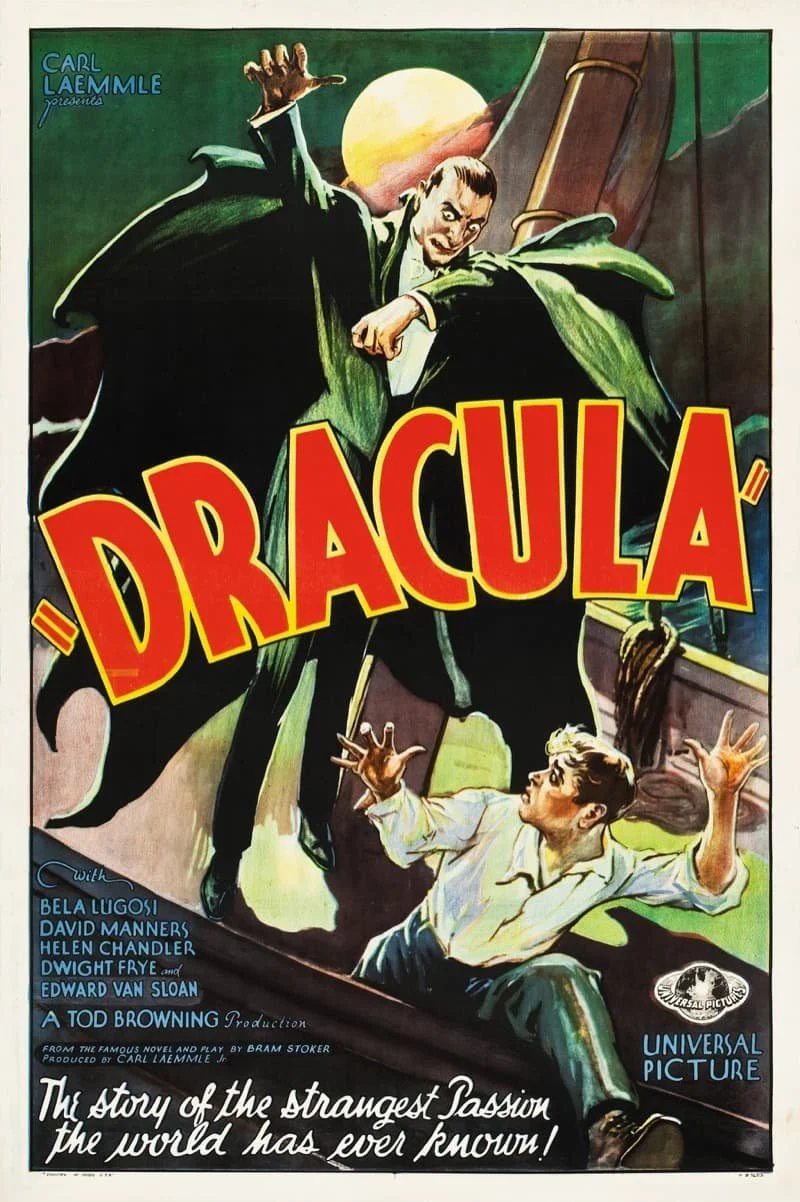
Image Source: Wikipedia
However, things seemed to take a turn when Lugosi was cast as Frankenstein’s Monster. Reportedly, Lugosi disliked the role as originally written and did not enjoy the makeup tests. Lugosi would later leave Frankenstein, either leaving or being removed, and Boris Karloff would be cast in his place. Despite this, Lugosi would find himself typecast as a horror actor for the rest of his career, while he desired some more “romantic” roles. Despite this, Lugosi continued to work in a variety of roles, including Dr. Mirakle in Murders In The Rue Morgue, Murder Legendre in White Zombie, and the Sayer of the Law in Island of Lost Souls.
Many of Lugosi’s films would also begin pairing him with Karloff. These included The Black Cat, The Raven, and The Invisible Ray. The two reportedly got along well, though rumors of a rivalry have persisted to this day. As the 30s started to end, however, Lugosi’s career would take a downward turn. It was at this point that he would be approached to appear in Son of Frankenstein, alongside Karloff once more. Reports state that Lugosi had a bad salary for a day or weeks worth, so director Rowland V. Lee had him on set at all times to give him more pay.
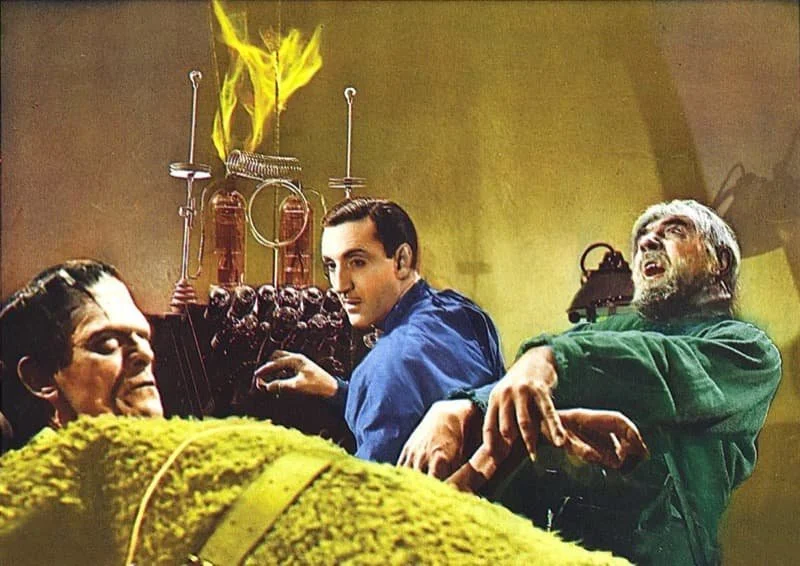
Image Source: Wikipedia
Lugosi, for his part, would go on to give an acclaimed performance as Ygor, going on to appear in Ghost of Frankenstein and later becoming Frankenstein’s Monster himself in Frankenstein vs. the Wolf Man. Despite Universal’s Horror films featuring Dracula in three "monster rally” films, Lugosi only reprised his role in Abbot and Costello Meet Frankenstein, with John Carradine filling in the cape for him. As the Universal Horror cycle finally came to a close in the late 40’s/early 50’s, Lugosi’s career began to slow down. Though he could fall back on Dracula performances, eventually, Lugosi’s financial troubles would catch up to him.
Enter Ed Wood. An aspiring filmmaker, Ed Wood had a lot of enthusiasm, but limited talent. Being introduced to Lugosi by a roommate, Ed Wood would begin casting him in his films, starting with Glen or Glenda. Together, the two would work on a variety of mostly poorly received films. Lugosi, however, would always give his best performance, even when doing ridiculous scenes, such as in Glen or Glenda, where he plays a scientist who seems to do all sorts of strange scenes, like in the video linked below.
Lugosi, despite his horror star status, was not immortal. He died on August 16, 1956. Wood would use footage he shot with Lugosi for his most infamous film, Plan 9 From Outer Space. Though this wasn’t the best end to his career, he left behind a legacy in the horror genre, one defined by his iconic portrayal of the equally iconic Count Dracula.
READ NEXT:


Source: IMDb, Belalugosi.com
Latest News


Featured







#/media/File:Dracula_(1931_film_poster_-_Style_F).jpg)
#/media/File:Son-of-frankensteinCropped.jpg)
• All sizes are adult unisex
• Printed art on the front
• 100% cotton
• Pre-shrunk fabric
• Shoulder-to-shoulder taping
• Culture Slate Exclusive Design
See more products here