
Double The Power: Sega 32X
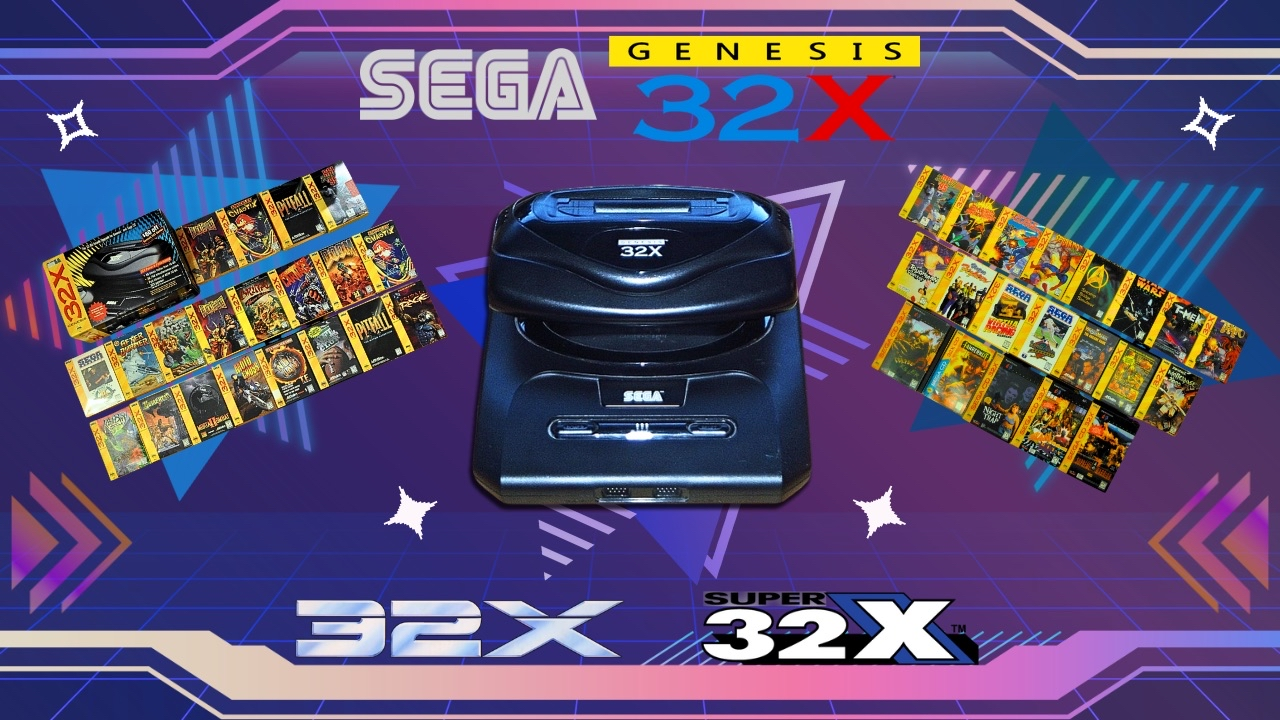
Image Source: Culture Slate
With the midpoint of the 90’s, Sega was looking towards the future with their new console. Sega of America, however, had one last trick up their sleeves to extend the lifespan of the Genesis. While it already had the CD add-on, Project Mars would be another peripheral. Originally pitched as a Genesis with double colors and half the cost, Project Mars would be a 32 bit system to compete with emerging systems like the PlayStation. This new system would effectively double the “bits” of the Genesis, though many people at the time didn’t really know what that meant. This wouldn’t go so well for Sega.
Development for what would be called the 32X began in early 1994. Alongside Project Mars, Sega was also working on the Sega Saturn, the Sega Neptune, a two-in-one Genesis and 32X, and the Sega Jupiter, essentially a cheaper Saturn.
RELATED:
While the Jupiter was quietly cancelled, and the Saturn would dominate discussions about Sega’s future, the 32X would be announced at the Sega Gamer's Day event in June 1994. However, few people were that excited for the 32X, as the Saturn was just around the corner, nevertheless, the add-on carried on, and was showcased at the Summer CES Event that year.
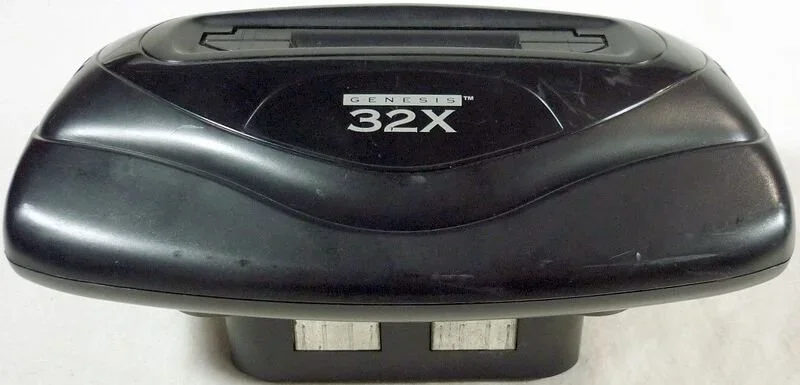
Image Source: Sega Retro
The Sega 32X would be released in November 1994. It was released without any pack in games at $159.99, 10 more than what was originally planned. Despite some initial drawbacks, it sold well for Sega. However, some people began to return their consoles, having trouble setting it up. The 32X slotted on top of the Genesis, but needed its own power and a cable to connect it to the system. This wasn’t helped by certain games which required both the CD and 32X add-ons, meaning three power sources, which could be hard to plug in, unless you bought Sega’s power strip.
The 32X was mushroom shaped, and could fit easily into Model 2 Genesis consoles, and was fully capable of playing Mega Drive games, so you didn’t have to remove it at all. Visually, the 32X was a clear upgrade, offering more colors and 2D sprites, along with 2D scaling and rotation. It was also capable of rendering 3D texture mapped graphics, which was all the rage back then. The audio chip provides a clear advantage over the Genesis, offering extra sound channels and multidimensional stereo. All in all, the 32X certainly delivered on its promise of being an upgrade to the system.
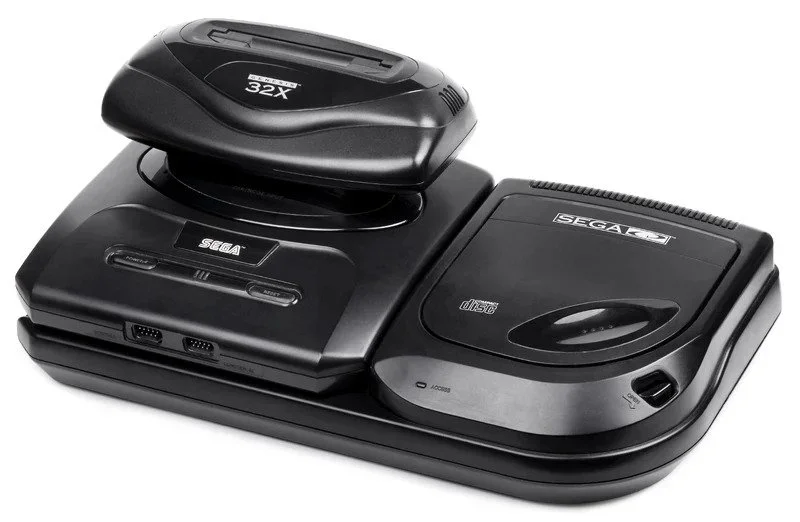
Image Source: Retro Console Wiki
Of course, one can’t really have a gaming system without games. There were a total of 40 games released for the system. Launch titles for the system included Doom and Star Wars Arcade, with Space Harrier or Virtua Racing Deluxe also being available depending on the region. Other games for the system include Knuckles Chaotix, a spin-off of the Sonic the Hedgehog series, Kolibri, a vertical shooter starring a hummingbird, ports of Primal Rage and Virtua Fighter, and T-MEK, among others. These games made use of the system in various ways, however, many of them didn’t fully take advantage of it..
Despite initial sales seeming to be promising, the 32X ultimately was considered a failure by Sega. As stated before, many people weren’t that excited for the add-on; it was meant to extend the lifespan of the Genesis until a successor could come out, but the Saturn was not that far off from release, and was already out in Japan. This made the 32X look like a waste, and many decided to turn elsewhere. These factors are believed to have played a part in Sega’s financial issues that would end their console careers.
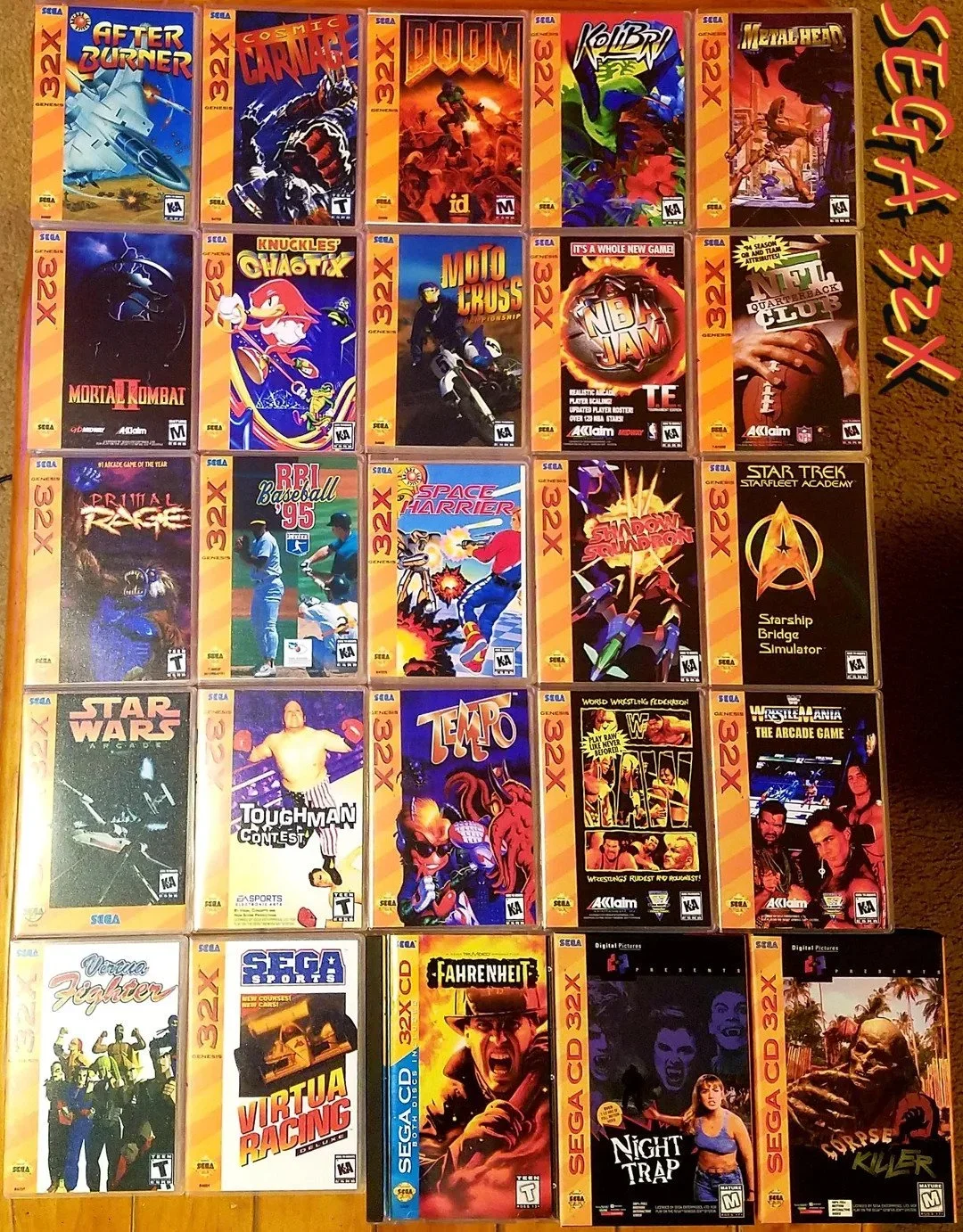
Image Source: Reddit
With consumers and developers moving on from the 32X, Sega saw the writing on the wall. The Sega Neptune would be cancelled, and all resources allocated to the Saturn. This left many games for the system to be canceled or switched to the new hardware.
The Add-On would cease production in 1996, just a couple years after it was launched, the last game for the system would be Spider-Man: Web of Fire. The add-on would be remembered by Sega fans as a failed stopgap for the Genesis, and contributed to the issues with the Saturn and the Dreamcast. Regardless, some games did have their fans.
READ NEXT:

Latest News

Featured






• All sizes are adult unisex
• Printed art on the front
• 100% cotton
• Pre-shrunk fabric
• Shoulder-to-shoulder taping
• Culture Slate Exclusive Design
See more products here