
How 'Star Wars' Subtly Connects To Mythologies Across Cultures
Image Source: CultureSlate
When Star Wars popularity went through the roof, Francis Ford Coppola suggested that George Lucas should quit making movies and turn the concept of the Force and the Jedi Knights into a religion.
Of course, this did not happen, but Coppola had a point, as there are definitely many connections between Star Wars, cultures, and religion. And we are not talking about the cult following the franchise has gathered over the decades (which sometimes tends to have religious traits), nor the fact that in an official survey from 2001, more than 390,000 people in England and Wales stated that their religion was “Jedi.”
RELATED:
No, we are talking about the subtle or not-so-subtle connections between Star Wars, (ancient) mythology, and religious beliefs across various eras and cultures.
In a 1999 interview with Bill Moyers, Lucas said this when asked what had been some of the cornerstones when creating Star Wars:
"Well, when I did ‘Star Wars’ I consciously set about to recreate myth and the—and the classic mythological motifs. And I wanted to use these motifs to deal with issues that existed today."
Over time, several religions have tried to make these mythologies their own, claiming that Lucas built concepts like the Force, the Light, and the Dark Side, or the monk-like Jedi Knights, on their respective writings and dogmas, when in fact Lucas' creation far exceeds the grasp of any single religion or methodology.
Greco-Roman Mythology

Image Source: World History Encyclopedia
Aside from serials like Flash Gordon or Buck Rogers, Joseph Campbell's book The Hero with a Thousand Faces (1949) probably influenced Lucas the most when he worked on writing the script for Star Wars. To this day, this film is mentioned first and foremost when it comes to applying Campbell's teachings to modern storytelling.
Luke Skywalker, a simple farmboy living on Tatooine (Ordinary World - stage 1 of the Hero's Journey), receives a"Call to Adventure" (stage 2), from Princess Leia, but is reluctant at first to follow Ob-Wan to Alderaan (stage 3: Refusal of the Call) until he is handed his father's lightsaber (state 4: Meeting the Mentor). He "Crosses the Threshold" (stage 5), when his uncle and aunt are killed, faces "tests" and meets "friends and enemies" (stage 6) when he encounters Han Solo and Chewbacca, infiltrates the Death Star, and frees the princes. The decision to join the Rebel Alliance and attack the Death Star is his "Approach to the Innermost Cave" (stage 7), and he has to fight his inner doubts and fears during the trench run (stage 8: Ordeal). When he uses the Force (instead of the targeting computer) it is his "Seizing the Sword" (stage 9), joining the rebellion to fight the Empire becomes his "Road Back" (stage 10) and his transformation from a farmboy to the hero of the Rebellion and possible Jedi Knight are his "Resurrection" and "Return with the Elixir" (stages 11 and 12).
Campbell created his Hero's Journey by studying and aggregating countless myth fables and stories from all over the world and different eras of time, and some of these stories date back to ancient Greek and Roman mythology.
Luke Skywalker's journey and transformation resemble those of Hercules or Perseus, guided by an Obi-Wan-like mentor, Chiron.
The concept of the Force reflects Stoic and Platonic ideas of a universal order akin to the Logos (the rational structure of the cosmos—the logic or order governing all existence).
The collapse of the Republic and the declaration of the Empire at the end of the Clone Wars mirror the fall of the Roman Republic and the rise of the Empire under Julius Caesar.
Hindu Mythology

Image Source: The Indusphere
The term "Katha" goes back 3000 years and refers to storytelling in North India at that time. One of these epics was called "Ramayana" ("Rama's Journey") and deals with a prince who lost his kingdom and his wife and had to go on an epic journey to get both back, making friends on the way and fighting countless enemies before he returned as an "ideal king".
One of the "dark lords" Rama had to defeat was Ravana, a powerful but fallen figure and the embodiment of the Dark Side.
Sounds familiar, right? Ramayana was another source on which Campbell built his monomyth.
The Hindu also believed in Atman, a unifying spirit of the universe, which is just another word for the Force, and Anakin Skywalker's "rebirth" as Darth Vader and his later redemption after killing the Emperor is symbolic of the Hindu belief in reincarnation.
Buddhist Philosophy
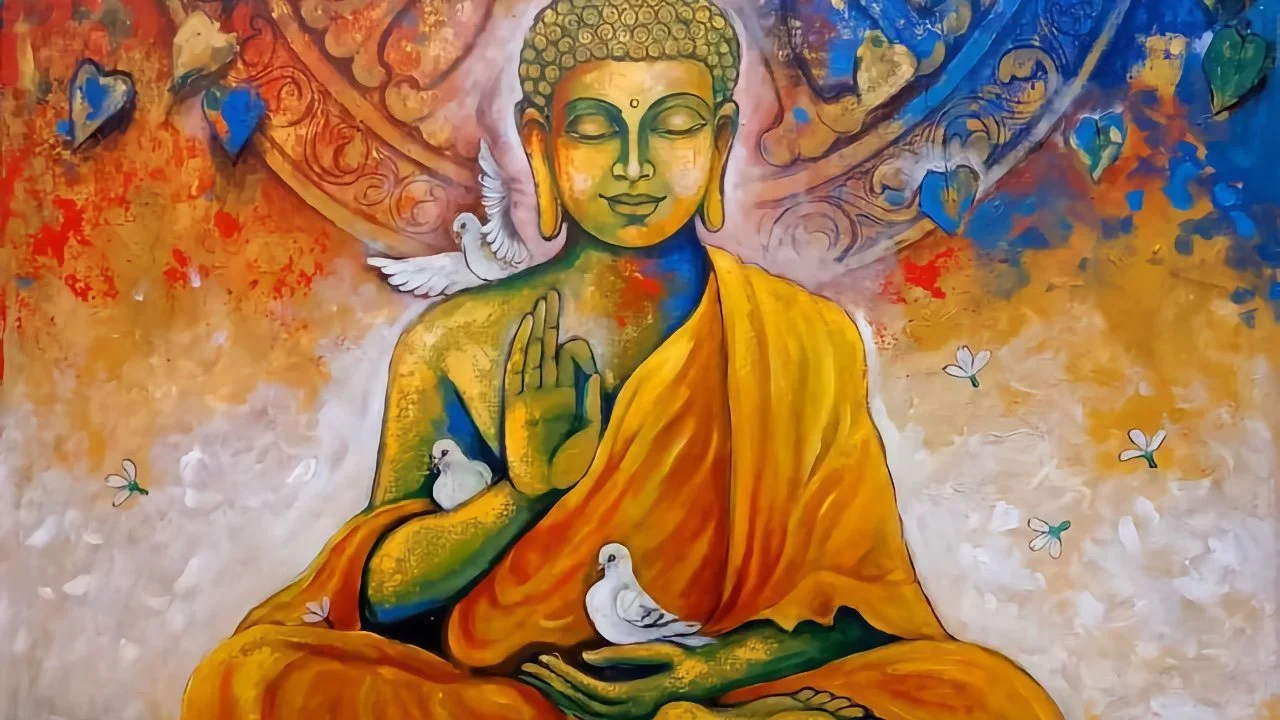
Image Source: Saatchi Art
The monk-like philosophy of the Jedi Knights to use power only for defense and not for attack, to let go of attachments and not crave personal wealth, to meditate to find answers and the balance between the light and the dark, very much resembles the teachings of Zen Buddhism.
One only has to look to the Jedi Code and the mantra of Buddha:
Jedi Code:
There is no emotion, there is peace.
There is no ignorance, there is knowledge.
There is no passion, there is serenity.
There is no chaos, there is harmony.
There is no death, there is the Force
Emotion, yet peace.
Ignorance, yet knowledge.
Passion, yet serenity.
Chaos, yet harmony.
Death, yet the Force
The Buddhist Noble Eightfold Path:
Right Understanding: Understanding the Four Noble Truths and the nature of reality.
Right Thought: Cultivating thoughts that are positive and free from greed, hatred, and violence.
Right Speech: Speaking truthfully, kindly, and constructively.
Right Action: Engaging in ethical and compassionate actions.
Right Livelihood: Earning a living in a way that does not harm oneself or others.
Right Effort: Striving to cultivate positive qualities and avoid negative ones.
Right Mindfulness: Being present in the moment and observing one's thoughts and feelings.
Right Concentration: Developing mental focus and concentration through meditation.
It doesn't take much imagination to see how the Noble Path influenced Lucas when creating the paradigms of the Jedi Order.
In addition, Yoda often behaved like a Zen Master, embodying wisdom but also being cryptic and minimalistic in his answers.
Christianity and Judaism

Image Source: Oratori Toronto
The probably most obvious connection between Star Wars and Christianity and the Jewish religion is the virgin birth of Anakin, but the influences go far beyond just that. The temptation of Anakin, the Chosen One, by Palpatine is similar to the Devil's attempts to lure in Jesus. Anakin's fall to the Dark Side can be compared to God banning Lucifer from Heaven, and Vader building a castle on the lava planet Mustafar is synonymous with spending a life in Hell.
In the end, he redeems himself, becoming a spirit-like Force Ghost watching over those who are still alive.
Islamic Influence

Image Source: 74FDC
Aside from the those points listed about Christianity and Judaism, many of which can be attributed to Islamic beliefs as well, the desert planet Tatooine resembles Bedouin life in North African cultures. The Jedi robes and spiritual warrior archetypes are comparable to Sufi mystics, and finally, the concept of inner jihad (struggle) resembles the Jedi's path to resisting the Dark Side.
Native American & Indigenous Cultures

Image Source: RG Munn Auctions
Many native American tribes, like the Lakota or the Navajo, believed in an omnipresent, almighty being that influenced and guided the lives and the deeds of the living, much like the Jedi and the Sith believed in the Force. Being in balance with nature and regarding each creature, big or small, as important is another aspect of the beliefs of these tribes that resembles the attitude of the Jedi towards nature (the Living Force).
The Ewoks' (and to some extent also the Wookiees') seemingly primitive way of living, resisting modern technology and believing in Gods embodied by nature, was likely influenced by native Americans.
Confucian & Taoist
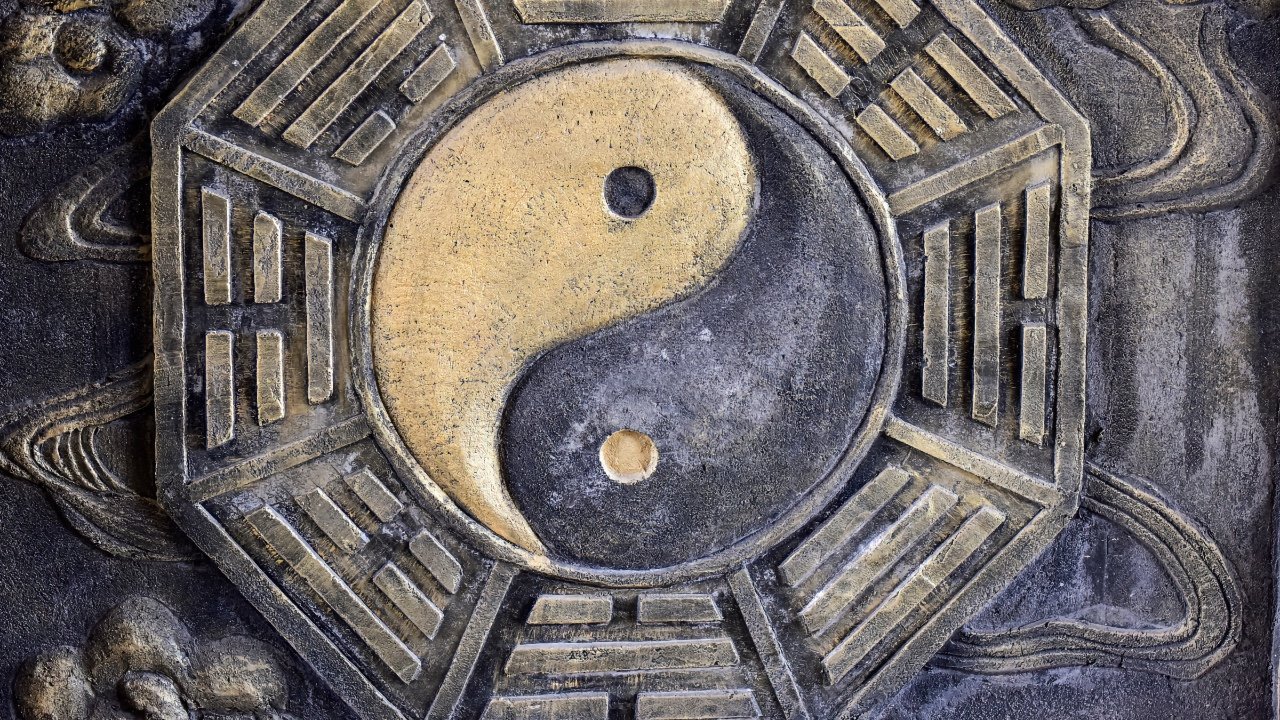
Image Source: Diversity Ressources
The balance of the Force resonates deeply with the Yin-Yang dualism. Taoism’s flow and balance ideology informs the Force's Light and Dark sides, and Lightsaber duels emulate samurai ethics and Confucian loyalty.
Hispanic and Latin Cultural Influences
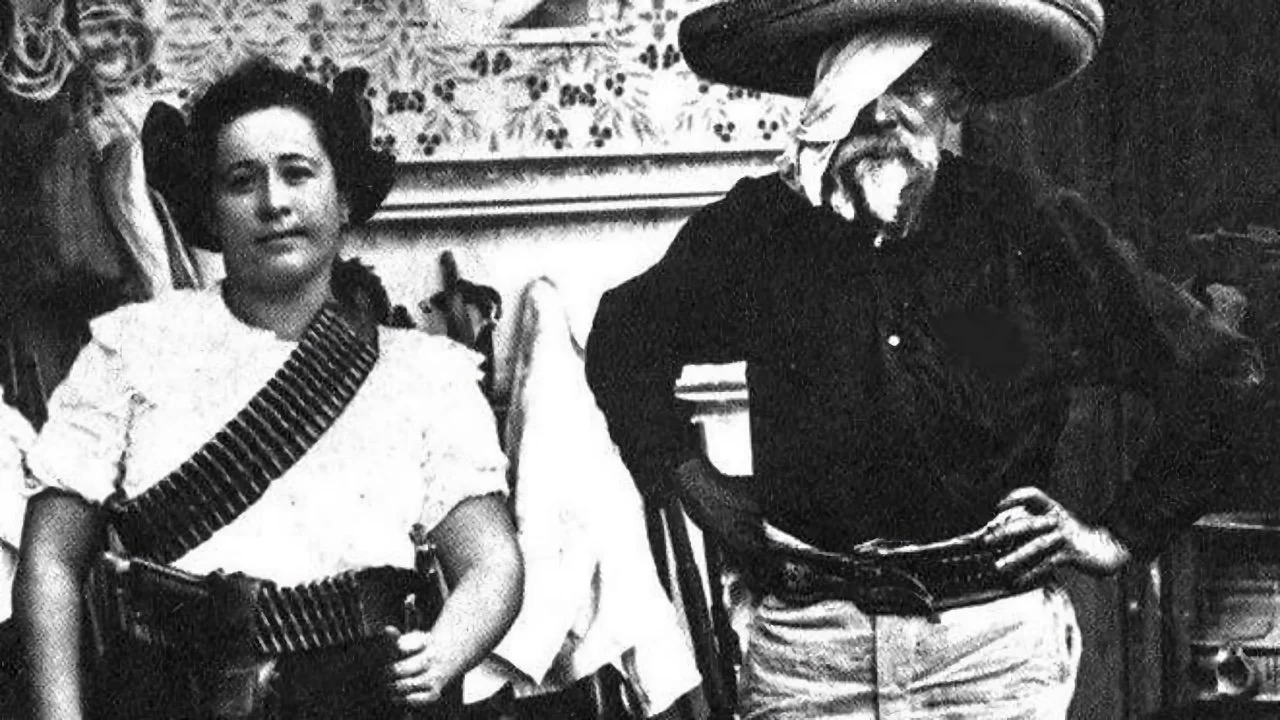
Image Source: BBC
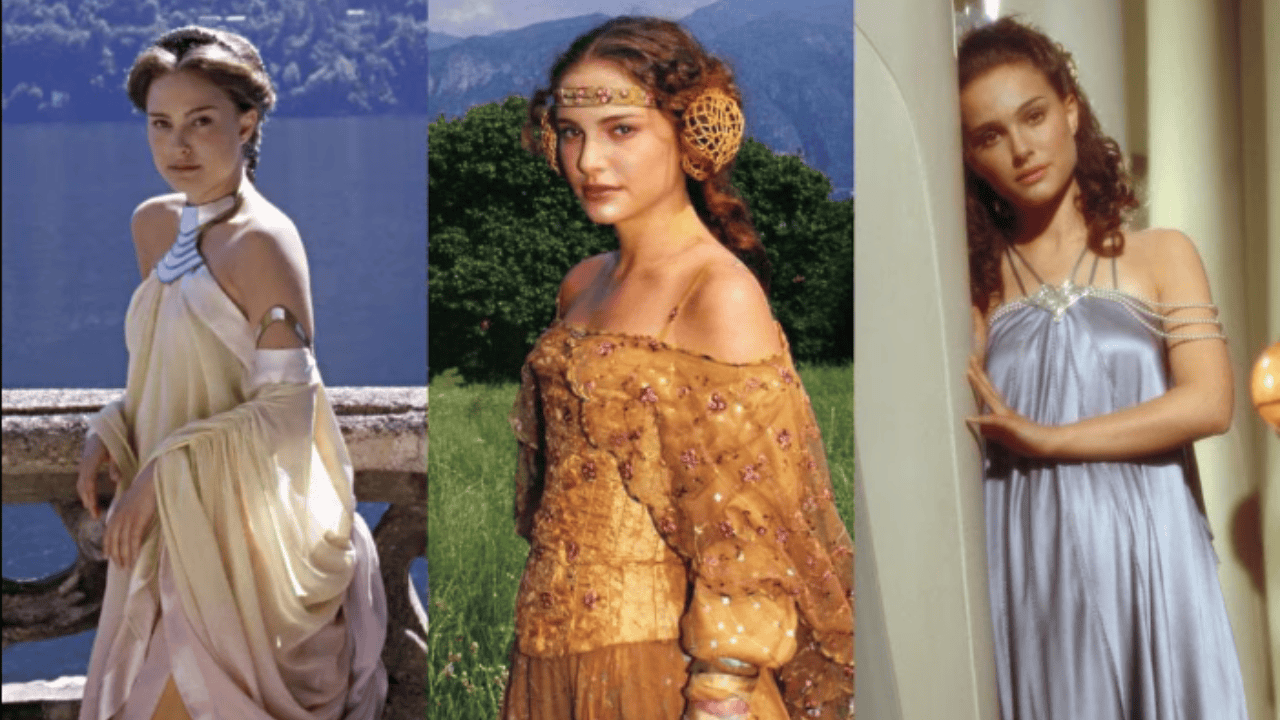
Many designs for costumes, hairstyles, and even whole planets like Naboo or Geonosis are influenced by Mayan or Inca styles and more modern fashions from South America. Princess Leia's classical hair buns were inspired by the southwestern Pancho Villa women's revolutionary look of Mexico from the turn of the 20th century.
Classic Latin archetypes of family honor, legacy, and rebellion often surface in various character arcs throughout the saga.
Arthurian and Medieval European Mythology
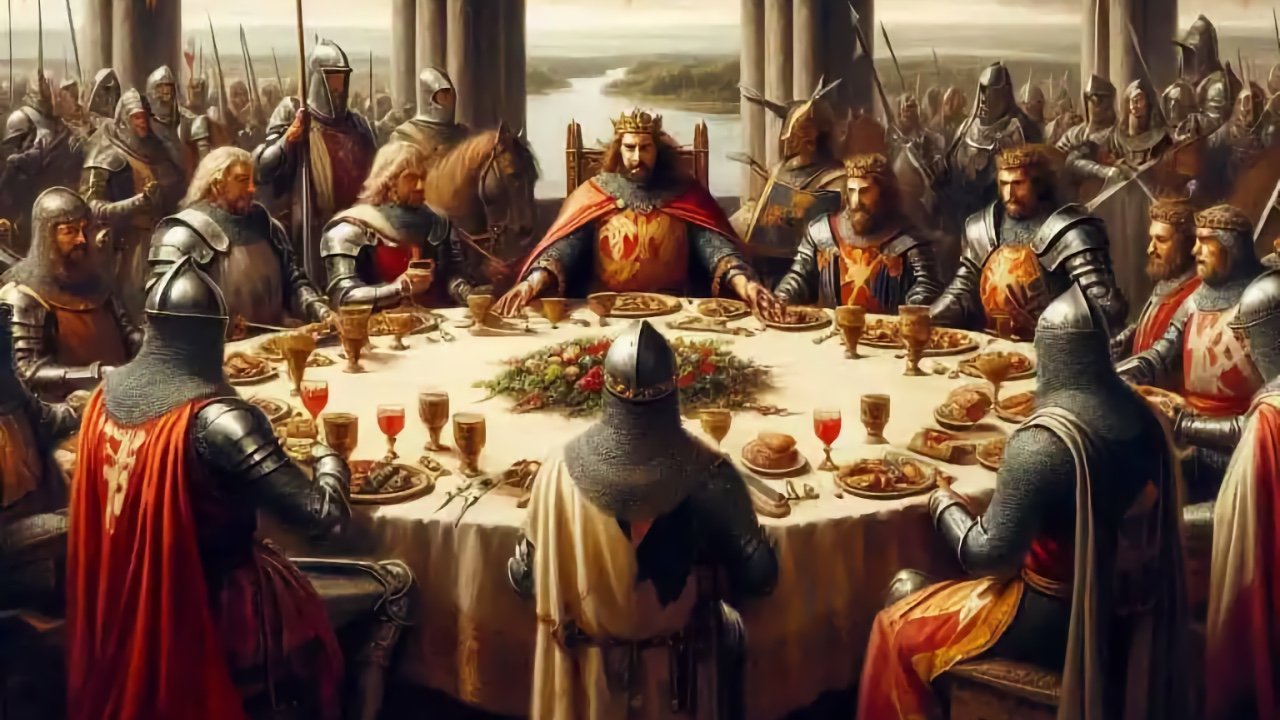
Image Source: Medieval Chronicles
Star Wars also draws heavily from the Europe of the Middle Ages. The term knight alone evokes pictures of men in shining armor, using (laser) swords to fight.
The Jedi Temple on Coruscant resembles a massive medieval castle, and the Jedi Council sitting in a circle is close to the Round Table of Arthurian stories.
The special ability to wield a lightsaber (or lack thereof) bears a resemblance to the mystical Excalibur, and Luke being guided by Obi-Wan (and later Yoda) is not too far from Arthur being taught by the wizard Merlin.
READ NEXT:

Sources: Joseph Campbell: The Hero with a Thousand Faces, Walter Damien: The 3000 year old sacred story that inspired Star Wars, Wookieepedia, Youtini
Latest News

Featured




• All sizes are adult unisex
• Printed art on the front
• 100% cotton
• Pre-shrunk fabric
• Shoulder-to-shoulder taping
• Culture Slate Exclusive Design
See more products here