
Image Source: Blogspot
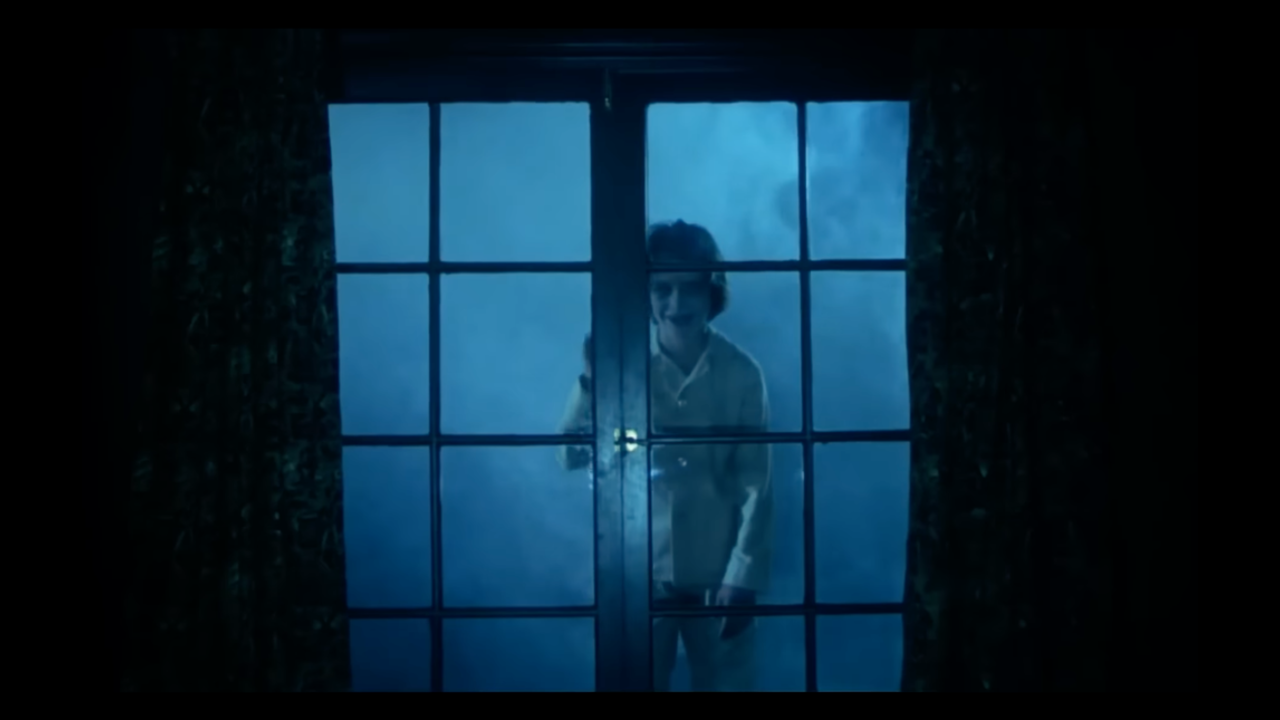
Salem’s Lot is a fictional town twenty miles north of Portland, Maine. It is the backdrop for the first Stephen King miniseries. By daylight, it’s a ghost town. By night, it’s a feeding frenzy.
The cult classic that reinvented the vampire genre made it abundantly clear that horror can broadcast through the airwaves of television and not exclusively through a darkened movie theater. It transformed vampires from a tired formula of highly cultured Transylvanians into a gothic stab at suburbia.
RELATED:

A lot was riding on this adaptation. After all, it was outside King’s hands. He had yet to earn the moniker “Master of Horror.” If a failure, it might have made the author of Carrie a one-hit-wonder. Indeed, he nearly aborted his writer’s journey altogether when he threw the first pages of his first novel in the trash because he thought himself too disadvantaged at imagining the experience of a female teenager. Not until his wife found the scraps and urged him to finish Carrie would Mr. King have the motivation to press on. (Source: On Writing) It was an act of love that the wheels of a talented career chugged forward, and it is a relevant anecdote because this is reflected by the protagonist of Salem’s Lot.
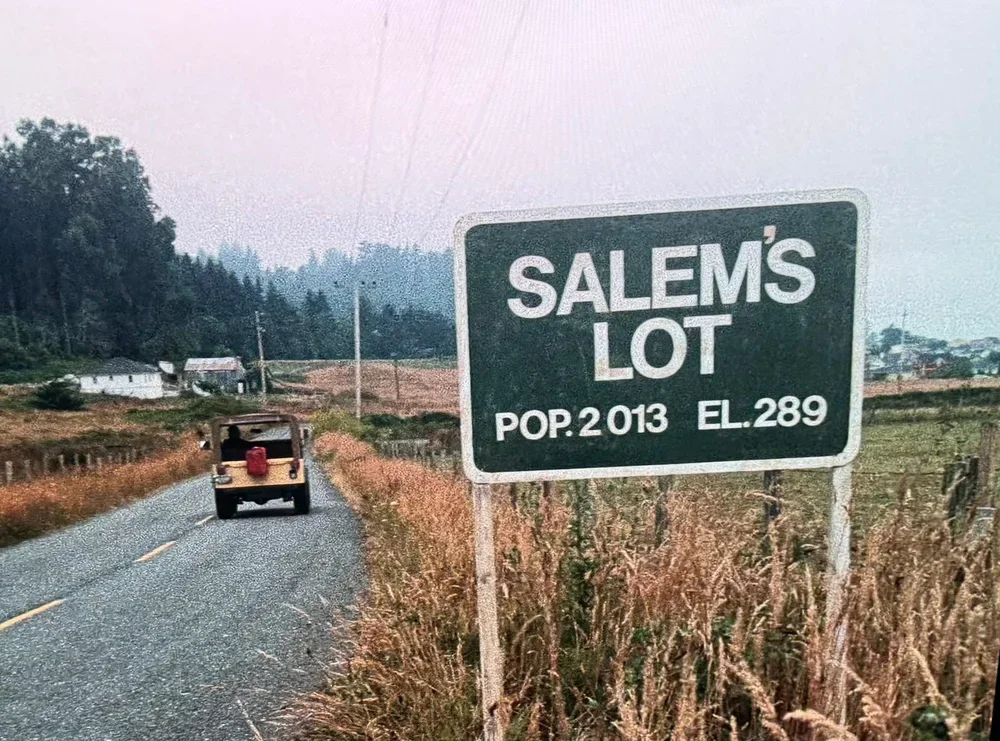
Image Source: Bad Elizabeth Pod
Ben Mears (played by David Soul from Starky & Hutch) is a struggling writer who hopes to capture that spark of life by returning to his hometown of Jerusalem’s Lot, better known as Salem’s Lot. He meets college graduate Susan Norton (played by Bonnie Bedelia of The Big Fix), who serves as a single, welcoming light upon his return to a place where most other townies distrust him. Ben’s homecoming is cursed by tragedy when a local boy is kidnapped, and the boy’s brother dies in the hospital under strange circumstances.
The plot escalates from a personal story that reflects its maker, Stephen King, into a murder mystery, before finally metamorphosizing into a struggle between faith and greed. Anyone who watches Salem’s Lot today knows that this is one of the most potent examples of vampires. That was not widespread knowledge when picking up the book in 1974, or chancing upon the CBS channel in 1979. Like watching a loved one die of disease, the pacing of this three-hour two-part miniseries is a slow burn—one that King applauds as faithful to his original source material (Source: Cinefantastique)—unlike his thoughts concerning the more well-known The Shining that he disliked. (Source: Collider)
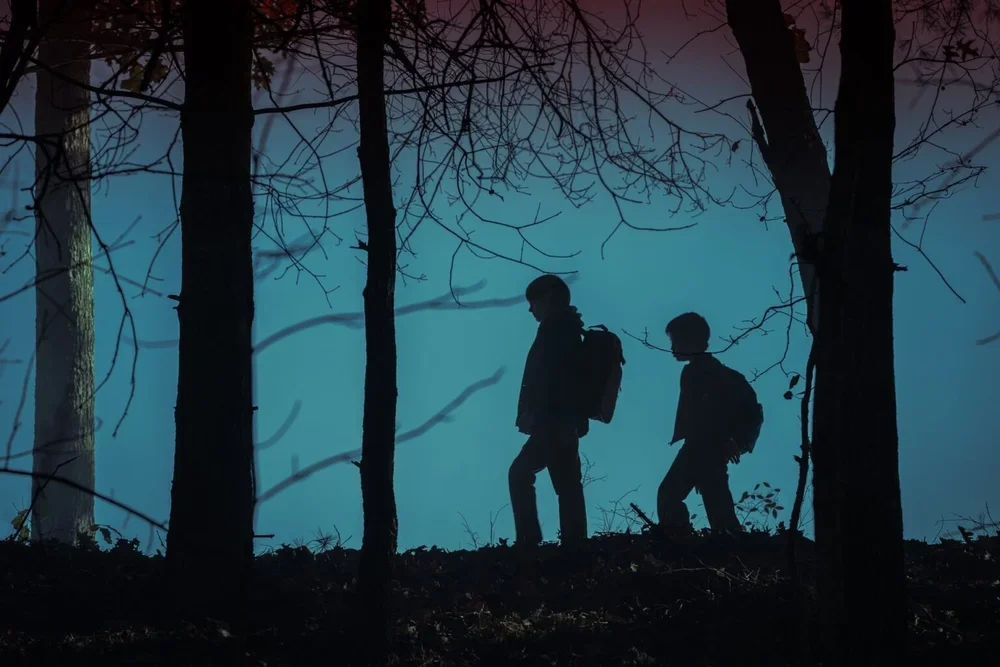
Image Source: Reactor
Salem’s Lot is remembered as one of the better King adaptations because it understands that a large cast means taking the time to make the town a character. It has its clueless bums and apathetic cops, delivery drivers and adulterers, but all denizens would agree that nothing too outrageous happens here. That is exactly when a clawed hand reaches for their sleepy heart. A massive weight is dropped once it becomes obvious that vampires are on the rise. The disappearances quickly prove to be an epidemic of supernatural proportions.
Ground zero for vampires into the U.S.A. is the Marsten House, an evil place staring down upon the town. It is occupied by Richard Straker (played by James Mason of A Star is Born), a devout collaborator to the Nosferatu-type head vampire, Kurt Barlow. Barely anything is discovered on his origins throughout the miniseries, but it matters not. In a few rotations of the moon, Barlow succeeds in turning everybody like him. The Marsten House represents Ben’s childhood trauma. It is a dark, decrepit epicenter that appears as cadaver as the Master himself. This haunted house is a type of setting that the author will use again with the house on Neibolt Street in his later novel, IT.
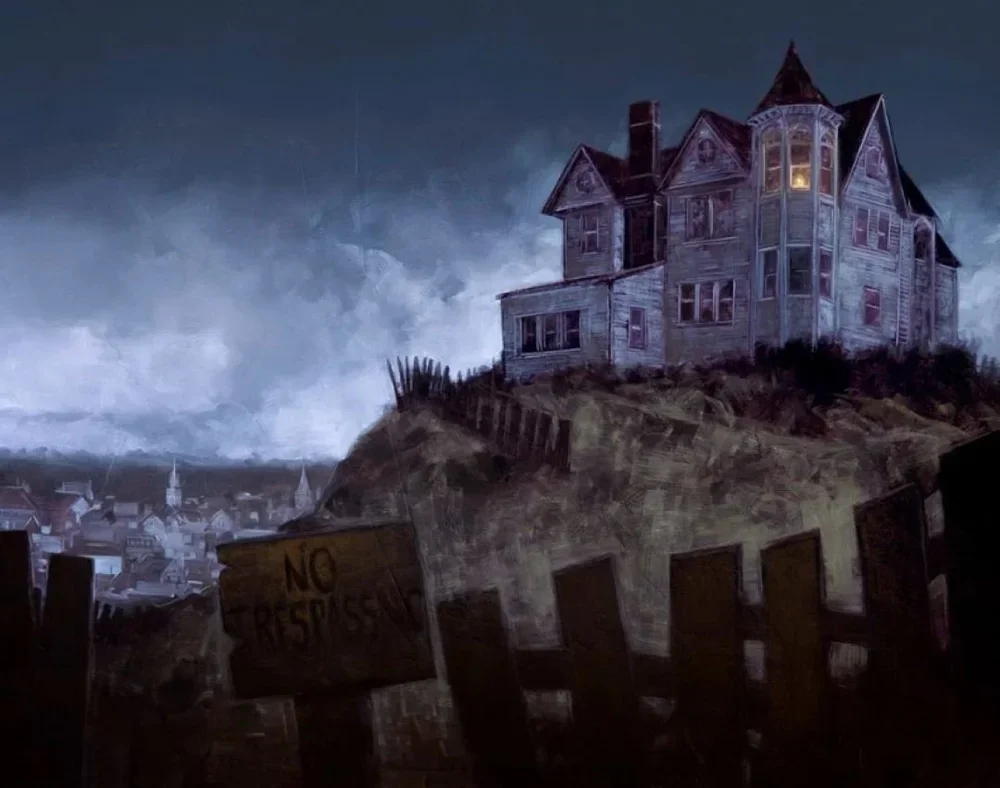
Image Source: Last Movie Outpost
King’s illustrious career, that almost ended before it started, is more prolific than anyone alive today. If stacked on top of each other, every page of every book he has ever written would be as tall as a house! He struck gold fifty years ago and like Barlow, nothing has slowed him down.
If anything, the themes of Salem’s Lot are more relevant today than when it aired. King was inspired by the communal decay of small towns, especially in northern America where his home state of Maine resides. This connection is made apparent when a lyric from Bob Dylan’s “North Country Blues” is an epigraph before the third act: “…Tell you now that the whole town is empty.” Dylan’s song is about the real-world history of blue-collar towns whose populations evaporated when the ore deposit dried or when the company made their workforce suffer by offshoring.
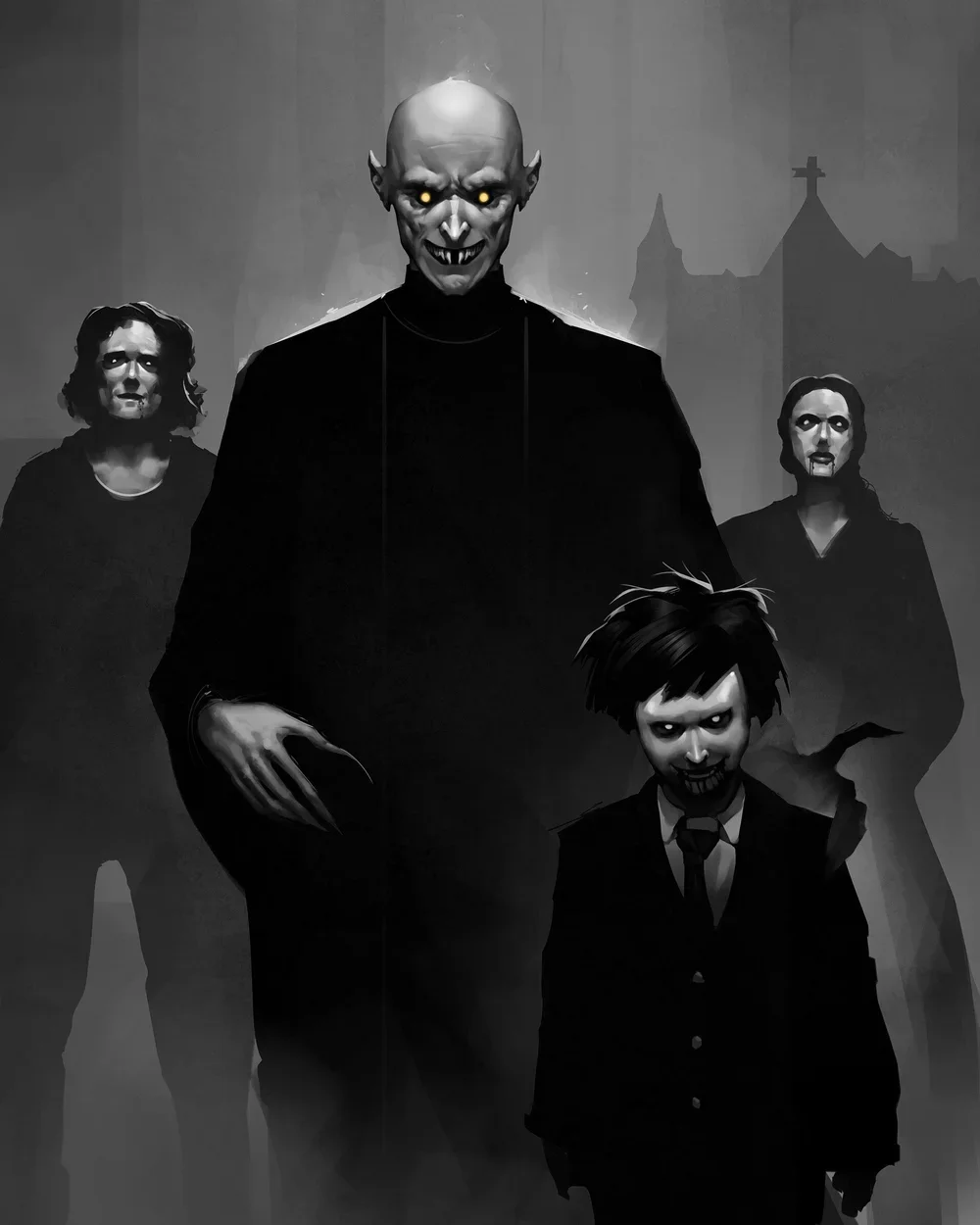
Image Source: Sebastian Bretthauer
For Salem’s Lot, “The Man” are a conspiracy that wipes out an already bypassed burg. But what’s worse, vampirism robs a person’s individuality and the choice of whether to be civilized gets stolen in exchange for eternal life as a pale, starving corpse. That kind of struggle to remain an individual is apparent through social media algorithms that encourage as many users as possible to shut themselves indoors and stay addicted to doomscrolling while the passage of time becomes ever more immaterial. Like vampires losing their old livelihoods to the infection, Internet consumption can coop anybody into a hateful and deprived state of mind where the only motivation is to feel young forever. The days slip by as all light of the world is forgotten in exchange for nocturnal cravings.
It is relevant comparisons like these that make the 70s era adaptation truly undead, even if it’s no mystery as to why such a yarn has lasted so unnaturally long.
CultureSlate: Made by humans, for humans.
Please consider supporting our AI-free content via our Patreon page.
READ NEXT:
Sources: On Writing: A Memoir of the Craft, Cinefantastique Vol. 9 No. 2, Collider, The Guardian, Reactor, ArtStation, The Movie Database, Bad Elizabeth,
Join The Team
Latest News



Featured






• All sizes are adult unisex
• Printed art on the front
• 100% cotton
• Pre-shrunk fabric
• Shoulder-to-shoulder taping
• Culture Slate Exclusive Design
See more products here