
Sounds Of The Grid Pt. I: Wendy Carlos And The Music Of 'Tron'
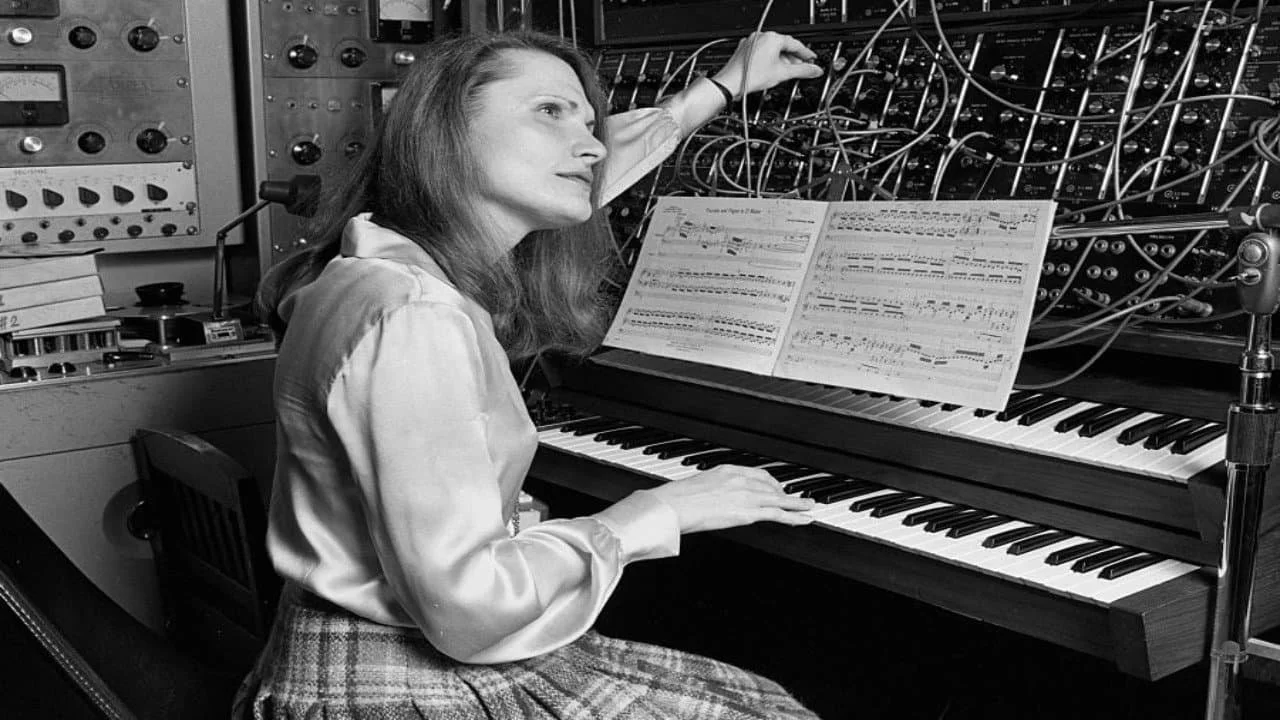
Image Source: KDFC
Greetings, programs! As we approach the milestone 15th anniversary of Tron: Legacy, we here at Culture Slate will take you on a musical journey! Ever wondered how the scores for the Tron movies were made? Ever wondered who scored them? Well, look beyond this trilogy of editorial: Sounds Of The Grid! And as we dive into Part I, we need to go back to the beginning!
Inspired by the rise of video games, Steven Lisberger envisioned a film that would transport viewers into the world of gaming, much like Alice's journey through Wonderland. Frustrated by what he perceived as cliquey environments in the video game and computer spaces, he saw the film as an opportunity to open those worlds to everyone. Drawing inspiration from his university days, Lisberger looked to a character he had created named Tron. The rest, as the kids say, is history. Tron was released in 1982, and the reviews at the time were mixed, with praise towards the film’s groundbreaking visual effects, sound design, and the performances, particularly Jeff Bridges as Kevin Flynn. Most, if not all, of the criticism was directed at its screenplay, a common criticism throughout the Tron franchise. The film sadly was not the Star Wars-level hit Disney was hoping for, only making $50 million worldwide. Despite the mixed reviews and tepid box office, Tron has been hailed as a landmark film, especially for its visual effects. Filmmakers who pushed the boundaries of visual effects themselves, such as James Cameron, George Lucas, John Lasseter, The Wachowski Sisters, Tim Burton, and Peter Jackson, have all hailed Tron as a benchmark for computer-generated effects. Since its release, Tron has developed a devoted cult following and is now considered to be one of the greatest science fiction films of the 1980s and of all time. Amidst the groundbreaking visual effects, quotable lines, exhilarating action sequences, and stylish costumes, there's another element of Tron that has consistently garnered acclaim: the musical score.
While the 80s were a significant decade for genre movies, 1982 specifically saw many prolific film composers casually drop some of their most iconic work. Whether it’d be Ennio Morricone’s haunting score for The Thing, Jerry Goldsmith’s double whammy of The Secret of NIMH and Poltergeist, Vangelis’ atmospheric work on Blade Runner, Basil Poledouris’ rousing score for Conan the Barbarian, James Horner’s breakout score for The Wrath of Khan, and above all, John Williams’ legendary tear-jerking score for E.T. the Extra-Terrestrial. E.T., obviously being the most famous of the bunch, as it won Williams his 4th Academy Award and remains a staple of his storied career alongside Jaws and Star Wars. While all these scores have earned their place as some of the best genre movie scores of 1982, and even the 1980s in general, one score stands next to them, and even surpasses a few, in terms of quality and influence, despite not receiving the same cultural status as the rest.
In Part I of Sounds Of The Grid, we shine a spotlight on one of the most influential women in music: Wendy Carlos!
RELATED:

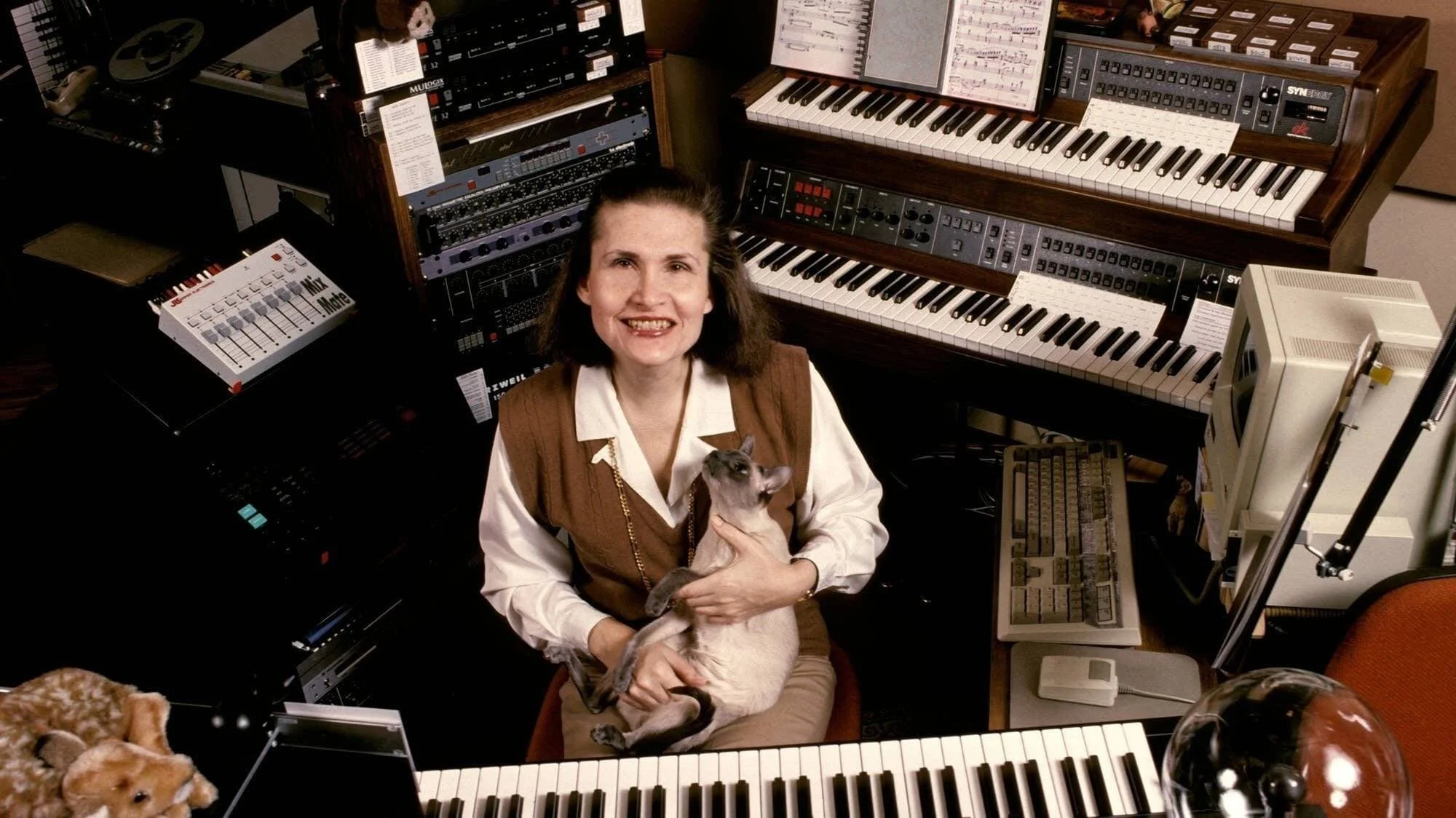
Image Source: Your Classical
It's tough to condense Wendy Carlos' extraordinary life into just a few paragraphs. As one of the most influential electronic musicians alive, her story is as captivating as it is dramatic. Born to musically gifted parents, Carlos' love for music blossomed at a young age. She composed her first piece of music at 10, earned a high school scholarship for building a computer, and graduated from Brown University with degrees in music and physics. Throughout the '60s, she embarked on various side quests, which included assisting Leonard Bernstein, crafting jingles and sound effects for commercials, and forming a close partnership with singer Rachel Elkind and electronic music pioneer Robert Moog. In 1968, Carlos released her debut studio album, Switched on Bach, on which she performed electronic interpretations of Johann Sebastian Bach's music. Despite being dismissed by classical music enthusiasts, the album was a hit with listeners, peaking at #10 on the Billboard Hot 200 and earning her three Grammy Awards. Thanks to her prolific output throughout the 60s, 70s, and 80s, Carlos has widely been considered one of the most essential living pioneers of electronic music. Some may say she’s the most important person, earning the title “The Godmother of Electronic Music” from many music critics and historians. And lest we forget, Wendy Carlos is a trans woman.
Carlos's identity as a trans woman might not seem significant on the surface, but it's crucial to recognize. In our current political climate, trans people have unfortunately become public enemy number one worldwide, making us highly unpopular. While gestures like Pedro Pascal wearing a "Protect the Dolls" shirt are sweet, truly protecting us means shining a light on our art, too. From a young age, Wendy Carlos experienced gender dysphoria, often opting to grow her hair long and wear feminine clothing. In 1962, while in university, she was introduced to transgender studies, which helped her understand her feelings and the steps she needed to relieve them. This will lead her to meet sexologist Harry Benjamin, who wrote the revolutionary book The Transsexual Phenomenon, also known as “The Transsexuals’ Bible”. While the book in later years has received criticism for creating stereotypes such as the outdated description that trans people are “born in the wrong body” and other problematic aspects that I have neither the time to explain nor do you want to hear about in an editorial about Tron (I promise we’ll get there again in a bit), the book has been credited for shining a much needed spotlight on trans issues in medical studies. After consulting Benjamin on The Transsexual Phenomenon, Carlos started hormone replacement therapy in 1968. Even when starting the process, Carlos continued to disguise herself as a man for public appearances and meetings with director Stanley Kubrick. This is what we trans girlies today call “boymoding.” After the success of Switched On Bach, Carlos was able to afford facial feminization surgery and publicly came out in 1978, ten years after starting HRT. Since then, all of Carlos’s work has been credited to her real name, and albums released under her deadname were reissued to reflect her true self. If you’ve been in any trans space, either in the real world or online, you know that a trans woman being good at electronic music is a stereotype. But what a sick stereotype it is. But you know what’s cooler than being a trans woman who creates influential, beloved electronic music? Being a trans woman who scores influential and beloved movies.
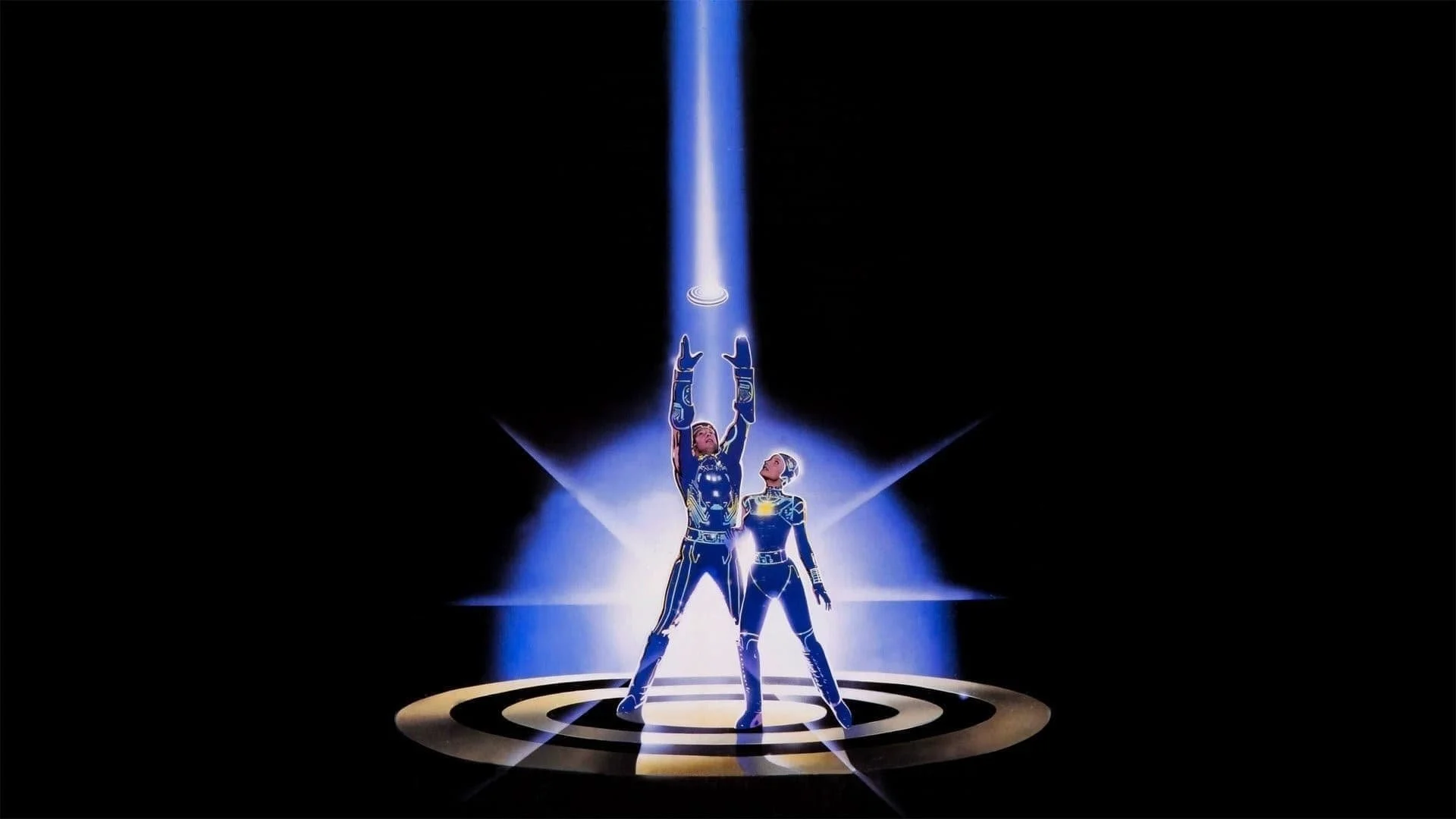
Image Source: Wallpapersden
An underappreciated aspect of Wendy Carlos’s many musical accomplishments is her work on film. Famously, Carlos provided the scores to Stanley Kubrick’s two most iconic films: A Clockwork Orange and The Shining. However, Wendy Carlos’s film work doesn’t always come up in conversation because Kubrick cut most of her music from both films. Carlos has expressed her dissatisfaction with her music for A Clockwork Orange being largely removed, accusing Kubrick of being rigid and being too enthralled with the temp score. Stanley Kubrick also did this to Alex North, who composed an original score for 2001: A Space Odyssey, only to replace it with classical music he used as temp.
However, Carlos’s work for Tron is easily her most famous film work. Not only because it’s the only score she did that actually made it into the final film, but also because it was so unique for the time. Initially, sound supervisor Michael Fremer hired Carlos to provide an electronic score for scenes set in the digital world, while another composer would provide a more traditional orchestral score for scenes in the real world. Eventually, Fremer agreed to let Carlos write the entire score. However, Wendy was not interested in just doing electronic music; she wanted a challenge. Wanting to marry the electronic music she was known for with traditional orchestral sounds, Carlos’s process would eventually have her score become a fundamental aspect of Tron. Wendy Carlos’ score may come off as outdated to untrained ears, especially in comparison to the more modern and visceral scores of Legacy and Ares. However, her musical score is an essential component that makes Tron what it is. To accompany the orchestra, she used a Moog Modulator Synthesizer and Crumar GDS (General Development System). The latter is especially noteworthy since it was Carlos’s first time using a digital synthesizer. While the Moog synthesizers were used primarily to make the score feel livelier and otherworldly, the Crumar GDS helped the score find its footing on the more droning, sinister cues, particularly in scenes featuring the villain Sark. The Crumar GDS was also one of only ten in the entire world.
In Carlos’s own words, the score for Tron is built around two themes. A main theme that also doubles as a love theme for the titular Tron and his love interest, Yori, and a militaristic march that was primarily used during action sequences. The main theme (which appears on the soundtrack as Theme from Tron) is sweeping and romantic, and it marries the electronic and orchestral worlds. Describing its creation as coming to her in the middle of the night while she slept, the theme came to Wendy in almost complete form. I suppose that adds to the theme’s dreamlike sound. At Disney’s insistence, the London Philharmonic Orchestra performed the orchestral parts of the score. The LPO has also performed acclaimed scores in other well-known films, including Lawrence of Arabia, The Fly, and all six Peter Jackson-directed Middle-earth films. Despite the untested marriage of electronic music and traditional orchestral score, everyone ultimately succeeded.
There were minor bumps in the road, such as Wendy’s cue for the film’s iconic lightscycle sequence being cut in favor of letting sound effects score the scene (much to the chagrin of Wendy). And the second half of the Ending Titles is replaced in the final film by the Journey song Only Solutions. However, when the film was released on DVD in the 2000s, a bonus feature allowed the end titles to play in full. Despite Carlos's initial reservations about the use of orchestra in the final product, she has since come to embrace Tron as one of her most beloved and well-known works. So much so that she's made a point of acknowledging the demand for a physical release of the score with some sound clean-up, which fans got in 2002. The score was released on vinyl in 2014, which makes Tron the only readily available work of Carlos’s you can find.
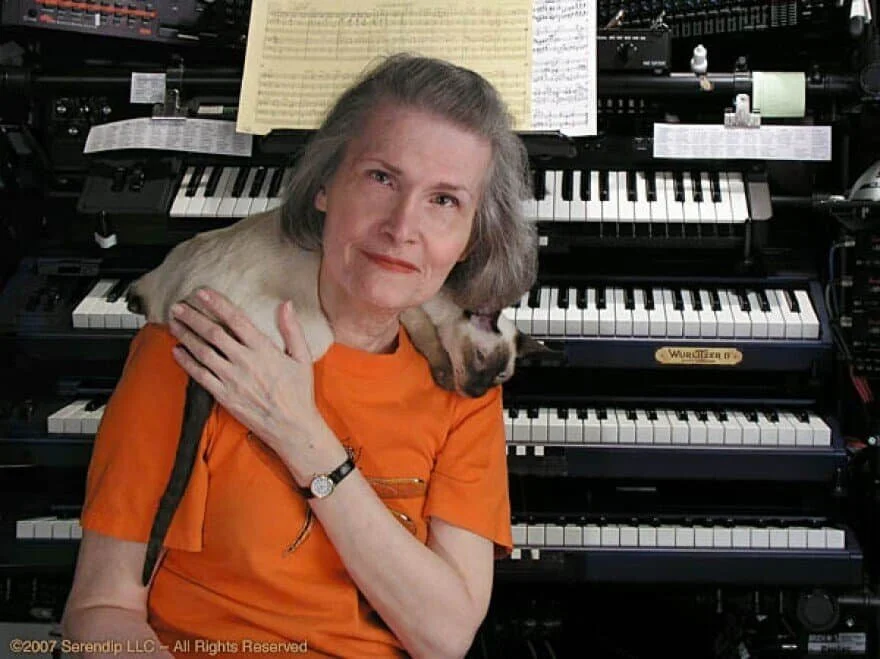
Image Source: Wendy Carlos.com
When I started this editorial, a friend of mine described Wendy Carlos’s hiring for Tron as the filmmakers' attempt to find the sound of the future. And honestly, that’s the best way to put it. Wendy Carlos and the filmmakers behind Tron probably didn’t realize they were going to change the game. But we, as fans of good sci-fi cinema, appreciators of game-changing visual effects, and connoisseurs of great film music, are all the better for it. It’s hard not to listen to Carlos’s score and not be taken by the sweeping orchestra and the simplicity of her themes. While cynics could mock Carlos’s Tron score for sounding outdated and lacking the complex catalog of themes and leitmotifs that have graced Star Wars and The Lord of the Rings, its simplicity and very ‘80s sound give it a certain charm.
While Carlos’s work is sadly notoriously hard to find, and she has been out of the public eye for the last 17 years, we can still be thankful that she was courageous enough to grace the world with her art. Trans women in creative fields or trans women who aspire to be in creative fields don’t get the credit, love, and attention we deserve. Especially in modern times, it’s hard to get eyes or credit for things we create, even from people we’re supposed to be in community with. But there’s a sense of solace in knowing that Wendy Carlos is as successful and influential as she is in a medium that’s hard to break into. The fact that Wendy’s influence, talent, and ambition speak for themselves and cement her legacy as one of the most important musicians is heartwarming. The fact that she was able to achieve any success in a world that didn’t want her gives me some hope for the future. And that’s what Tron is at its core: hope for the future. A world where anything’s possible, where good always triumphs over evil, and ambition and heroism go hand in hand. At the end of the day, that’s the main takeaway from both Wendy Carlos’s legacy and the themes of Tron: Remember to create and always fight for the users.
Please tune in next time as we enter the Grid and take a look at the score for Tron: Legacy! Stay tuned, programs!
READ NEXT:

Latest News


Featured





• All sizes are adult unisex
• Printed art on the front
• 100% cotton
• Pre-shrunk fabric
• Shoulder-to-shoulder taping
• Culture Slate Exclusive Design
See more products here