
The World of 'Warhammer 40K': Orks
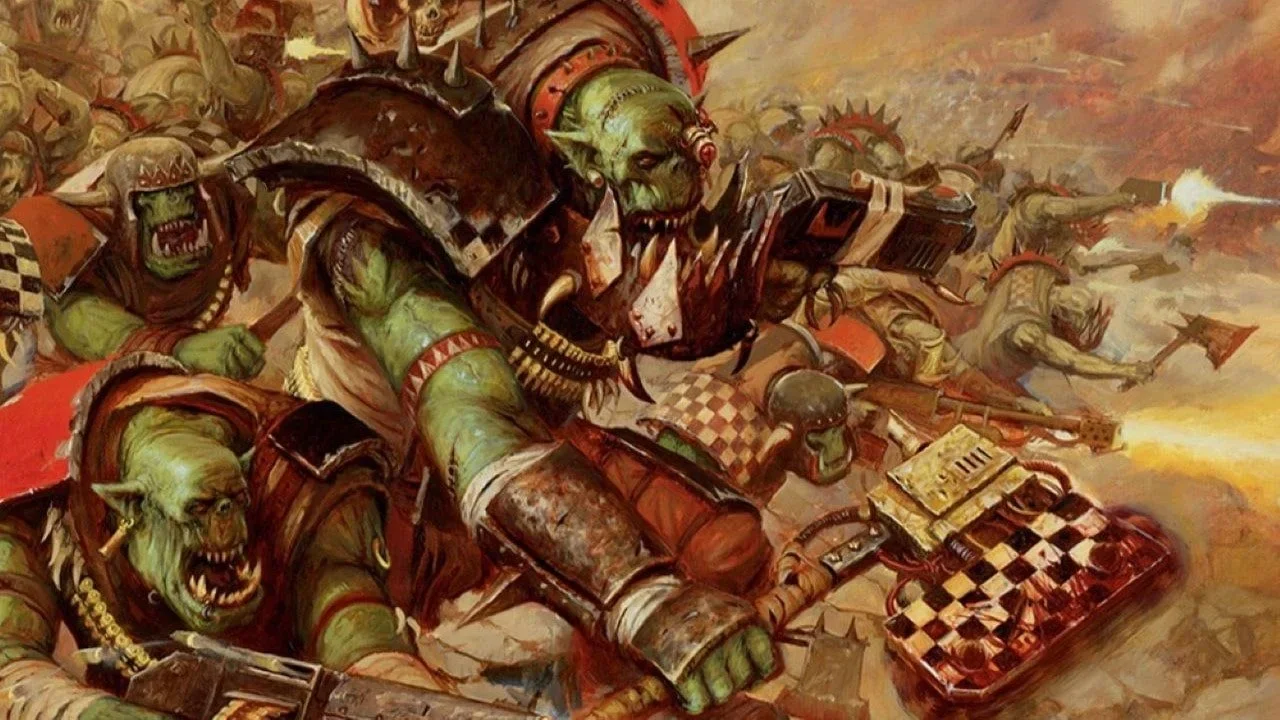
Image Source: Warhammer-Community.com
D’ere iz jus one truf in da ‘ol ga-laxi ‘n dis iz dat Orks, dey be da best! Don’t worry, we won’t attempt to write any more of the distinctive Orkish speech patterns, but the Orks certainly hold a high opinion of themselves.
Descended from ancient superweapons of the War in Heaven, the modern Orks are a species of fungal beings who grow, fight, and die at an astonishing pace at millions of sites across the entire 40K galaxy. Able to survive in incredibly hazardous environments, their hardy nature is matched by their extremely hazardous nature on the battlefield. While most Orks are not the brightest bulbs, they will easily smash that bulb, eat it, and then spit the results into the face of any attacker, or defender, or fellow Ork who gets in their way.
RELATED:
History of the Orks
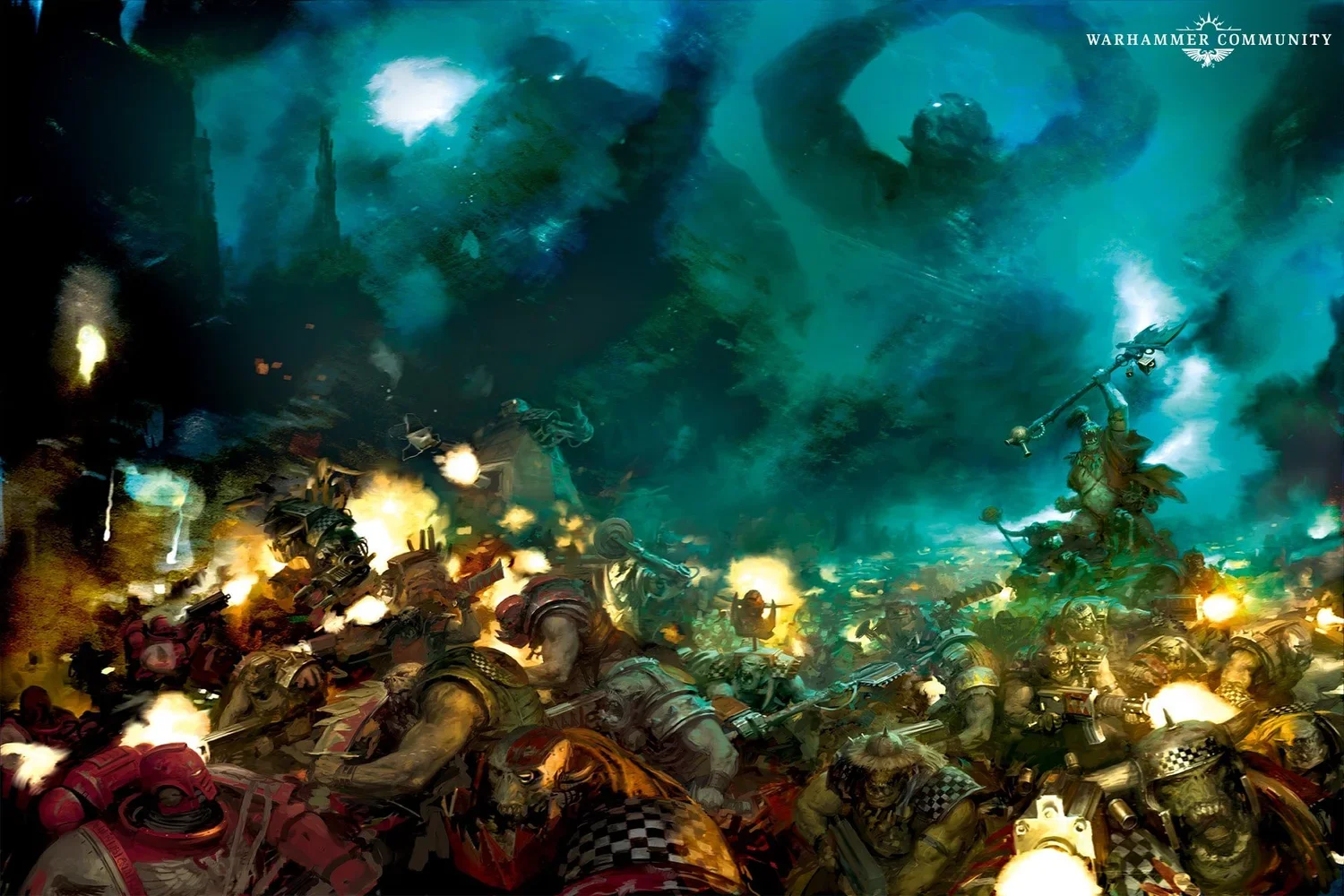
Image Source: Warhammer-Community.com
The Orks, as a result of an extremely chaotic nature, generally do not keep records beyond myths and legends of their kind’s greatest deeds. However, other species of the galaxy have kept records or are aware of the Orks’ long-forgotten origins. During the War in Heaven, when the Necrons fought the Old Ones, the Orks were called the Krork, and served alongside the Aeldari as weapons in the conflict. As opposed to the Orks of today though, the ancient Krork were huge beings, towering figures with large suits of armor who bore massive weapons. But in the millions of years that followed the end of the War in Heaven, while the Aeldari ascended, the Krorks stumbled. Exactly why is unclear, but they gradually deteriorated into modern Orks, who have infested the galaxy for countless millennia at this point.
When the Great Crusade by the fledging Imperium of Man began, one of the biggest xenos threats were the Orks, persistently found across the whole expanse of the galaxy as the Imperium expanded and drew human systems back under centralized control. Various Orkish empires and states stood in the Imperium’s way, but they were all destroyed, though after the Horus Heresy, the Orks eventually got back at the “umies”. An Ork attack moon dropped into orbit right above Terra centuries after the Heresy, the culmination of a campaign of chaotic combat which had raged for some time prior. Terra sent out a panicked recall of any and all forces to fend off the xenos threat and the Imperium was ultimately victorious in what became known as the War of the Beast, but at the cost of millions of human lives. The Orks would sadly be underestimated again and again across the galaxy over the following millennia despite this event.
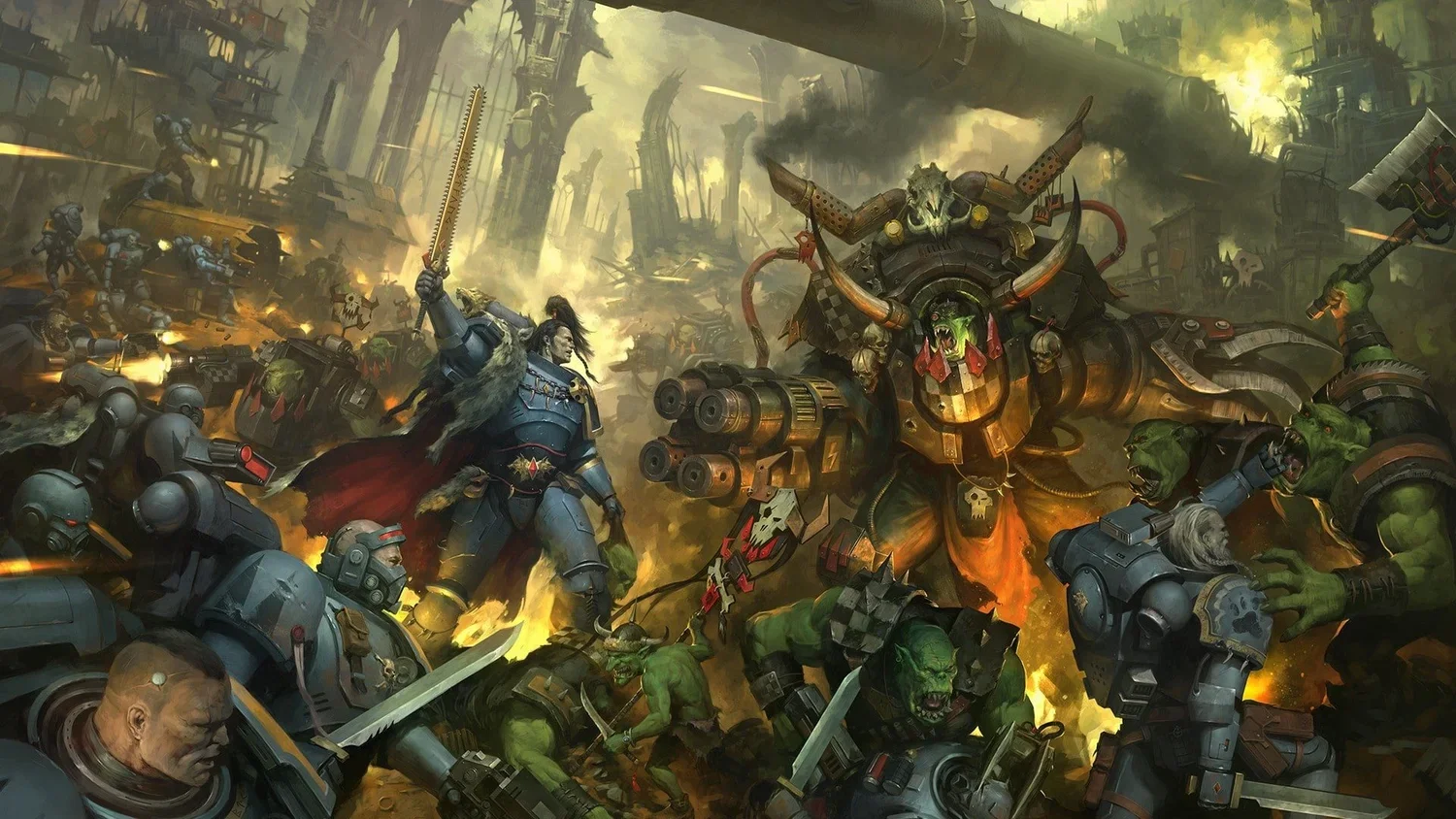
Image Source: Warhammer-Community.com
In the modern day, Ork warbands, Waaaghs and other forms of organization fill the divided galaxy. Two of the biggest groups worth mentioning are the forces of Ghazghkull Mag Uruk Thraka and the Orks of the Octarius sector. Ghazghkull is the biggest threat to the Imperium due to the colossal weight behind his military forces. He is also physically the biggest Ork currently known, with shockingly high intelligence to match that physical size. His great Waaagh devastated the world of Armaggedon, formerly an Ork world the Imperium of Man conquered during the Great Crusade, and he remains active in the galaxy. He also has a legendary rivalry with the Imperium commander called Commissar Yarrick, considering the “umie” one of the few people capable of giving the Orks a proper good time in a fight.
The other group of Orks are those found in the Octarius sector, who are currently bearing the brunt of a Tyranid invasion in that region of the galaxy. The conflict, brought into being by the machinations of a renegade Inquisitor, was initially meant to fully stall a Tyranid invasion by pitting Orkish combat prowess against the adaptability of the Hive Fleets. However, this effort has gradually begun to fail as the acquisition of Orkish biomass has allowed the Tyranids to develop new, stronger, bioforms to attack their foes. Ironically, the Imperium of Man now has to hope that one of their oldest enemies is able to win this ongoing fight, lest the wider Segmentum if not Imperium becomes doomed to a breakout of powerful Tyranids.
Orkish Biology (Is Weird) And Orkish Organisms
As mentioned earlier, the Orks are fungal organisms which are grown, not naturally born. The spores of Orkish infestation are incredibly hard to remove from worlds once they have taken root, as nothing short of Exterminatus will cleanse a planet of this invasive form of biological matter. Even then, Orks have been found on post-Exterminatus lifeless rocks, demonstrating their incredible resilience. This resilience extends to physical trauma, as even beheaded Orks can recover if properly cared for, either via reattachment to a body or to a Orkish walker.
Orks are also unique in the 40K galaxy for the power of their collective belief. When one Ork believes something, maybe it could impact their life or the life of another Ork in some small way. But when multiple Orks believe something, it actually begins to come true. This extends from everything like the functioning of their impossibly-built ramshackle firearms to the power offered by colors painted on their gear and vehicles. If Orks believe in it, it can happen. This can occasionally result in utterly bizarre occurrences, and allow even the most impossibly built, teetering wrecks of vehicles, to move, function and fight as the Orks need it. This power is also simply innate to their species, and does not seem to be related to the Warp in any strong way.
Waaaghs are another innate Orkish trait, and the result of Orks entering a frenzied state brought on by visions of their gods. They will enter a rampage, and led by a Warboss (the biggest Ork in the horde), will simply move in one direction across the galaxy until they run out of steam or are destroyed, a devastating process for anyone or anything in their way.
Another unique aspect of Ork biology are the closely related organisms that mature and develop alongside them. Grots, also called Gretchin, are smaller, nimbler, frailer organisms which serve as a slave labor force for the Orks despite often being smarter than them. Grots also, sadly, don’t just serve as labor, but also emergency rations, ammunition, and whatever else Orks require them to be, often resulting in their deaths. Yet some Grots are crafty enough to make themselves useful to Orkish society, and avoid the quick deaths suffered by so many others of their kind. Others seek to fight for their freedom, and so the tradition of Da Red Gobbo lives on across the galaxy (and every Christmastime in our real world).
Then there are the Squigs. Often pink lumps of teeth and eyes on two legs, Squigs have been adapted by the Orks to serve a heinous cornucopia of purposes in their society as a pet but also as a tool. Some Squigs grow large enough to be ridden into battle, while others grow hair, and latch onto an Ork’s bald head granting the individual a stylish topknot, and others still are loaded up with technology or explosives to become living targeting devices, or simply bombs. They are infinitely diverse in their purpose, presentation, and participation in Orkish society.
Orkish Society And Clans
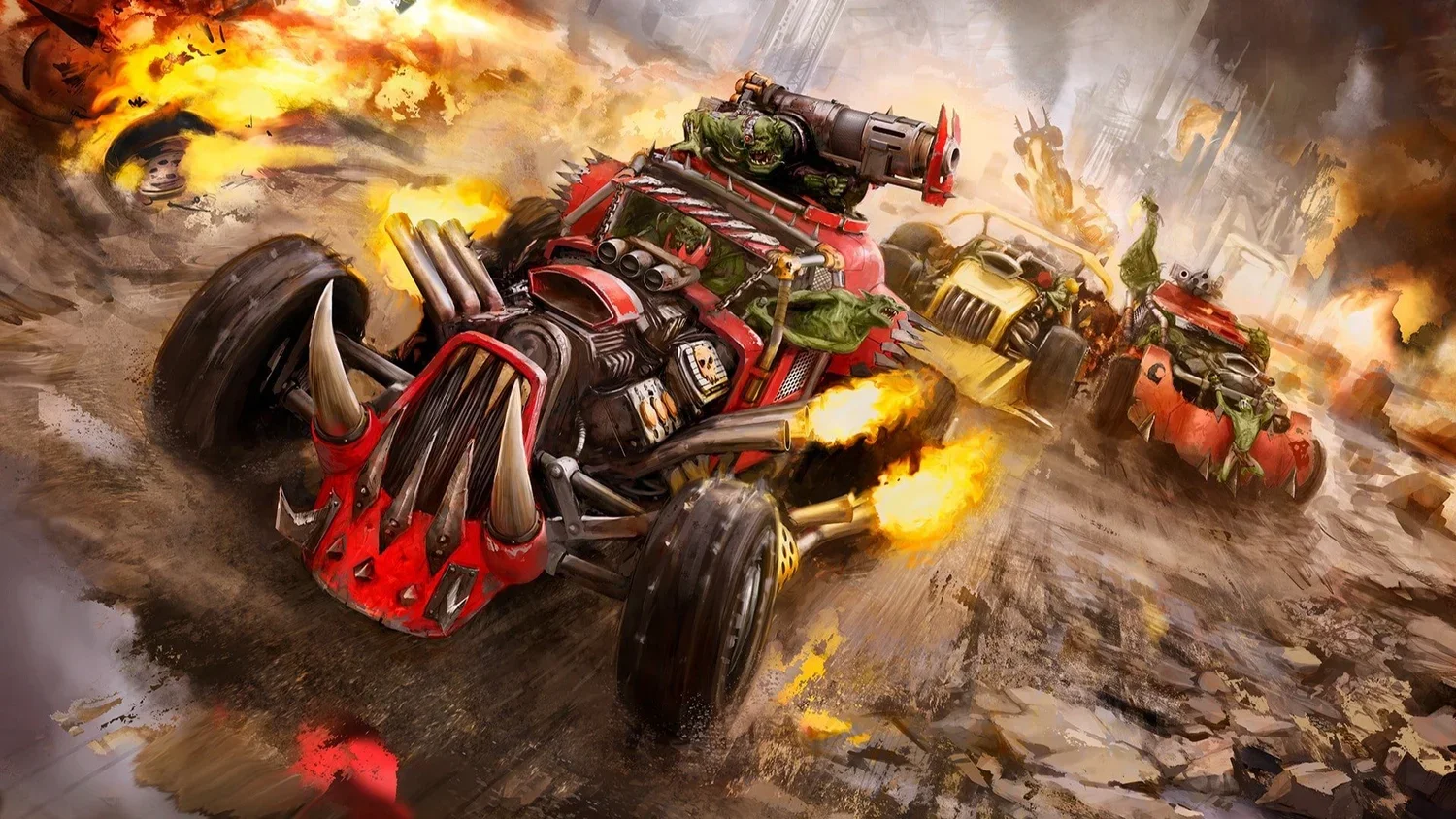
Image Source: Warhammer-Community.com
The Orks are a surprisingly diverse faction, with multiple clans within their hordes of battle-focused brawlers. Their biology is unique because whatever kind of Ork is needed, is simply created for their society, as Orks will spawn with full knowledge of what they need to do, or in possession of innate skills that lead them to some task. For example, there are the Mekboyz, Orkish engineers naturally skilled with machinery who construct everything from the guns to the vehicles to the colossal Stompahs. There are also the Weirdboyz, the Ork’s psykers.
While the Orks have their aforementioned strange powers of collective belief, the Weirdboyz function as religious figures connected to the twin gods of the Orks, Gork and Mork, and are also involved in navigation through the Warp. Their powers are often wild though, just as easily capable of killing themselves and everyone around them, as they are to direct at a foe. Painboyz, meanwhile, are the surgeons and doctors of the Orks, capable of reattaching limbs as much as they are also capable of reattaching dismembered heads (which can then spring to life). But besides these jobs performed by members of Ork society, there are the aforementioned clans, which represent different ways of thought and attitudes among the Orks.
Goffs
The most prominent clan of Orks due to their central role in combat, the Goffs also have prominence thanks to Ghazgull Mad Uruk Thraka being a major leader of their forces. They are notable for frequently wielding or wearing items bearing a checkerboard black and white pattern, which represents strength in Orkish society. They are the quintessential warriors.
Evil Suns
Full of Orks better known as Speed Freeks, the Evil Suns are made up of Orks obsessed with speed as the path to power on the battlefield. The color red is the fastest color for Orks, so any vehicle the Evil Suns ride in will go faster if it is painted red. Of the Speed Freek vehicles, the Boomdakka Snazzwagon is the most well known. It should be noted that other Orks are entirely capable of having a focus on vehicles, but the Evil Suns take this focus to a new level.
Bad Moons
The Orks who quest after the most expensive things, Bad Moons are notable for possessing a unique mutation that leads them to grow teeth faster than fellow Orks. As Orkish teeth form the currency in their society, that means the Bad Moons get to buy the most things, and have an obsession with the color yellow. The status and power that comes from owning the best guns and fastest rides (except they’re not painted red because then it would belong to the Evil Suns) is worth the teeth these Orks spend on them.
Snake Bites
The Snake Bites are Orks who live tribal lifestyles without advanced technology, and with a focus on natural animals and weaponry. This doesn’t mean they’re all “love and harmony with nature”, no, but they instead keep to the purported old ways of their people. Snake Bites don’t have a notable color associated with them, but can be identified by their feather and bone-decorated bodies as well as how they often ride Squigs into battle due to lacking other vehicles.
Death Skulls
Where the other Orks crave wealth, fast rides, or the best fights, the Death Skulls crave material things as well as the best fights. Unlike the Bad Moons though, they do not earn their items through the profit of copious teeth, but through trickery and theft. Functioning something like the traders and merchants in Orkish groups, Death Skulls will steal an Ork’s objects, and then sell them back to him, only to probably steal them again. They have an affinity for the color blue, the luckiest color, and pursue efforts to acquire things, regardless of what those things are.
Blood Axes
The Blood Axes stand out from their fellow Orks for one simple reason: their tactics. Where most Orks prefer a straightforward, full on charge in any scenario, the Blood Axes instead have the audacity to perform tactical actions, wear camouflage, and engage in stealth! Such acts are viewed by many other Orks as the antithesis to the ideals of Gork and Mork, alongside the fact that the Blood Axes will even work as mercenaries for other factions in the Warhammer 40K galaxy! Of course, they will often seek to betray their contracts, or immediately attack former allies when the deal is done, but this still marks them as near-outsiders among fellow Orks.
Freebooters
There is no one mutation or mindset that unites the Freebooter Orks together, aside from the fact that they are all exiles and misfits, and want to make money. Exactly why Freebooters were exiled can vary wildly, but the end result is that these pirates of the stars can draw on a vast array of Orkish knowledge when in combat and plundering the galaxy for riches. Led by Kaptins, these Orks are also fleet-based, using ships to traverse the galaxy, and engage with the other species, often violently, but also selling their services and trading as needed. Some Freebooter forces can become quite powerful, forming pirate fiefdoms to match the empires of more terrestrial Orks.
CultureSlate: Made by humans, for humans
READ NEXT:

Latest News


Featured



• All sizes are adult unisex
• Printed art on the front
• 100% cotton
• Pre-shrunk fabric
• Shoulder-to-shoulder taping
• Culture Slate Exclusive Design
See more products here