
Putting The "Dragons" In 'Dungeons & Dragons'
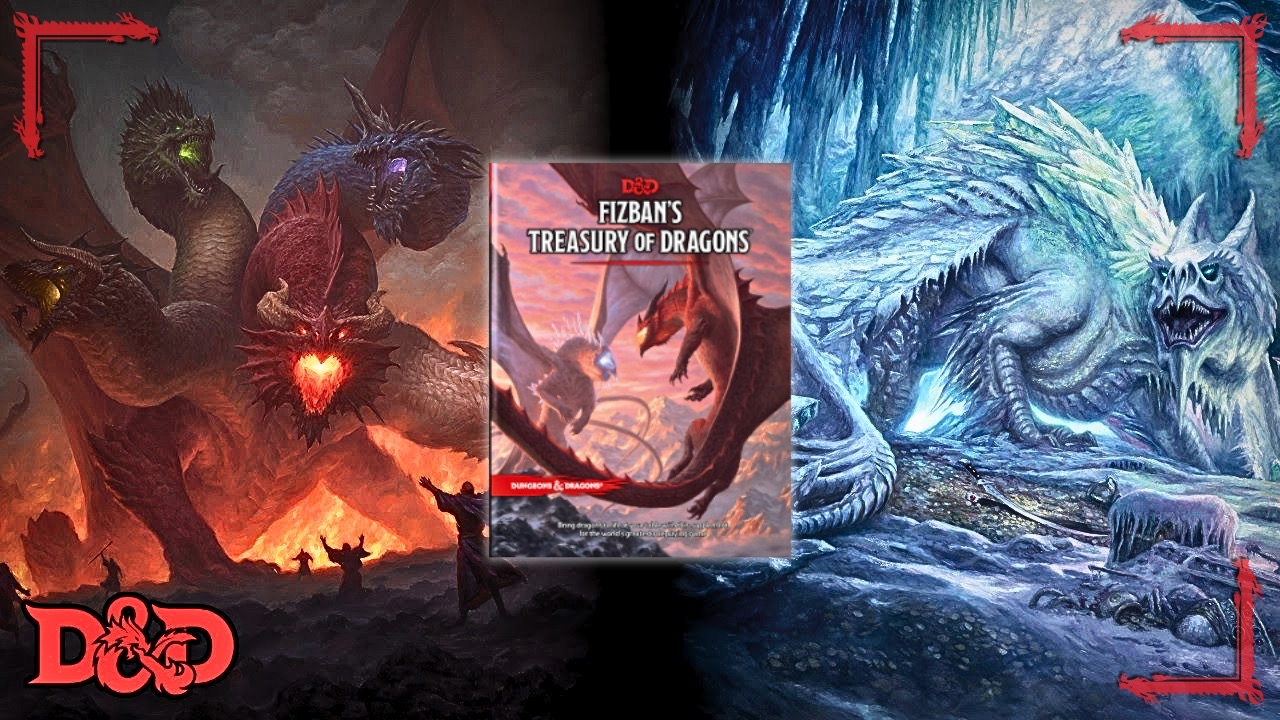
Collage of Tiamat, Bahamut and Fizban’s Treasury of Dragons.
Image Source: Culture Slate
Dragons are a type of creature that, as the name suggests, are an iconic part of Dungeons & Dragons. From the first editions of the game, Dragons have been appearing in many different shapes and colors. Having such a long history both in-universe and out of it, to go over all the details of Dragons would take a while, but we can certainly go over some of the basics. This article will discuss the basic types of “true dragons”, aspects of dragon biology, and of course the iconic gods behind them all.
There are three main types of “true dragons” in the game: Chromatic Dragons, Metallic Dragons, and Gem Dragons. Chromatic Dragons are usually the “evil” alignment, and come in five colors: Black, Blue, Green, Red and White. Metallic Dragons tend towards good, and come in the varieties of Brass, Copper, Bronze, Gold and Silver. Gem Dragons are the neutral type, and are divided into Amethyst, Sapphire, Emerald, Crystal and Topaz. Other types of dragons introduced throughout the years include lawful “Ferrous” dragons, Lung Dragons based on eastern dragons, extraterrestrial Planar Dragons, and various other races that don’t fit into a single category. There are also “lesser dragons”, related creatures that aren’t counted among true dragons.
RELATED:
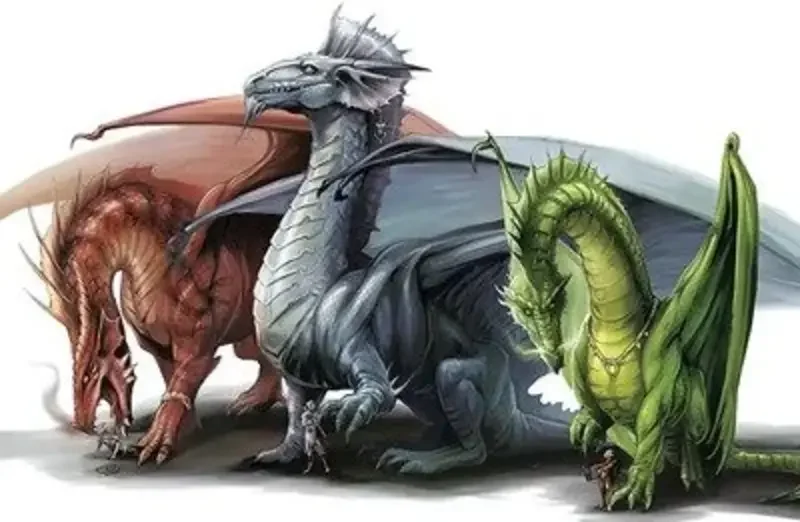
Dragons
Image Source: Forgotten Realms Wiki
The most notable aspect of Dragon biology, apart from their various breaths, is that the older they get, the stronger they get. To clarify, they grow in size, become more resistant to damage types and magic, and gain stronger breaths, among other things. They typically reach their maximum development after a millennium or two; though some books have talked about stages beyond even this, typically an advanced age or “greatwyrm” stage. Older dragons are also capable of using draconic magic, a special form of the game’s magic that doesn’t need the complex rituals, gestures or words other forms are known for.
Dragons are inherently magic creatures, and aren’t really classified as reptiles, though they share many traits; dragons lay eggs, and have a scaled skin. Dragon eggs are laid in low numbers, though this varies on the race. Dragons are also cross fertile with many different creatures, including fiends and celestials. Dragons have better sense than most creatures, though once again this varies depending on race, with some having better eyesight or touch than others. All dragons are intelligent (specifically sapient) beings, and many of them have distinct personalities. Many are wise and knowledgeable, others less so.
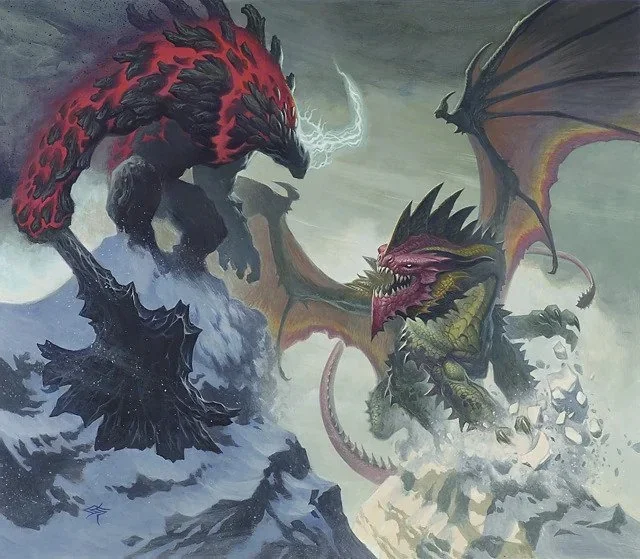
Io vs. Erek-Haus
Image Source: Forgotten Realms Wiki
There are several figures in the draconic pantheon, though a few stand out among the others. Chief among them is Io (also known as Asgorath), the neutral god of Dragonkind itself. Revered by all dragons, Io is believed to be the progenitor of Bahamut and Tiamat, the two “main” dragon gods most people are familiar with. His exact story varies by edition, sometimes he’s their father/creator, or they were split from him, but currently he seems to have been downplayed if not removed from Fifth Edition. Regardless, Io sprang forth other dragons and deities, and he remains part of the lore.
Bahamut is the God of all Metallic dragons, and is thus firmly in the Lawful Good territory. Known as the Platinum Dragons, the God of Dragons, King of the Good Dragons and Paladine, it is believed that Bahamut is the progenitor of the Metallics. Bahamut serves as a guiding figure for many dragonkin, and is locked in an eternal conflict with his sister Tiamat. Bahamut has become an iconic figure in D&D, with many other fictional dragons taking their name from him, including a series of summons from Final Fantasy.
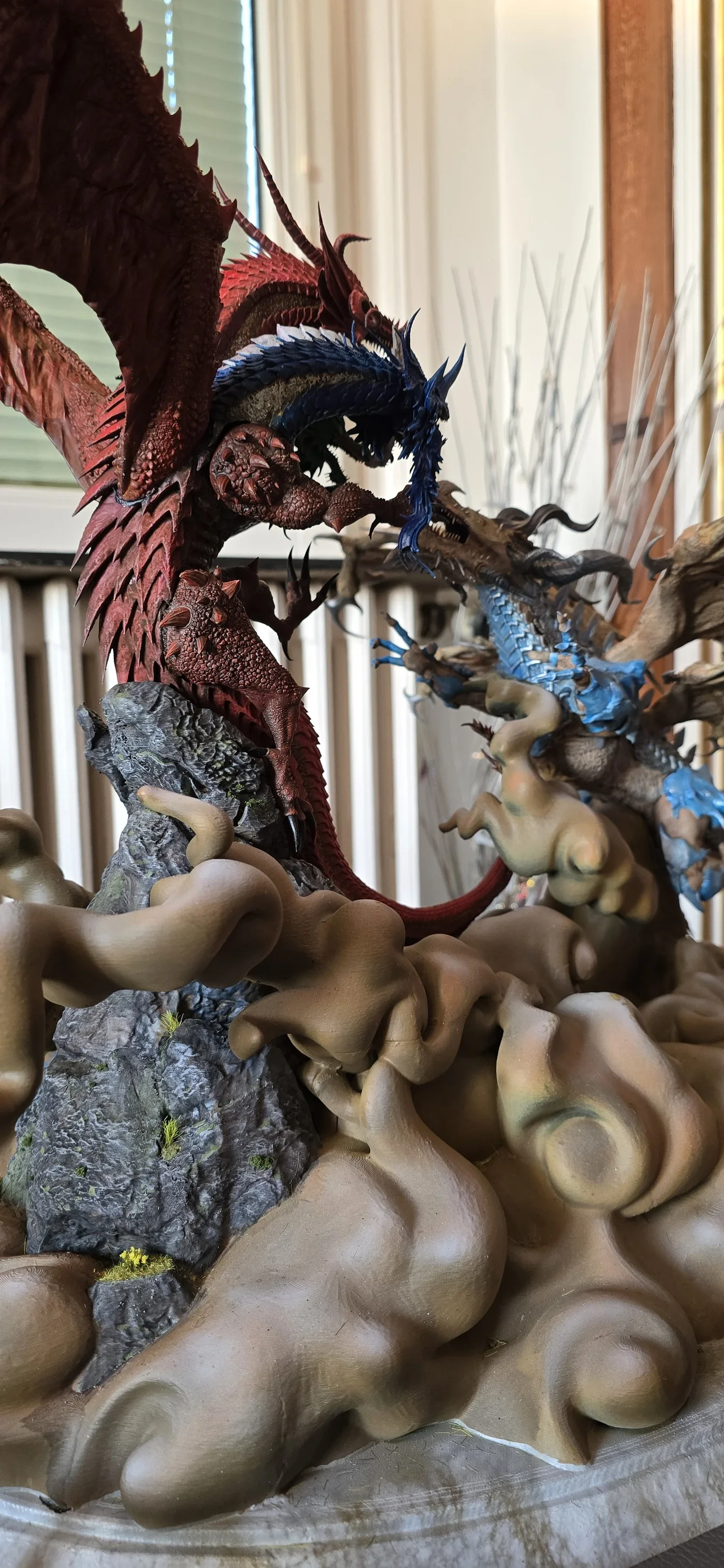
Tiamat Vs Bahamut Figure
Image Source: My Mini Factory
But where there is good, there must also be evil. Enter Tiamat, The Dragon Queen, The Prime Evil, and the Creator of Evil Dragonkind, also known as Takhisis. She is the God of Chromatic (“evil”) Dragons, the sister of Bahamut and a five headed dragon with all the colors of Chromatics. Trapped in Avernum, one of the Nine Hells of Baator, she seeks the domination of Dragon over all else, and hopes to escape her prison and rule. She has appeared in a few adaptations, most recently an episode of Secret Level. Her conflict with Bahamut will last as long as there are stories to tell about it.
A fourth, lesser known dragon dog is Sardior, The Ruby Dragon and god of the Gem Dragons. According to Fizban's Treasury of Dragons, Sardior was the first creation of Tiamat and Bahamut, only to be “split” into the Gem Dragons when Tiamat destroyed the First World. Previous editions had him as a more active participant in the pantheon, only to be downplayed as Gem Dragons were largely ignored by fourth edition D&D. As such, he tends to be overshadowed by Tiamat and Bahamut, but he still remains a part of the History of Dragons in the game.
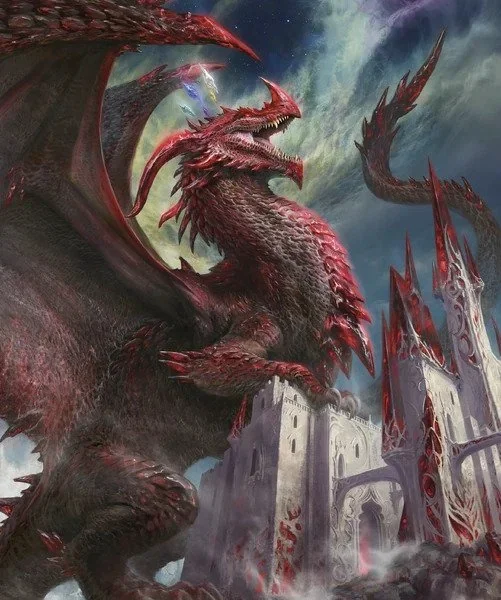
Sardior
Image Source: Forgotten Realms Wiki
There is, of course, much more about dragons that we can discuss. With hundreds of pieces of lore, there’s only so much we can choose from. For now, consider this a starting point for any future “deep dives” we might take about the Dragons of Dungeons & Dragons. We also have other articles on similar subjects for those that are interested. Interested readers just check out the rest of our website to see what they can find.
READ NEXT:


Latest News



Featured







• All sizes are adult unisex
• Printed art on the front
• 100% cotton
• Pre-shrunk fabric
• Shoulder-to-shoulder taping
• Culture Slate Exclusive Design
See more products here