
Thinking Outside The Box(ing Ring): Celebrating The 10th Anniversary Of 'Creed'
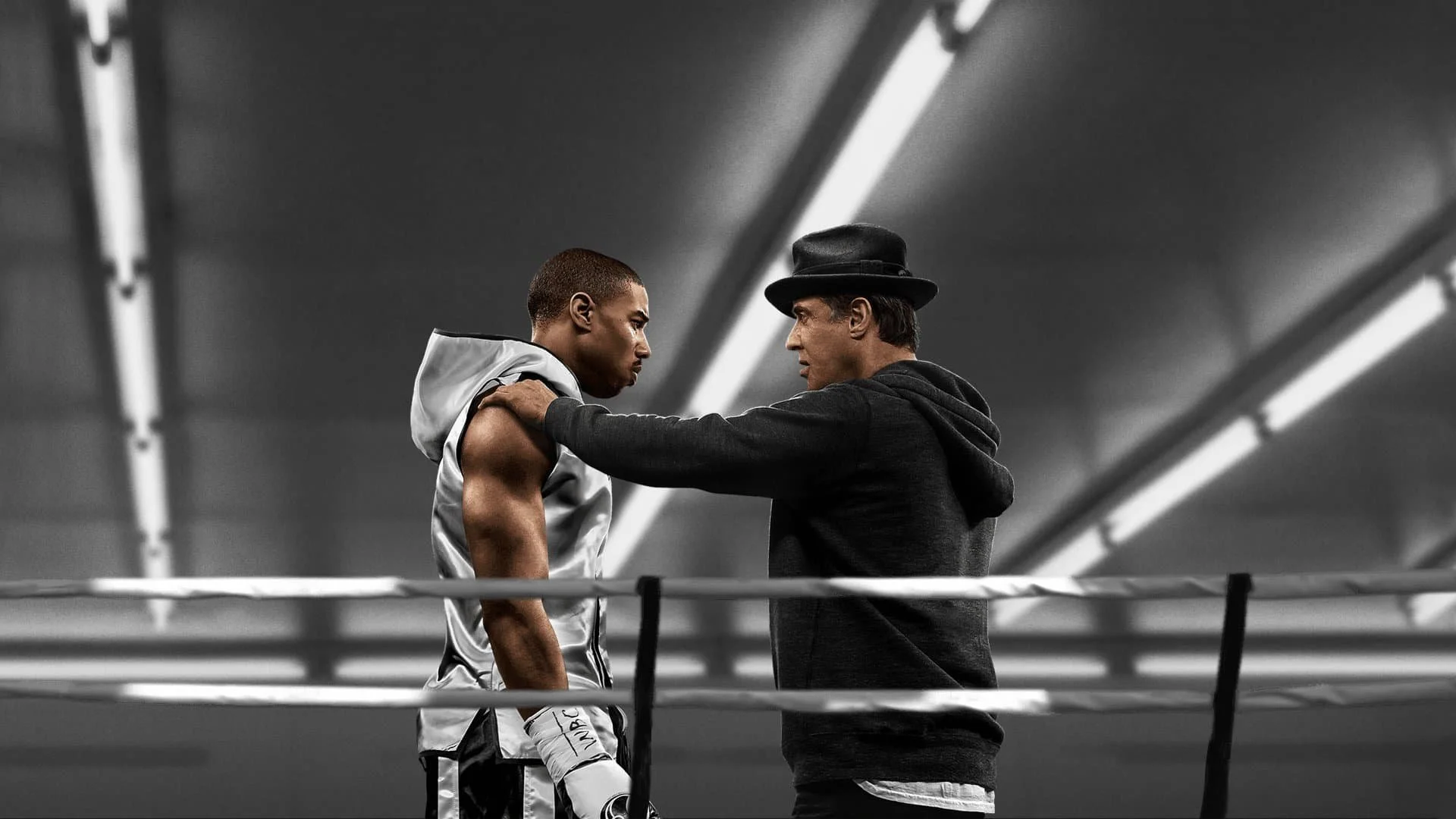
Image Source: Alpha Coders
Dorothy, Corleone, Finch, Skywalker, Lightyear, Baggins, Everdeen. These are just some of the most iconic characters in film history. Characters who you can refer to by just one part of their name, and everyone knows who you’re talking about. Very few film characters embody that concept than Rocky Balboa.
Created by legendary film star Sylvester Stallone, Rocky Balboa has endured as one of cinema’s most iconic on-screen heroes. Next year, the original Rocky will be celebrating its 50th anniversary, a milestone anniversary for THE most beloved sports film of all time. Directed by John G. Avildsen, Rocky was the simple story of a man trying to become a heavyweight champion. While not the first sports movie to focus on a down-on-his-luck protagonist trying to obtain the American dream, Rocky perfected the formula in a way that’s still influential to this day.
From its dialogue to the score by Bill Conti, Rocky was an instant classic and remains a fixture in pop culture. The film earned 9 Oscar nominations and won 3 for Best Film Editing, Best Director, and Best Picture. While Stallone would lose his nominations for Best Actor and Best Original Screenplay, he became an instant movie star. Rocky was followed by four sequels between 1979 and 1990, to varying levels of success. While most would agree that Rocky II, III, and IV have their own merits, none of them come close to the power and magic of the original despite their best efforts. Rocky V is widely regarded as the worst installment, to the point that Time Magazine named it among the 100 worst ideas of the 20th Century. A list, mind you, that also included the Blacklist, the Hitler Diaries, The Jerry Springer Show, and the Titanic. A sixth installment, titled Rocky Balboa, was released in 2006 to positive reviews, and, for a time, it seemed like that’s where Rocky’s story would end. That was until six years later.
RELATED:
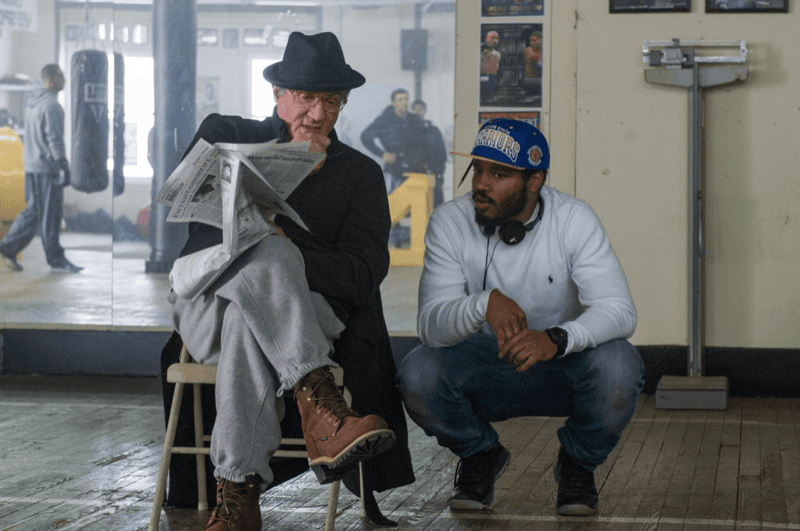
Image Source: The Saturday Paper
In 2013, Fruitvale Station was released. Starring Michael B. Jordan and written and directed by the newcomer Ryan Coogler, it told the tragic true story of the senseless killing of Oscar Grant at the hands of the BARTPD. The film was a festival darling and received universal critical acclaim, with high praise towards Jordan’s performance and Coogler’s direction. Precisely 12 days after the film was released, Deadline broke the story that Ryan Coogler was developing a Rocky spin-off, Creed, with Michael B. Jordan as the title character, and that Sylvester Stallone was expected to reprise his role as Rocky. Despite some grumbling that Ryan Coogler’s first film after Fruitvale Station was, in practice, a seventh Rocky installment, some held hope considering Creed was Coogler’s idea. Alongside Aaron Covington, Coogler would craft a spin-off that was not only worthy of being made, but also equal to, and in some cases surpasses, the original Rocky. Creed received widespread critical acclaim, primarily for Coogler’s direction, the screenplay, fight sequences, musical score, and the performances of Jordan and Stallone. Stallone would become one of only six actors (the others being Bing Crosby, Paul Newman, Peter O'Toole, Al Pacino, and Cate Blanchett) to be nominated for a second Academy Award for roles they had previously played. Had it not been for Ryan Coogler’s visual eye and affinity for genuine emotion, Creed could’ve come and gone without as much as a good opening weekend to help people remember it. Instead, it propelled Michael B. Jordan into movie-star status and made Ryan Coogler a household name. Without Creed, Ryan Coogler wouldn’t have given the Marvel cinematic Universe its most culturally impactful film with Black Panther, nor would he be taking his much-deserved victory lap for Sinners.
The key to Creed’s success IS Ryan Coogler. He miraculously embodies the themes that made the original Rocky so special while also infusing it with his own style. Coogler’s triumphant story of a Black man overcoming the odds and becoming one of the best boxers alive is a simple way to describe what makes Creed such a remarkable movie. A man who wants to prove he’s not a mistake or an embarrassment provides the franchise with emotional heft not seen in any installment before it, even the original. There’s also Coogler’s technical prowess, which he’ll bring into his Black Panther films and Sinners. As evidenced by a remarkable four-minute oner featuring Adonis Creed’s first fight. Working with cinematographer Maryse Alberti, Coogler handles all the fight scenes with finesse and style. A. Coogler also utilizes oners in scenes of characters walking to the boxing ring or correction officers stopping a fight in a juvenile detention center, and it all works. Coogler frequently keeps the energy up without being flashy for the sake of it. Amidst all the heartfelt drama and heart, the fight scenes feel just as epic as they are emotional, which Steven Caple Jr. and Michael B. Jordan thankfully carried over into Creed II and Creed III, respectively
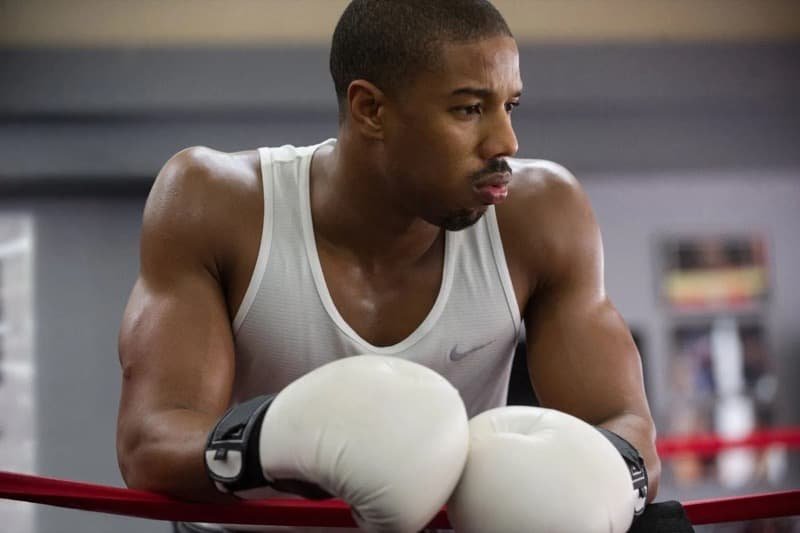
Image Source: Vulture
For every legacy sequel, you need a new protagonist for the old protagonist to take under their wing. Vincent Lauria in The Color of Money, Sam Flynn in Tron: Legacy, Rey in the Star Wars Sequel Trilogy, Sam Carpenter in the newer Scream films, Rooster in Top Gun: Maverick, to name a few. Nobody embodies this concept better than Adonis Creed, who takes on the main protagonist from the word go. Rocky doesn’t need to be removed from the central plot or die for Adonis to take center stage and hold his own. Michael B. Jordan always had the potential to become a movie star. After scoring major supporting roles in acclaimed dramas such as The Wire, Parenthood, and Friday Night Lights, his path to stardom was inevitable. Despite the much-earned negative reputation of 20th Century Fox’s horrific Fantastic Four reboot, Jordan was easily the best part of the movie as Johnny Storm, even if the script didn’t supply nearly the same humor and fun that was afforded to Chris Evans in the Tim Story-directed films or Joseph Quinn in Matt Shakman’s MCU reboot. Luckily, Creed came out three months later, so he was fine! Michael B. Jordan is a natural-born leading man, not only possessing charisma for days but also doing everything effortlessly. A character like Adonis requires a performer who can feel relatable while also, for lack of a better term, feeling like a superhero. I don’t think it’s a hot take to say that Michael B. Jordan is a stronger performer than Sylvester Stallone, even in the better Rocky films. However, that doesn’t mean Sly Stallone is a slouch. Stallone delivers his best performance as Rocky in this movie, which earned him a much-deserved Academy Award nomination for Best Supporting Actor. Still reeling from the loss of his wife and mentor, and his estranged relationship with his son, Rocky finds new life when he takes on Adonis as his protegé. Not wanting Adonis to suffer the same tragic fate as his father, Apollo (who was killed by Ivan Drago in the ring in Rocky IV), Rocky makes sure to tell Adonis that he needs to build his own legacy first.
Unlike other legacy sequel protagonists who are either left undone by uncommitted storylines, frequent hip-attachments to the OG protagonists, or lackluster casting, Adonis never has this problem. Coogler and Jordan have made five films together, and that is likely not to change soon. With Creed being only their second film together, they work to help Creed find its own identity while staying true to the franchise’s roots. You can’t help but feel for Adonis, whether it be his challenges to break from his father’s shadow or to keep his relationships with Rocky and his girlfriend Bianca (played by Tessa Thompson). Boxing movies are the easiest way to root for underdog protagonists (as evidenced by the enduring legacy of the original Rocky). Still, Adonis Creed is a compelling protagonist cause Ryan Coogler and Aaron Covington understand the importance of having a relatable hero. This is why audiences followed Adonis into the sequels, because his journey is always fascinating. For anyone who believes Adonis was only a draw because of Rocky, look no further than Creed III becoming the second-highest-grossing installment of the entire Rocky franchise, despite being the first film without Rocky.
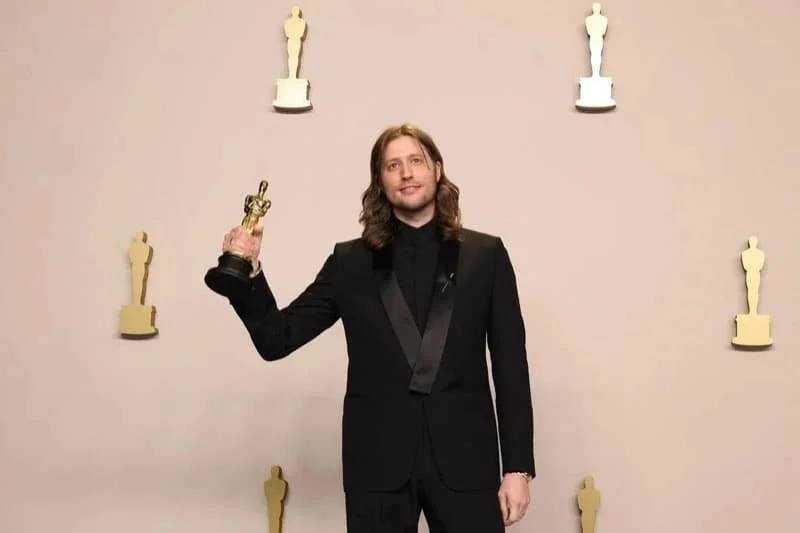
Image Source: r/TheMandalorianTV
Behind every great director, there’s a great composer—Spielberg and Williams, Burton and Elfman, Hitchcock and Herrmann, Chazelle and Hurwitz, etc. And of course, Coogler and Göransson. After meeting Coogler at film school in 2009, Ludwig Göransson quickly became his regular. The pair has worked together on five feature films, their most recent collaboration being for Sinners. In addition to providing acclaimed scores for Coogler’s films, Göransson has worked on many acclaimed TV shows and movies, including Community, The Mandalorian, Turning Red, and the recent Christopher Nolan films, starting with Tenet. Göransson has also lent his talents to some of the most popular and acclaimed music artists in recent memory, including Childish Gambino, Adele, Rihanna, and Chance the Rapper. While not his first film score, Creed was the film that proved Görranson was one of the most reliable composers in the game.
Göransson’s love for and background in hip-hop made him a perfect fit for the film. Approaching the score as if he were making an album, Ludwig (much like Coogler) carved his own identity into the Rocky franchise while staying true to its roots. Due to their history, Göransson began writing the score after reading the script, which gave him more than enough time to create the film’s new musical identity. The main Creed fanfare wouldn’t sound out of place in a superhero film or a grand epic, as every use of it feels bigger and bolder than it did before. Göransson would channel similar musical styling for his work on Black Panther and The Mandalorian. The most memorable use comes from the training montage where Adonis trains for his big fight against “Pretty” Ricky Colan and is followed by a group of neighborhood boys on ATVs. Combined with the song Lord Knows by Meek Mill and the beautifully haunting vocals of Jhené Aiko, it all fits so perfectly. To go the distance, Görranson utilized the sound of someone using a punching bag and other sounds he recorded in a gym in the score. And yes, even with all the new thematic material, Bill Conti’s iconic Rocky theme, Gonna Fly Now, finds its way into the film during the final fight. Talk about fighting strong.
Since Creed’s release, Ludwig Göransson has earned himself multiple awards, including 4 Grammys, two Oscars for Best Original Score for Black Panther and Oppenheimer, and two Emmys for his work on The Mandalorian. As Göransson preps for his third Christopher Nolan, The Odyssey, and his long-awaited return to that galaxy far, far, away, he clearly shows no signs of slowing down.

Image Source: Awards Radar
As we celebrate Creed’s 10th anniversary, we look back at what it truly means to be an underdog. As the very concept of diversity and representation is under attack, storytellers like Ryan Coogler remind us what can be accomplished when storytellers of color (Especially Black storytellers) are actually given the chance. Had Coogler not been allowed to tell the Rocky story of his dreams, we wouldn’t have been blessed with Black Panther or Sinners. It’s great to see marginalized filmmakers given the tools and resources to craft inspiring stories rather than just award-bait stories of pain. Without Creed, Michael B. Jordan wouldn’t have become one of our most reliable movie stars today. Nor would he have discovered his passion for filmmaking and directed his own films, such as Creed III and his upcoming remake of The Thomas Crown Affair. Without Creed, Ludwig Görranson wouldn’t have come to define his own sections of the Star Wars universe or the MCU. The very medium of film is better with Coogler, Jordan, and Göransson being active in their respective fields.
Following the success of Creed III, Michael B. Jordan and Amazon-MGM are planning to expand the so-called Creed-Verse. Plans for anime series, a live-action series titled Delphi, a Drago spin-off, and a prequel centered around a young Rocky Balboa. And of course, a Creed IV with Michael B. Jordan expected to return as director. As Coogler makes his mark on The X-Files and returns for one final trip to Wakanda, and Jordan continues his directing journey, it’ll be a while until we see Adonis Creed again. I’m sure the next installment will be worth the wait, as Coogler and company laid a solid foundation that could go just as long, if not longer, than the mainline Rocky films. Underdog stories are forever reliable sources of comfort, inspiration, and warmth. They’re like a warm blanket in a way. No matter how many times we see Rocky or Adonis walk into the ring, we hope they come out on top and win. That’s the magic of the movies. That’s the magic of the underdog story. That’s the magic of Ryan Coogler. That’s the magic of Creed.
READ NEXT:

Latest News
Featured


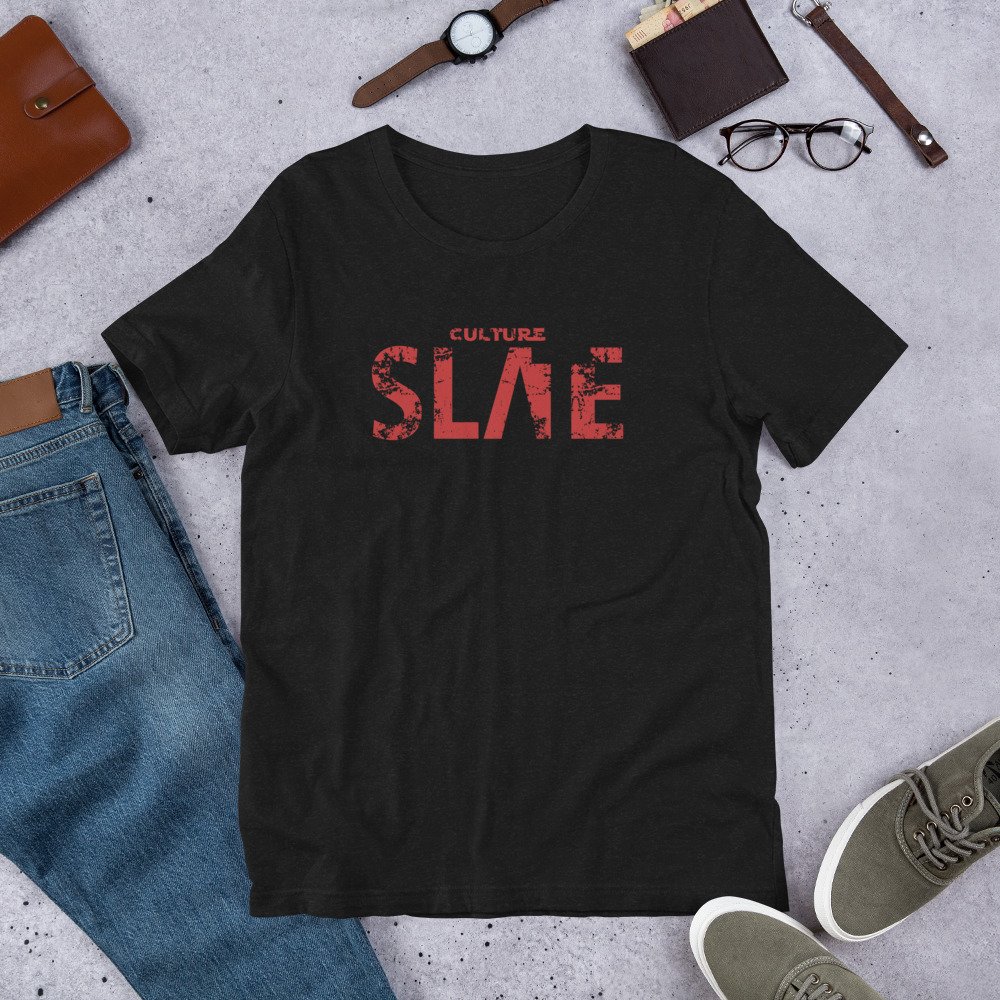

• All sizes are adult unisex
• Printed art on the front
• 100% cotton
• Pre-shrunk fabric
• Shoulder-to-shoulder taping
• Culture Slate Exclusive Design
See more products here