
Why 'The Rise Of Skywalker' Works As The Final Chapter Of The Skywalker Saga
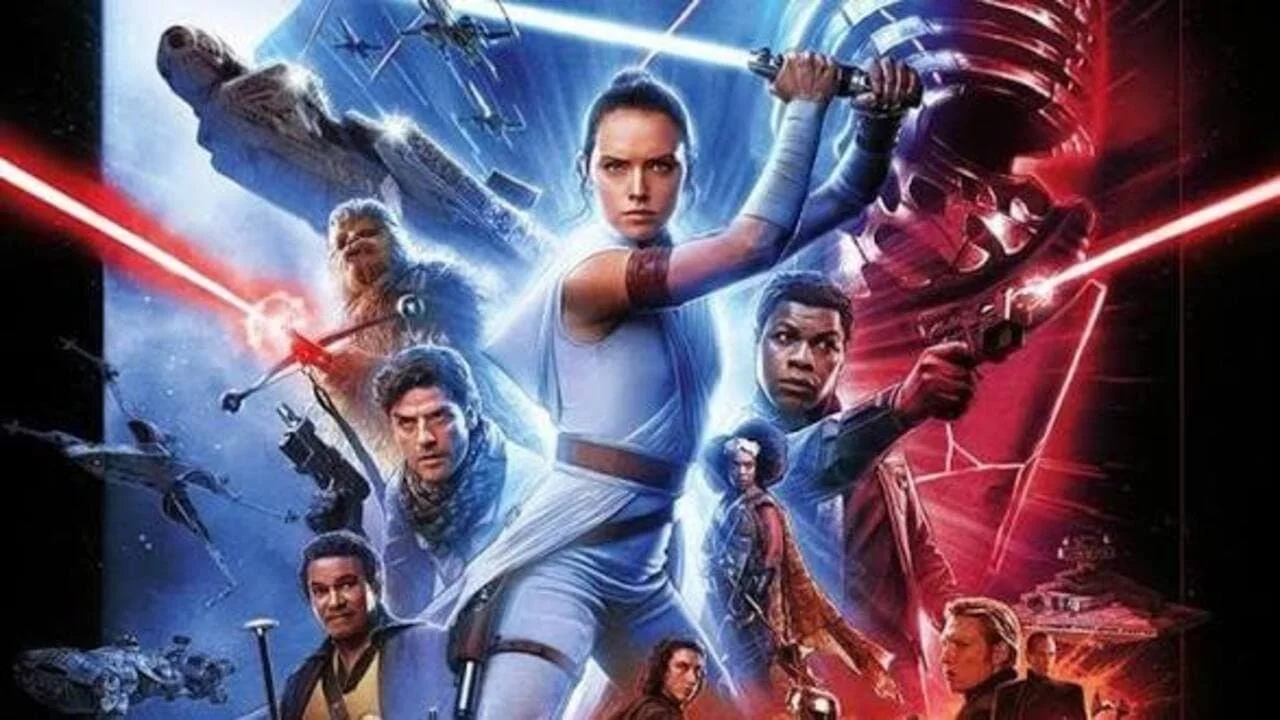
Image Source: Film-Authority
Let me preface this by saying that I love Star Wars.
Now let me follow that up with a caveat: I like Star Wars…except for the last two-thirds of the sequel trilogy.
This probably isn't a new opinion to enter our cultural zeitgeist, but it does make defending them, particularly The Rise of Skywalker in this case, somewhat difficult at times. There's no denying that the troubled production history of the sequel trilogy shines through especially hard in the latter entries, with awkward dialogue, rushed storylines, and abrupt and clumsy plot-threads.
However, time heals some wounds, and that time allows one to acknowledge that while it may not have been the ending many of us wanted or, less charitably, deserved, it's the ending we got. Despite its many, many flaws…there are core tenets of The Rise Of Skywalker that we can acknowledge that form an arguably sturdy bookend (for now) to the Skywalker Saga.
To understand this, however, we must take a brief look at the evolution of Skywalkers throughout previous trilogy eras. We must look at the beginning to understand the end and a common thread that connects generations.
RELATED
Prequel Trilogy
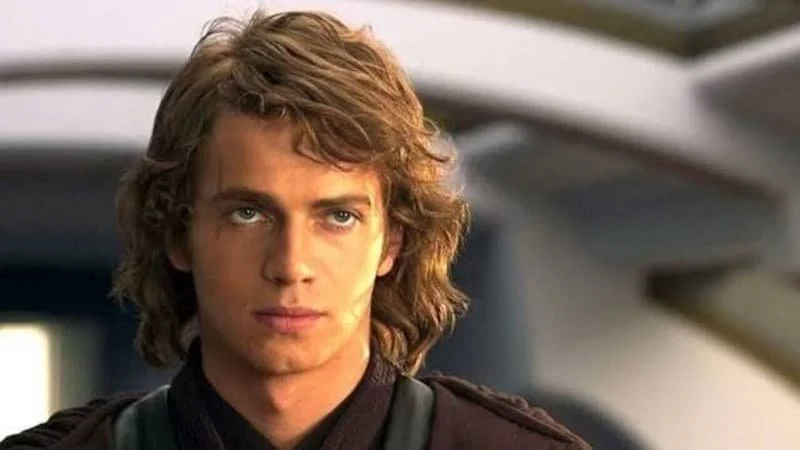
Image Source; GamesRadar
Anakin Skywalker is introduced to us as a series of contradictions intertwined in the form of a defiant child slave who turns into a troubled young man. He's compassionate yet selfish. He's hopeful yet filled with rage. He shines bright with power, but has a horrific darkness within. He's a guardian and yet a mass murderer, a teacher and yet a child.
This messy individual is weighed by the burden of destiny. Qui-Gon Jinn saved and yet also condemned him, naming him the Chosen One, the person of prophecy of whom the Jedi were to look to and rely on. And while his fellow Jedi try to pretend they do not believe, try to treat him like any other one of them…they watch him. They're unable to help it. They place their expectations upon him, and he tears himself apart trying to live up to them—before proceeding to tear them apart as well.
For Anakin is torn between desires and unable to articulate his woes to the people who would be his family. This is, of course, helped along by the disguised Sith Master Darth Sidious, who seemingly gives Anakin a shoulder to lean on even while he convinces him that other shoulders are inadequate at best and hostile at worst. And in the end, Anakin tries to be the lone hero while also attempting to appease his own selfish desires.
This, of course, goes poorly.
Original Trilogy
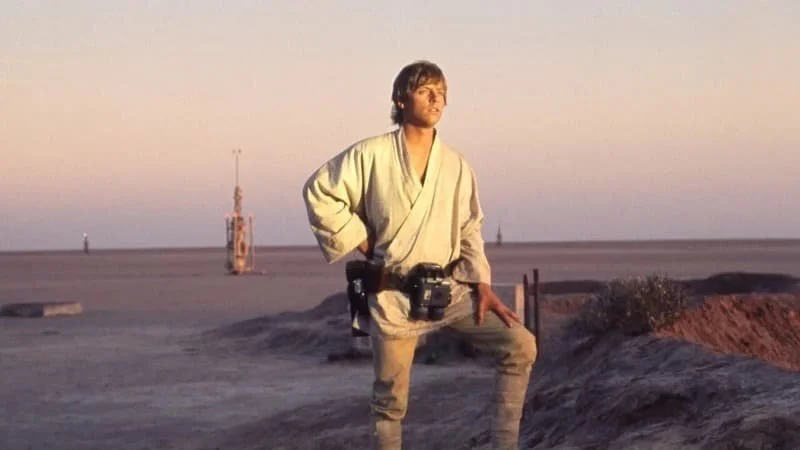
Image Courtesy Of CultureSlate
Fast forward some twenty-odd years, and we meet Luke Skywalker, son of the man who would become the monstrous Darth Vader.
Most of you know the story: a farm boy leaves a shattered home, and through great trials and tragedy, becomes a hero.
But he doesn't do so alone. He makes friends, connections. He's a source of inspiration who is also inspired. And it is through these aspects, these characteristics of love and compassion and loyalty, that he gets through to his fallen father. It is through this that he defeats the great evil plaguing the galaxy.
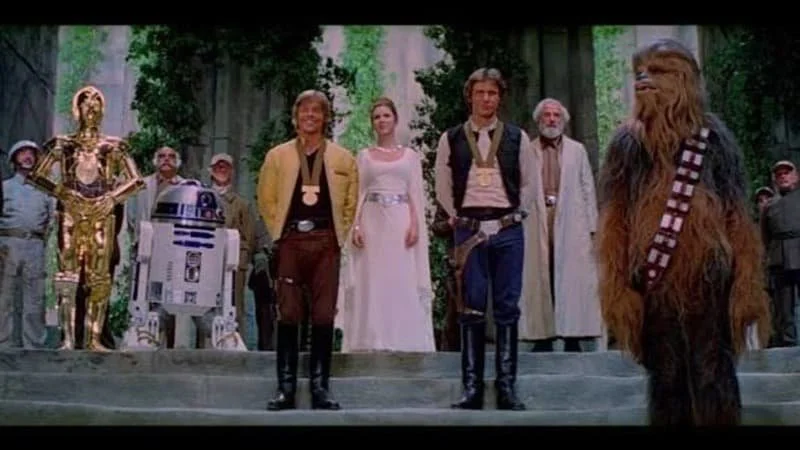
Image Source: Henchman-4-Hire
And yet…at the same time, he is alone. The burden of his destiny and legacy, while powerful, also separates him from his peers. His sister and best friend fall in love, and he, while adored, tasks himself with the herculean challenge of resurrecting a deceased culture. It is not a burden he chooses, and his growing isolation is not completely voluntary…yet it happens all the same. He meets the same pitfall as his father (the belief of the power of the lone hero) and ends up falling into it.
Sequel Trilogy
So, who is Luke Skywalker in the sequel trilogy?
Bitter. Depressed. Alone. The hero he was is tired and broken. The darkness he fought against has crept back in, stronger than ever.
And he's not the only one. Han Solo traverses the galaxy, once again working job to job. Leia Organa once again fights to keep the galaxy for collapsing. The unity they held in the war has dissolved, burdened by obligations and their personal demons. All the same, the galaxy begs for them to save it. The Resistance hunts Luke, seeking that bulwark, that legendary hero to once more save the day.
Enter the next generation: Rey, an orphaned scavenger. Finn, a stormtrooper defector of the cruel First Order. Poe Dameron, ace pilot of the Resistance. Echoes, of a sort, of those who came before. So much so that they even follow the numbers: they find the weak point of the massive planet-killing weapon of destruction. There's a celebration. There's hope—a new one, even.
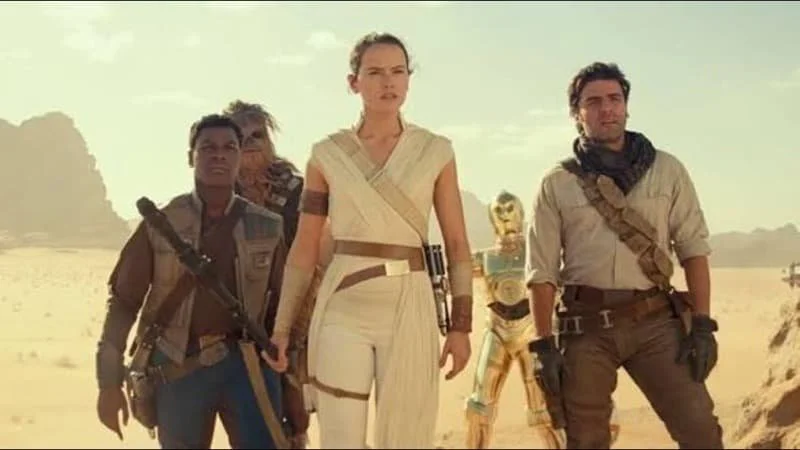
Image Courtesy Of ABC
But they separate. And just like their predecessors, things go wrong. The Resistance fleet is in shambles and on the run. Rey trains to be a hero, but finds herself faltering, lonely and haunted by her past. She can't be the bulwark. She can't be the Golden Hero, a figure worthy of prophecy.
But…she doesn't have to. And it's here that we get to the most important element in The Rise Of Skywalker, the vital lesson that manages to shine through its awkward narrative.
Evil doesn't die to a single, golden hero. It dies to a community that stands up and says “No more”.
Finn, the lone stormtrooper defector, can't challenge his former abusers alone. But perhaps he can with an entire community of escaped child soldiers just like him.
Poe can't defeat Palpatine's massive fleet alone. But with a galaxy's worth of ships, of people big and small and tired of being beaten down by evil, perhaps he can.
And Rey, half-trained and scared, can't destroy her twisted grandfather alone, tenacious though she may be. But with the voices and encouragement and backing of innumerable Jedi, a community unto itself, a community consistently hunted and broken and surviving, a community that can never die, as they are one with the Force and the Force is with us always…perhaps. Perhaps she may just stand a chance.
And she does. And Poe does. And so does Finn. They stand a chance and more
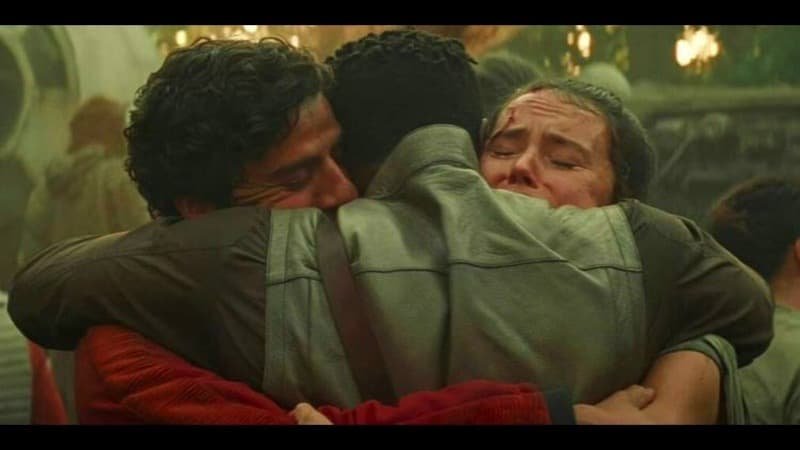
Image Courtesy Of ScreenRant
I don't enjoy the sequel trilogy. But I do think, despite the awkwardness, even though I don't like how some concepts turned out…Rise nevertheless forced me and others to accept a fundamental aspect of media: it grows up. It changes. Tropes, cliches, and themes change as the world does. Not liking something doesn't render it invalid.
There will always be a romanticism around the lone hero standing against the dark. But maybe it's time to consider that vanquishing evil is a lot easier with more than one flashlight.
CultureSlate: Made by humans, for humans.
Please consider supporting our AI-free content via our Patreon page.
READ NEXT:
Latest News
Featured



• All sizes are adult unisex
• Printed art on the front
• 100% cotton
• Pre-shrunk fabric
• Shoulder-to-shoulder taping
• Culture Slate Exclusive Design
See more products here