
How 'The Phantom Menace' Destroyed A School Library Book Company
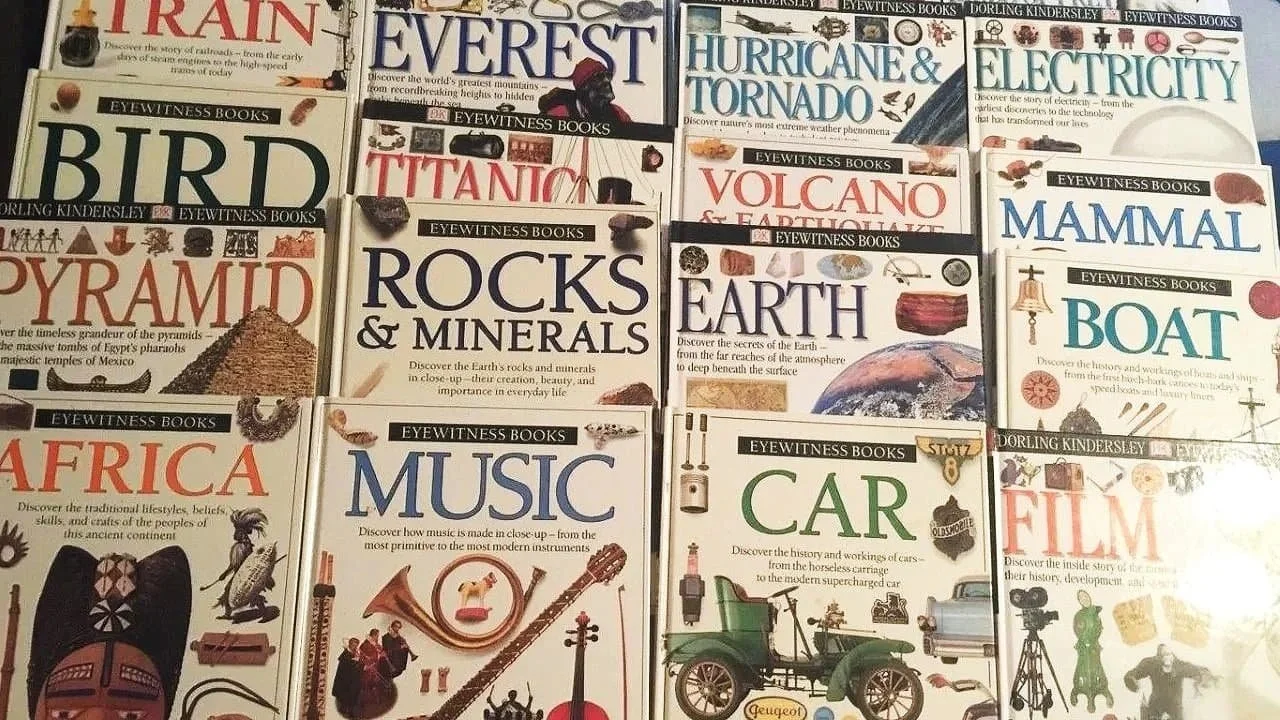
Image Source: Avocado
Independent publishers, Dorling Kindersley had a thriving business, operating not just in the UK but in the US too…. until George Lucas decided he wanted to make another Star Wars movie. You’ve probably picked up a Dorling Kindersley reference book in the school library or your childhood bookshelf. They were once famous for annotated images against a stark white background. Their large-format visual guides (on everything from the planets to the Romans) were popular with adults and children alike.
Then, in 1999, they landed the licence to make reference books for Star Wars: Episode I – The Phantom Menace. The hype around this movie was huge, the first Star Wars film in sixteen years with George Lucas back at the helm. DK produced several big titles, including Star Wars: Episode I Incredible Cross Sections, Star Wars: Episode I, The Visual Dictionary, The Art of Star Wars Episode I: The Phantom Menace, and Inside the Worlds of Star Wars: Episode I.
RELATED:

Image Source: Avocado
The quality of the books wasn’t in question; they got a good response from fans and sold comparatively well. About three million copies accumulated.
There was just one major problem. DK had printed thirteen million copies. To put this figure into perspective, to appear on the New York Times Best Seller List it books have usually sold between 5k-10k. That’s a way off thirteen million.
Timothy Zahn’s Heir to the Empire is Star Wars' best-selling novel; it spent 19 weeks on the NYT Best Seller list. Released in 1991, it took more than twenty years to sell that many books. Sales figures released in 2017 estimated sales of fifteen million.
DK had printers, authors, and staff to pay; they couldn’t wait twenty years to get rid of the ten million unsold books sitting in their warehouse. It left them with a £3m loss on operations and a £14m write-off against the unsold stock. Once word got out, the share price plummeted, wiping £42.3m off the personal fortune of founder Peter Kindersley (who still owned a chunk of the business) and more than £140m off the company’s value.
Over 150 layoffs followed, including the group’s CEO, James Middlehurst, and several members of the board. The unsold books were reportedly all destroyed. As if that’s not enough to make any Star Wars fan cry.
A fellow school textbook publishing company (revision guides, etc), Pearson came in with an offer days before the administrators moved in. Four years later, Penguin, one of the ‘big five’, bought out Pearson.
The DK branding still exists, but it’s now an imprint rather than the independent family business it once was. Their iconic way of presenting information has been copied by so many other authors that it’s almost become the industry standard.

Image Source: YouTube
The strangest thing of all is that DK continued to publish Star Wars guides and reference material under Penguin. The mishap didn’t put George Lucas and Disney off from issuing the merchandising licence. In fact, the DK edition of Star Wars Encyclopedia: The Comprehensive Guide to the Star Wars Galaxy was updated in 2024 to include information from The Bad Batch, Andor, and Ahsoka. Star Wars: Complete Locations was reissued as recently as 2025 and contains planets from The Mandalorian and Rogue One.
Dorling Kindersley does still exist and is still thriving in a watered-down form. But it had no one to blame for its downfall except itself. Whether the decision was a mistake or just hubris has never been made public. In the late nineties, the hype for The Phantom Menace was phenomenal, and it was easy to get swept away with it. But surely someone in a publishing company with twenty years of experience should have realised the numbers were excessive? If only they’d said, "Let’s hold back. If we run low, we can always do a second run.”
Because someone had to pulp/burn/send to landfill all those Star Wars books. Let’s hope they weren’t a fan.
READ NEXT:
Source(s): The Guardian, BBC, Wikipedia
Latest News


Featured




• All sizes are adult unisex
• Printed art on the front
• 100% cotton
• Pre-shrunk fabric
• Shoulder-to-shoulder taping
• Culture Slate Exclusive Design
See more products here