
A Comparison Of 'Stranger Things' And 'Harry Potter'
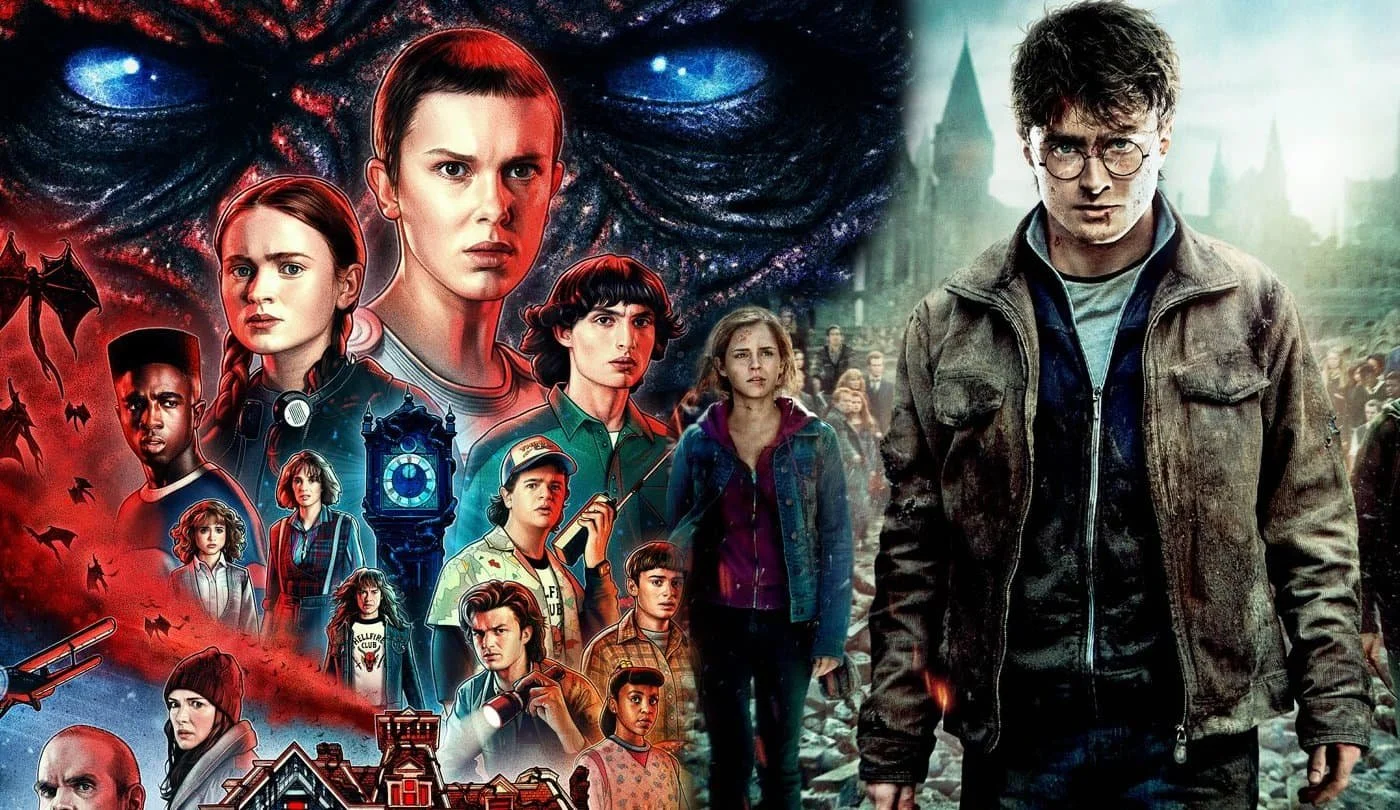
Image Source: Film Folly
Spoiler Alert for Stranger Things and Harry Potter!
Millennial kids grew up with Harry, Ron, and Hermione just as much as Gen Z kids grew up with Mike, Will, Lucas, Dustin, and Eleven. Fans who were young at the time may say they’ve learned so many life lessons because these stories existed when they did. Stranger Thingsand Harry Potter use fantastical elements and hidden, parallel worlds to express what it means to take that first step toward self-acceptance. Despite that, they are scary places for a kid to live through, with an abundance of bullies and manipulators—in the real world and in the world of Hawkins and Hogwarts. And yet there is enough pure heart within these communities that makes them worth saving against larger, darker forces.
Like the school year flying by with each book or season, the main cast of kids encounter new allies like Max Mayfield or Luna Lovegood. One thing that is unreal about both franchises is its perfect casting. It’s not only the actors’ adoption of the role that feels interchangeable to fans, but they are also playing relatable characters that have a persona, an archetype. For example, Snape is a severe, black-robed teacher with a secret he guards close to the vest, but it’s difficult to see him as played by anyone other than Alan Rickman. The same could be said of David Harbour as the paternal but troubled Jim Hopper.
Despite their well-written characters that give these faces a recognizable following, the actors age progressively with each release. It can be little differences, but they are noticeable. So much so that with each new season or movie, fans are astounded simply by the characters’ physical growth. This coincides with the growth of the main demographic… teenagers.
RELATED:
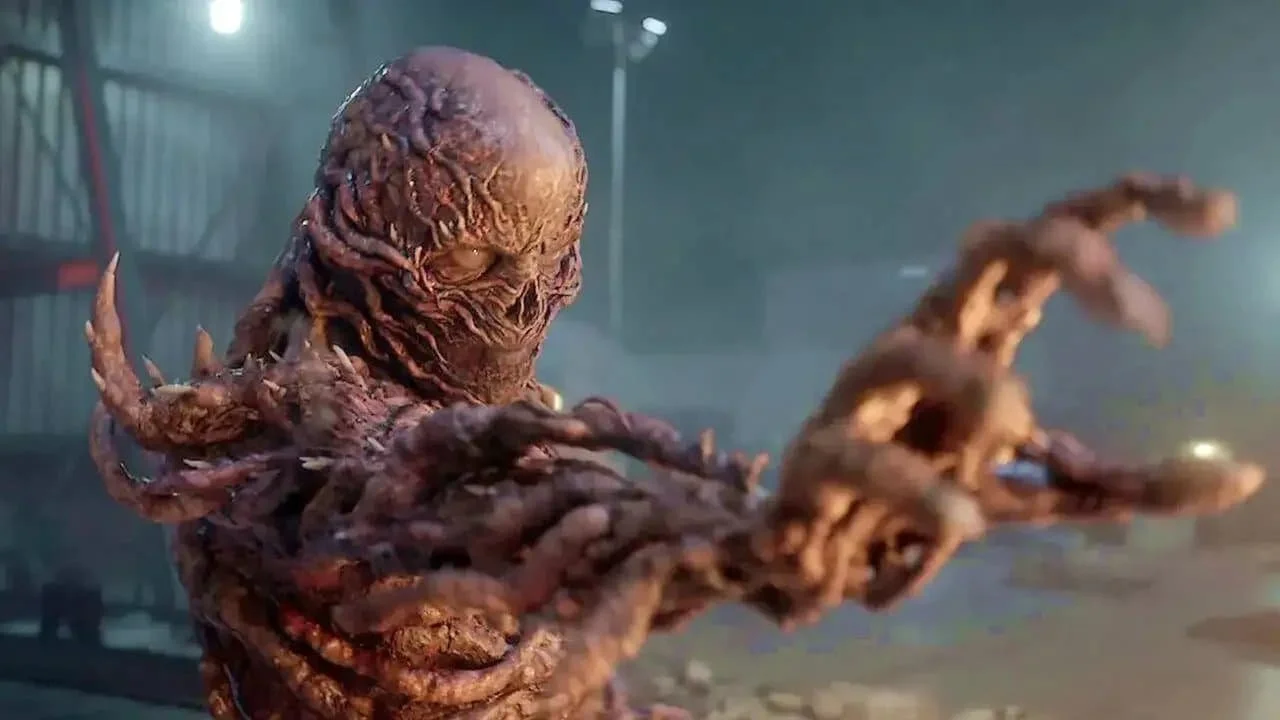
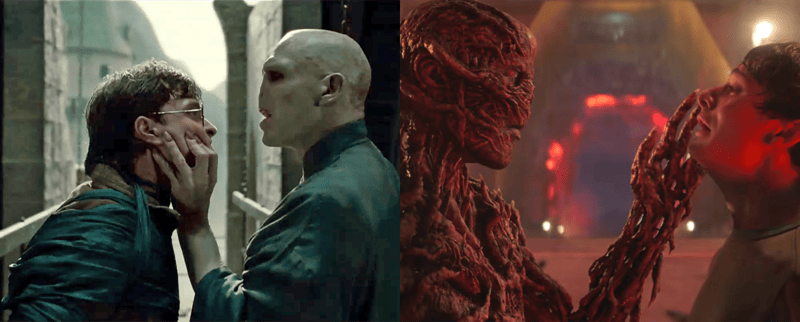
Image Sources: Harry Potter, Variety
Then there are the two villains with a capital V: Voldemort and Vecna, born as Tom Riddle and Henry Creel. They are the megalomaniacal masterminds behind Evil creeping into the Magic of the world. Although Vecna was confirmed as a major threat only by season four, and Voldemort built up big time since the start, they share a desire to reshape all society into a pyramid scheme that puts themselves at the top. The book version of Voldemort is furthermore comparable to Vecna, in that their movement is referred to as slow, lazy; almost as if they never have any need to chase—they shall win regardless.
An important comparison is how they are finished off in the final chapter. Over the course of season 5 and book 7, the villains who were once the stuff of nightmares realize their limitations too late and react erratically for it. The audience learn alongside the protagonists about the humanity the antagonist has stripped away (figuratively and literally) via a series of origin stories. By so doing, this parries the fear straight back to the oppressor. It is no mistake that the villains appear pathetic when they approach the climax. They are in denial. They thrash out like schoolyard bullies. The fear of death reflect inside bloodshot eyes.
Their first huge mistake was to wrong an innocent boy, at a time when their power was paramount. Voldemort targets baby Harry because of a Chosen One prophecy and Vecna targets Will because he’s a child with a malleable mind for spreading horrors into the human world. They unintentionally create a psychic connection that proves to be their undoing. When their life flashes before their eyes because the one they cruelly marked defies their omnipotence, they are given one final warning to accept—of all things—their humanity!
“It’s your one last chance,” said Harry, “it’s all you’ve got left…. I’ve seen what you’ll be otherwise…. Be a man… try… Try for some remorse….” (page 741, Deathly Hallows) Likewise, Will begs his enemy to accept a chance at forgiveness: “It wasn’t you. It was never you…. You were just a kid, a kid like me.” (The Rightside Up) The villains keep to their ego, believing there is no more hope except within a power they never had any control. They die just as swiftly as their refusal for another chance at life.
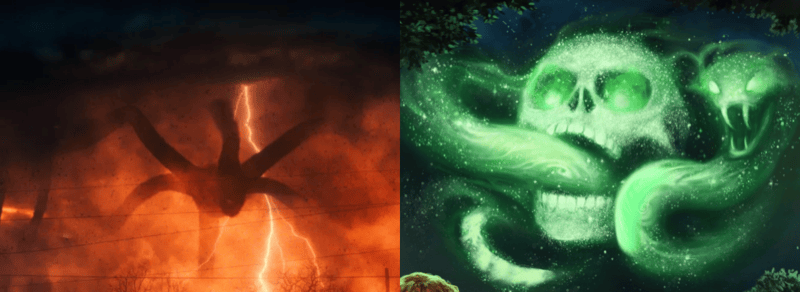
Image Sources: Newsweek, Harry Potter
The genre of Stranger Things has always been horror. It’s conspiratorial thrills. It has cosmic serial killers and grossout body snatchers. Harry Potter, on the other hand, is young adult fantasy that has a sense of lurking danger beneath the veneer of whimsy. It goes from child-friendly adventure-of-the-week to angsty teenage development to a dark epic—where characters are dying left and right. Stranger Things, in contrast, has an immediate body count and major characters die around the end of each installment.
However, there are not as many dramatic deaths in the final season as the bloodbath that is Deathly Hallows. For the case of Stranger Things 5, the reason so many major characters make it out alive (or are inferred to survive at the eleventh hour) is to have a return to normalcy. While in the Wizarding World, a lingering Evil must be removed from the fabric of society for there be a return to the lighthearted magic Harry remembers when he first discovered this alternative community.
The nature of both is very Mystery Box, meaning the story has a high-concept layer of secrets that gradually reveal the underlying mythos. Early on, the jeopardy of what’s at stake is character-focused, but inexact. Voldemort is supposedly dead but clawing his way back inside fresh new bodies; a Demogorgon goes back and forth between dimensions. The first three books and seasons are monster-of-the-week adventures. While important characters grow, these young souls do not grasp the capabilities of the villain until the fourth installment, where it ends with Evil winning. Both stories even have secondary antagonists in the Big Corrupt Government. The reveal of the Abyss and Horcruxes puts the ultimate threat into perspective, but their exposure also provides a clear path out.
Once the Monster (who could have remained a Man) is finally defeated, there is a passing of the torch via an Epilogue. It ends where the journey began. Harry Potter starts his tale by boarding a train on Platform 9¾ and in the last chapter watches his children leave, hoping their school years will be safer than his. Mike Wheeler starts his tale by narrating a DnD roleplay and later watches those same kids shelve their shared campaign to allow a younger generation to proceed with theirs. It ends with the message that despite great hardship and loss, maturing means an understanding that life goes on despite the highs and lows of yesterday.
CultureSlate: Made by humans, for humans.
Please consider supporting our AI-free content via our Patreon page.
READ NEXT:
Sources: Harry Potter, Variety, CNET, Newsweek, Harry Potter and the Deathly Hallows, and Stranger Things 5 “The Rightside Up”
Latest News
Featured



• All sizes are adult unisex
• Printed art on the front
• 100% cotton
• Pre-shrunk fabric
• Shoulder-to-shoulder taping
• Culture Slate Exclusive Design
See more products here