
The World of 'Warhammer 40K': The Horus Heresy
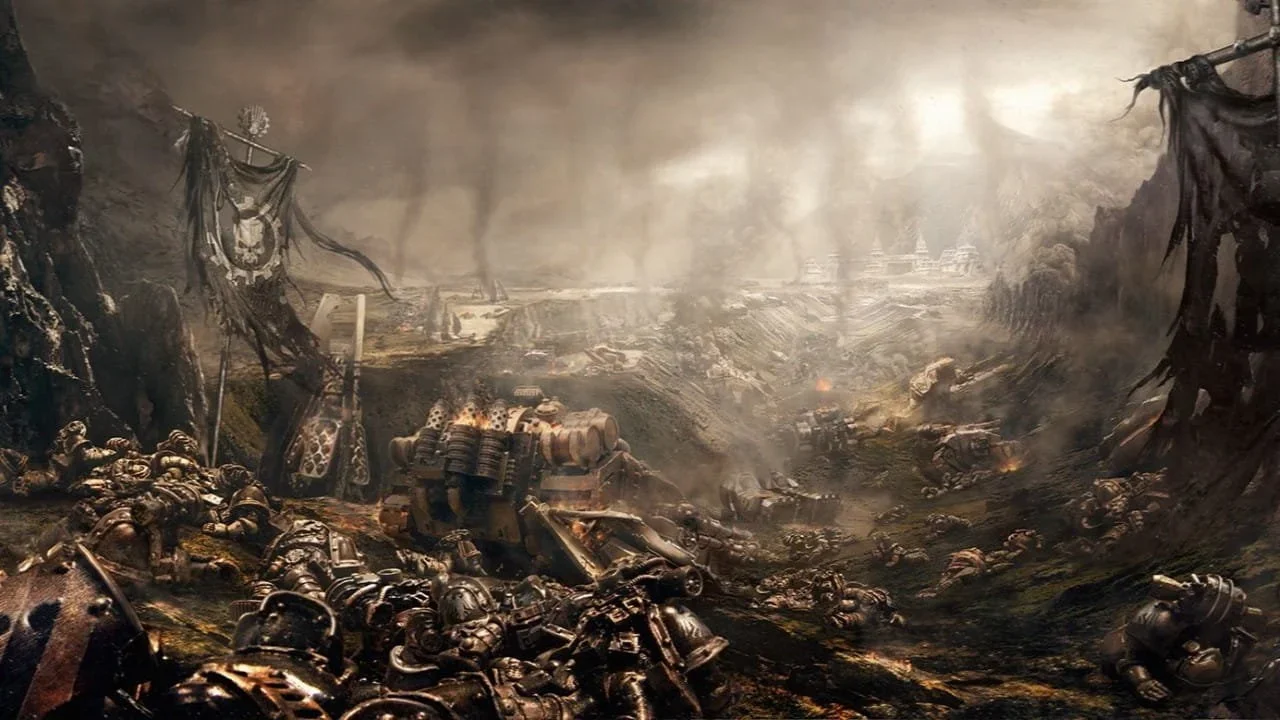
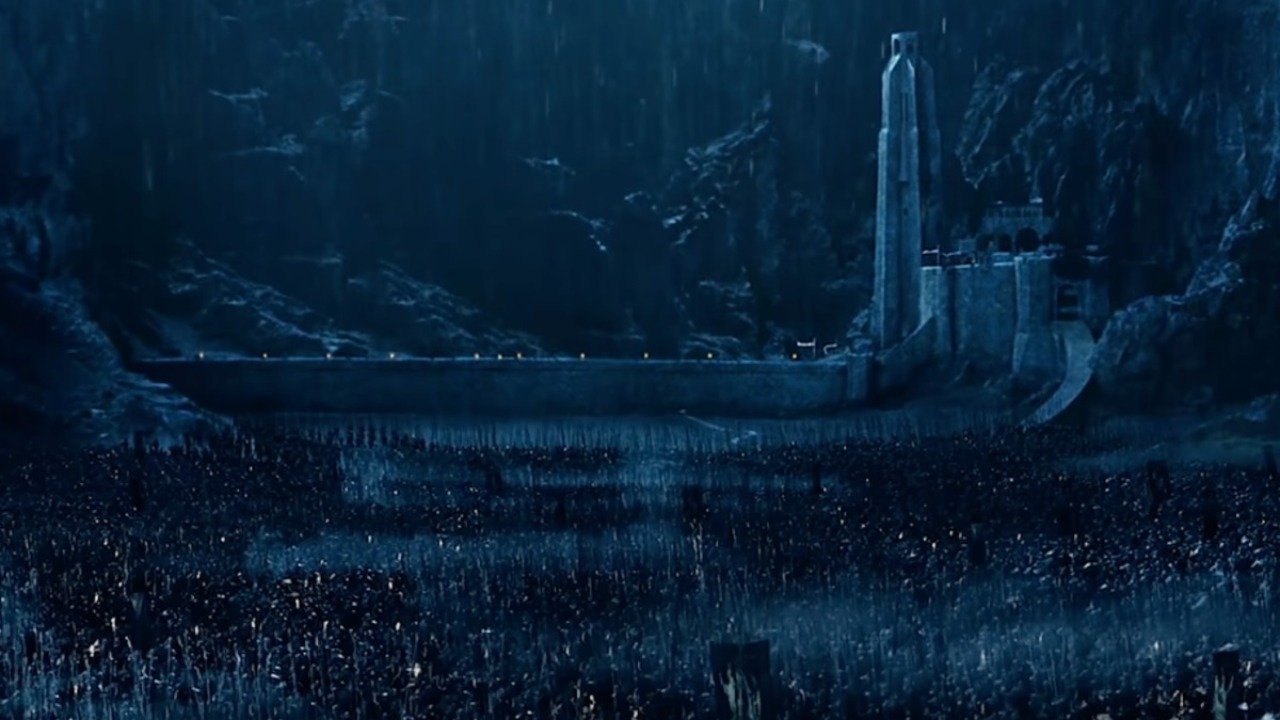
The devastated surface of Isstvan V after the Dropsite Massacre
Image Source: Warhammer-Community.com
The most significant conflict in the history of the Imperium of Man, the Horus Heresy was a disastrous civil war that fundamentally broke the dream of a better galaxy for humankind, and resulted in the worsening of the grim, dark universe known to fans of Warhammer 40K. Also called Warhammer 30K, and playable through a separate war game system on the tabletop, The Horus Heresy is also supported by one of the longest, most complex book series this writer has ever seen.
Numbering dozens of books, and tackling characters big and small, CultureSlate’s summary of this era is going to avoid those incredible specifics. We instead seek to offer a very broad overview of those events so newcomers to the setting can get their bearings, and understand the world of Warhammer 40K a little better.
RELATED:
Background of the Horus Heresy
Prior to the Horus Heresy, the great campaign of the Imperium of Man was the reunification of the scattered enclaves of humanity across the galaxy. Over the course of 200 years, vast fleets gradually expanded the Imperium while adapting to the threats they faced and helping discover the Primarchs on myriad worlds they resided on after being thrown through the Warp by the manipulation of the Chaos powers. The Space Marine Legions, thousands-strong forces, worked alongside soldiers recruited from across the expanding Imperium, fighting fiercely against xenos threats and rogue human populations deemed to be opposed to the spreading light of the Imperium.
But it was also during the Crusade that cracks would start to form in the Imperium. The Primarchs formed rivalries, some far more insidious and damaging than others, and some also hated the Emperor of Mankind. Among these was Lorgar, Primarch of the Word Bearer’s Legion, who had tried to worship the Emperor as a God. But the Emperor sought a secular Imperium, and when it became clear Lorgar did not understand that, he and his faith-spreading Legion were harshly reprimanded. Chastised, Lorgar sought faith from other sources, and found it in the Chaos Gods. Over the coming years after this communion, Lorgar, Erebus (a Space Marine recruited from Lorgar’s homeworld) and others, began the slow, gradual process of corrupting other Legions to an ideology in opposition to the Imperium as it currently was.
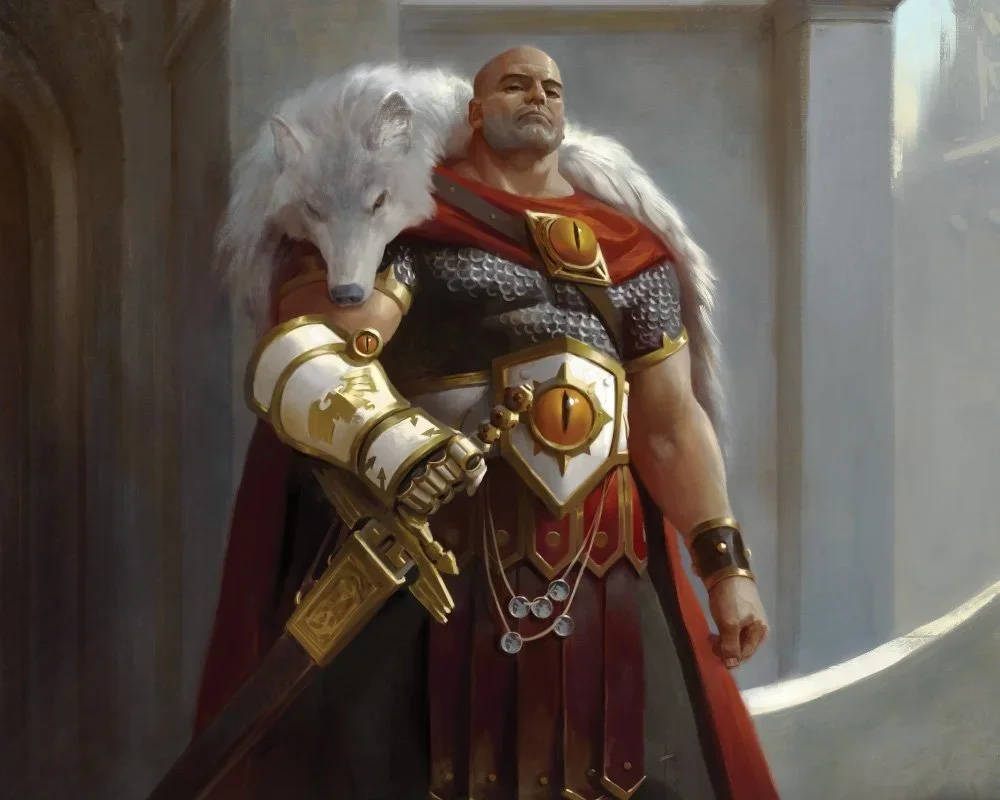
Horus, prior to his corruption by the Chaos Gods
Image Source: Warhammer-Community.com
Eventually, they sprang a trap. Newly declared Warmaster of the Great Crusade, Horus Lupercal was the Primarch of the Sons of Horus (once called the Lunar Wolves), and the first of the Primarchs to be found by the Emperor. So, when the Emperor had to refocus on important projects on Terra, he left Horus in charge in his absence. However, Horus was soon stabbed by a poisonous blade, an assassination effort orchestrated by Chaos-aligned forces among the Legions and humans of the Crusade.
He entered a coma, and was approached by the Chaos powers, who showed him lies and truths about the universe, convincing him to turn on his creator. The Primarch of the Thousand Sons, Magnus the Red, tried to stop his brother’s turn, but it was too late. By the time Horus rose again, he had set his mind against the Imperium and quickly got to work orchestrating the division and destruction of the Imperium’s greatest assets.
Inciting Incidents
The Burning of Prospero, the Dropsite Massacre and the Betrayal at Calph were three major events organized by Horus to cripple the Imperium’s defenses. First, Prospero’s fate. Homeworld of the Thousand Sons and Magnus, Horus quickly moved to silence his turn away from the Imperium by sending the Space Wolves Legion alongside its Primarch, Leman Russ, to kill the Thousand Sons and Magnus.
Magnus had already tried to reach out to Terra and the Emperor, but his psychic powers had accidentally devastated the Emperor’s ongoing project, resulting in orders for Magnus’ arrest and transport for questioning to reach Horus as Warmaster. Horus falsified a kill order instead, and soon, Prospero burned. Thousands of Space Marines perished as the great cities of the planet were reduced to ash, alongside centuries of knowledge and study about the Warp (which was already a taboo topic in the wider Imperium). Magnus himself did not die, but was instead shattered into many shards, and the surviving Thousand Sons alongside the majority of Magnus’ essence found salvation by swearing loyalty to the Chaos God Tzeentch.
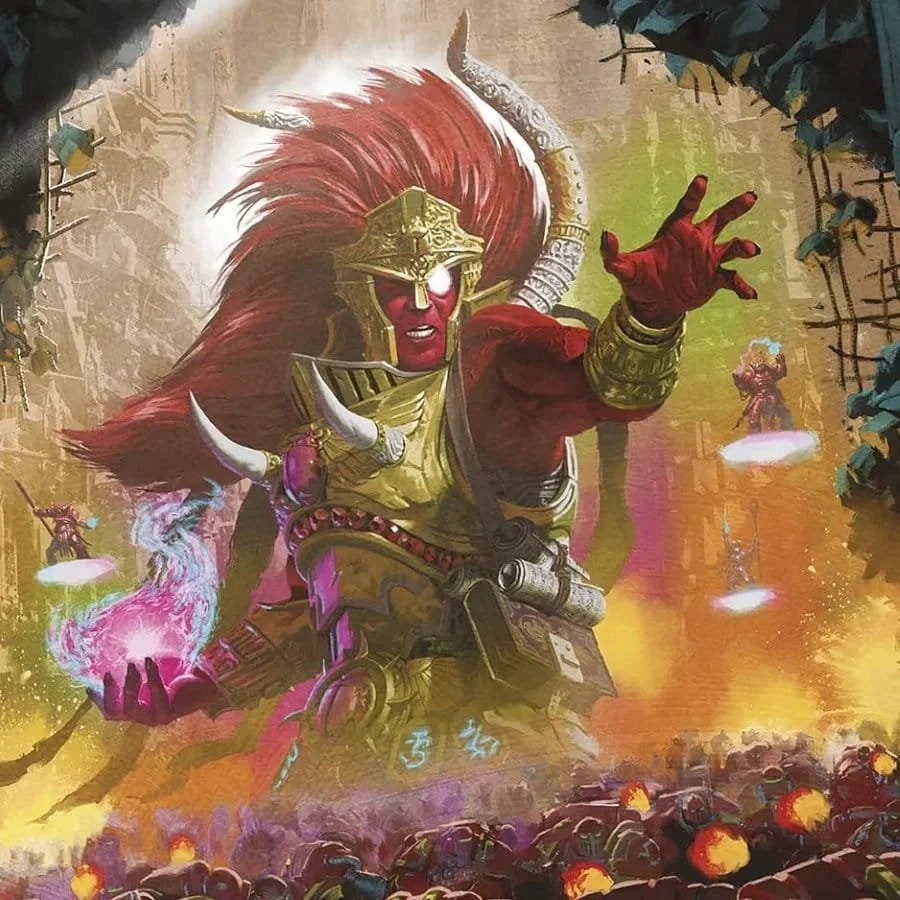
Magnus the Red and the Thousand Sons after their transformation through loyalty to Tzeentch
Image Source: Amazon
But that fruit would take years to bear. In the short term, Magnus’ ability to warn others was silenced. After time spent organizing, gathering his allies, and buying the loyalty of the Mechanicum of Mars, Horus next moved to the rebellious Isstvan system. With Horus were the Emperor’s Children, World Eaters, Sons of Horus, and Death Guard, who then slaughtered their Loyalist elements during conflict on Isstvan III. Some escaped and warned the Imperium, but this hardly mattered as Horus chose to make his stand at Isstvan.
He had been moving the Legions about in preparation for this moment, and so when a retribution fleet was sent to bring him to justice (made up of the Iron Hands, Salamanders, Raven Guard, Word Bearers, Night Lords, Alpha Legion and Iron Warriors), it appeared like his rebellion was finished. On Isstvan V, led by the headstrong Primarch Ferrus Manus, the Salamanders, Raven Guard, and Iron Hands all deployed…only to be cut down when their reinforcements all turned traitor. The Alpha Legion, Iron Warriors, Word Bearers and Night Lords all sided with Horus, and committed their own purges of Loyalist elements. Nine Legions now stood against the Imperium.
Lastly came the Betrayal at Calph. Fresh from their purge of Loyalist elements, and looking for revenge against the Ultramarines (who had been part of the Emperor’s humiliation of the Word Bearers years earlier, though they had merely followed orders), the Word Bearers arrived in the Calph system to find a vast gathering of the Ultramarines. Arraigned here by Horus under the pretext the two Legions were to undertake a joint campaign together, the Ultramarines did not know what had happened at Isstvan, though they soon found out.
The Word Bearers tore into their unprepared cousins, and thousands died. At the same time, the Traitor Space Marines performed a Warp-infused ritual that poisoned Calph’s star, and allowed them to raise the Ruinstorm. This vast Warp anomaly spread across the galactic east, and cut off three Loyalist Legions from the core of the Imperium, isolating the path toward Terra and leaving the Imperium with few organized Space Marine defenders between Horus, and the Emperor.
The Long March to Terra
Despite these significant successes, the Traitors were a quarrelsome lot. Few of the Primarchs in their cohort liked each other, and the power of the Warp was not seen as an ally by some, like Mortarian, Primarch of the Death Guard. Despite this, slowly, Warp-powers began to seep into the Legions, though this would take the full decade of conflict that was about to follow to make its impact known. Several of the Traitor Primarchs also ascended into Daemonhood, including, ironically, Mortarian. Elsewhere, despite the Mechanicum of Mars being bought off by Horus, factions of the Mechanicum soon opposed the Fabricator General’s decision. On Mars itself, civil war erupted, while across the galaxy, Forge Worlds either entered their own periods of civil conflict, or declared for the Traitors or the Loyalists.
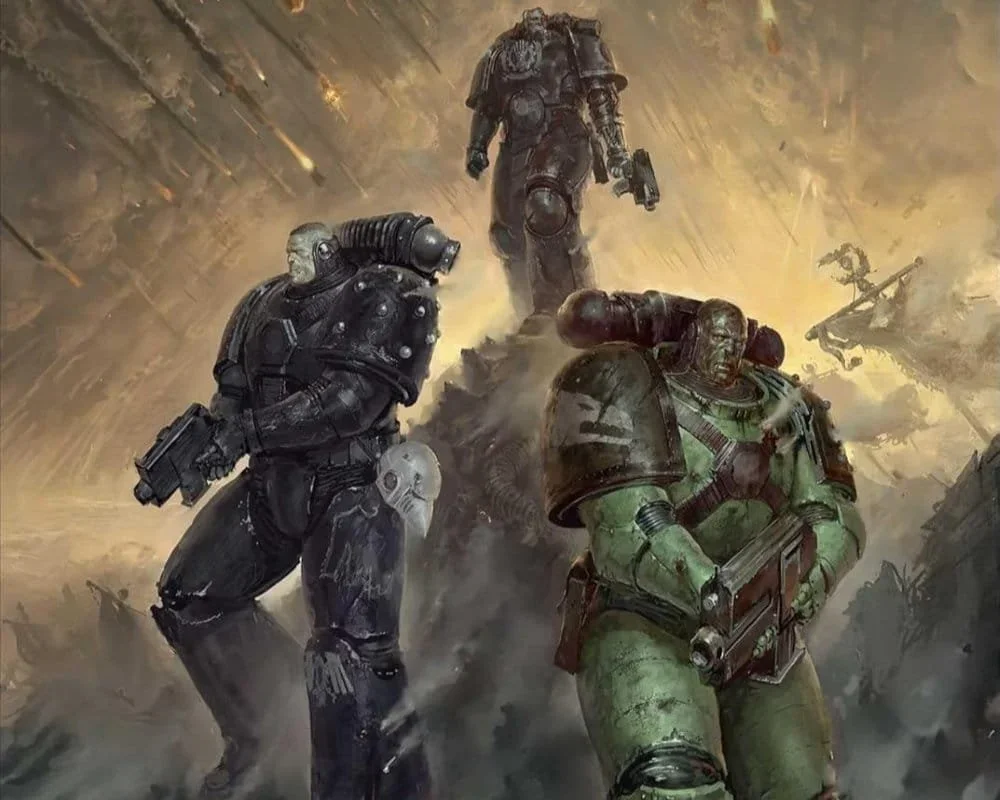
Survivors of the Dropsite Massacre
Image Source: Amazon
As for the numerical superiority of the Traitors, that was whittled down as the Legions were divided to go on campaigns of conquest and terror, both to keep the remnants or trapped Legions busy, or to help clear a path toward Terra. While there were few Space Marines in the Traitors’ path to Terra, the mundane soldiers of the Imperium’s armies alongside the ships of the navy put up a fierce resistance, when they didn’t turn Traitor themselves. The Space Marines left alive after Isstvan though, were also a problem. Scattered though they were, many were filled with a rage at the Traitors for their actions, and began their own guerilla campaigns, harassing Traitor forces across the galaxy. Blackshields also emerged during this time, Space Marines of a mercenary nature or detached ideology who didn’t firmly side with one Legion in particular, nor one side in the civil war. They had their own goals and missions, and inflicted their own pains on both sides of the Heresy.
Years of conflict followed, as Forge World fought Forge World, aided by allies and the-then more numerous Titan Legions and Knight Houses, Space Marine fought Space Marine, and the Warp prospered. In the galactic east, the Primarch of the Ultramarines, Robuete Guilliman, established Imperium Secondus as a safe haven for Imperium forces trapped in the region, unsure if Terra was still intact beyond the impenetrable Ruinstorm. Closer to the galactic core, Traitor Legion homeworlds were destroyed by retribution fleets.
But, slowly, the Traitor forces turned their might toward Terra. Conquering a series of worlds on the path toward the seat of Humanity’s great empire, the Traitor Primarchs came together once again, and while Lorgar was banished after doubting Horus’ ability to successfully prosecute the coming conflict, his Legion largely remained at Horus’ side. Entering into a portal on the world of Molech, used by the Emperor millennia prior to gain knowledge from the Warp, Horus returned, empowered by Chaos, and the final days of the Imperium seemed to loom.
The Siege of Terra
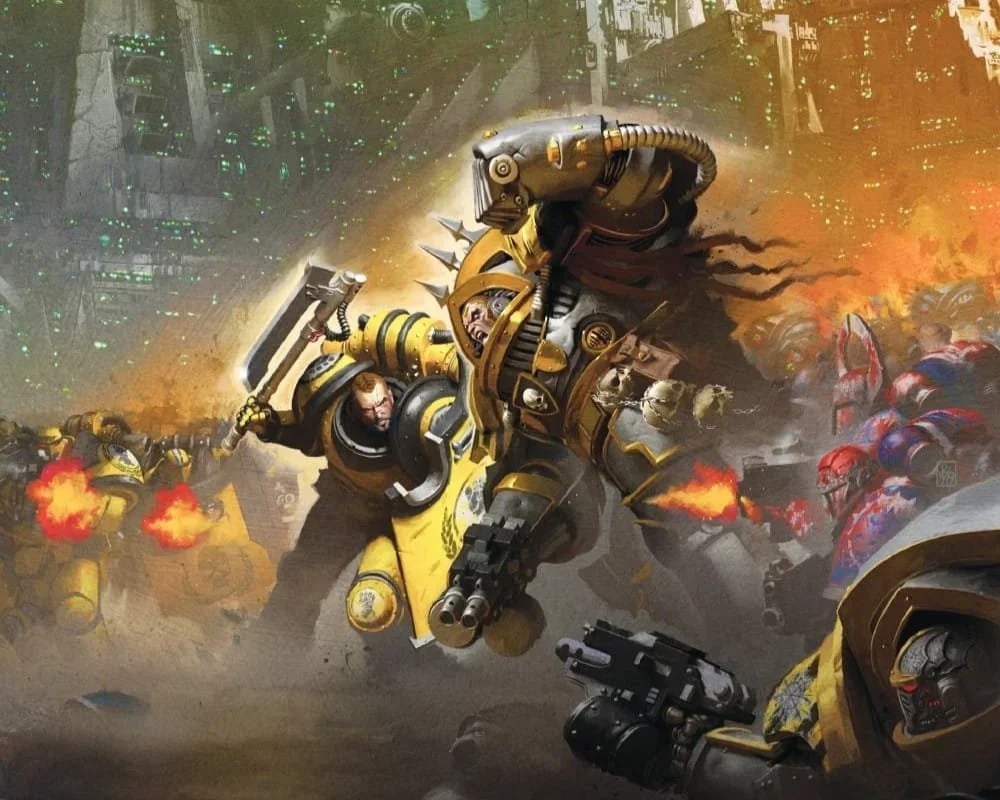
Combat between Traitors and Loyalists during the Siege of Terra
Image Source: Warhammer-Community.com
Throughout this advance by the Traitors, what Loyalist Legions existed in the area fought them ferociously. Elsewhere, Imperium Secondus was abandoned when the Loyalist forces trapped in the region realized Terra still survived, as did the Emperor. Breaking the power of the Ruinstorm, only the Blood Angels Legion and their Primarch Sanguinius were able to rush to Terra before the coming Siege, with the Dark Angels and Ultramarines drawing away Traitor forces to allow for this breakout. Terra had been garrisoned throughout the conflict by the Imperial Fists, though their Primarch, Rogal Dorne, faced his match in Puterabo, Primarch of the Iron Warriors as he masterminded the Traitor’s advance on Terra, breaking through rings of defenses, before Terra itself was in their sights.
The Imperial Palace, the size of a small continent, was the Traitors’ main focus. With several Legions thoroughly corrupted by Chaos, Daemonic forces joined the fray, and reality began to blur as more and more Warp power was expended in the brutal fighting, and as millions of regular humans died, further fueling the Warp’s presence. Primarch battled Primarch, with some notable Loyalist victories as they held the line. As the Siege ground on, the Traitors received bad news: the Ultramarines had broken through and were headed to Terra. Always one of the largest Legions, they had thoroughly rebounded from their losses at Calph. If the Traitors didn’t end this fight soon, they were going to lose.
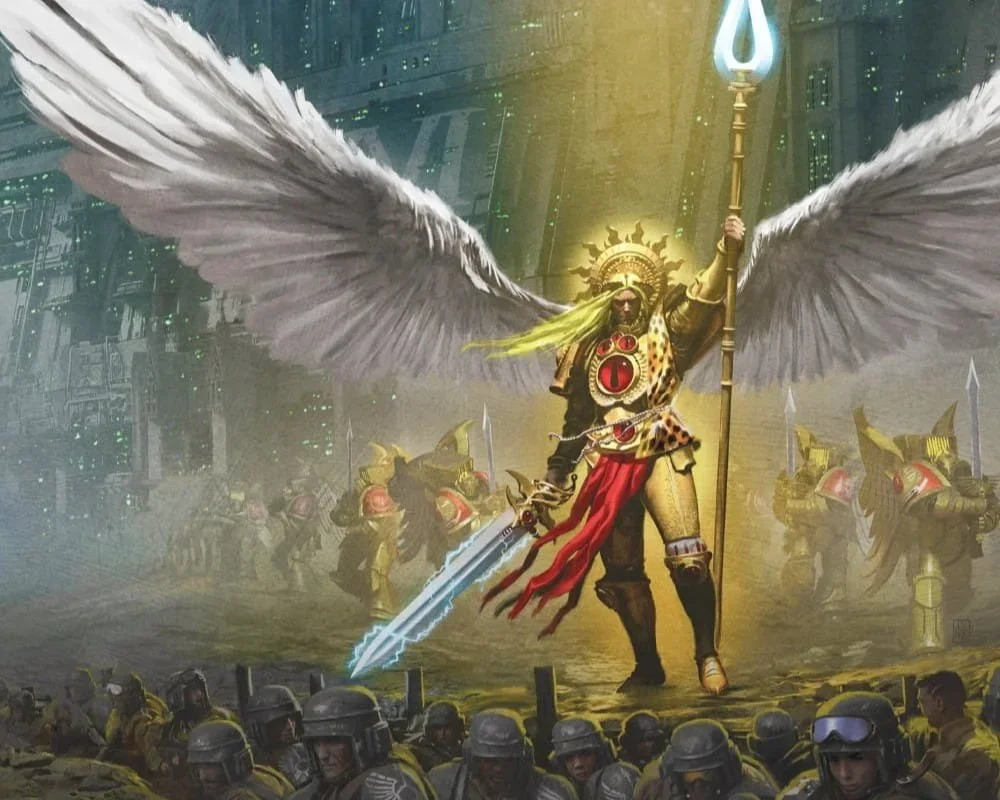
The Primarch of the Blood Angels, Sanguinius, standing in defense of Terra
Image Source: Warhammer-Community.com
So, to lure the Emperor into a final confrontation, Horus dropped the shields of his capital ship, and waited. The Emperor, at last disengaging from his all-important task of sustaining the various protections of the Palace from Chaos, was replaced on the Golden Throne by Malcador the Sigilite, one of his oldest confidants and an extremely powerful Psyker. The effort to maintain the same wards and protections as the Emperor killed the man, but for a short time, these defenses held, and with the Primarch Sanguinius at his side, the Emperor teleported to Horus’ flagship. But they and the forces they had brought with them were scattered across the vast vessel.
By the time the Emperor reached Horus, Sanguinius was dead at Horus’ hand, and in the violent conflict that followed, the Emperor almost drew too deeply from the power of the Warp. Horus, empowered by the four Chaos gods, was near-unstopable, but the Emperor and others foresaw that if the Master of Mankind were to dive into the Warp and empower himself, he would become a force even more terrifying than Horus. So, instead, the Emperor allowed himself to be grievously wounded, but, in the process, was able to slay Horus. The Warmaster’s spirit was annihilated, and the Heresy was at an end, though at a terrible cost.
Aftermath
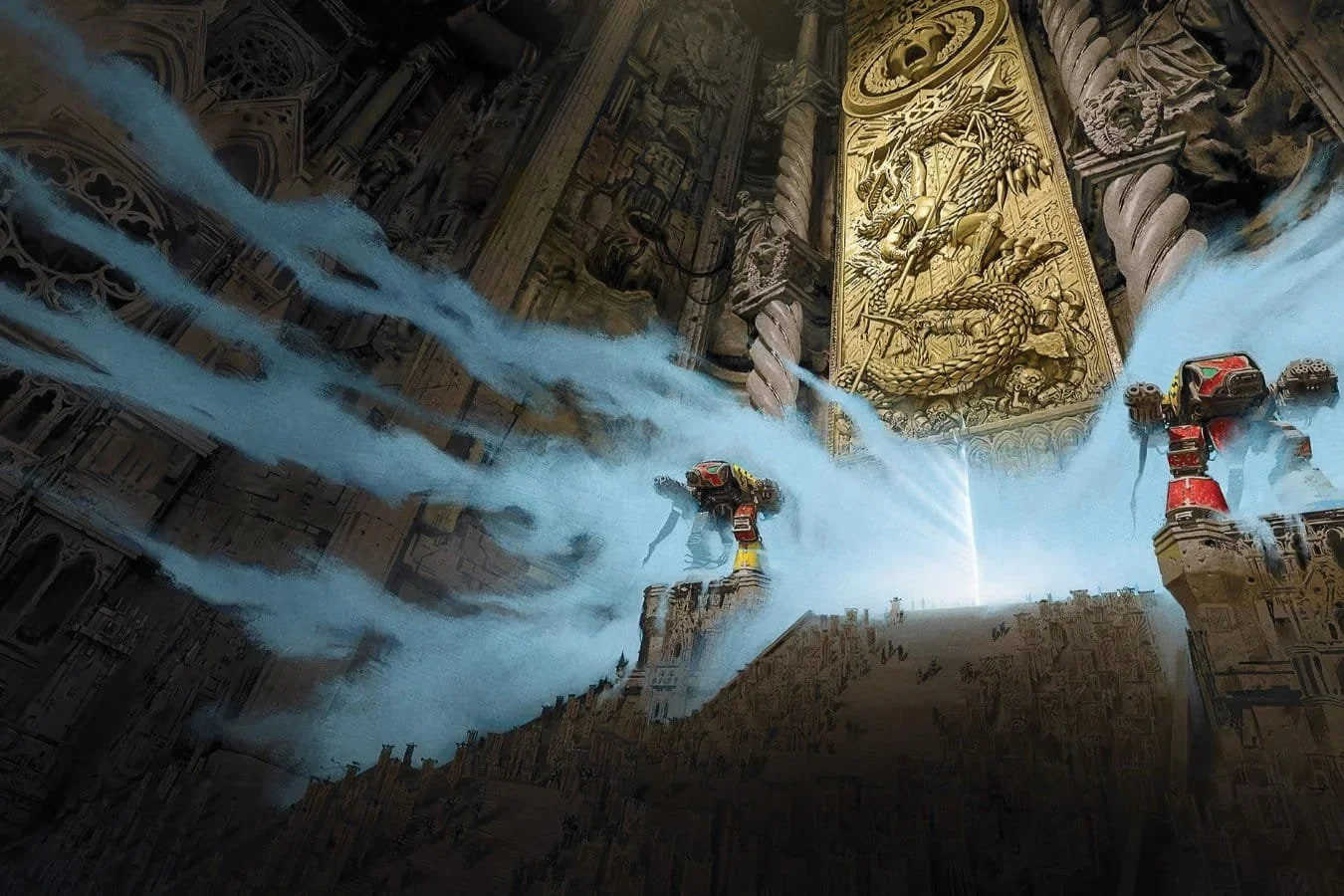
The Eternity Gate
Image Source: Warhammer-Community.com
The Emperor was born back to Terra by Vulcan, Primarch of the Salamanders, and placed in the Golden Throne, where he has sat ever since, fuelling the power of the Astronomican. Traitor forces, some of which had already retreated from the Siege for various reasons, now fled the solar system in a mix of chaotic and orderly retreats. The Ultramarines brought stability and relief to the embattled world, and Robuete Guilliman also brought political reform. No longer could any Primarch, or any military commander in the Imperium, control an entire, multi-disciplined force with ease. Everything was broken up, specialized, and divided, including the Space Marine Legions. Now, there would be Chapters, of about 1000 Marines each. Some Primarchs resisted these reforms, but over time, chose to agree to them so as to present a united front to the war-ravaged Imperium.
Speaking of that war-ravaged Imperium, the Traitors soon found themselves hunted. While initially reluctant to aggressively pursue this foe while work needed to be done recovering and consolidating, Robuete Guilliman and less reluctant Primarchs alongside Loyalist forces pursued the Traitors across the galaxy in an event called the Scouring. Some Traitors sought refuge in realspace hideaways, occasionally meeting with death and destruction as a result, but many more sought refuge in the Warp. They journeyed into the anomaly called the Eye of Terror, and would not be seen again for several centuries. While fighting broke out between the Legions or even within the Legions which saw the likes of the World Eaters shattered into dozens of warbands, the favor of their gods granted certain Legions new Warp-twisted homeworlds which they shaped to suit their needs. Eventually, the Traitors would return to reality for raids, either for their own goals, the goals of the Gods, or being directed in some larger plan by other, stronger forces.
But beyond the Eye, the Imperium was shattered. One by one, the surviving Loyalist Primarchs disappeared, were indisposed, or were otherwise lost. The Emperor’s dream for the future faded, broken by the Heresy’s devastation, and the Imperium began its slow slide toward collapse. It survived another 10,000 years, but when some of those lost Primarchs returned, they found a fundamentally altered galaxy, still the same in some ways, and totally alien in others.
CultureSlate: Made by humans, for humans.
Please consider supporting our AI-free content via our Patreon page.
READ NEXT:
Source(s): YouTube
Latest News
Featured




• All sizes are adult unisex
• Printed art on the front
• 100% cotton
• Pre-shrunk fabric
• Shoulder-to-shoulder taping
• Culture Slate Exclusive Design
See more products here