
History Of 'The Transformers'
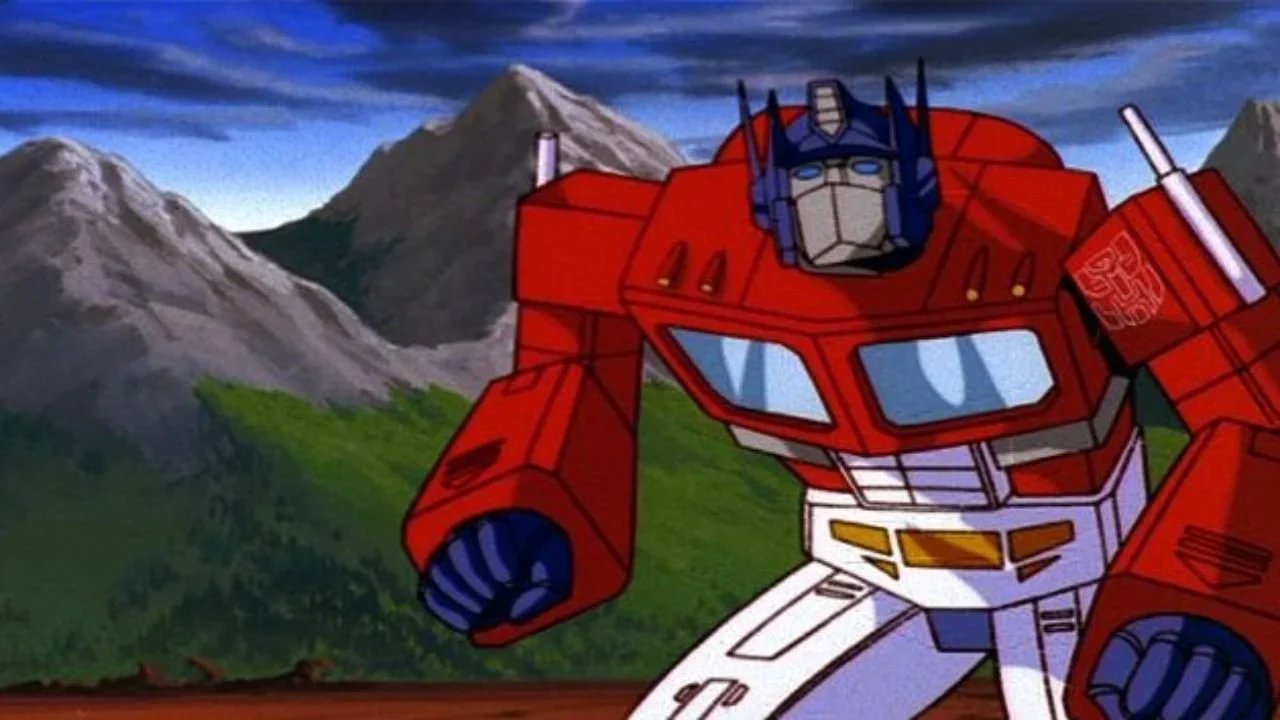
Image Source: mxdwn
The History of The Transformers
For over forty years, audiences have been enthralled by a great battle between evil and good, fought by robotic warriors that are more than meets the eye. From their inception in 1984, generations have seen the battle between the Autobots and Decepticons take on different forms over countless shows, comics, video games, and movies, creating a sprawling zeitgeist for every kind of fan. Let’s take a moment to explore this franchise’s beginnings and where we’ve been to figure out what’s next in the History of The Transformers.
Before Transformers: Diaclone & Micro Changers
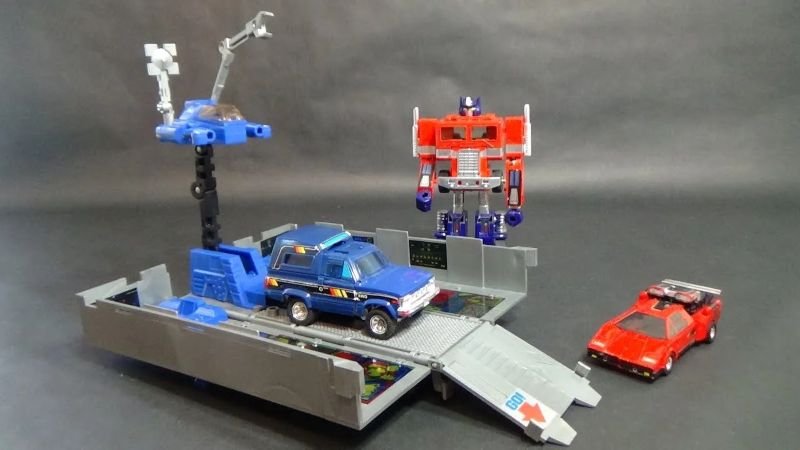
Image Source: The 80s Transformers Fan (YouTube)
To understand the origins of The Transformers as a toyline, we have to take a look overseas at two toylines from Takara Toys, known as Diaclone and Micro-Change. First launched in Japan in 1980, Diaclone was a line of toys designed by Shoji Kawamori and Kazutaka Miyatake, comprised initially of mecha and pilots, which would branch into the idea of mechs that can transform into everyday vehicles, objects, and weapons. One of these mechs was Battle Convoy, a red and blue robot that would convert into a truck. Kawamori would go on to create another transforming mecha franchise known as Macross, with Miyatake becoming a fellow designer on the toys.
RELATED:

In 1984, Hasbro would gain the license to Diaclone and Micro-Change, rebranding the line as The Transformers. Battle Convoy would become the iconic hero Optimus Prime, with many figures from Diaclone, Micro-Change, and Macross becoming characters in The Transformers toyline, along with its tie-in series.
Generation One
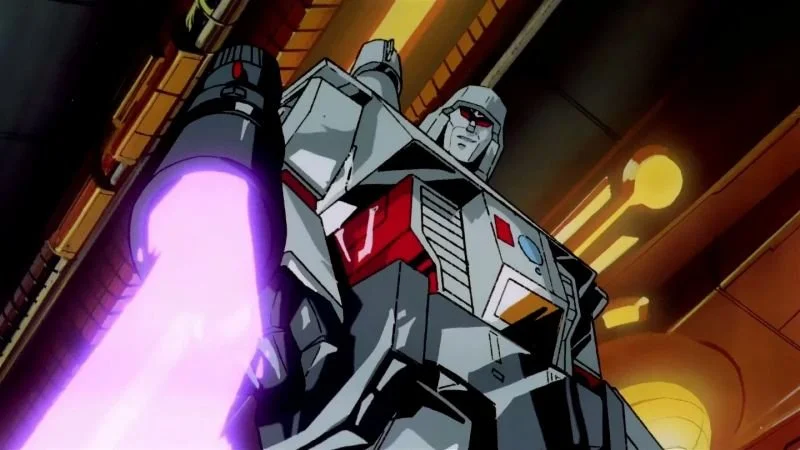
Image Source: GeekIreland
Produced by Marvel and Sunbow Productions and animated by Toei (One Piece), The Transformers would grace the small screen in September 1984 with a three-part pilot which gave us the origins of the heroes and villains we love, with Optimus Prime (voiced by Peter Cullen) and his heroic Autobots, and Megatron (voiced by Frank Welker) and his villainous Decepticons, fleeing their homeworld, Cybertron, in search of new energy resources, before crash landing on Earth millions of years in our past. Both factions would awaken in 1984, with their war resuming on Earth as the Decepticons attempt to conquer Earth and drain its natural resources, while the Autobots would fight back to protect their newfound home, joining forces with father-son duo Sparkplug and Spike Witwicky, with Spike forming a strong friendship with the small-but-mighty Autobot Bumblebee. We would follow Optimus, Bumblebee, Spike, Sparkplug, and a large revolving door of different Autobots for 65 episodes, or two seasons of television, before finally making their way to the big screen in August 1986.
The Transformers: The Movie would mark a major turning point for the original series and for its fans. Set twenty years after the show’s second season, it would lay the groundwork for a new conflict and new characters taking center stage, though the method by which things were set up would be less pleasant. Many young viewers would be shocked as they watched many of their favorite Autobots and Decepticons alike being brutally murdered in the film’s first act, including the show’s lead character, Optimus Prime, in a scene that makes audiences weep to this day. Main villain Megatron would also be on death’s door before being resurrected as Galvatron, voiced by the late Leonard Nimoy, by the planet-eating transformer Unicron, voiced by the late Orson Welles, with this movie being his final role before his death in 1985.
With Optimus gone, the lead role in the movie would go to a younger Autobot, Hot Rod, voiced by Judd Nelson, with a brand new supporting cast of Autobots and Decepticons alike taking center stage, with Unicron as the main villain. The movie would see Hot Rod grow into becoming a leader in his own right, arising to become Rodimus Prime, and vanquishing Unicron.
The remainder of the series would fall into a new status quo, with Rodimus as the new lead character and Galvatron (now voiced by Frank Welker) as the lead villain, with stories centered around Earth, Cybertron, and different alien worlds. Following backlash over Optimus Prime’s death in the movie, the show’s third-season finale would officially bring Optimus back from the dead, setting the stage for the show’s fourth and final season, a 3-part miniseries airing in 1987, bringing the first generation of Transformers to a close.
After this, Transformers would enter a bit of a drought, with a second generation toyline debuting in 1992, but severely underperforming for Hasbro, leading to its end in 1995, and the franchise’s first great transformation, one of a more primal nature.
Beast Wars
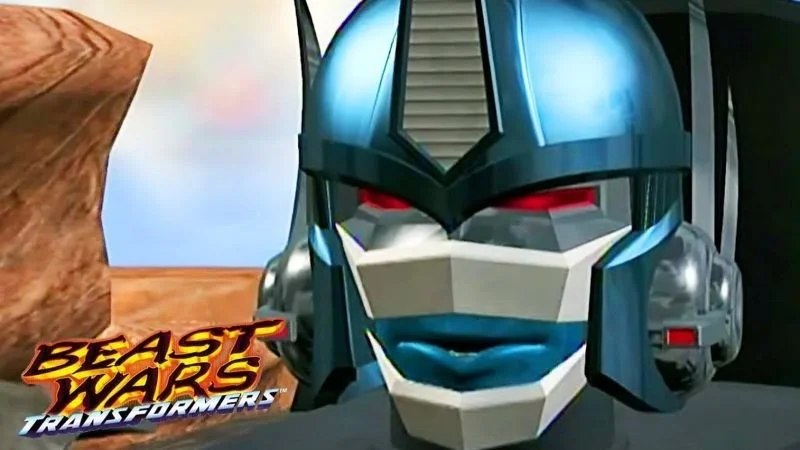
Image Source: Transformers Official (YouTube)
In 1996, Transformers would return to toy shelves and TV with the ‘Beast Wars’ series, reimagining the robots in disguise as robots transforming into animals rather than vehicles, with new factions and characters taking the lead. The series would be produced by Canadian animation studio Mainframe Entertainment, and was the first CG-Animated Transformers series, praised for its groundbreaking animation as well as its balance of comedy and thoughtful storytelling, earning the series a Daytime Emmy.
Though set in a time and place far removed from the original series, the core premise remains the same, with two warring factions crash-landing on a strange world teeming with life, and waging battle over this world’s resources, but with an extra twist. In order to navigate this world safely, these robots must take on the organic forms of the native wildlife to protect themselves from these raw energy deposits. Thus the heroic Maximals, led by Optimus Primal (voiced by Gary Chalk), and the Predacons, led by Megatron (voiced by David Kaye) were center stage for what’s still considered one of the most entertaining and engaging Transformers shows to date, having a more serialized approach to its storytelling and longer-form character arcs.
Beast Wars would run for three seasons spanning 52 episodes, before coming to an end in 1999. It would be followed by a sequel series, Beast Machines the same year, which saw the Maximals returning to Cybertron in hopes of reviving their dying homeworld. This sequel would run for two seasons, spanning 26 episodes, before coming to a close in 2000. While this sequel would be a bit more polarizing among fans, it’s generally regarded as a solid follow-up and bookend to the series that re-imagined Transformers for the 90s.
The 2000s
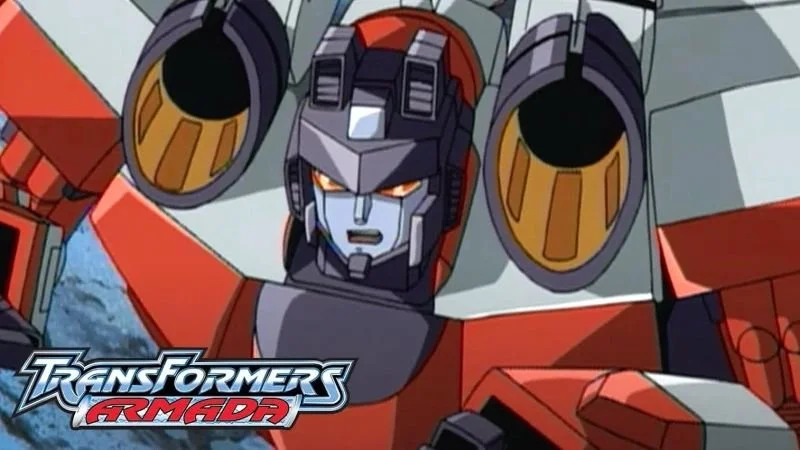
Image Source: Transformers Official (YouTube)
The turn of the millennium would mark a major resurgence for the Transformers franchise, with multiple shows and comics spawning throughout the 2000s, including one of the franchise’s most ambitious series to date: The Unicron Trilogy.
Transformers would make its 2000s debut with the 2001 series ‘Transformers: Robots in Disguise,’ the first Japan-produced series to be dubbed for US Audiences, while also mixing and matching elements of shows that came before. The general premise focused on the Autobots, led by Optimus Prime (voiced by Neil Kaplan) and their battle with the Predacons, led by Megatron (voiced by Daniel Riordan). This series would also re-introduce the human element with their human protagonist Koji Onishi (voiced by Jason Spisak), who is taken in by the Autobots when his father is kidnapped by the Predacons in their search for ancient secrets that would allow them to vanquish the Autobots. The series ran for one season of 39 episodes before concluding in 2002, but it wouldn’t be long before the series made its return in a big way with the Unicron Trilogy of shows.
Transformers: Armada would make its debut alongside a tie-in comic series by Dreamwave, which saw the Autobots and Decepticons coming to Earth in search of Minicons, artificial life forms created by Unicron. Gary Chalk and David Kaye would return to voice Optimus Prime and Megatron respectively. The series would run for one 52-episode season from 2002-2003, and while rough around the edges, was seen among fans as a strong start to the Unicron Trilogy. However, it would seem none of its sequels would quite meet that same standard.
Transformers: Energon would debut in 2004, picking up a decade after the events of Armada, continuing the story with a new status quo while engaging in a larger conflict with Unicron. Energon would depart from the fully hand-drawn style of Armada and Robots in Disguise, opting for cel-shaded CGI for the Transformers themselves as a result of a shortened production schedule, something which drew ire from fans who’d grown to love the hand-drawn robots. The series would run for 51 episodes, coming to an end in 2005. Energon would not be well-received by audiences for its lack of plot progression, unpolished English dub and lower-quality animation.
In 2005, the final part of the Unicron Trilogy, Transformers: Cybertron, would begin airing. In the aftermath of Unicron’s defeat, Cybertron is threatened by a black hole, leading to a mass exodus to Earth, while Optimus and the Autobots search for the Cosmic Keys and the Omega Lock, ancient artifacts that can save Cybertron, while the Decepticons do the same in hopes of taking over Cybetron for themselves. Cybertron would run for 51 episodes, coming to an end in 2006. While the animation was still considered rough and unrefined like Energon, the series would correct a number of mistakes made in its predecessor, with an improved English dub and more cohesive plot, bringing the rollercoaster of the Unicron Trilogy to a satisfying close.
The final Transformers series of the 2000s is regarded by many as the strongest of the era, and one of the best reboots of all time. Transformers: Animated made its debut in 2007, and was a ground-up reimagining of the original story, focusing on a small group of maintenance Autobots, led by Optimus Prime (voiced by David Kaye), who uncover the long-lost Allspark before being stranded on Earth in a futuristic Detroit. What made this series stand out was not only its more lighthearted tone and episodic approach, but the fact that the Autobots would be forced to contend with not only Decepticons searching for a missing Megatron (voiced by Corey Burton) and the Allspark, but with human villains as well, all while only being a small maintenance crew and not proper warriors, making the entire series an underdog story. This, combined with cameos from countless characters and actors from the series’ past made Transformers Animated an energetic and lively love letter to incarnations from the past.
Transformers Animated would run for three seasons, spanning 39 episodes before being cancelled in 2009 before a fourth season could enter production. While this would come as a disappointment for fans, thankfully they wouldn’t have to wait very long for a number of Transformers projects to take root, including one ongoing series of films.
The Bayverse
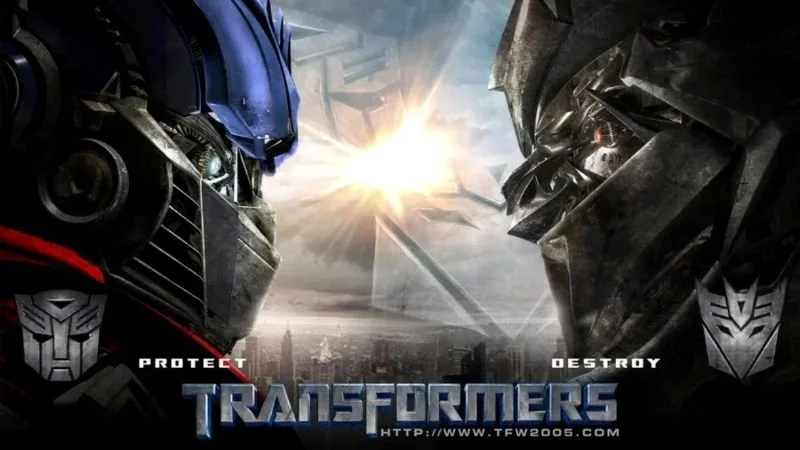
Image Source: Culture Slate
In 2003, producer Don Murphy would begin laying the groundwork for a live-action Transformers movie, with Steven Spielberg signing on as an Executive Producer. In 2005, Michael Bay was tapped to direct the film, throwing his own spin on the main idea of a boy and his car. It was this trio, along with writers Roberto Orci and Alex Kurtzman, that would bring the 2007 blockbuster, Transformers, to life with some of the most groundbreaking CGI ever put forth in film. Transformers would receive mixed reception from critics and fans, but was a massive financial success, earning over $700million at the box office on a budget of $145million.
The first movie focused on Sam Witwicky (Shia LaBeouf) as he finds himself at the center of the Autobot and Decepticon battle as they search for the Allspark on Earth. The film would see Peter Cullen reprising his role as Optimus Prime for the first time since Generation One, and Hugo Weaving voicing Megatron.
The success of the first Transformers movie would lead to four more films being made over the span of a decade. Shia LaBeouf would return as Sam Witwicky for two more films, Revenge of the Fallen and Dark of the Moon, which both made bank at the box office even less-than stellar reviews. The fourth film, Age of Extinction, would introduce the Dinobots alongside a new cast of Autobots, Decepticons and human characters, with Mark Wahlberg leading as Cade Yeager. While Age of Extinction would be panned by both critics and fans alike, the film would gross over a billion dollars at the Box Office. In 2017, the fifth Michael Bay film, Transformers: The Last Knight, was released and was panned by both critics and longtime fans, and underperformed compared to all the films that came before. The Last Knight would be the last Transformers movie directed by Michael Bay, ending the Bayverse on a whimper…for now.
The Aligned Continuity
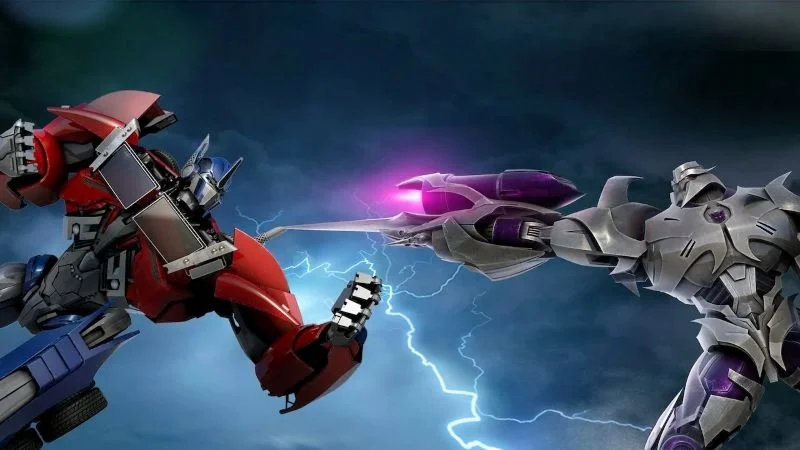
Image Source: Netflix
Alongside the Michael Bay films, the groundwork was laid for what would be the most ambitious idea in the Transformers Universe. Hasbro would tap writers Aaron Archer and Rik Alvarez to create ‘The Binder of Revelation,’ a 300+ page document plotting out a new interpretation of the billions of years of history and lore behind the Transformers. This bible was to be the foundation for a universe of novels, games, and TV Shows which became known as ‘The Aligned Continuity.’ The very first projects to stem from this were a novel, a video game, and an animated series.
In June 2010, the High Moon Studios game Transformers: War for Cybertron made its debut, alongwith the tie-in novel Transformers: Exodus by Alex Irvine. Two more novels would be written, tying into the 2012 game Fall of Cybertron, and then bridging the gap into the third original project of the Aligned Continuity.
November 2010 would also mark the debut of the modern classic series, Transformers Prime. Alex Kurtzman and Roberto Orci would helm the series alongside Jeff Kline and Duane Kapizzi. The series would also mark the first time since 1986 that both Peter Cullen and Frank Welker would share the screen as Optimus Prime and Megatron. Prime was praised for its incredibly well-crafted CG Animation (courtesy of Polygon Animation) as well as its more mature interpretations of the characters and their conflict while delivering pulse-pounding action and a heavy serving of heart. Transformers Prime also wasn’t afraid to deviate from the continuity of the novels and games, opting to loosely connect while taking creative liberties for the sake of its story. While Prime would tragically be cancelled due to its high budget, the series would run for a total of three seasons, coming to an end in 2014 with the movie finale, Predacons Rising, delivering a bittersweet yet satisfying conclusion to a Transformers show that remains part of the conversation even 12 years after its conclusion.
While Prime is fondly remembered, its handful of spinoffs vary in quality. The biggest of these is the 2011 spinoff series ‘Transformers: Rescue Bots’, the first-ever Transformers series aimed specifically at preschoolers. Set during the events of Prime, Rescue Bots would follow a different cast of Transformers navigating life on Earth as robots in disguise. Hidden away from the war and with no Decepticons around, these Autobots would help their human companions in Air Rescue, Firefighting, Construction, and Police work. The series performed well among its young viewers and older fans of Prime, with characters from Prime sometimes making appearances in the preschool cartoon. Rescue Bots would run for 4 seasons, coming to an end in 2016, but receiving a sequel series in 2018 titled Rescue Bots Academy, which would see the Rescue Bots training a whole new generation of Cybertronians, tying into the final, and most polarizing series in the Aligned Continuity. Rescue Bots Academy would run for two seasons, coming to an end in 2020.
Not long after Prime’s conclusion, fans would learn that a sequel series was in the works. In February 2015, Transformers: Robots in Disguise would debut on Cartoon Network, focusing on Bumblebee (voiced by Will Friedle), leading a new team of Autobots back to Earth to track down escaped Decepticons. While the series was praised for its stylized and more expressive animation style and entertaining cast of characters, many fans took issue with the show’s tone and story, seeing it as a step down from Prime’s more mature narrative. Much of the criticism to this show would come from fans of this show’s prequel. Robots in Disguise would come to an end after three seasons in November 2017, marking the end to the main story of the Aligned Continuity.
The Modern Era
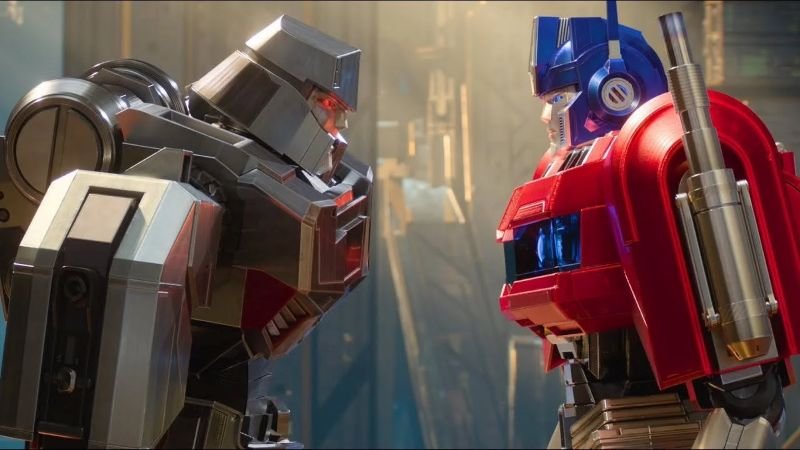
Image Source: Geekwave
With the Aligned Continuity and the Michael Bay era of Transformers content coming to a close in the late 2010s, the next era of Transformers stories is one full of potential, building upon old tales and laying the foundation for new ones across television and film.
This era would begin with the Cartoon Network series Transformers: Cyberverse, which debuted in 2018. This series would focus primarily on Bumblebee (Jeremy Levy) and Windblade (Jessica DiGiovanni) in an adventure to recover Bumblebee’s lost memories amidst the ongoing conflict with the Decepticons. This series would run for three seasons, concluding in 2021. In 2020, Netflix would release their animated series Transformers: War for Cybertron Trilogy, retelling the story of the final days of the Autobots and Decepticon’s war on Cybertron, as well as exploring their travels before reaching Earth, running for three seasons and concluding in 2021. In 2022, Nickelodeon would release their series Transformers: Earthspark, which explored a future where Optimus Prime and Megatron settled their differences, becoming allies and safeguarding a new generation of Transformers on Earth. Earthspark would run for four seasons before ending in 2025.
On the movie side, three more films would come out, and while Michael Bay was no longer directing, he’d still be heavily involved as a producer. The first of these films, Bumblebee, was directed by Travis Knight (Kubo and the Two Strings) and released in late 2018, focuses on Bumblebee’s early days on Earth, and his bond with his human companion, Charlie (played by Hailee Steinfeld). The film was praised for its more character-driven story, character designs that masterfully blended the realism of the Bay films and the stylization and simplicity of G1, and a lighthearted tone. Bumblebee would be the start of a new continuity of live-action films, giving way to the 2023 film, Transformers: Rise of the Beasts. Directed by Steven Caple Jr (Creed II), Rise of the Beasts would bring Optimus Prime and a new team of Autobots into the fold, while also adapting the Maximals from Beast Wars to live-action. Finally, in 2024, the first animated Transformers Movie in nearly 40 years would make its debut. Directed by Josh Cooley, Transformers One told the tale of how miner-bots and best friends Orion Pax (Chris Hemsworth) and D-16 (Bryan Tyree Henry) became arch enemies Optimus Prime and Megatron. This film was praised by fans of all ages, but would sadly underperform at the box office, with any plans for sequels being abandoned.
On the video game side, it has been rough for Transformers Fans, between the de-listing of the 2015 game Transformers: Devastation on all consoles despite being praised by fans, and the more recent cancellation of the highly anticipated Transformers: Reactivate game as well.
What’s Next?
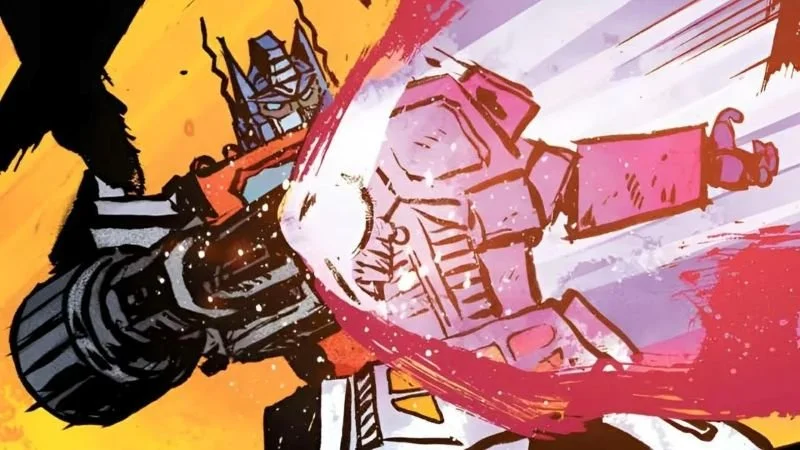
Image Source: Moonbase Three (YouTube)
With the recent acquisition of Paramount Pictures by Skydance in 2025, the future of the Transformers is an uncertain one. In 2024, it was announced that a sequel to Rise of the Beasts was in the works, one that could crossover with another Hasbro IP, GI Joe. As of now, there are no further details, with no further announcement of either production or cancellation.
Another confirmed project, however, is an adult animated series from Skybound Entertainment, which will adapt Robert Kirkman’s (The Walking Dead) Energon Universe comics.
Regardless of what comes next, these robots in disguise have inspired generations of audiences, and continues to transform to tell the stories of new characters across new mediums. While their immediate future is uncertain, there’s no doubt that they’ll return triumphantly as they always have.
CultureSlate: Made by humans, for humans
Please consider supporting our AI-free content via our Patreon page.
READ NEXT:
Latest News

Featured





• All sizes are adult unisex
• Printed art on the front
• 100% cotton
• Pre-shrunk fabric
• Shoulder-to-shoulder taping
• Culture Slate Exclusive Design
See more products here