
‘Dragon Ball Daima’ Review
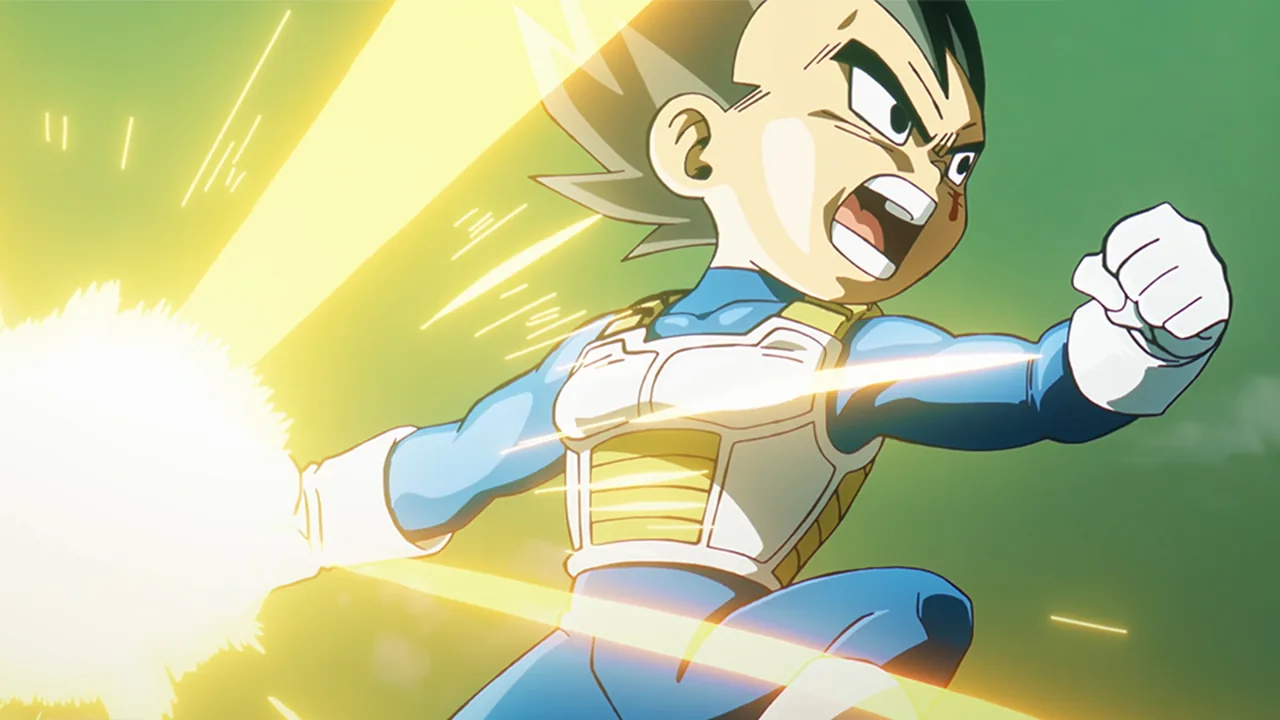
Image Source: IGN Pakistan
Dragon Ball Daima wrapped up recently, and as the last project series creator Akira Toriyama was involved in before his passing, it has caused quite a stir within the Dragon Ball fandom.
Though this series features pint-sized versions of our heroes, there is a huge world to explore in this 20-episode series. Now that we’ve had a bit of time to take everything in, let’s take a closer look at Dragon Ball Daima.
Warning: There will be spoilers for Dragon Ball Daima in this review
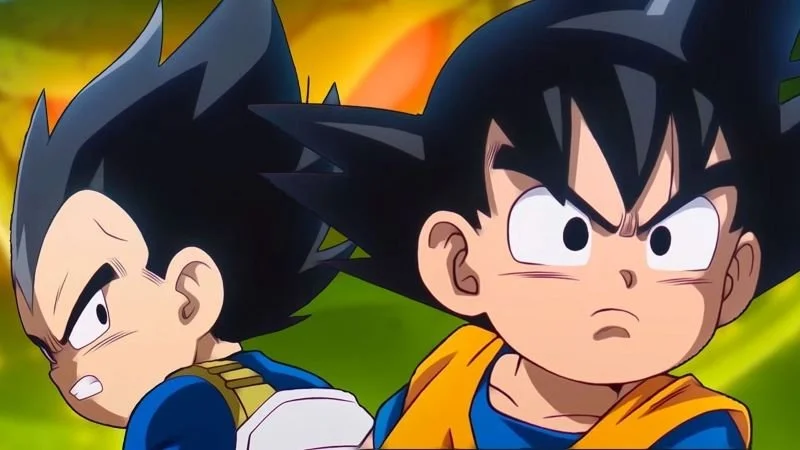
Image Source: IGN
Taking place shortly after the Buu saga, Dragon Ball Daima features the newly crowned Supreme King of the Demon Realm, Gomah, wanting to protect his power and limit any potential threats. As a means of achieving this, he makes a wish on the Dragon Balls to turn Son Gokū and his friends into children (with those who are already children being turned into infants). After making their wish, Gomah and his right-hand man, Degasu, kidnap Dende, the God/Guardian of Earth, who has been turned into an infant, with the intention of raising him to create a new set of Dragon Balls for the Demon Realm. Now, Gokū and his friends must travel to the Demon Realm to rescue Dende and get the Dragon Ball from each Demon World. Along the way, they encounter several foes, including the Tamagami that guard each Dragon Ball. A grand adventure awaits our shrunken heroes!
RELATED:
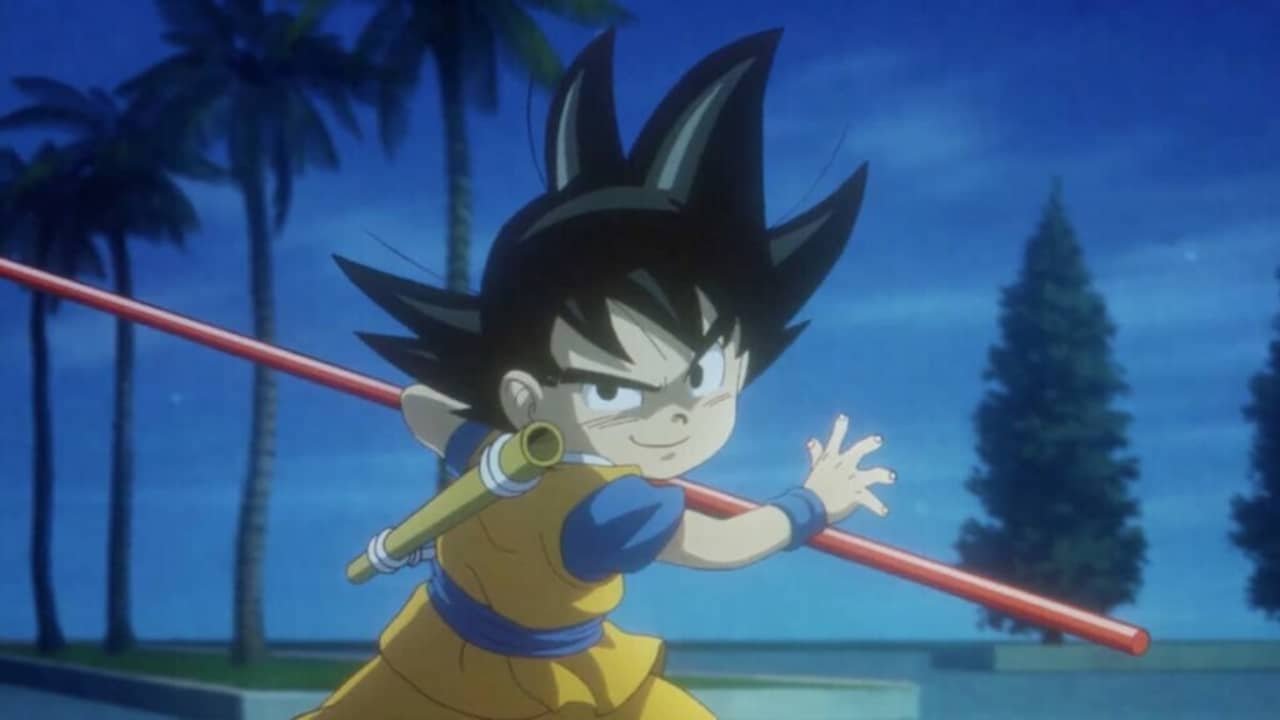
The story is filled with action, adventure, and plenty of Toriyama’s trademark humor. Though the focus on adventure rather than combat may be unfamiliar to those used to the more action-packed entries in the franchise, such as Dragon Ball Z, it is very much in line with the tone of early Dragon Ball and reminiscent of the Dragon Ball chasing adventures with Gokū and Bulma.
Admittedly, Dragon Ball Daima does take a little while to get going and is a bit heavy-handed on the exposition at times. However, this exposition helps to expand the world of Dragon Ball even more. For example, one of the larger earlier lore drops includes the Kais and the Namekians originating from the Demon Realm, with Kaioshin/Nahare even being related to Degasu and the court scientist, Dr. Arinsu. In addition, the betrayals and crossed alliances within the royal court sort of give a mini Game of Thrones element to the plot, which helps to give some depth to the plot. The only downside to this story is the limited episode count. Dragon Ball Daima is only 20 episodes long, and it has a pretty slow start. It picks up a lot toward the end, but it feels a tad bit rushed. Nonetheless, the actual writing of the show definitely makes up for it.
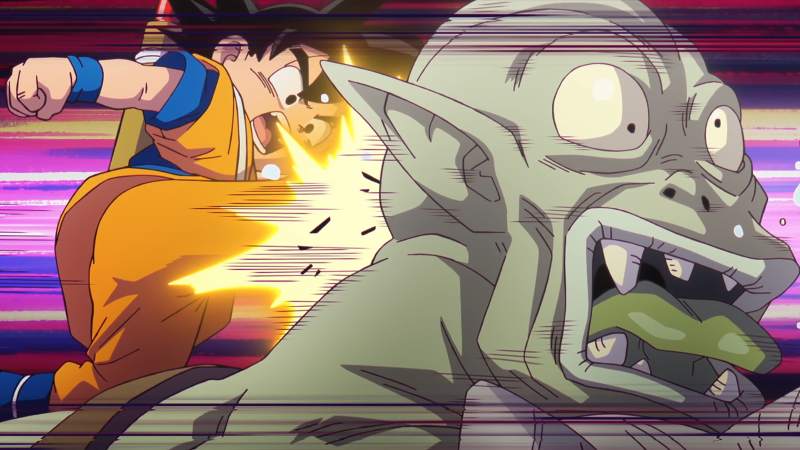
Image Source: Crunchyroll
Dragon Ball Daima’s animation is also a huge highlight. The Demon World truly feels alive with each shot, and Toriyama’s style is evident throughout every frame. The fights are also well-animated as well, with each blow being smooth and intense, even without blood or gore. Furthermore, the transformations that the franchise is known for are also beautifully animated, especially the (spoilers) now-canon Super Saiyan 4 Gokū and Super Saiyan 3 (or Ultra Vegeta 1). This is a clear benefit of the show’s production schedule, as unlike its predecessor, Dragon Ball Super, the series had much more time to refine its art and animation, leading to much less of the animation errors that had plagued Dragon Ball Super. The child designs do lean more on the chibi side and less on the child side at times, but they do convey the status of the characters well. Overall, Dragon Ball Daima’s animation is beautifully executed.
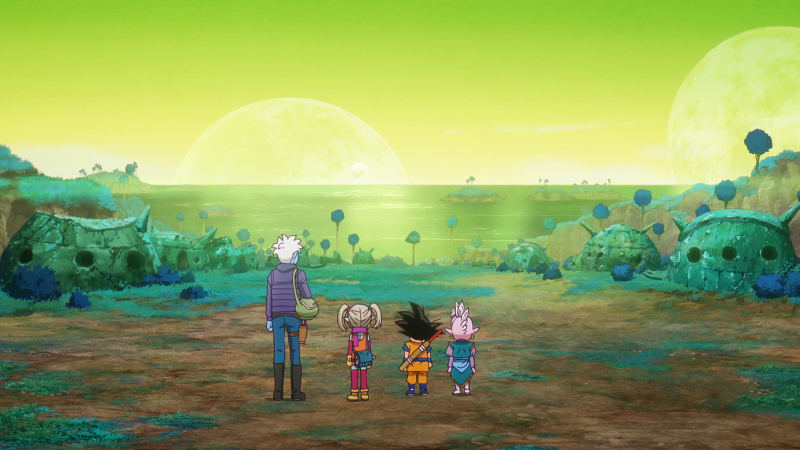
Image Source: Crunchyroll
The music is a bit of a mixed bag at times. Though not bad, the tracks are often forgettable and not as iconic as other scores in the series. As the series goes on, however, Kosuke Yamashita’s score begins to create its own identity, feeling very reminiscent of the music from a JRPG, which fits the more adventurous tone of the series perfectly.
The theme, “Jaka Jaan,” by Zedd and C&K, is very catchy and gives a sense of the grand adventure these characters are going on. However, the lyrics are somewhat simplistic, especially in the pre-chorus. Overall, the music of Dragon Ball Daima holds up against the franchise’s other scores.
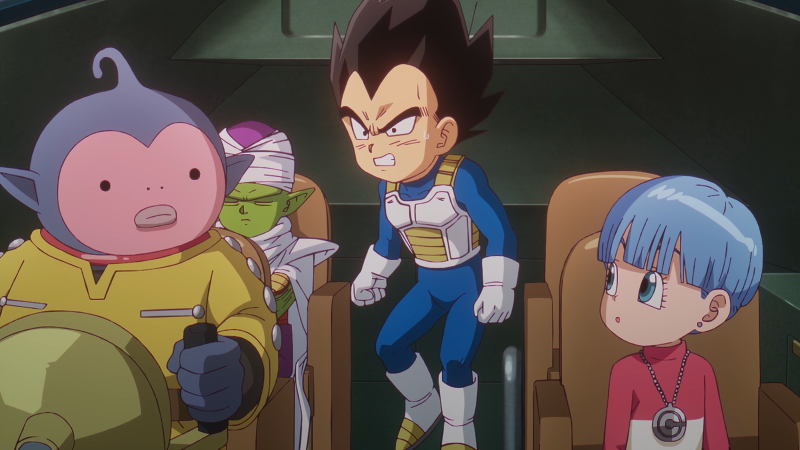
Image Source: Crunchyroll
Lastly, the voice acting is fantastic in both English and Japanese. Series veteran Masako Nozawa returns once more to voice not only adult Gokū in the beginning and end of the series but also child Gokū as well. Though Nozawa is in her 80s, her age doesn’t slow her down, as she is still able to pull off the yells and battle cries that have become synonymous with the character. Other returning cast members voicing the adult versions of our heroes include Ryo Horikawa as Vegeta, Takeshi Kusao as Trunks, Toshio Furukawa as Piccolo, Mayumi Tanaka as Kuririn (Krillin), Aya Hisakawa as Bulma, Kozo Shioya as Kaioshin/Nahare, Aya Hirano as Dende, and Shin Aomori as Kibito. Ryota Suzuki makes his debut as Yamcha, being the only adult version not to be voiced by a returning actor.
Aside from the male members of the Son family, most of the child forms of our heroes are voiced by new actors. These newcomers include Kobayashi as Mini Kaioshin/Nahare, Yudai Mino as Mini Vegeta, Tsubasa Yonaga as Baby Trunks, Tomohiro Yamaguchi as Mini Piccolo, Mai Nakahara as Mini Bulma, and oddly enough, Aki Kanada voicing mini Kuririn despite Tanaka voicing child Kuririn before. Yudai Mino stands out from these newcomers, as he is very reminiscent of a young Ryo Horikawa. Some do sound a bit old for supposedly being second graders, particularly mini Bulma. The Demon World newcomers also have some good voice talent behind them, including Naomi Kusumi as Kadan, Yoko Hisaka as Dr. Arinsu, Fairouz Ai as Panzy, Koki Uchiyama as Glorio, Reimi as Hybis, Kenichi Ogata as Sir Warp, Junya Enoki as Degesu, and Hiroshi Naka as Neva.
On the English side, all of the characters have separate voices for their child and adult forms, as this has been the practice since the start. Notably, Stephanie Nadonly returns as Kid Gokū after a lengthy hiatus from the franchise. She performs rather well as the character and even arguably better than she initially played him over 20 years ago. The other returning actors do an excellent job as their respective characters, and the mostly newcomers that play their child forms do an awesome job too. Paul Castro Jr is an interesting case, as he sounds like a mix between Chris Sabat’s Vegeta, and the Ocean Dub actor, Brian Drummond’s, portrayal of the character. In regard to the new characters, their voice actors are also stellar in English as well, with Aaron Dismuke portraying Glorio well especially. The only slightly off voice is Major Attaway as Kadan, though that might have more to do with the writing rather than the acting. In addition, some of the voices still sound a bit old, such as Nasim Benelkour as Piccolo. Taylor Murphy as Mini Bulma, however, actually sounds more age-appropriate and the respective Japanese voice actress. The English dub itself is actually rather 1:1 to the Japanese original, with it only being punched up slightly at times and keeping terms and pronunciations consistent with other English dubs. However, this dub is significant for using the term “ki” in the English version of the anime for the first time. Overall, whether you watch it in English or Japanese, the voice acting behind each character is stellar.
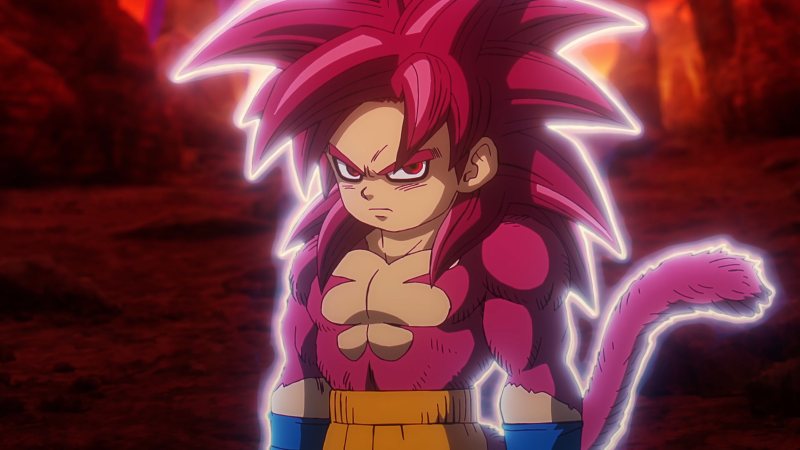
Image Source: Crunchyroll
Dragon Ball Daima is a bittersweet love letter to the Dragon Ball franchise, with it being the last Dragon Ball property to contain Toriyama’s involvement before his passing. Though the ending feels slightly hollow, it wraps everything up nicely and leaves it open for future installments. There are questions on how it fits in with Dragon Ball Super, but it still stands alone as its own interesting story within the greater Dragon Ball universe. Whether you’re new to Dragon Ball or a longtime fan, the series is a nice little adventure (pun not intended) that, though easily binged, is a perfect final gift for Toriyama-sensei. It returns to the series’ roots and focuses a lot on the mangaka’s love of comedy with a huge helping of adventure. Dragon Ball Daima is available to stream on Crunchyroll, Hulu, and Netflix, and though the series has wrapped up in Japan, the English dub is still being released weekly and is currently on episode 12. Regardless of how you watch it, Dragon Ball Daima is an excellent addition to the world of Dragon Ball
Rating: 8/10
READ NEXT:

Latest News

Featured





• All sizes are adult unisex
• Printed art on the front
• 100% cotton
• Pre-shrunk fabric
• Shoulder-to-shoulder taping
• Culture Slate Exclusive Design
See more products here