
A Rey Of Sunshine: Celebrating The 10th Anniversary Of 'The Force Awakens'
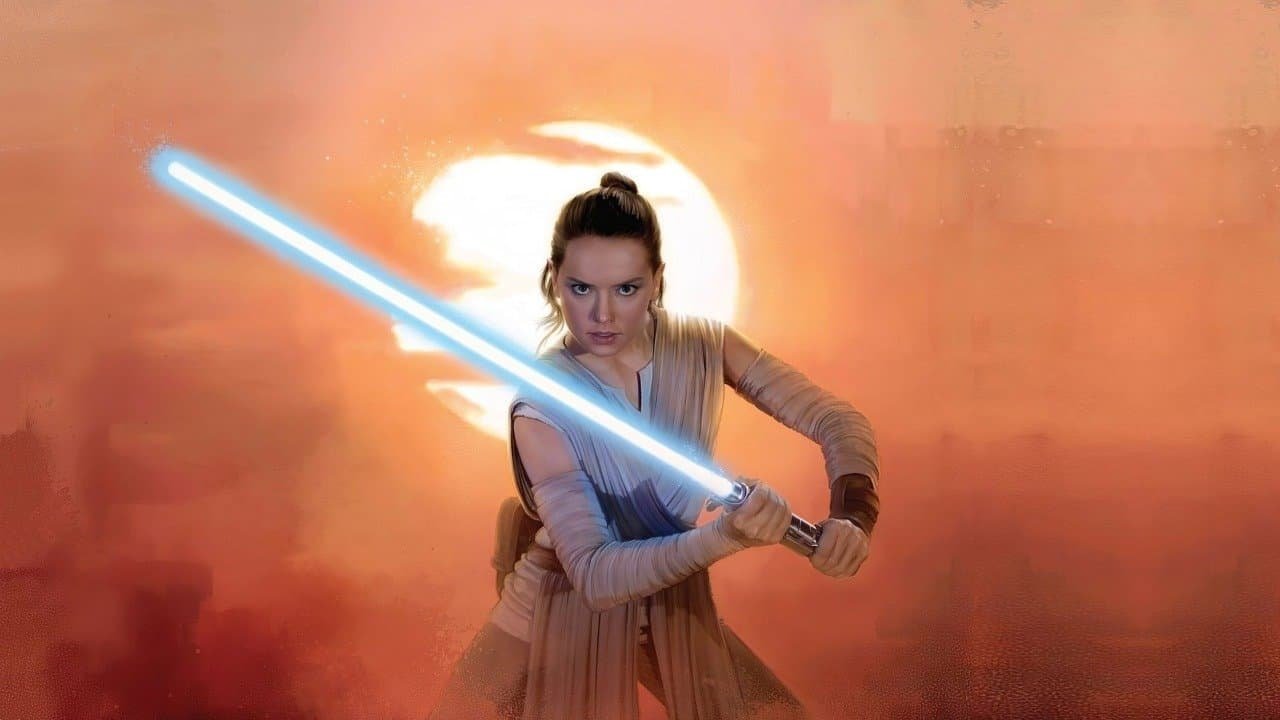
Image Source: Wallpaper Abyss
Contains spoilers for Star Wars: The Force Awakens!
“The saga is complete.”
Those four words would echo around the world throughout early 2005. With the release of Revenge of the Sith on May 19th, 2005, the Star Wars Saga was officially over. After 28 years of two trilogies, multiple video games, a handful of animated shows, and a ton of comic books, we had a good run. I, being seven at the time, took the tagline to mean that Star Wars would be gone forever, with no hope of any other media being made for the rest of time. That was until 2008, when fans were treated to The Clone Wars, both the film and the hit series on Cartoon Network. While the show frequently enjoyed high viewership, it didn’t escape fan backlash. What Star Wars project can, honestly? For a while, it seemed the franchise would continue to chug along with a slew of mediocre video games, declining merchandise sales, decent but stagnant ratings for its only marquee TV series, and no hope for future films in sight. The 3D re-release of The Phantom Menace in 2012, which was supposed to kick-start 3D re-releases of all 6 films at the time, failed to generate any real buzz. It didn't help that a fifth Indiana Jones film was still years away, and movies such as Red Tails were not making any splash either critically or financially. Lucasfilm needed a change, and George Lucas understood that. On October 30th, 2012, it was announced that the Walt Disney Company had purchased Lucasfilm for $4 billion. And if that wasn’t shocking enough, it was also revealed that Episode VII was in active development for a 2015 release.
This news sent shockwaves throughout the industry, and fans around the world held their collective breaths waiting for the arrival of a brand new Star Wars film. After 3 years of rumors, leaks, unparalleled levels of hype, and a unique blend of excitement and anxiety, Episode VII, titled The Force Awakens, was released on December 18th, 2015. At the time of its release, The Force Awakens received critical acclaim for its performances, J.J. Abrams’ direction, John Williams’ musical score, the action sequences, emotional depth, and blend of visual and practical effects. While some critics took issue with the film’s many similarities to A New Hope, the movie was mostly seen as a return to form for a franchise that many thought could never recapture its glory days. Also, making $2 billion worldwide doesn’t hurt either, I don’t think. Academy Award nominations, 7 Saturn Award wins, and even wins at the Grammys and the BAFTAs, The Force Awakens was a gamble that paid off. However, its modern reputation seems to forget all this. Should you mention The Force Awakens in modern fan spaces, you’re typically met with discourse that you’re not really interested in being a part of. We are now officially 10 years removed from The Force Awakens, the first milestone anniversary for Star Wars films made after the Lucasfilm sale in 2012. It feels like only yesterday that I saw the film on Christmas Day with friends and family (waiting an extra 10 days to see the film was legit torture for me back then). I still remember spending many hours online with other friends, obsessing over every promo, poster, piece of merchandise, or concept art leak before the film came out. I have never been more excited for a movie in my life, and I’ve yet to feel that level of excitement for a movie since. I miss the good old days when it was actually fun to talk about The Force Awakens in the presence of other fans. I long for that brief period where you weren’t accused of only liking the movies for nostalgia reasons or to “appear woke.” I think other fans and I, who have held this movie in our hearts for the last decade, deserve to celebrate its 10th anniversary in peace. Since Lucasfilm doesn’t seem to be doing anything to celebrate, and grifters are likely taking this time to make lazy, uninformed, and hacky videos about how this movie was the beginning of the end for Star Wars, I wanted to take matters into my own hands with this editorial. I want to tell anyone who comes across this editorial why The Force Awakens holds up 10 years later and why people should hold it in high regard once again.
RELATED:
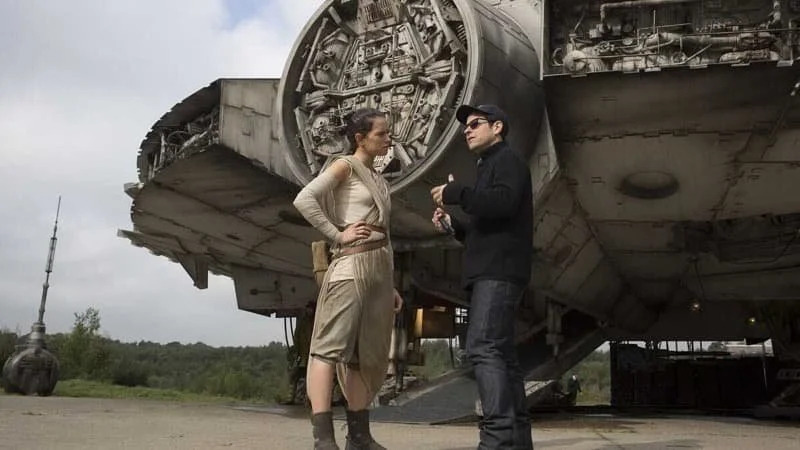
Image Source: Medium
When it was announced that The Force Awakens was in development and George Lucas would pass the torch to the next generation of filmmakers (per his own words), the job of director became the hottest (and scariest) gig in Hollywood. Every director who was even remotely successful at the time was considered for the project. The most frequent names that came from the trades and other pop culture reporting sites included Steven Spielberg (the man, the myth, the legend), Brad Bird (The Incredibles), David Fincher (The Social Network), Darren Aronofsky (Black Swan), Guillermo del Toro (Pan’s Labyrinth), Ben Affleck (Argo), Jon Favreau (Iron Man), Colin Trevorrow (Safety Not Guaranteed), Neill Blomkamp (District 9), Joe Johnston (Captain America: The First Avenger), and Matthew Vaughn (X-Men: First Class).
While Bird and Vaughn nearly got the job, they declined due to scheduling conflicts and creative differences, respectively. Then there were the directors that everyone and their mother wanted to helm the project, including Christopher Nolan (The Dark Knight), James Cameron (Avatar), Peter Jackson (The Lord of the Rings), Edgar Wright (Shaun of the Dead), Duncan Jones (Moon), Joss Whedon (The Avengers), and Rian Johnson (Looper). In my research, it was not at all hard to find listicles that stated “the Looper guy” could make a great Star Wars film. After months of rumors, denials, reports, and false starts, Lucasfilm found a director in J.J. Abrams. A lover of film and an aspiring filmmaker at a young age, Abrams began his career as a screenwriter, with notable credits including Regarding Henry, Armageddon, and Joy Ride.
Abrams found success in TV relatively quickly with shows like Felicity (which he co-created with future Planet of the Apes and The Batman director Matt Reeves) and Alias, which earned Abrams an Emmy nomination for writing. Abrams’ catapult moment from promising talent to an industry titan came with Lost, which he co-created with Damon Lindelof and Jeffrey Lieber. The series received universal critical acclaim and is widely considered to be one of the greatest television shows of all time. For his troubles, J.J. Abrams won an Emmy for Outstanding Directing for a Drama Series for the show’s pilot. On the film side, Abrams made his feature directorial debut with Mission: Impossible III, which helped revitalize the franchise after the mixed reception of the second film. In 2009, Abrams would direct Star Trek, a reboot of the iconic sci-fi franchise that was at that point in desperate need of new life. Receiving widespread acclaim, Star Trek has since been hailed as one of the greatest science fiction films ever made. Abrams would then follow it up with Super 8, an original science fiction film that was hailed as a heartfelt homage to Steven Spielberg's films. J.J. Abrams walked so the Duffer Brothers could run, ok! Abrams was widely seen as the perfect man to give Star Wars a new jolt of life.
Abrams was granted the unenviable task of being the first Star Wars director to receive the keys in full. While there were directors who weren’t George Lucas who helmed Star Wars films before J.J., Irvin Kershner and Richard Marquand were still very much at Lucas’ mercy. Marquand is barely a footnote in the franchise’s history, with cast and crew speaking of the film as if Lucas directed it himself anyway. Abrams is one of the few Star Wars directors who was allowed to bring his distinct style along for the ride (the others being Rian Johnson and Taika Waititi). After the opening shot of a Star Destroyer eclipsing, we are treated to visuals that are unmistakably Abrams. The way the camera zips and moves, and the way ominous First Order transports look as they land on Jakku, are quick ways to tell the audience that a director who knows how to tell a good visual story is at the helm. Many jokes have been made about Abrams’s too-intense love of lens flares, but thankfully, they are not as prevalent or distracting here as they are in his earlier films, especially Star Trek. Also gone is Abrams’ heavy use of shaky cam, with him and cinematographer Dan Mindel allowing themselves to tell the story with greater visual clarity.
While Lucas, Kershner, and Marquand performed more static camera movements, Abrams has the camera travel throughout the movie, making every scene feel dynamic and engaging even when action isn’t happening. I’m on record saying The Force Awakens is probably the best directed installment of the Saga, and I don’t think that take is tough to defend. Just on visuals and actor performances alone, Abrams fits the universe like a glove. You can feel his passion and devotion to the franchise's themes and characters in every scene. It’s almost impossible to be bored when Abrams’ direction, Mindel’s cinematography, and the remarkable editing of Maryann Brandon & Mary Jo Markey keep the drama, action, and humor at a quick, steady pace. Star Wars felt real again, as evidenced by the film’s expert blend of practical and digital effects.
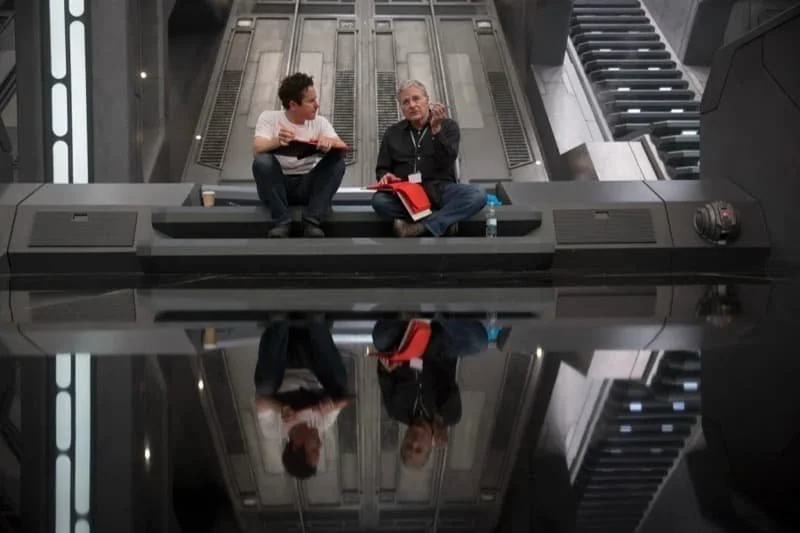
Image Source: Star Wars News Net
But kinetic direction isn’t enough to make a movie good. Many have shared their thoughts and opinions about the film’s screenplay, many of which aren’t always positive. A lot has been said, even by people who enjoy The Force Awakens, that it's essentially just A New Hope again. In a galaxy far, far away, a Rebel spy acquires crucial information and entrusts it to a trusty droid. Simultaneously, a spirited young hero from a desert planet joins forces with a man who is down on his luck, a Wookiee warrior, and a grizzled old war veteran. Together, they embark on a daring quest to infiltrate the Empire's ultimate weapon, a planet-destroying superweapon. As the climactic battle unfolds, our young hero discovers their powers to save the day. Oh, and there’s an X-Wing trench run. Yes, when you put it like that, The Force Awakens is the same film. It’d be dishonest to say there are NO similarities whatsoever, as J.J. Abrams and co-writer Lawrence Kasdan (who co-wrote The Empire Strikes Back and Return of the Jedi) describe the screenplay as “moving backwards to move forward.” The goal of The Force Awakens is to introduce a new generation of heroes while also catching up with heroes of old. The film has to make you care about characters you never met before we see the old favorites. The decision to echo the events of A New Hope is also a thematically rich one.
While some have bemoaned the idea of another Imperial force rising after the defeat of the Empire, I always felt that to assume there was no more conflict after the events of Return of the Jedi was silly. As Maz Kanata laid out in The Force Awakens, she has seen evil take many forms, from the Sith to the Empire to the First Order. Evil can be defeated, but it can always come back. J.J. Abrams described the First Order as Nazis who fled to Argentina after World War II, but decided to rise again. Especially when looking at the current state of the world, it was never out of the realm of possibility that there are people out there who, willingly or unwillingly, make history repeat itself. The MacGuffin Chase is simply a backdrop for a heartfelt tale of two young heroes trying to find real purpose, and I think that’s more engaging and beautiful than the "A New Hope 2.0” narrative that’s been spread for the last decade. The Force Awakens may not have the poetic dialogue of Andor or the ambitious character development of The Last Jedi, but it’s well-structured, coherent, and very engaging. I think that counts for something.
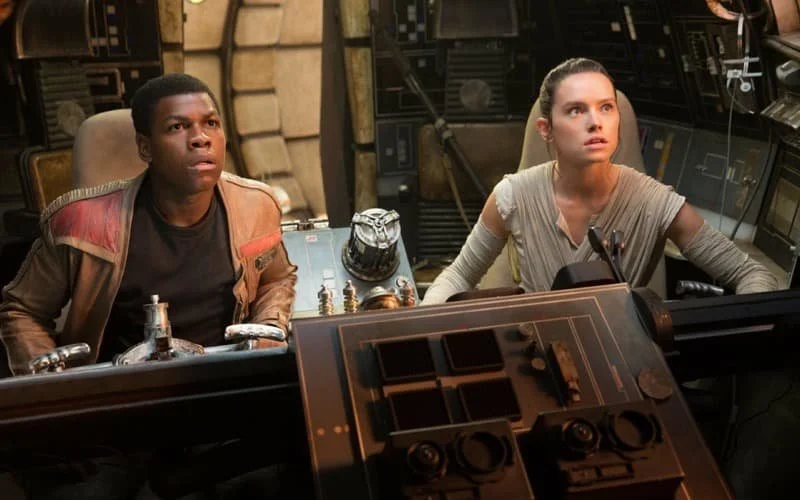
Image Source: Alpha Coders
Like the best Star Wars projects, the best aspect of The Force Awakens is the characters. As mentioned in the last section, The Force Awakens has to make us care about completely new characters before we reunite with older ones. The first 40 minutes of this movie focus squarely on new heroes and villains, with the story belonging solely to Rey, Finn, Poe Dameron, BB-8, and Kylo Ren for most of the runtime. This decision could’ve hurt the film if the characters weren’t interesting or the actors playing them didn’t step up to the plate. Luckily, neither aspect was an issue. The new band of heroes is as compelling, relatable, and plucky as their Original Trilogy and Rebels counterparts before them. Michael Ardt (the screenwriter initially hired to write The Force Awakens but left shortly afterwards) stated that the central idea of the Sequel Trilogy was focused on Luke Skywalker training a young girl. Rey makes for a remarkable protagonist, as her longing for adventure but fear of jumping in makes her both relatable and admirable. Rey is a heroine who inspires, but she also acts as an audience surrogate. Also in this role is Finn, who has to deal with his newfound place in a war he doesn’t know how to fight. Rey and Finn are given enough screen time apart to establish their characters:
Rey is a skilled scavenger and gearhead who wonders if there’s a future beyond Jakku, and Finn is a soldier who doesn’t know if he wants to fight the First Order. But when the pair is put together, magic happens. Daisy Ridley and John Boyega are excellent in their roles here, riding the fine line between wide-eyed heroes meant to inherit the torch of rebellion and brave warriors we’re meant to root for. Ridley’s affinity for drama and Boyega’s effortless everyman charm help make Rey and Finn as interesting as they are. I am not at all interested in spending an entire section of this editorial debunking the lie that Rey is a “Mary Sue”. I’ll say this much: You’d have to watch the movie with your eyes closed if you think that take is at all accurate.
We, of course, have other great characters joining the proceedings, such as BB-8 (puppeteered by Brian Herring and Dave Chapman and voiced on separate occasions by Bill Hader and Ben Schwartz). Our main droid on this adventure, the fact that BB-8 is primarily a practical puppet, helps him feel more alive. While there is nothing wrong with CGI in practice, seeing Daisy Ridley, John Boyega, and Oscar Isaac actually get to walk alongside and touch BB-8 makes the experience all the more charming. BB-8 has a lot of personality for a character who doesn’t even speak English. And with the added challenge of BB-8 being a little ball who lacks the legs R2-D2 has, it’s astounding how real he feels when he’s scared, sad, or trying to survive whatever messed-up situation he’s in. My personal favorite character of the Sequel Trilogy, Poe Dameron, is a revelation from the word go. Oscar Isaac’s endless pool of charisma can rival that of Harrison Ford in his prime. Poe makes a massive impression as the daring pilot who is willing to do whatever it takes to find the map that leads directly to Luke Skywalker. John Boyega and Oscar Isaac’s instant chemistry provides us with something that the Prequel Trilogy couldn’t offer: Best friends with believable chemistry. The sequence in which Finn and Poe steal a TIE Fighter gives the duo more banter, two-hander action, and an overall pleasant vibe in 4 minutes than the Prequels ever could with Anakin and Obi-Wan in three movies.
And who can forget Adam Driver as Kylo Ren? Arguably the trilogy’s most iconic character, Kylo Ren is as three-dimensional a villain as they come. After the Prequels did away with most of their villains or underutilized them (something The Force Awakens is also guilty of in the case of Captain Phasma), it’s not to see a Star Wars film that actually gives the villain something to do besides aura-farm and kill people. Granted, Kylo Ren does kill people and looks insanely cool doing it, but it’s Adam Driver’s performance that makes Ren so interesting. Kylo Ren wants to be Darth Vader, but he’s so lost and broken that he can’t do it. Rey even calls him out for being afraid he’ll never be as strong as Vader. As far as veteran characters go, the movie belongs to Han Solo. Playing a more world-weary and enlightened version of the character, Harrison Ford hasn’t been this good as the character since The Empire Strikes Back. I’d argue this is his best performance as the character in the five films he appeared in. As the reluctant mentor who warms up to Rey and Finn and tries to take them under his wing, Han has some of the best scenes in the film as he tries to set the young heroes on the right path. The scene where Han admits he believes in the Force and the Jedi sends chills down my spine every time I watch it. However, the best acting moment in the film, and probably the entire trilogy, is Han’s scene with Kylo Ren on Starkiller Base. Calling him by his real name, Ben, Han’s final appeal to Kylo to give up the Dark Side and come home to him and Leia is a heartbreaking scene, even before Han is killed—a peak moment in terms of acting performances in this franchise.
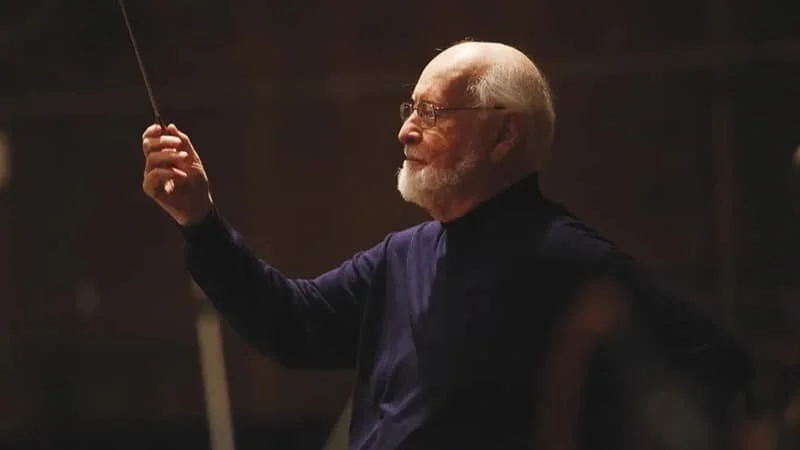
Image Source: Vanity Fair
Every great film needs a great musical score, and The Force Awakens is no exception. Despite early rumors that J.J. Abrams’ frequent collaborator Michael Giacchino would take over scoring duties, Giacchino quickly denied the rumors, stating that he’d rather hear John Williams’ music in a Star Wars film than his own. The irony is that Michael Giacchino would go on to score Rogue One. John Williams was quickly asked to return, expressing excitement to return to the saga he thought he had left behind. His first Star Wars film without George Lucas, Williams’ #1 mission was to honor the musical lineage he and Lucas crafted while giving Abrams new themes for new heroes and villains. And the mission paid off as Williams would earn his record-breaking 50th Oscar nomination for his work on The Force Awakens. Despite losing to the late and great Ennio Morricone for The Hateful Eight, Williams would win a Grammy Award and a Saturn Award for his work on the film.
Reviews hailed Williams’ score as a highlight, hailing it as a welcome return to classical movie scoring after a decade of almost every blockbuster sounding like Hans Zimmer. However, some fans have said that The Force Awakens (and the Sequel Trilogy as a whole) doesn’t have any themes that measure up to the main title theme, The Imperial March, or Duel of the Fates. I completely disagree. The main theme of the score is Rey’s Theme, which Williams has credited as being the reason he scored all three Sequel Trilogy films. Made up of three primary leitmotifs, Rey’s Theme is the perfect tune to represent her sense of loneliness, the lurking want for adventure, and her wide-eyed sense of optimism as her adventure begins. The Christmas bell-esque chimes and the romantic strings all help Rey feel larger than life, but also help remind you that she’s just a girl whose journey is just beginning. In my humble opinion, Rey’s Theme is the single greatest musical composition John Williams has ever made. Other major highpoints of the score include Kylo Ren’s Theme, the heroic suite March of the Resistance, the leitmotifs for Poe Dameron and Finn, and the emotional track The Starkiller.
A major high point of the score comes at the end, with The Jedi Steps. A piece made up almost entirely by a theme that doesn’t appear in the rest of the film, The Jedi Steps feels like you’re entering a whole new world. Uplifting, mysterious, and oddly comforting, The Jedi Steps is a lovely piece that ends the film on a musical high note. The piece is followed by a remarkable rendition of Binary Sunset and the best end credits suite of the franchise. The end credits feature the Star Wars end title tune, as well as themes for Rey, Kylo Ren, Finn, Poe, the Resistance, and a beautiful blend of Binary Sunset and Rey’s Theme. I’ve always said that just because The Force Awakens doesn’t have “EPIC” cues like Duel of the Fates and Battle of the Heroes doesn’t mean it’s forgettable or bad. The soundtrack album for the film does a good job of highlighting essential cues from the score, which previous film soundtracks often didn’t. Action cues such as I Can Fly Anything, The Falcon, and Scherzo For X-Wings are all classic John Williams goodness, which is a good thing for a film actively invoking the spirit and tone of the Original Trilogy. There’s a reason the soundtrack debuted at #5 on the Billboard Hot 200 album charts. That’s what I call a legacy.
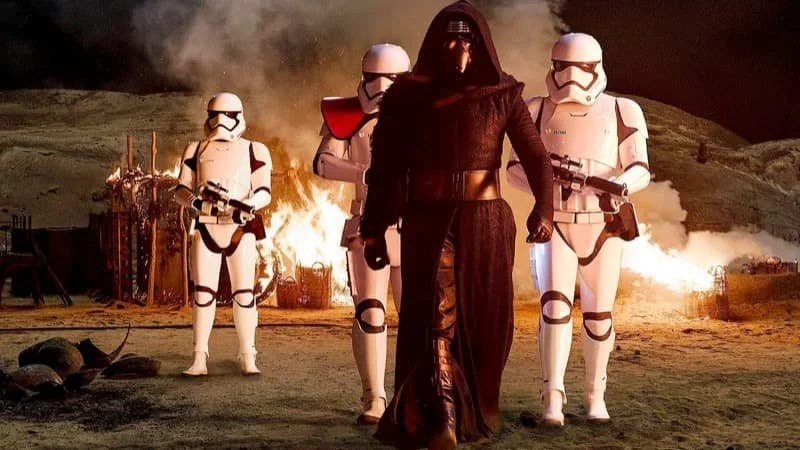
Image Source: The Hollywood Reporter
There is so much more ground I could cover regarding The Force Awakens. I could go on and on about the production design, costumes, and sound work. I could dive into how this movie was the reason I finally realized I was a girl. There is just so much I could go over, but this editorial is long enough as it is. While any genuine love and passion for any of the three Sequel films is greeted with unfounded allegations of one being a shill, lacking media literacy, or enjoying “nostalgia slop”, I think it’s important to remember that The Force Awakens has a lot of merit. It’s dumbfounding to see people say with their full chests that The Force Awakens is not only not worthy of praise, but a film that’s worth considering one of the franchise’s worst installments. Yes, yes, film is subjective and all that. But I will never understand how someone can see J.J. Abrams’ kinetic direction, the gorgeous visual effects, the winning performances, and hear the remarkable musical score and go “Yeah, this is slop.” The sooner the word “slop” is retired from any film discussions online, the better. J.J. Abrams and the talented cast and crew set out to create a film that captures that feeling you get when you watch Star Wars. But what does Star Wars FEEL like? This is a question with no simple answer. The cop out answer is “We’re all right, yay us!” It’s true, we all have a very different perception of what Star Wars is supposed to feel like. For J.J. Abrams, it’s childlike wonder. I think that is a fundamental part of what makes Star Wars what it is. George Lucas always referred to the Saga as “movies for 12-year-olds,” going back to when he started writing them. Some have taken this comment as a sign that Lucas is ashamed of his own work, but he’s not wrong. Star Wars, at its core, is a story for children, but it’s a story we’re supposed to take with us as we get older. For a franchise that’s about love, found family, redemption, good triumphing over evil, courage, and learning from your mistakes, I think it’s important to remember who these movies are supposed to be for.
Growing up doesn’t mean you have to stop loving Star Wars, and that’s what The Force Awakens does so beautifully. A story of how the next generation has to fight the same evil forces our parents did before us, it was a beautiful thing to witness back in 2015 to see people pass the torch of the franchise to younger siblings and even their own children. The Force Awakens is a rollicking adventure with lovable characters, dazzling effects, and energetic action sequences set to great music. But it’s also a reminder to keep our inner child alive. It’s important to keep optimism and hope in times of darkness and hardship. It’s important to make friends who will help us through said dark times. It’s important to remember the stories and myths that kept us going. The fact that this movie has given us another decade of stories, characters, and new fans should be its most significant legacy. The more fans Star Wars enchants, the better the fandom can be. Advertised as "the cinematic event of a generation" (a tagline so good they used it for Avatar: The Way of Water), it’s nice to remember that brief moment where it seemed like Star Wars fans from all walks of life were all on the same page. That brief moment when the filmmakers behind The Force Awakens told us to sit back, relax, and feel good about being back in that galaxy far, far away.
Will we ever feel that again with this franchise? As Maz Kanata says: “A good question for another time.”
CultureSlate: Made by humans, for humans
READ NEXT:

Latest News
Featured




• All sizes are adult unisex
• Printed art on the front
• 100% cotton
• Pre-shrunk fabric
• Shoulder-to-shoulder taping
• Culture Slate Exclusive Design
See more products here