
'The Avengers: Earth's Mightiest Heroes' / 'Avengers Assemble' Retrospective
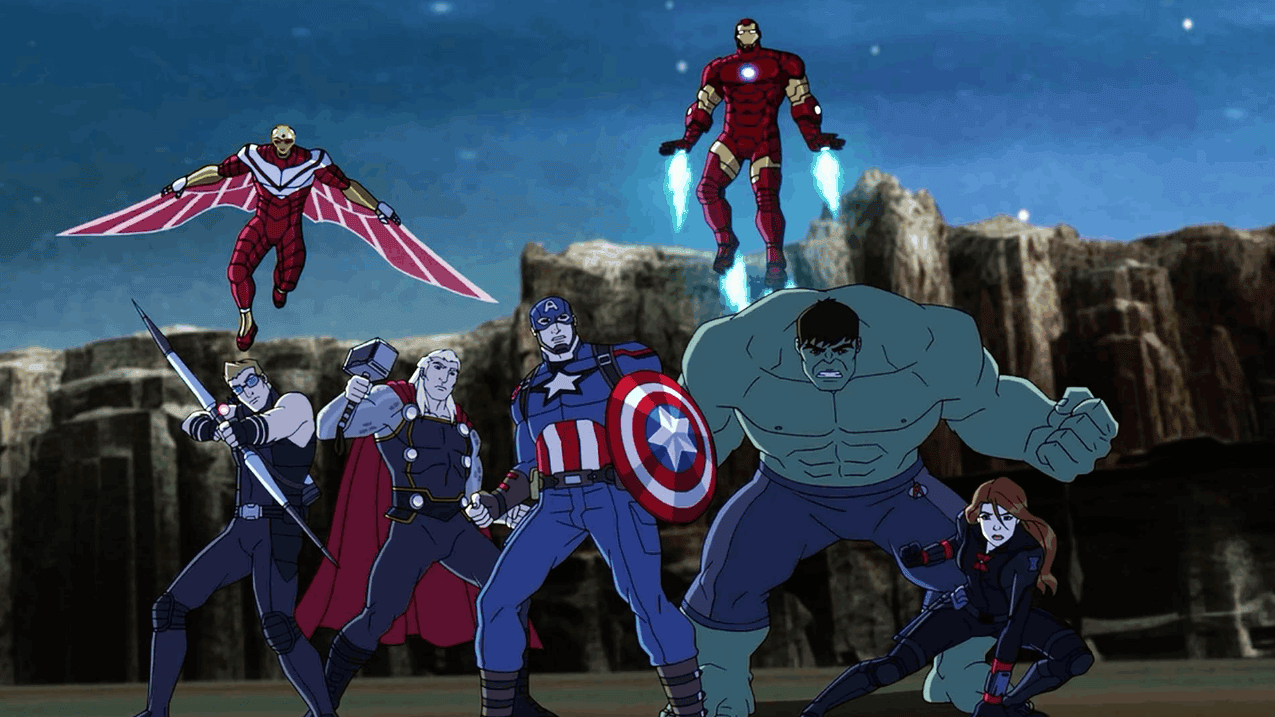
Image Source: IMDb
For two shows with substantially different visual styles, The Avengers: Earth's Mightiest Heroes and Avengers Assemble should still be seen as something of a package deal. They help represent a pattern of animation for Marvel’s heroes and villains, and also represent how much those plans could shift as the MCU’s continued expansion saw efforts to align the small-screen projects with the big screen before the Disney+ streaming shows. It is also interesting to consider what, for many people, might have been their first look at characters and plot lines that have since been adapted into the MCU. So today, we’re looking back at both shows, Earth's Mightiest Heroes running from 2010 to 2012 while Avengers Assemble ran for longer, from 2013 to 2018.
Earth’s Mightiest Heroes is a show full of bright colors and designs calling back to the original comic designs for many of its characters. Yet it isn’t a show that lives in that past, instead combining and rehashing plotlines from comics both recent and past. But, like most animated shows that derive their source material from comics, there are also new storylines or significant deviations. For example, the show created its own version of the formation of the Avengers, and later featured a Skrull invasion that draws clear inspiration from the Secret Invasion event in the comics. But it did so while pushing each central plot forward across two seasons, with set-up in earlier episodes paying off down the line.
RELATED:
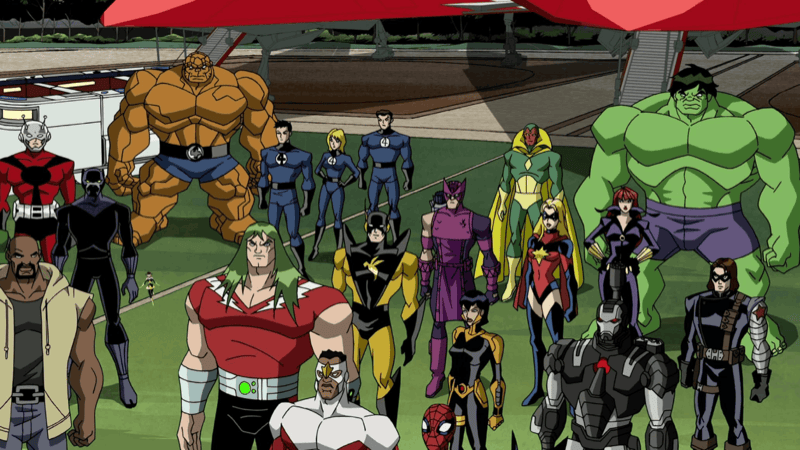
Image Source: IMDb
But Earth's Mightiest Heroes was also where the first flaw with both animated projects began to appear. The influence of the MCU is felt in the show’s Season 2 visuals, while the show also almost entirely dropped the equal inclusion of some of its characters. The Wasp, the Avengers’ only female member, saw considerably less impact in that second season, and while the introduction of Captain Marvel picked up some of that slack, the near-total vanishing of Black Panther also shows that the series clearly had a mandate to focus on the core cast of male characters who were likely seen as the heart of the MCU at that time: Iron Man, Captain America, Hulk, and Thor. These characters also got the focus in Season 2’s new truncated introduction sequence, showing the program’s realignment to focus on them. Earth's Mightiest Heroes also suffered because it clearly ended too soon, mid-way through setting up a plotline involving Surtur’s threat to Asgard, while also revealing the shocking survival of the Red Skull into the modern day without a clear explanation provided in the show’s final few episodes.
Avengers Assemble, then, serves as a spiritual successor to Earth's Mightiest Heroes, with the show’s first two seasons suggesting a shared world with the older series. It also went out of its way to avoid using existing major villains seen or mentioned in Earth's Mightiest Heroes, with only the Red Skull and MODOK appearing, with dialogue noting the surprise of Skull’s survival, and that MODOK’s appearance had changed, helping add weight to the idea of a shared world. The show’s early plot revolves around the Avengers reuniting after breaking up for some unclear reason, while also taking on even more of the MCU’s characterization and visual design, with Avengers Tower as the centerpiece of the team’s activities followed by the Avengers Compound. The only major addition in the first season was the budding hero Sam Wilson, aka Falcon, recruited from SHIELD by Iron Man due to his skillset, bravery, and ingenuity.
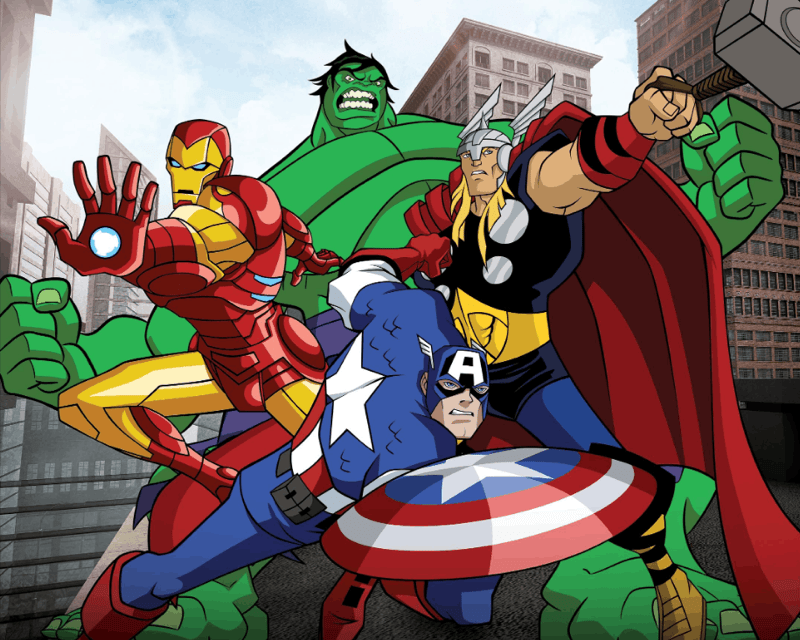
Image Source: IMDb
While Earth's Mightiest Heroes definitely had episodes with messages about social situations and more, early Avengers Assemble laid it on thicker, with the group of heroes almost behaving like college roommates to each other, able to substitute in high school and perhaps also middle school social situations involving friendship troubles to create messages meaningful to the show’s (probable) demographic. Yet, despite the presence of Black Widow on the roster, much of Avengers Assemble remained a boy’s club, with female characters only having guest appearances or, more infrequently, getting the spotlight.
After Season 2, it is clear the creative team had a new directive: even more MCU association, and they were free to use the factions, heroes, and villains seen in Earth's Mightiest Heroes as they saw fit, alongside a much broader cast of Marvel characters. Some stories tried to let Earth's Mightiest Heroes and Avengers Assemble co-exist, but others entirely disregarded it, fully severing any notion of Avengers Assemble as a continuation of Earth's Mightiest Heroes. Season 3 and beyond also represented a clear change in direction because Season 2 ended on the major tease of Captain Marvel, Black Panther, and others, maybe joining the team in a major expansion of the roster back to fit its Earth's Mightiest Heroes breadth. But this did not happen as quickly as Season 2’s finale implied, and Season 3 feels like a soft reboot of the show as a result of these shifts.
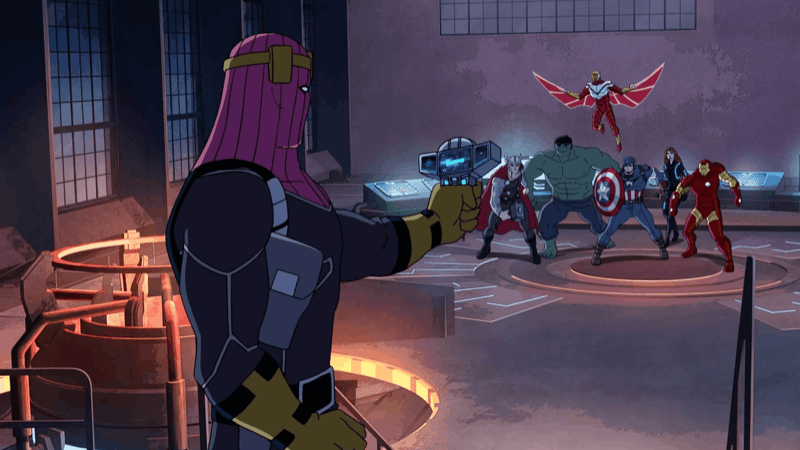
Image Source: IMDb
Avengers Assemble also existed alongside three related shows, Guardians of the Galaxy, Ultimate Spider-Man, and Agents of SMASH, which did a lot of work to further distance their shared universe from Earth’s Mightiest Heroes. The existence of this programming block of Marvel content points to further MCU inspirations, since all four shows were part of the same world and shared characters between them, though often as cameos or in brief crossover episodes.
Finally, considering both series, the length of time, seven total seasons, inevitably means several major characters and storylines now in the MCU were likely first shown off here to newcomers and kids who have now grown up with over a decade of Marvel storytelling on the big screen. Perhaps most notable of the characters shown off in both series is Captain Marvel, who would go on to headline her own film followed by a team-up adventure with two related heroes in the MCU.
Yelena Belova, who has had a growing presence in the MCU, also appeared in Avengers Assemble and while a villain, was set up a rival to Black Widow with a complex family past. As for storylines, the biggest was likely the aforementioned Secret Invasion, with this author heartily recommending Marvel fans watch the animated show’s take, over the MCU series which was broadly panned by fans and critics on its release. There was also a substantial Inhumans-based storyline in Seasons 3 and 4, likely meant to align with the also-panned small-screen Inhumans show produced by Marvel Television in the early 2010s.
Looking back on both shows, Earth’s Mightiest Heroes and Avengers Assemble did their jobs well, telling stories on the small screen with a focus on particular audiences, and fulfilling what seems to have been clear directives to shift the plot, tone, and content of those stories thanks to the MCU and other considerations. Sometimes, those changes could be for the worse, but in others, they created interesting action romps through the vast panoply of characters, locations, and more originating in Marvel’s comic empire. It also stands in contrast to what we see post-Disney+, where almost all of Marvel’s animated content is either firmly placed in the MCU, often as part of the franchise’s multiverse, or is meant for a young audience, and doesn’t closely follow the MCU. Each has their benefits, and their drawbacks, but overall, it's all part of that Marvel magic.
CultureSlate: Made by humans, for humans.
Please consider supporting our AI-free content via our Patreon page.
READ NEXT:

Latest News

Featured


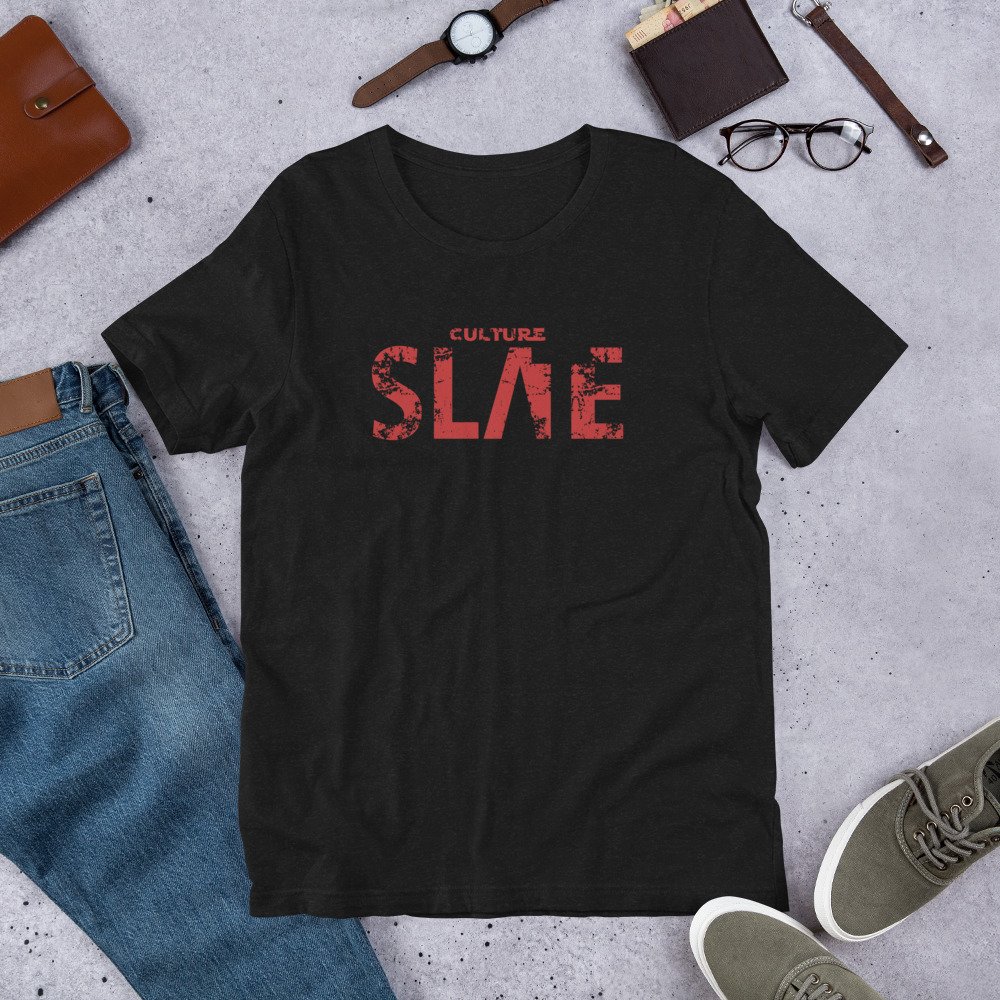


• All sizes are adult unisex
• Printed art on the front
• 100% cotton
• Pre-shrunk fabric
• Shoulder-to-shoulder taping
• Culture Slate Exclusive Design
See more products here