
A Look Back At 'Journey To The Force Awakens'
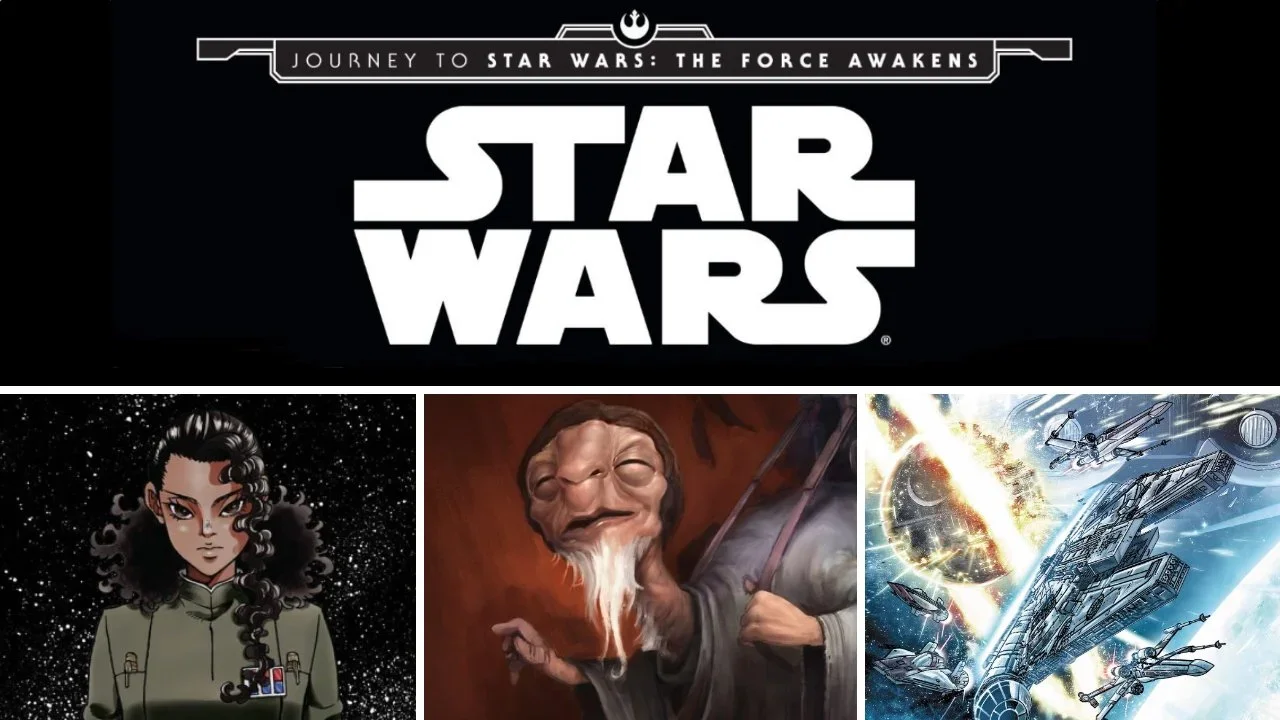
cover snippets from JTTFA media
Image source: Cultureslate
In March 2014, Disney CEO Bob Iger revealed at a shareholder meeting in Portland, Oregon, that Star Wars: Episode VII (which by then didn’t have its final title, as shooting had not even commenced) would be set around 30 years after the events of Return of the Jedi. This is roughly the same timeframe as between The Phantom Menace and A New Hope.
A lot of things must have happened in those three decades, and Lucasfilm was keen to let fans in on what these “a lot of things” had been. Or so we thought…
RELATED:
Roughly one year later, in March 2015, the official Star Wars site announced Journey to Star Wars: The Force Awakens, a multimedia project consisting of novels, comics, short stories, reference- and activity books, magazines, and trading cards.
Image source: Wookieepedia
The first two paragraphs of the respective press release read like this:
Star Wars fans will soon uncover some major secrets -- without the need for Bothan spies.
Disney Publishing Worldwide and Lucasfilm announced today an ambitious publishing program, "Journey to Star Wars: The Force Awakens," which will lead into the highly-anticipated Star Wars: The Force Awakens, coming December 18. Journey to Star Wars: The Force Awakens, kicking off this fall, is planned to include more than 20 titles available in print and digital, and will feature new narrative stories for middle grade and young adults as well as comics, illustrated reference, Look and Find, and sticker book formats. Stories are set to star characters old and new, and retell classic Star Wars tales from new perspectives.
Between September 4 and December 18, 2015, the day before the premiere of The Force Awakens, the following publications hit the shelves:
Adult Novel:
Aftermath by Chuck Wenig, release date: September 4
Remark: the second and the third novel of the Aftermath trilogy, Life Debt and Empire’s End, were released on July 12, 2016, and February 21, 2017, and were thus not part of the Journey to The Force Awakens program.
Young adult novel:
Lost Stars by Claudia Gray, release date: September 4
Junior novels:
Moving Target: A Princess Leia Adventure by Cecil Castellucci and Jason Fry, release date: September 4
Smuggler's Run: A Han Solo & Chewbacca Adventure by Greg Rucka, release date: September 4
The Weapon of a Jedi: A Luke Skywalker Adventure by Jason Fry, release date: September 4
Short stories:
The Perfect Weapon by Delilah S. Dawson, release date: November 24
All Creatures Great and Small by Landry Q. Walker, release date: November 30
The Crimson Corsair and the Lost Treasure of Count Dooku by Landry Q. Walker, release date: November 30
The Face of Evil by Landry Q. Walker, release date: November 30
High Noon on Jakku by Landry Q. Walker, release date: November 30
Comics:
Star Wars: Shattered Empire by Greg Rucka, release dates: between September 9 and October 21
Reference books:
Star Wars: Absolutely Everything You Need to Know by Adam Bray et.al., release date: September 4
Star Wars: Ships of the Galaxy by Benjamin Harper, release date: September 4
Collector's Edition magazine:
Star Wars: 100 Defining Moments, published by Topic Media Lab on November 4
Activity books:
Star Wars Look and Find, published by Phoenix International Publishing on September 4
Star Wars: Droid Factory, published by Studio Fun International on November 3
Star Wars: Build a Droid - Sticker Activity Book, published by Hardie Grant Publishing on December 18
Other
Topps trading cards
Originally, the one-shot comic Star Wars Special: C-3PO 1 was intended to be part of this program as well, but after its publication was delayed until April 13, 2016, it was released without the Journey to The Force Awakens banner, although some variant covers still bore it.
No Heir to the Empire
Image source: Mynock Manor
Chuck Wendig had lobbied to write a Star Wars novel, and when he finally got to write the Aftermath trilogy, with the first book being the tentpole of the Journey to The Force Awakens program, he felt a “girlish joy”.
Before the book’s release, the general understanding among fans was that this would be the canon version of Timothy Zahn’s Heir to the Empire. This didn’t mean that Thrawn would be a character in it (although this idea was briefly toyed around with, but ultimately scrapped because by that time the Chiss Grand Admiral had not been reintroduced into the current Star Wars lore). But it was widely expected that Aftermath would chronicle the further adventures of Luke, Han, and Leia after the victory celebration on Endor had ended.
But instead, the novel introduced a set of new characters, like the Rebel pilot Nora Wexley and her son Temmin, a bounty hunter named Jas Emari, and the mysterious operator.
This group tried to stop Imperial Grand Admiral Rae Slone and a bunch of other remnants of the former regime from holding a summit on the planet Akiva.
Han Solo, Leia, Chewbacca, and C-3PO had only brief appearances in the book, and Luke is only mentioned.
Many of the storylines introduced in Aftermath would only be resolved in the second and third books, and the rather slow pacing of the story left many fans puzzled about the meaning of this first major novel set after Episode VI.
Making things worse was Wendig's minimal and unadorned writing style and the overall structure of the book with its seemingly random interludes, so that the book’s reception was largely negative, an attitude that didn’t change very much with Aftermath’s sequels.
Across the (Lost) Stars
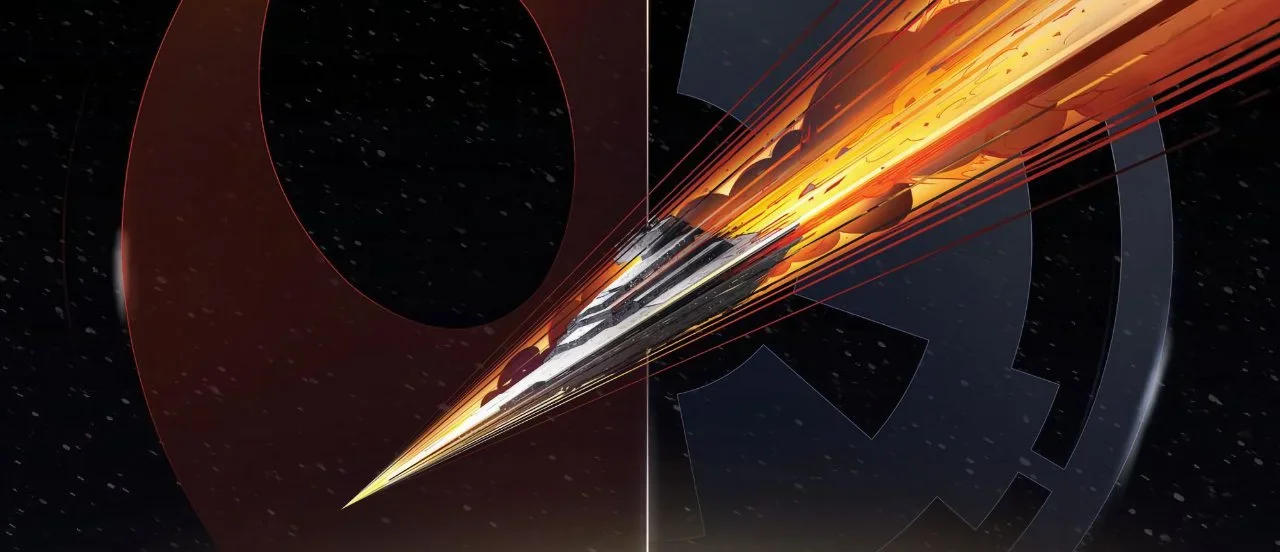
Image source: Thalia
Things were different with Claudia Gray’s Lost Stars, which is still regarded as one of the best novels of current Star Wars canon and even received a manga adaptation between 2017 and 2019.
The two main protagonists of the book are Thane Kyrell and Ciena Ree, two young pilots from an Outer-Rim planet who became first friends and then lovers. Eager to fly, both joined the Imperial Academy, but while Ciena remained loyal to the regime, Thane became disillusioned with the dark deeds of the Empire and defected to the Rebel Alliance. Throughout the book, their paths crossed at several major events of the Original Trilogy, and although they were on different sides, their love for each other never died. After the Battle of Jakku, Ciena surrendered to the New Republic, and Thane promised to wait for her.
What makes Lost Stars special (aside from the two main characters) is its depictions of the major events of the Original Trilogy that are just so slightly “beside” from what was shown in A New Hope, The Empire Strikes Back, and Return of the Jedi. If the cameras were just tilted a little bit to the left or to the right, one could spot Tane Kyrell and Ciena Ree.
This Is What You Came For
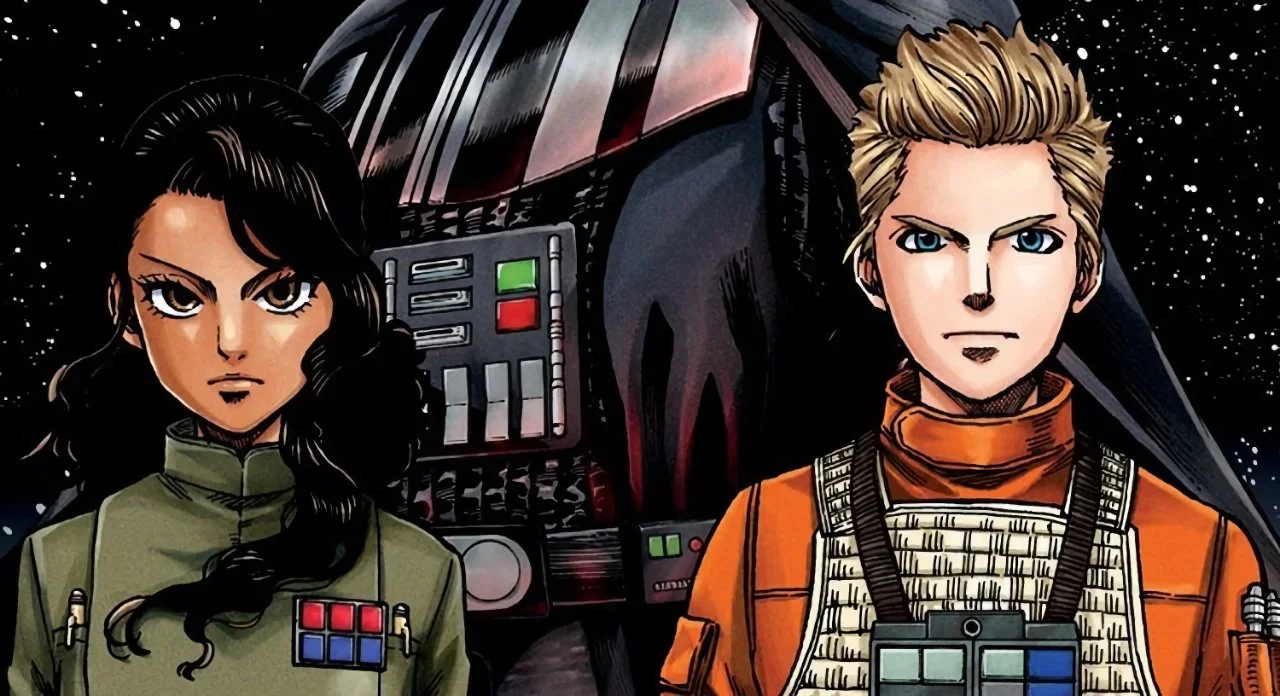
Image source: Fantha Tracks
Perhaps the story that comes closest to what fans were hoping for with The Jounry to The Force Awakens is the four-part comic series Shattered Empire.
Starting with the space battle over Endor and the attack on the second Death Star, presented from the point of view of rebel pilot Shara Bey, the story covers the one year leading up to the Battle of Jakku, and although Shara and her husband Kes Dameron are the main figures, the four issues heavily feature Luke, Han, and Leia and their continued struggle against the Empire. It includes a flashback scene to The Phantom Menace as well as the first appearance of Operation: Cinder, which was part of Palpatine’s contingency plan.
The story ends with Poe Dameron being born and Luke presenting the family with a Force-sensitive tree.
A Journey for whom?
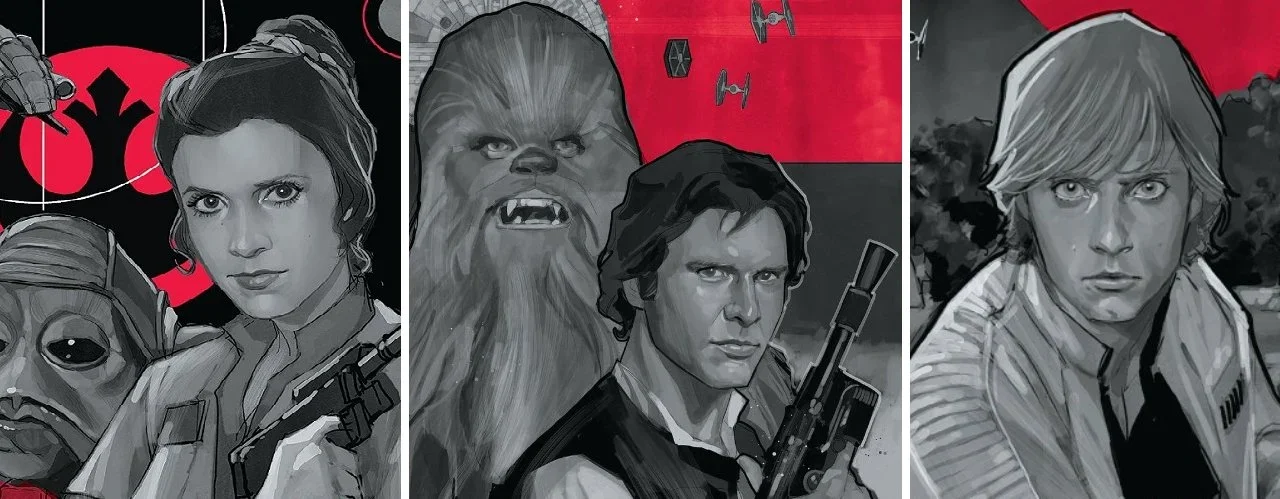
Image source: Cultureslate
The real issue with the stories presented in The Journey to The Force Awakens program is not that they are bad, which they aren’t, but that the name implies something quite different from what was ultimately delivered. Aftermath and Shattered Empire at least take place after Return of the Jedi (as does the end of Lost Stars), but the events of the three junior novels, Moving Target, Smuggler’s Run, and The Weapon of a Jedi, all deal with adventures of Leia, Han, and Luke that happened between Episode IV and V.
The short stories at least feature characters and creatures from Episode VII, but some of them are blink-and-you-miss-it figures, like Bobbajo, the little turtle-like creature that first appeared in the Force for Change video of J.J. Abrams, the bird-like Frigorians that briefly appear in Maz Kanata’s castle, or Contable Zuvio, who was featured heavily in the marketing campaign leading up to the film, but then barely made it into the final cut. These stories are nice, but ultimately more or less inconsequential.
The term “Journey” implies a movement from point A to point B, with A being the end of Return of the Jedi and B being the beginning of The Force Awakens, and all the books and stories nearly completely failed in providing such a movement. Of course it would be absurd to expect a chronicle of every event that had happend betwenn the celebration on Endor and the attack of the First Order on Lor San Tekka, but what could (and should) have been expected was that The Journey to The Force Awakens gave the new film more context and at least answered some of the most pressing questions going into the new Trilogy, like what had happened to the New Republic or how and why the First Order came to power, something that Lucasfilm is still struggling to explain and that again shows the lack of a bigger, cohesive plan for the story of the Sequel Trilogy.
But maybe the term “Journey” is not primarily meant from an in-universe, but an out-of-universe perspective. Maybe the main purpose of these books and comics was to (re-)introduce the not-so-hardcore fans to the galaxy far, far away, its main characters, and the events leading into the new trilogy.
Did it succeed in this matter?
As a hardcore Star Wars fan for most of my life, I’m probably not the right person to answer this question…
CultureSlate: Made by humans, for humans.
Please consider supporting our AI-free content via our Patreon page.
READ NEXT:

Latest News
Featured



• All sizes are adult unisex
• Printed art on the front
• 100% cotton
• Pre-shrunk fabric
• Shoulder-to-shoulder taping
• Culture Slate Exclusive Design
See more products here