
How The Landspeeder Has Evolved Over the Last 50 Years

Luke and the original X-34 - Image Source: StarWars.com
The landspeeder has been with Star Wars since the beginning — Luke’s battered X-34 kicking up dust on Tatooine in A New Hope set the tone for tech that felt both alien and lived-in. Over almost five decades of canon, spin-offs, and design innovation, the landspeeder has evolved from a prop car into a symbol of everyday mobility in a galaxy far, far away.
The X-34: Luke’s Beater With Character
The first landspeeder fans encountered was the X-34 in 1977’s A New Hope. Designed by special effects legend John Stears and built by Ogle Design, the prop was based on the chassis of the Bond Bug, a three-wheeled British car. The production crew masked the wheels with camera tricks and visual effects, like reflective gelatin and angled mirrors, to simulate hovering. George Lucas even coined the blur beneath the vehicle as “The Force Spot” to explain away the visual cheat.
RELATED:

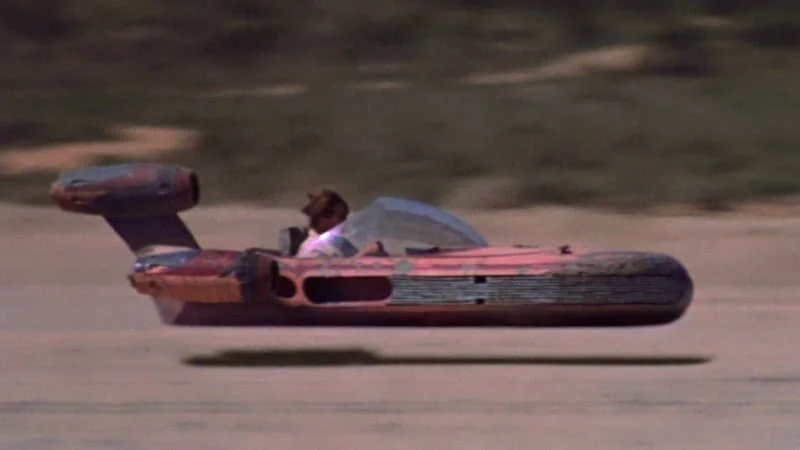
Image Source: Wookiepedia
This was an early example of how Star Wars blended function with fantasy. The X-34 was 3.4 meters long, equipped with three turbine engines and floated roughly a meter above the ground using repulsorlift technology — a ubiquitous, if rarely explained, innovation in the Star Wars universe.
Luke’s X-34 was never sleek or pristine. It was sun-bleached, beat-up, and missing its port turbine cowling. That wear was by design, reflecting the harsh desert of Tatooine and Luke’s modest upbringing. He used it for routine errands, including ferrying R2-D2, C-3PO, and eventually Obi-Wan to Mos Eisley. After his aunt and uncle’s deaths, Luke sold it for 2,000 credits to pay for passage to Alderaan. Even in-universe, it was outdated, and Luke grumbled that “ever since the XP-38 came out, they just aren’t in demand.”
Background Props With Lore: The V-35 Courier
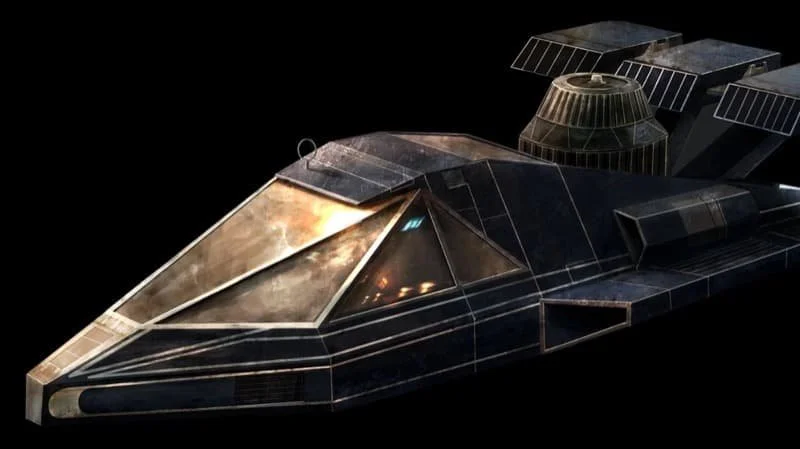
Image Source: Wookiepedia
While the X-34 took the spotlight in the first iconic Star Wars installment, the V-35 Courier appeared in the background of the same film. It sat parked outside the Lars homestead and showed up again in Attack of the Clones, implying its impressive durability across decades. The V-35 was a more family-oriented model, with three repulsorlift thrusters and an angular design built for civilian use.
Flash And Firepower With The Naboo Speeders
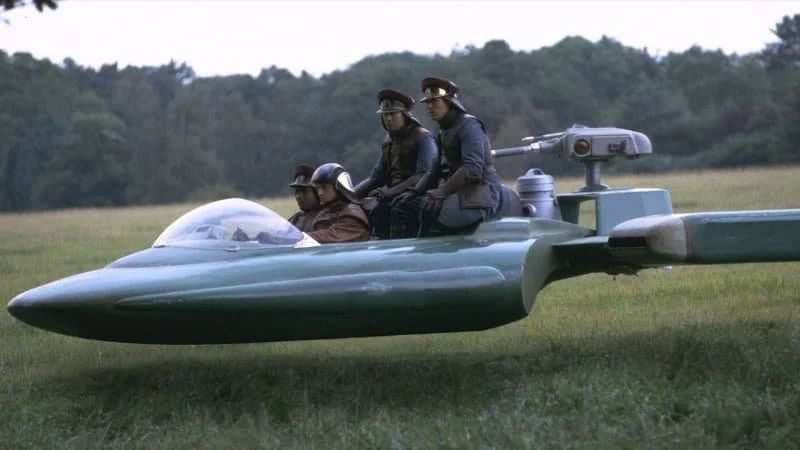
Image Source: StarWars.com
By the time speeders appeared in the fourth and more high-tech installment in the franchise — The Phantom Menace — advanced digital technologies allowed them to move beyond dusty errands into military applications. The Flash speeder — built by SoroSuub Corporation — was a green patrol landspeeder with a sleek racecar-inspired design. It seated four and featured a rear-mounted swivel blaster — perfect for skirmishes during the Battle of Naboo.
The Gian speeder was bulkier and armed with multiple repeating blasters. It was slower and less agile than the Flash but had more armor, which suited its use in heavier combat.
Both these models expanded what a landspeeder could be, turning it from personal transport into tactical hardware.
Han Solo’s M-68 And Corellian Muscle
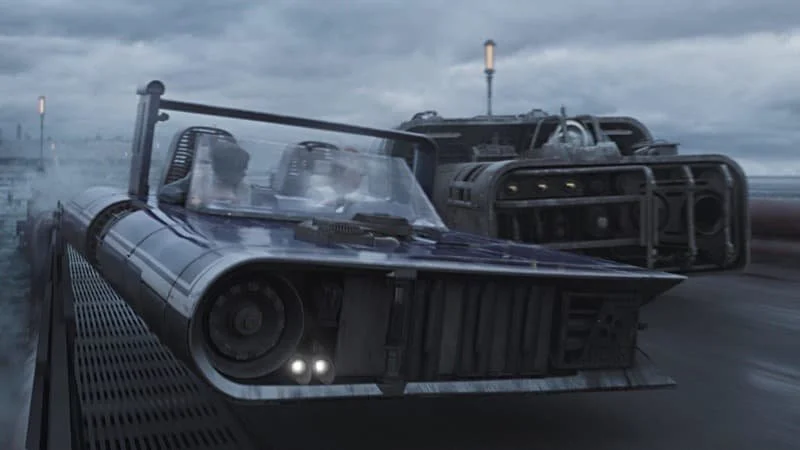
Image Source: StarWars.com
In Solo: A Star Wars Story, the M-68 entered the scene. This sleek, two-seat model looked more like a street racer than anything seen before. The M-68 — manufactured by Mobquet Swoops and Speeders — had a “burning injection” engine and open-air and hardtop variants, and a cagey ownership backstory, making it perfect for Corellian speedsters. It even featured adjustable thruster nozzles for agile cornering.
The prop was based on the Dodge Charger and Chevrolet Malibu, fitting for a hotshot Corellian thief. The M-68 added a youthful, rebellious edge to the landspeeder design, aligning with Han’s early character arc.
The A-A4B Truckspeeder Workhorse
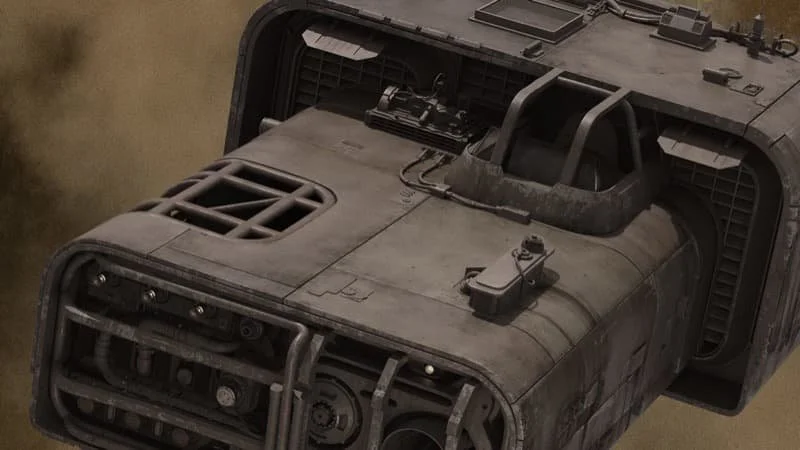
Image Source: StarWars.com
Solo also introduced the A-A4B truckspeeder, essentially the Star Wars equivalent of a cargo hauler. Manufactured by Trast Heavy Transports, it had a bulky build, an armored cockpit and a rear box for storage. While not flashy, it became a favorite among smugglers and operatives of syndicates thanks to its durability and mod-friendly frame. Fans have noted its resemblance to a repulsorlift version of a tank or semi-truck.
Landspeeder Variants: Airspeeders And Snowspeeders
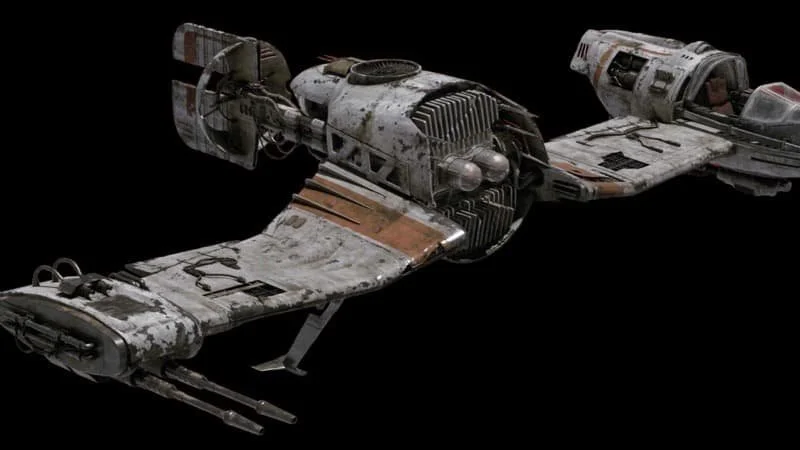
Image Source: Wookiepedia
While airspeeders don’t technically count as landspeeders, the lineage is worth noting. Airspeeders like the XJ-6 used by Anakin in Attack of the Clones, and the V-4X-D in The Last Jedi, pushed the limits of repulsorlift technology. However, unlike landspeeders, they could actually fly, making them a different beast altogether.
The T-47 airspeeder, also called a snowspeeder, features prominently on Hoth’s frozen wastes in The Empire Strikes Back and is famously used to trip AT-ATs during the Battle of Hoth. These vehicles were modified cargo lifters retrofitted with tow cables and heavy armor to become combat-ready.
From Film To Franchise: Landspeeders Across The Saga

Image Source: LEGO
Across the Skywalker saga, spinoff films, and animated series like The Clone Wars and Rebels, landspeeders have become a visual shorthand for mobility. They show up in chase sequences, background shots, and world-building vignettes. Designers often keep the shape authentically simple — flat hulls, front grilles and exposed turbines. That silhouette alone is enough for fans to identify a landspeeder.
Games have leaned heavily on them, too. In games with playable characters, like LEGO Star Wars: The Skywalker Saga and Battlefront, players can pilot landspeeders across maps — a nod to their enduring popularity.
Luke’s X-34 is now among the most merchandised vehicles in Star Wars. LEGO’s 2022 Ultimate Collector Series release included a 1,890-piece replica with display stand, matching the screen-used dimensions down to the missing turbine cowling.
At the Volo Museum in Volo, Illinois, fans can see a life-size replica of the X-34 used in A New Hope. The display serves as a tribute not just to the vehicle itself but to the practical effects that made it possible.
And yes, a drivable version exists. Built on an electric golf cart frame, it can reach street speeds and has made appearances at fan events across the U.S.
The Hovercar That Endures
Fifty years in, the landspeeder still holds its own in the Star Wars mythos. It’s not a lightsaber or an X-wing, but that’s the point. Landspeeders are grounded in the day-to-day reality of the galaxy — they’re beat-up, modified and sometimes full of smuggled spice. They're the pickup trucks, the sports cars and the taxis of Star Wars.
While new designs emerge with every new installment, the core idea — a fast, floating vehicle designed for function over flash — remains untouched.
For die-hard fans, spotting a new model is part of the fun. For everyone else, it’s a reminder that even in science fiction, the best vehicles still leave a trail of dust behind them.
READ NEXT:


Source(s): Silodrome, StarWars.com, Volo Auto Museum, Space.com
Latest News



Featured





• All sizes are adult unisex
• Printed art on the front
• 100% cotton
• Pre-shrunk fabric
• Shoulder-to-shoulder taping
• Culture Slate Exclusive Design
See more products here