
The Planetary Classifications Of 'Warhammer 40K': From Death Worlds To Crone Worlds
Image Source: Warhammer-Community.com
The 40K galaxy is a big place, populated with as many stars as we have in our own reality, if not more, and with a vast array of worlds orbiting these many points of light. Some of these are habitable, some of these aren’t, and some of these shouldn’t be habitable, but people still live on them anyway. The galaxy has all kinds of worlds of varying ecosystems, but what they often base their important classification on is language related to their purpose or history. Today, we look at several notable major planetary classifications in the far grim future, and some notable examples of each world.
Imperium Worlds
The Imperium is perhaps the most widespread organized body in the galaxy, even in the wake of its sundering in two as a result of the Great Rift tearing the galaxy apart. Imperium Sanctus, still under siege from all sides, holds vast swathes of the galaxy under its thrall, while Imperium Nihilus stands in darkness and chaos as disorder reigns. But across this vast galaxy, humans survive in all manner of environments, from the sustainable and quiet to the horrific and chaotic. What follows is a listing of several notable world classifications, and one notable example of each.
RELATED:
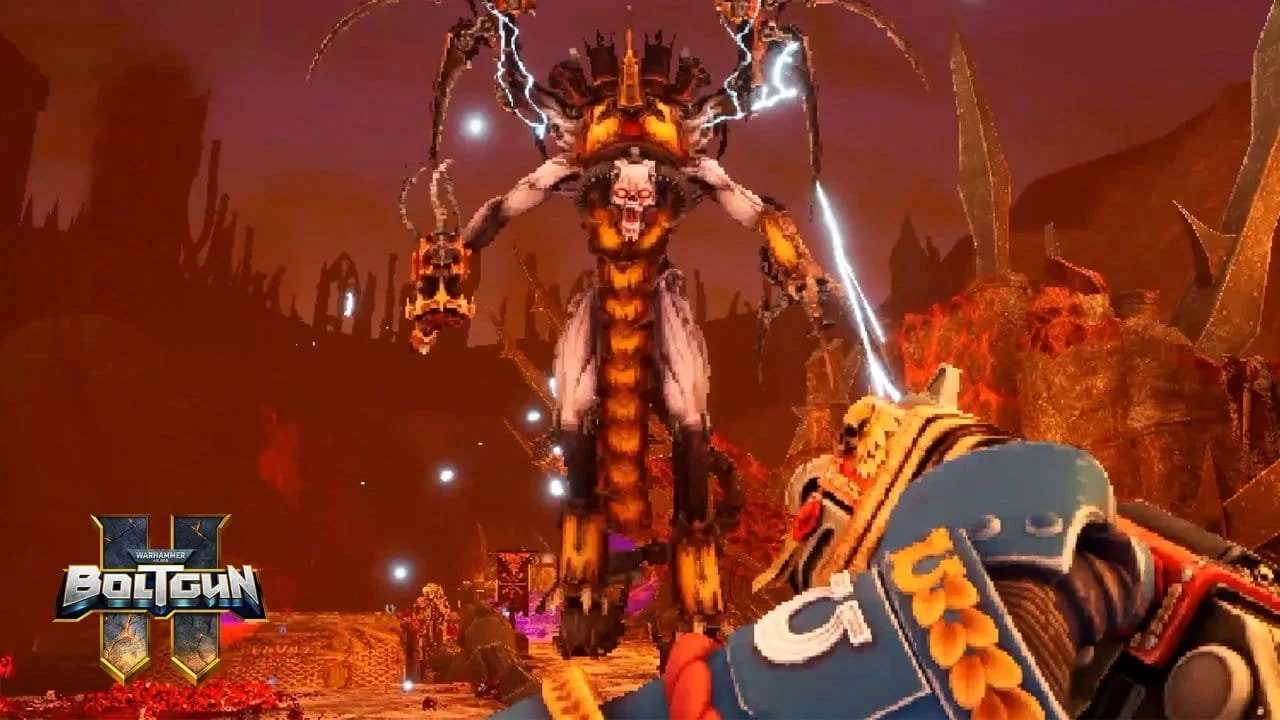
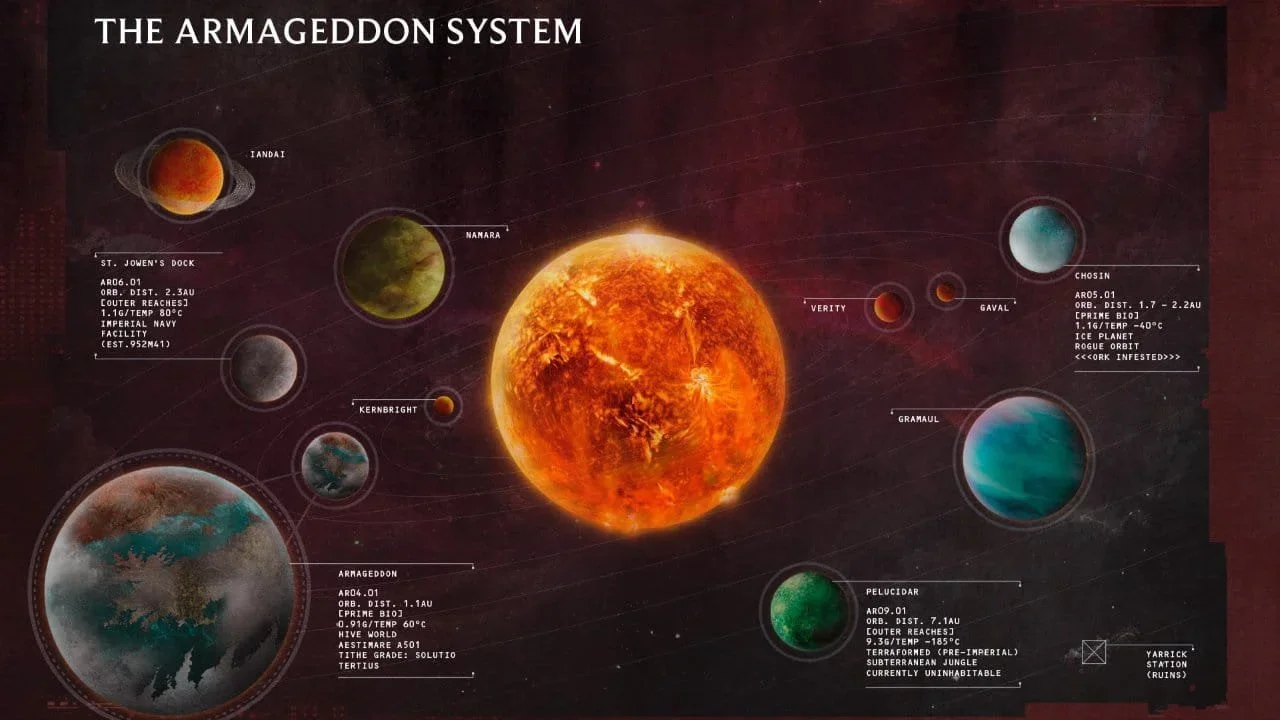
Image Source: Warhammer-Community.com
Death Worlds are planets of environmental extremes, be it as a result of local geography, ecology, or more. Many are hellish places humans should not be living, yet more often than not, they are found anyway, suffering heinous attrition rates while still pushing through to sustain a population. The world of Catachan is perhaps the best-known Death World, a jungled planet full of lethal creatures and plant life, which the local humans have become experts at surviving.
Feral Worlds are worlds that have degenerated to a below-average level of technology within the Imperium, the result of stranded humans from as far back as over 10,000 years, or as recently as a few centuries, or survivors from great cataclysms who have been forced to make do within the ruins of the past. These feral people, often living in tribal societies on harsh worlds, are a common source of recruits for Loyalist Space Marine Chapters, who take advantage of the lower technology level of the locals for their own ends in ensuring obedience and control over the population. For example, the Feral World of Banish is the homeworld of the Exorcists Space Marine Chapter.
Forge Worlds stand as the exact opposite of Feral Worlds, seeing sophisticated planet-wide industrial activity taking place under the guidance of the Adeptus Mechanicus. Forge Worlds are often home to well-known legions of Titans or Knight Houses, or the Worlds hold sway over other planets that have these machines and need the Mechanicus’ know-how to keep them operating. Forge Worlds also specialize in the manufacturing of certain technologies, with “_-pattern” machines often linking that specific model to a certain World. Forge Worlds can also slip out of the Imperium’s grasp and fall to Chaos and the Dark Mechanicum. As an example of one of the most notable Forge Worlds, Ryza was at the center of a legendary campaign during the Horus Heresy that saw many Titans fighting in devastating campaigns in the galactic east.
Fortress Worlds are epicenters of the Imperium’s military industrial complex. They feature extensive orbital defenses and facilities, alongside immense planet-side defenses. Designated as lynchpins in protective military deployments designed to repel Xenos and Chaos forces, the destruction of Fortress Worlds can be calamitous to the Imperium. Ten thousand years was spent perfecting the defenses of Cadia, which was the core of the defensive network called the Cadian Gate, which Abaddon the Despoiler made it his target for the 13th Black Crusade. Cadian ultimately fell after an immense siege, and with its destruction, Cadian legions have been spread across the galaxy, or sent fleeing to nearby now-vulnerable areas of the Cadian Gate.
Hive Worlds are planets of extremes, with incredibly dense urban sprawls towering up into planetary atmospheres, while the land around them is often a wasteland of toxic, near-uninhabitable terrain as a result of thousands of years of byproducts from the megacities. Hive Worlds are home to billions, and while they consume vast amounts of resources, they also manufacture a great deal. They are also often worlds with high levels of military recruitment, either by choice or by force, as the billions of lives in the cities must fuel the hundreds of wars the Imperium wages across the stars. The most notable Hive World is Necromunda, a world of criminal gangs, diverse cultures, and many secrets.
Shrine Worlds are centers of Imperial faith in the God Emperor, and are consecrated in the name of any number of holy saints who stand as exemplars of the faith or who performed miracles during their time. Often featuring a central site of worship with one or more relics, the planet’s economy largely revolves around serving the presence of pilgrims journeying to these places, and are often under the direct control of the Imperium’s priesthood. Perhaps the most notable Shrine World in the Imperium is Holy Terra, with many pilgrims seeking to make a journey to the capital, only to never return home in their lifetime due to how utterly crushing the entire process is.
Xenos And Chaos Worlds
The Imperium does not have a monopoly on settling the galaxy. Many other species live on a range of worlds and sites, such as the T’au and their Sept Worlds (a term for their colonies), or the Leagues of Votann and their many exotic fortresses in hostile environments. The following represent three notable types of planets settled or significant to Xenos and Chaos powers.
Crone World
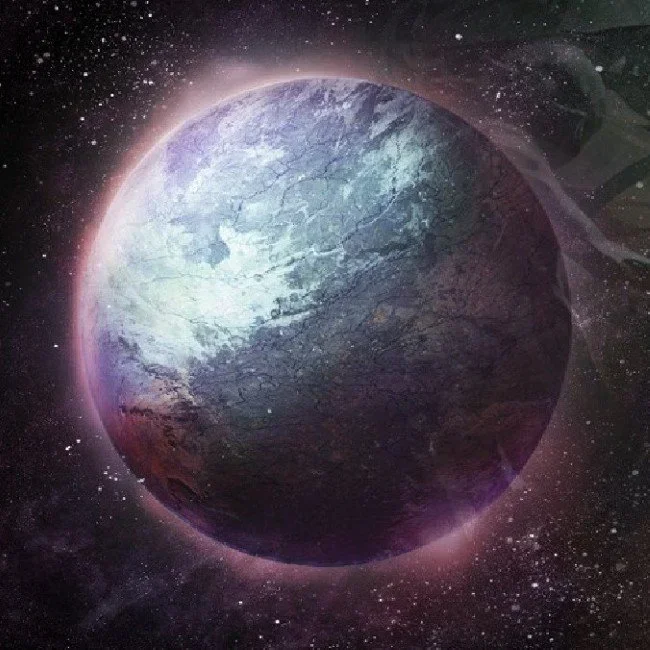
Image Source: Warhammer-Community.com
Crone Worlds are ancient seats of the now-vanished Eldar Empire, which often exist in the modern age as nightmarish and twisted planets. Named for one of the dead Aeldari gods, they are exceedingly dangerous places with the often small local populations having fallen to the worship of Chaos, and various hostile mutants, Daemons, and exotic creatures also populating the worlds. Despite how dangerous they are, the Crone Worlds are also the only place in the galaxy where new Spirit Stones can be recovered by the Asuryani, requiring expeditions to acquire this valuable material. Many expeditions, sadly, do not return. A notable Crone World is Belial IV, which played a role both in the 13th Black Crusade but also in the plans of the Ynarri, who recovered one of the legendary Crone Swords on the world’s surface.
Daemon World
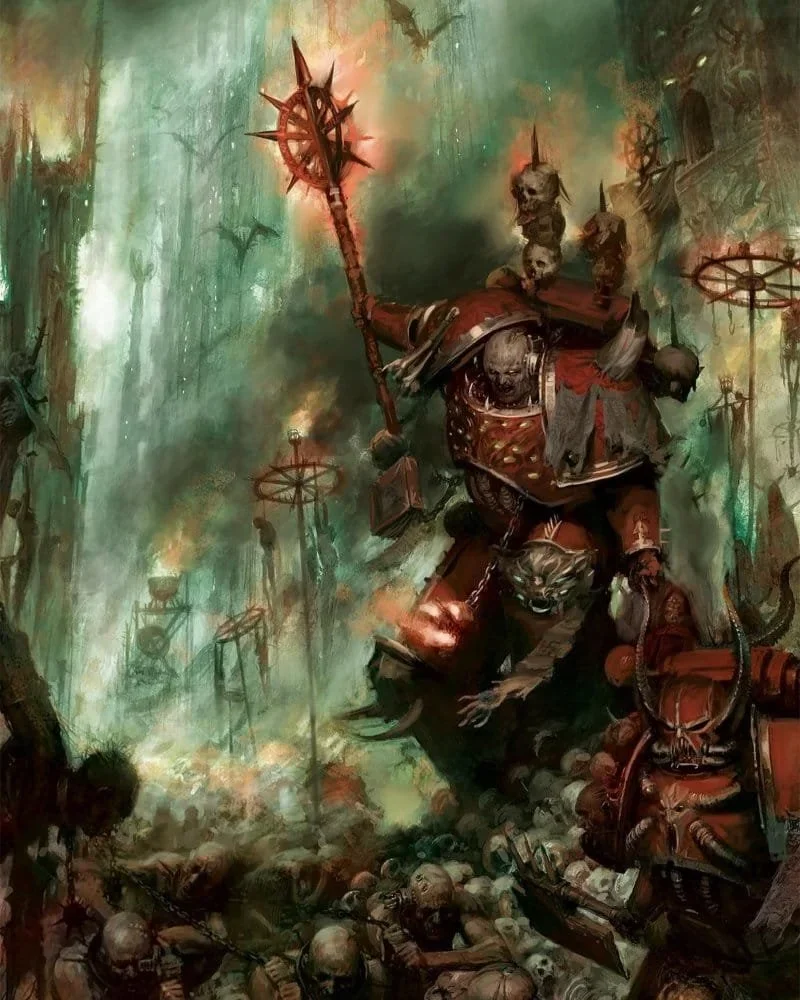
Image Source: Warhammer-Community.com
In some respects, the aforementioned Crone Worlds might be a type of Daemon World, but Daemon Worlds also deserve a full explanation. The result of material celestial bodies being pulled into the Warp, either partially or wholly, the resulting exposure to the forces of Chaos causes a hellish transformation to the bodies bathed in the empyric energies of this other dimension. Daemons run riot over the surface, often dominating a world in the name of a particular Chaos power, or entering into conflict with each other in the name of the Great Game between the gods. These Worlds do sometimes have mortals living on them, sometimes Chaos Space Marines or Cultists, but average humans are usually the victims of horrific fates.
The process of subsuming a world into the Warp can happen by various means, most often by rituals conducted on the world’s surface, or as a result of Warp rifts opening or expanding, such as happens with the Maelstrom’s whirling, indistinct edges, or the emergence of the Great Rift, which tore the galaxy in two. A notable Daemon World which has recently come into being is Wyrmwood, the corrupted ruins of the Dark Angels Space Marine Chapter’s original homeworld of Caliban. Reconstructed by Vashtorr the Arkifane, it now serves as his mobile base, having tunneled across the galaxy into a Pariah Nexus which is heating up to be a major flashpoint in Imperium Sanctus.
Tomb World
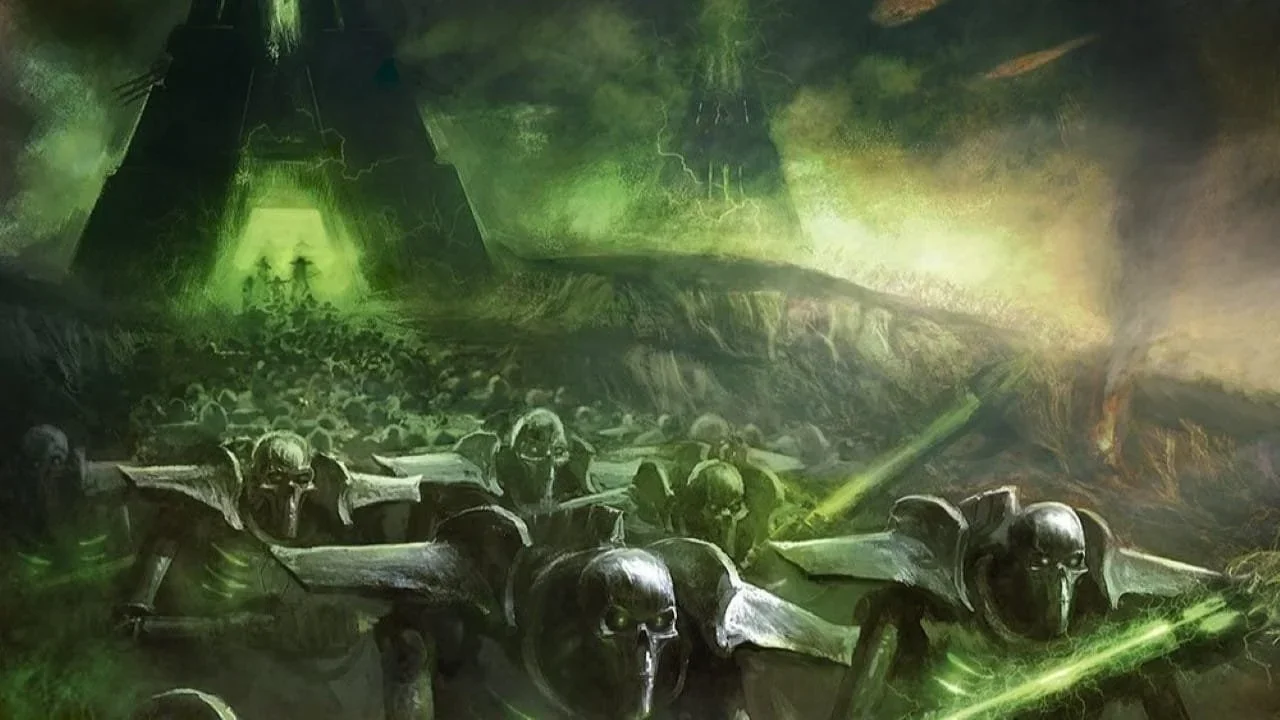
Image Source: Warhammer-Community.com
Home to slumbering Necrons, Tomb Worlds are among some of the most varied in the galaxy. They can exist on any type of planet, from barren, desolate and dead, to thriving, heavily settled, and industrialized. This is because the tombs in question often lie under the world’s surface, sometimes very deep or hidden, but other times, millions of years have seen them drawn up to the surface, where they are easily uncovered. Unfortunately for those who are not Necrons, the activation of a Necron tomb or intrusions into these seemingly empty spaces often see the intruders, if not a planet’s entire population, violently removed from existence. Many notable Tomb Worlds exist, but a recent example is Hekateus IV, or Qivroth to the Necrons, the site of a young Forge World currently facing a Necron awakening event in Mechanicus II.
CultureSlate: Made by humans, for humans.
Please consider supporting our AI-free content via our Patreon page.
READ NEXT:


Latest News

Featured





.jpg)
• All sizes are adult unisex
• Printed art on the front
• 100% cotton
• Pre-shrunk fabric
• Shoulder-to-shoulder taping
• Culture Slate Exclusive Design
See more products here