
'Tron: Ares' Review
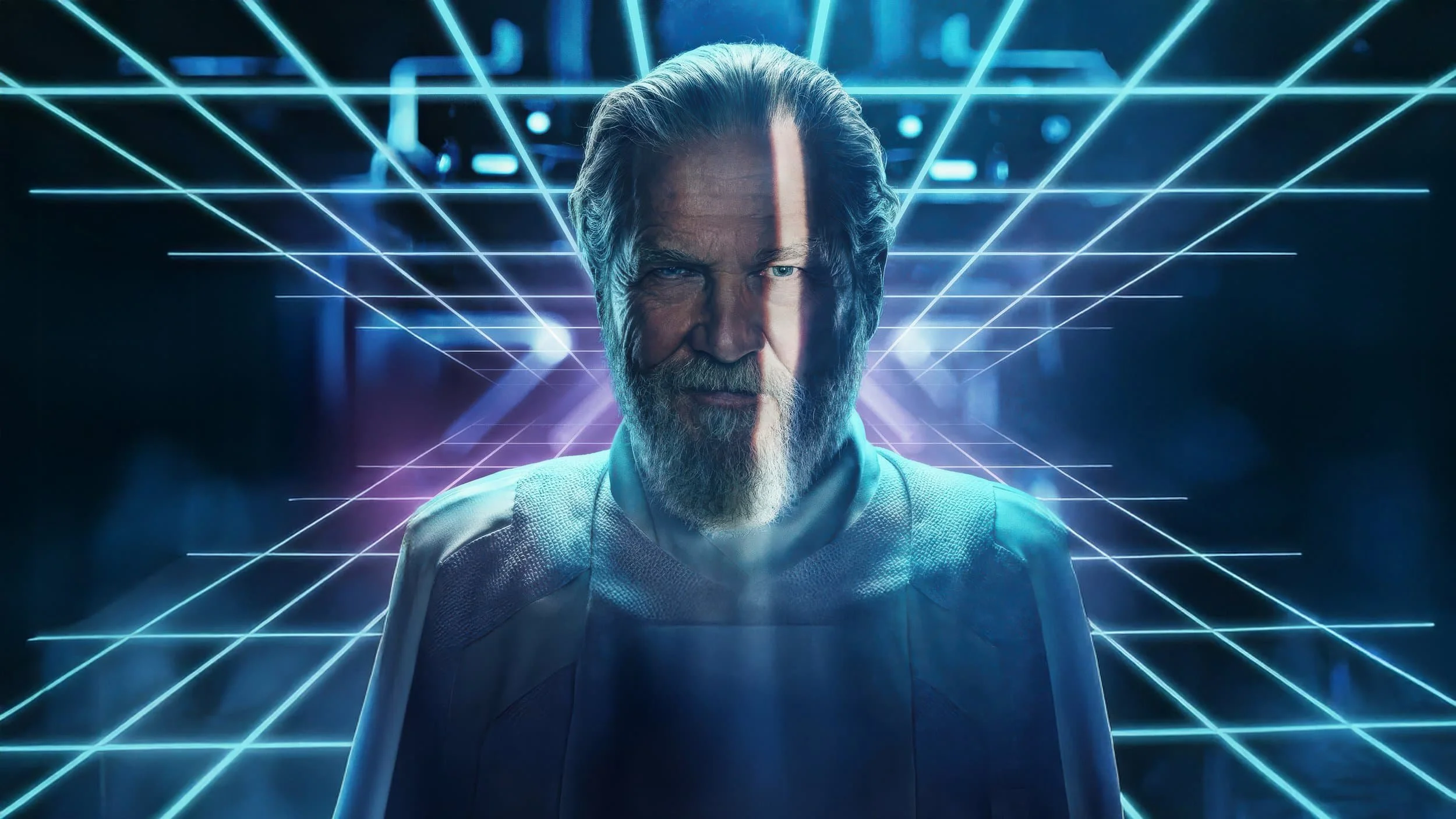
Image Source: Alpha Coders
“Greetings, program!”
In 1982, the world was introduced to a universe beyond imagination. Steven Lisberger’s Tron showed us an image of the future that was unlike anything we had ever seen before or since. While it didn’t light up the box office as much as Disney would’ve hoped, Tron lives on as a sci-fi classic and remains one of the most influential visual effects-heavy films ever made. After years of hibernation, the franchise would return with Tron: Legacy in 2010. Directed by Joseph Kosinski, Legacy took what made the original Tron as fun as it was and amplified it with modern visual-effects technology. Sadly, the film didn’t live up to Disney’s expectations at the box office, and the Tron franchise was backburnered for more than a decade. After the cancellation of Tron: Uprising (a short-lived Disney XD animated series), Joseph Kosinski moved on to films such as Top Gun: Maverick and F1, the continued success of the Marvel Cinematic Universe, and the purchase of Lucasfilm, Disney did not see any real incentive to revisit the franchise. That was until 2017.
While a sequel to Legacy, titled Tron: Ascension, lingered in development for years, a standalone sequel titled Tron: Ares went into development in 2017. Initially reported as a soft reboot, the film was retooled as a star vehicle for Academy Award-winning actor and musician Jared Leto. While some Tron fans bemoaned that a new movie would no longer continue the story set up by the ending of Legacy, some fans (like myself) were just happy that Disney found a reason to make another one at all. Even if the lead actor didn’t generate much, or any, excitement. Excitement grew when Garth Davis, the director of the Oscar-nominated film Lion, was announced to direct in 2020. Sadly, that excitement was short-lived after Davis left for unknown reasons and was replaced by Disney vet Joachim Rønning.
After years of excitement, worry, discourse, and curiosity, Tron: Ares has finally ridden into theaters. And the result? It’s pretty good!
RELATED:
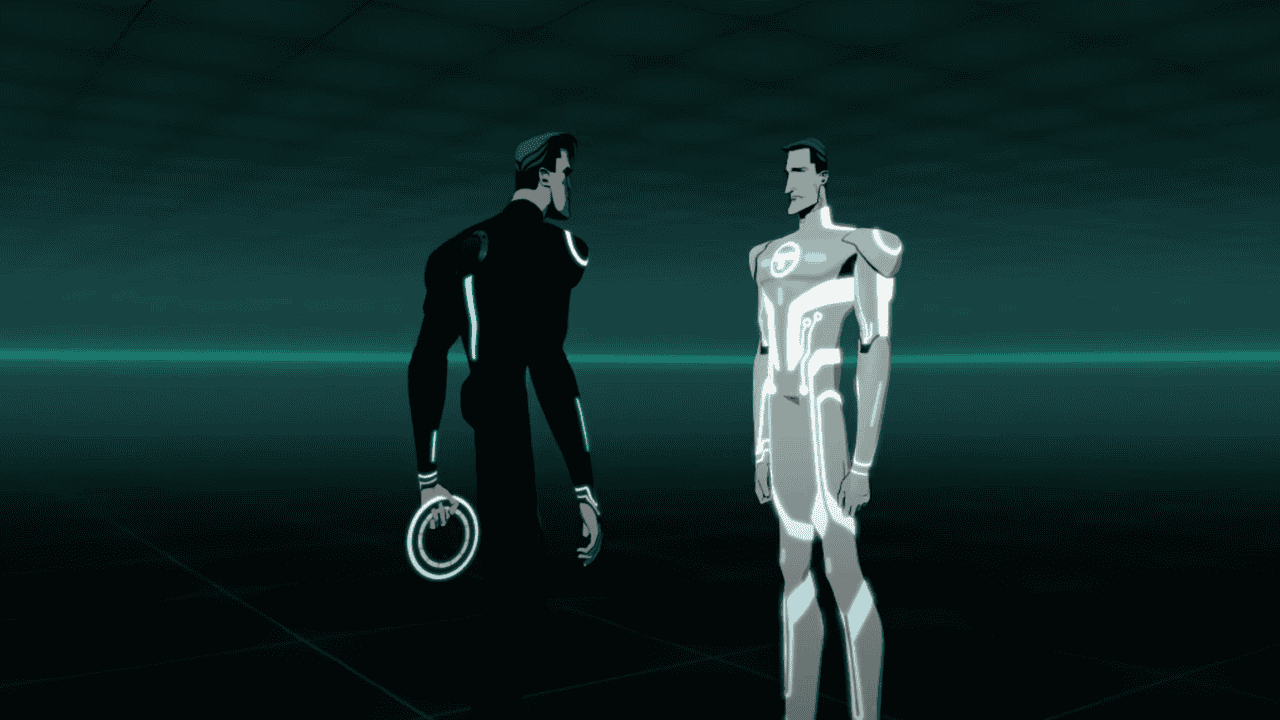
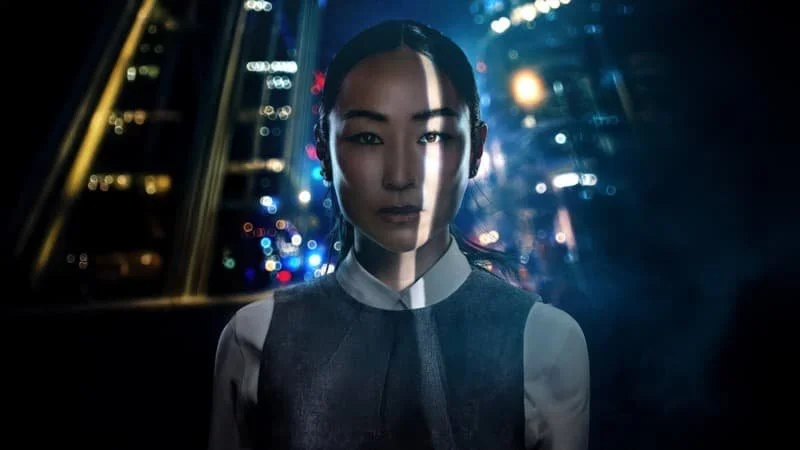
Image Source: Alpha Coders
Tron: Ares, at its core, is solid sci-fi entertainment, which is how most people would describe the first two films as well. We, as Tron fans, have been spoiled with endless amounts of time spent with OG Tron and Legacy, and we appreciate those movies beyond simple popcorn fun. But that’s the best way to describe Ares. It won’t change your life, it won’t open your mind, but it will entertain you, and that’s worth something, I feel. I don’t think I’m stepping on any toes by saying the screenplay isn’t particularly compelling. Tron movies have never been known for having thematically rich screenplays. Screenwriter Jesse Wigutow (working off a story by himself and David DiGilio) deserves some props for attempting to find an emotional core with the thematic throughline of appreciating life while you have it. As Ares, an AI soldier, starts to develop a desire to explore the human world, he connects with our human protagonist, Eve Kim. Eve, mourning the death of her sister, also has to learn that life is too precious to take for granted. It’s not the deepest plot, but it tries to give audiences a little extra to bite on beyond the visuals, which end up being the best part of the movie anyway. A downside of the script is the much-marketed plotline of the world of the Grid and our world crossing paths. The trailers made it seem like this was going to be the film’s main selling point, going as far as to use the tagline “Worlds will collide.” Disappointingly, said collusion only amounts to the film’s climax involving soldiers from the Grid attacking one city. It also doesn’t help that we don’t spend nearly as much time in the Grid as we did in the first two films. The few scenes we visit the Grid are entertaining, colorful, and exciting, but they’re so rare that it almost feels like the film is teasing you with them.
Helming this film is Joachim Rønning. As Steven Lisberger and Joseph Kosinski made their directorial debuts on the first two films, Rønning is the first Tron director with a long history of film experience before joining the franchise. Beginning his career with entertaining dramas (such as the Oscar-nominated Kon-Tiki) with former directing partner Espen Sandberg, Rønning has spent the last 8 years of his career at the Mouse House. Rønning and Sandberg first came in with Pirates of the Caribbean: Dead Men Tell No Tales, and despite their hiring signaling the arrival of much-welcomed new life for the franchise, the film ended up amounting to being the living embodiment of the question, “What if The Force Awakens was really bad?” Rønning would go solo for Maleficent: Mistress of Evil, a mediocre sequel to a mediocre live-action remake that can be generously described as perfunctory. Last year, Rønning helmed Young Woman and the Sea, a genuinely solid sports drama starring Daisy Ridley that was the first sign that Rønning can direct good movies on his own if given solid material. Ares, to my shock, continues that. Rønning makes due as a solid studio journeyman director, a type of director I often champion. While he may not be at the same talent level as other prominent studio journeymen such as Gore Verbinski, Jon Favreau, or Gareth Edwards, he levels up with Ares. He channels a J.J. Abrams sense of energy, with the camera often zipping and moving with purpose, especially during action sequences. The film is always moving, never feeling boring or stale. There is a sense of energy that was completely absent in Dead Men Tell No Tales and Mistress of Evil. While Rønning may not channel Joseph Kosinski’s now-distinct sense of speed and camera trickery, he does his job well. It makes me wonder why he didn’t channel this energy when he did Pirates.
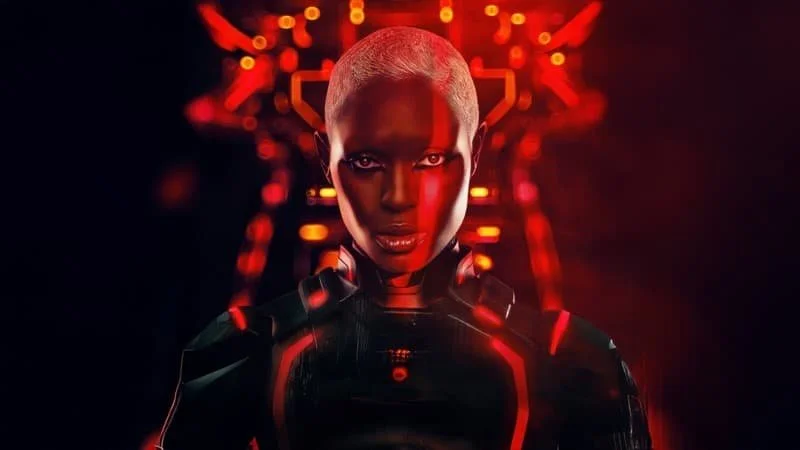
Image Source: Alpha Coders
Acting in the Tron franchise usually amounts to these key factors: A handful of solid performances, one truly standout performance, and Jeff Bridges stealing the show. In Tron, Bruce Boxleitner and the late Cindy Morgan do solid work, the late David Warner delivers a truly standout performance as the film’s villain; meanwhile, Jeff Bridges steals every scene he’s in. In Legacy, Garret Hedlund and Olivia Wilde are solid leads, Michael Sheen delivers an unforgettable performance with a really good David Bowie impression of all things, and Jeff Bridges steals every scene he’s in, doing double duty as Kevin Flynn and CLU. Ares continues this.
The elephant in the room is, of course, Jared Leto. Much has been said about Leto’s acting ability, his antics via method acting, and allegations of misconduct. With and without said allegations, Leto was (and still is) a weird choice to build a sci-fi blockbuster around. Leto’s strongest performances are usually in films where he’s not the main character, delivering solid, and sometimes scene-stealing performances in films such as Dallas Buyers Club, Blade Runner 2049, and The Little Things. I’m happy to say that Leto is solid as the titular Ares. He does his best as an AI soldier who learns about humanity and the world around him. His best acting moments come from scenes where he gets to bounce off better performers. However, there is an issue the movie never shakes off. My best point of comparison is Paul Mescal in Gladiator II. While the lead performance is solid, the actor chosen to play the lead is not at all believable as an action hero. This causes our lead to be frequently outshone by the rest of the cast. Had Leto played a villain and Ares been played by a more believable leading man (Actors such as Dev Patel and Yahya Abdul Manteen II come to mind), the movie would’ve been better for it. But since the movie only got made cause of Leto’s commitment to it, there was no outcome where anyone else would’ve played Ares. So I guess we have Jared Leto to thank for trying to give Tron a third chance at cinematic life.
If you watch the film’s trailers, you could not have guessed that Greta Lee is our main protagonist. Playing Eve Kim, a CEO searching for the film’s MacGuffin, the Permanence Code, Lee does a lot with a fairly low-key role. Lee gets the film’s most emotional moments and even some of the film’s best jokes. If Ares was a test for Greta Lee to headline her own blockbuster, she aced it. Another performer who was oddly left out of most marketing is Jodie Turner-Smith as Athena. Acting as our more active antagonist, Athena spends the film following the directive to delete Ares and retrieve the Permanence Code from Eve. Turner-Smith makes for a chilling villain to the point where I often wished the movie was called Tron: Athena instead. My inner cynic tells me that Lee and Turner-Smith were absent from a lot of marketing material due to Disney not wanting grifters to accuse the movie of being “woke” as they’ve done with many Star Wars and Marvel films in the past. But I can’t prove that, of course. Evan Peters also delivers an entertaining performance as Julian Dillinger, our human antagonist, who also makes for a more compelling male lead than our title hero.
And what can be said about Jeff Bridges? In an odd move, Bridges is the only actor from either OG Tron or Legacy to appear in Ares. And some might be as disappointed as I was that Kevin Flynn is only in one scene. However, unlike some legacy sequels that make poor use of past protagonists (see Jurassic World Dominion), Bridges is given a lot to do with limited screentime. His scene with Ares is heartfelt and helps it become the most compelling scene in the entire film. Bridges’s sense of charisma and heart, which he channeled in the first two films, is more than present here. And yes, I teared up when Flynn said his signature line, “Greetings, program!”
It’s Jeff Bridges, man! What more can you say?
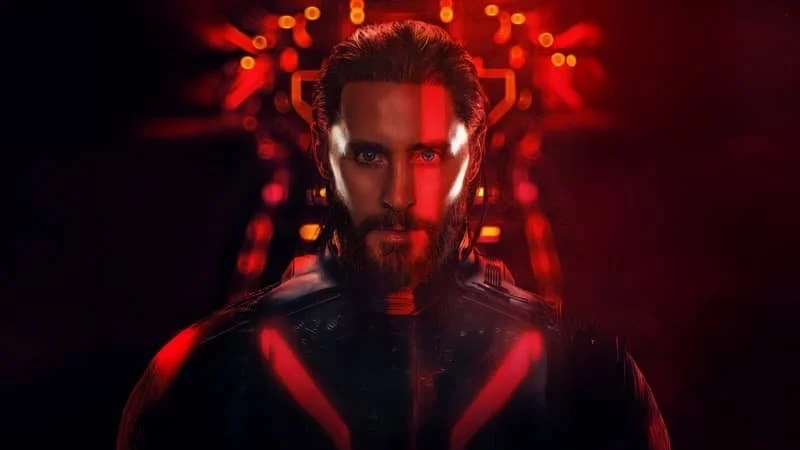
Image Source: Alpha Coders
If you ask any Tron fan what the most important part of any Tron film is, there’s a high chance most of us will say the music. Electronic music pioneer and trans queen Wendy Carlos hit the ground running with her score for the original Tron. In addition to combining her signature electronic sound with sweeping romantic themes, Carlos set the standard for what Tron music can be. Enter Daft Punk’s score for Legacy. Channeling Wendy Carlos’ expert combination of electronic music and character themes and leitmotifs, Daft Punk turned the dial to a thousand and crafted one of the most beloved and acclaimed film scores of the 2010s. As Ares entered production, rumors swirled that Daft Punk would return. Sadly, the duo would break up in 2021, leaving the seat of composer vacant. While Wendy Carlos is still kicking at age 85, she has retired from music. However, last year, fans were given the news that single-handedly revived hype for this film: The score for Tron: Ares will be composed by Nine Inch Nails.
The use of the Nine Inch Nails name is more for marketing purposes than anything else, as the score is composed by Trent Reznor and Atticus Ross, who have been scoring movies together since their Oscar-winning work on The Social Network. Since then, Reznor and Ross have become regular composers for David Fincher and Luca Guadagnino, while also providing scores for other acclaimed directors such as Pete Docter and Sam Mendes. Their work for Tron: Ares has to be their best work to date, as far as I’m concerned. Channeling the atmosphere of Soul, the pulse-pounding energy of Challengers, the anxiety of Gone Girl, and the simplicity of The Social Network, the score for Tron: Ares often makes you want to bob your head or hold on to your seat. The score on Dolby Atmos often made the theater shake, and it was thrilling. While themes and leitmotifs aren’t as easy to spot on first listen, they are there, with the theme for Ares being the most frequent, memorable, and compelling. A lot has also been said about the film’s theme song, As Alive As You Need Me To Be. I can’t even describe how many times I’ve listened to it since it dropped. If it’s my most listened to song on my Spotify Wrapped, I wouldn’t at all be surprised. If you aren’t compelled to see the movie, give the soundtrack a listen; you won’t regret it.
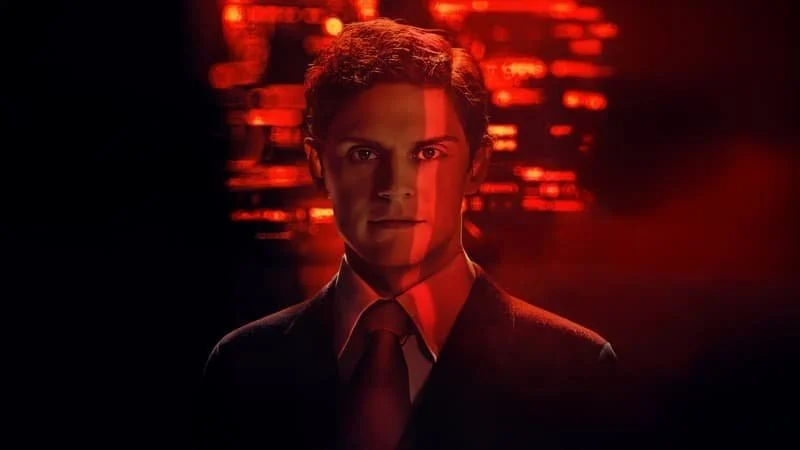
Image Source: Alpha Coders
Overall, while Tron: Ares may be the weakest film of the three we’ve gotten, it still sports the same gorgeous visual effects, thrilling action, expert sound design, and incredible music that we’ve come to expect from this franchise. Despite a slightly miscast leading man, the strength of Greta Lee, Jodie Turner-Smith, Evan Peters, and Jeff Bridges makes the movie an entertaining watch. Joachim Rønning defies the low expectations of his skills as a director and actually manages to prove he can make movies of this scale that are actually fun to watch. And I haven’t said this in ages, but the 3D was worth it. The narrative hiccups aside, the film is often engaging, setting up an exciting future for the franchise. A future we will likely never see.
Sadly, this is likely our last trip into the Grid. Tron has often been dogged by lofty box office expectations, mixed reviews, and long periods of abandonment. As Ares continues to be greeted by lukewarm reviews, unoriginal memes, and bad box office, it all makes for a sad conclusion to a franchise that deserves a lot better than it’s been given. Should the successful soundtrack sales, potentially high streaming numbers on Disney+ once it drops, and the success of the Lightcycle Run ride at Disney World, we can only hope that Disney sees a reason to revisit Tron. Even if it’s on the small screen, we will be there. Until then, enter the Grid one last time while you can. FLYNN LIVES!
Rating: 7.5/10
Tron: Ares is now playing in theaters everywhere. Rated PG-13
READ NEXT:

Latest News

Featured




• All sizes are adult unisex
• Printed art on the front
• 100% cotton
• Pre-shrunk fabric
• Shoulder-to-shoulder taping
• Culture Slate Exclusive Design
See more products here