
A Critique Of The 'Warhammer 40K: Dawn Of Fire' Novel Series
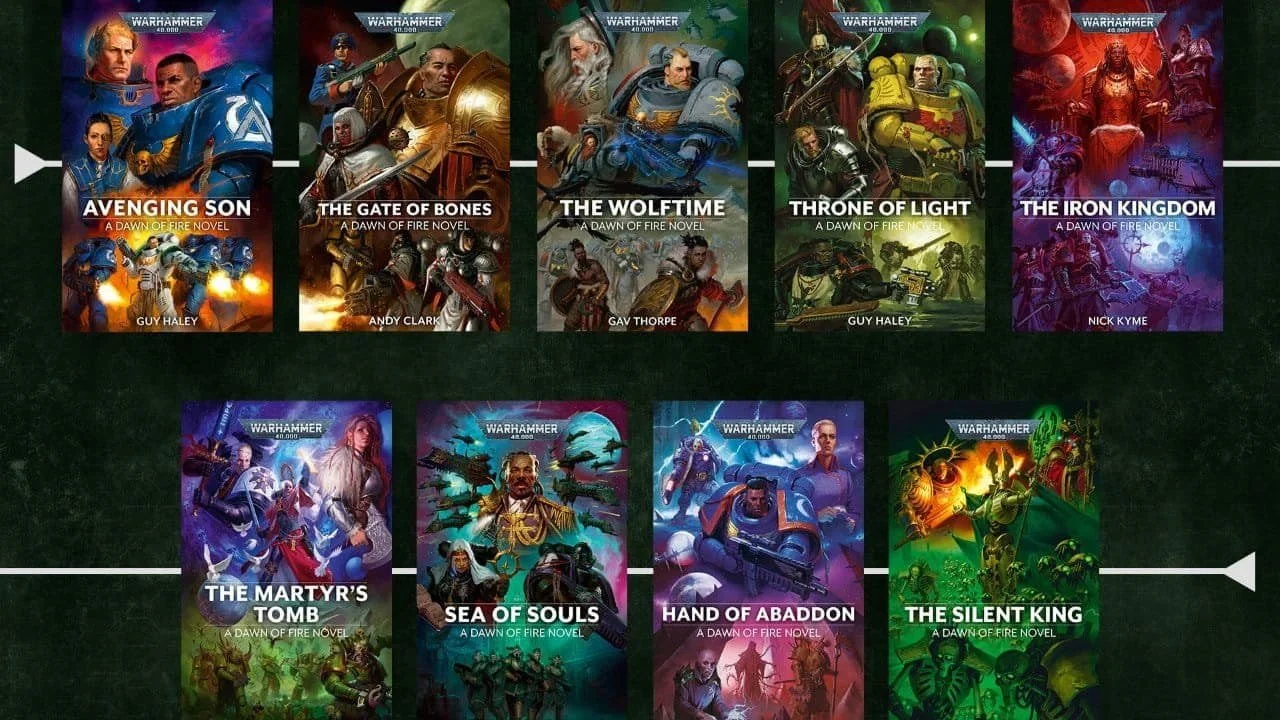
Image Source: Warhammer-Community.com
The Dawn of Fire series is odd. It does not have the ludicrous web of interconnectivity seen with the novels telling the events of the Horus Heresy, but it also seemingly lacks the ever-present push of core characters and plot situations inherent in something comparable like The High Republic. It instead sits somewhere in the middle, telling a large story, but with core material that often reads like extra material which should have been sectioned off.
The pacing of the narrative, then, is also askew as a result of these elements, and one has to ask: how? How did a project lauded at the time of its launch as “the chief narrative of Warhammer 40,000” end up so fragmented and often disconnected from the wider universe? This is not a review, but instead, a reflection by a writer who has listened to eight of the nine available Dawn of Fire novels back to back, and has ample questions to ask, and answers to ponder.
WARNING: This discussion contains spoilers for the Dawn of Fire series.
RELATED:
Praises To Be Sung
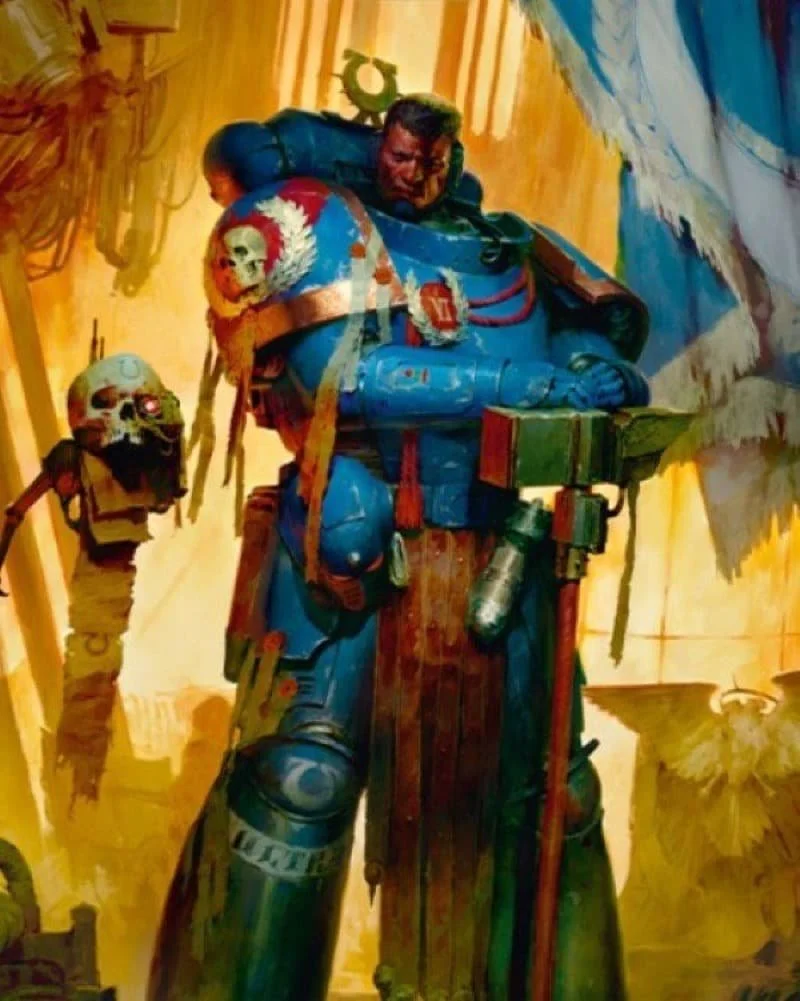
Image Source: Warhammer-Community.com
We should first make clear that we are not blindly taking down the Dawn of Fire series as there is a lot to like in it, so we want to spend some time emphasizing those traits before we explore what we think doesn’t work.
At the top of the list for positive elements are the characters. A few were characters fans would already know about due to the Dark Imperium trilogy, chronologically set after the Dawn of Fire novels, or due to their appearance in other material prior to this series. Yet other faces are brand new, created for the stories they play a major role, and they have a lot of interesting insights to offer based on their diverse views of the Imperium of Man. For instance, Mordian Astra Militarum characters play major narrative roles, rather than a group like the Cadians, who are next-to-absent as anything more than tertiary narrative mentions. Considering Mordians haven’t seen new tabletop models in three decades, the choice to go with and retain focus on this group is also admirable in shining a light on less-frontfacing military forces.
Another positive is that Dawn of Fire books have various genre themes and tropes which weave in and out of the books, with some novels presenting stronger as one genre and doing so well, and others being a mix of genres based on the storyline at play. We wouldn’t want to spoil the genres and stories told in the novels, but they run the gamut, from horror-infused tales of woe to epic stealth missions.
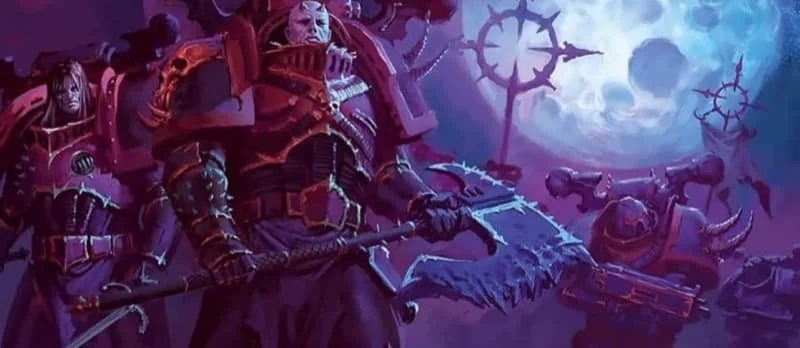
Image Source: Warhammer-Community.com
Lastly, each story does say something about the Imperium of Man, or the factions and people involved. Similar to the diversity of opinions within Imperial ranks, the inclusion of Chaos and Chaos-aligned factions as primary antagonists for most of the series allows for the Imperium’s faults to be pointed out by their agents, or to come to the fore in the fight against them. These faults also sometimes appear due to the natural unfolding of the narrative, such as gradually noting issues with the ongoing Indomitus Crusade the books help chronicle. This discussion of faults also helps introduce questions about the characters and the grimdark universe that have less obvious or simple answers, prompting interesting considerations in the universe.
Discordant Notes
In spite of those positives, the end product is one full of odd notes and an uneven flow. One minute, we have a major plot revelation, a significant breakthrough for the Imperium, even if it bodes poorly, and the next novel will completely drop that development to instead tell a story which only slightly intersects with what seems to be presented as the core narrative to Dawn of Fire. This is most apparent in Books 5 and 7 of the series, The Iron Kingdom and Sea of Souls, where events occur that are only, at the 11th hour, revealed to propel the central plot forward. While we do have some familiar faces in Iron Kingdom, Sea of Souls is a completely separate adventure that only briefly refers to a key character of previous storytelling.
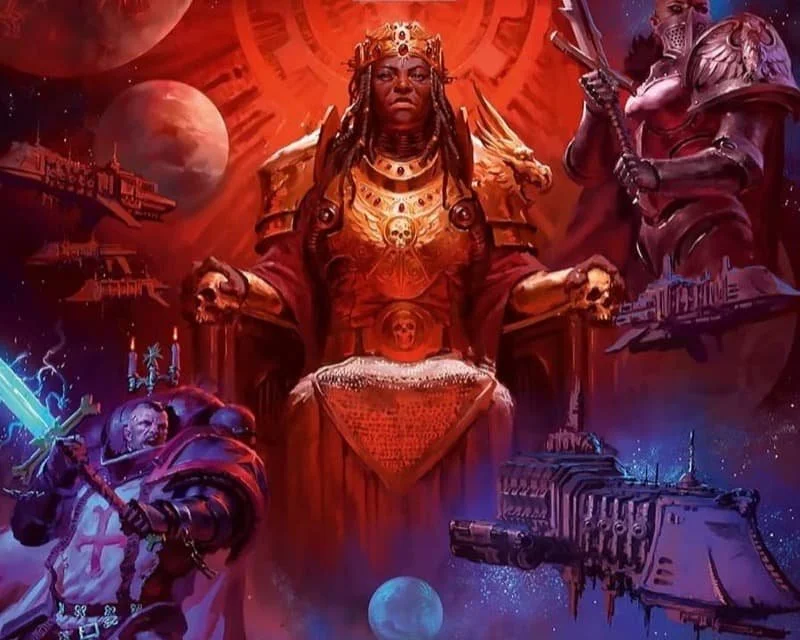
Image Source: Warhammer-Community.com
There is also the fact that elements of both of these books then go on to play little to no part in the final two books of the series, with a rogue Knight house, and a corrupted starship, valuable Chaos assets, being the biggest offenders. In most series, especially today, side-adventures or non-main-plot-relevant stories either inform the characters or messaging of the overarching story, or are later more significant than they first seemed, if not being both. To have both largely fall into the messaging category is a real shame, because it leaves their stories untold, and that’s another big flaw of Dawn of Fire.
While the original intention that plot hooks and dangling narrative strands would help weave the setting of the stories together while providing material for others, all it does is currently leave holes in the narrative that nothing seems to be filling. Warhammer storytelling can be extraordinarily slow at times, but this was a modern series of novels which could have balanced leaving some smaller details open for later exploration, while also closing larger important elements.
To be very blunt, the Hand of Abaddon as a threat means nothing to the central narrative of Warhammer 40,000 when that group isn’t mentioned in any material outside of this book series, and even then, has minimal development within said series. We get no clear information on the make-up of the group until the final few books, and their end goal doesn’t seem to have borne fruit in storytelling yet. Perhaps the Hand will be more significant in 11th Edition Warhammer 40,000, as the series telling the Hand’s story only just concluded at the end of 10th, but it still feels like plans dramatically shifted at some point into the series’ production.
The Final Arrangement
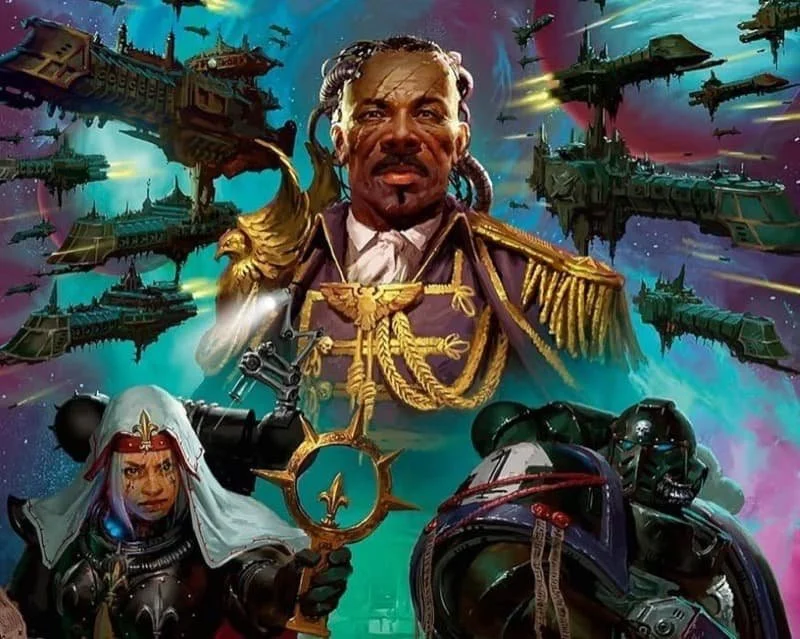
Image Source: Warhammer-Community.com
The creative voices behind the Dawn of Fire novels were a number of notable Warhammerauthors, with Guy Haley headlining the project with three of the nine books, joined by Gav Thorpe, Nick Kyme, Chris Wright, Marc Collins, and Andy Clarke. Each of these authors had, and still has, several Warhammer stories under their belt, often in addition to their own work outside of the franchise. These were not amateurs to the craft, or unschooled in the creation of interconnected storytelling.
However, in his interview on the goals behind Dawn of Fire in 2020, Guy Haley stated, with considerable frankness: “This is an original narrative largely written by the Black Library but guided by events and ideas being continuously created by the studio. Both these areas of Games Workshop have slightly different needs and both have to accommodate the other, so there’s all manner of things that need to be taken into account.”
It seems apparent to this writer that, at some point in the development of the series, Games Workshop made a choice to leave Dawn of Fire behind as a consideration in development of their storytelling across 9th and 10th Edition Warhammer 40,000. Perhaps it was because of low sales of the book series, perhaps because they became stretched too thin in an era where a lot of resources were needed for a game which has simply continued to grow and grow in recent years, especially after the popularity of Space Marine 2. But the result is that Dawn of Fire feels somewhat disconnected with the rest of the Warhammer universe it exists within. There was no flowering of Dawn of Fire adjacent novels, or short stories, as seems to have been in the intention. Instead, what few were written, have only been written relatively recently or by the same authors who wrote the main novels, and are largely set after the events in the end of the series as a whole. There are few to no mentions of the events in the series in even reference material of the wider franchise, and the impact of the events in the overarching story is very muted.
Conclusion
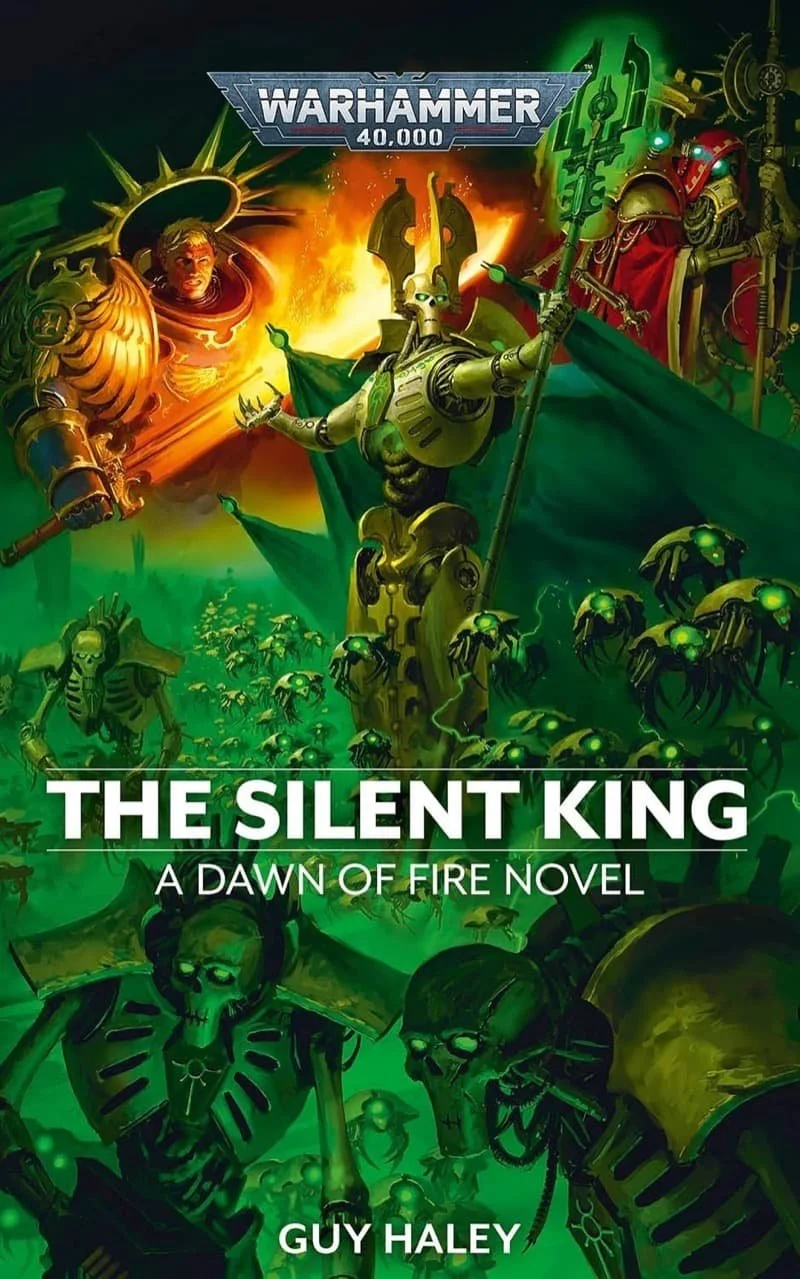
The reason this discussion of Dawn of Fire didn’t include the final novel of the series is because that novel appears to stand as the epitome of the change in direction the series underwent. Instead of more Chaos threats, instead of the Hand of Abaddon looming up for one last desperate swipe at the Imperium, the entire plot aggressively shifts focus to suddenly see the Necrons as the major antagonistic force of the final story. This is not without some telegraphing, the main Pariah Nexus which has been the focus on tabletop campaign storytelling and more was discussed as far back as the first book in the series. But if there were meant to be greater teases to Roboute Guilliman focusing his efforts on the Necrons, or the threat of the Necrons looming large, the series as a whole did not accomplish that.
However, Necrons are very big on the tabletop and popular with the fandom. Some recent new models have been particularly appreciated by the fans and playerbase, and it makes sense to have the Imperium start to face the Necrons as a more serious threat as their Tomb Worlds reawaken across the galaxy. Even so, this writer strongly questions the idea that Guilliman versus Necrons were somehow the epic endpoint originally envisioned for these stories and characters. While it makes sense narratively to happen eventually, why did it have to happen in the finale to Dawn of Fire, where Chaos and the Imperium’s own failings were at the forefront as antagonists for most of the series?
All and all, the Dawn of Fire series is not a bad read (or listen in this case). There are great characters, good substories within the overarching plot, and a lot of intriguing ideas and settings to explore. But that overarching plot is messy with its pacing, and it feels very safe to say that this series did not turn out to be “the chief narrative of Warhammer 40,000” it was originally sold as. That it isn’t a bad thing, but it seems like its role in the franchise changed over the years into something less prominent than was originally envisioned.
CultureSlate: Made by humans, for humans.
Please consider supporting our AI-free content via our Patreon page.
READ NEXT:
Source(s): Dawn of Fire series, Warhammer-Community.com [1], [2], [3]

Latest News
Featured



• All sizes are adult unisex
• Printed art on the front
• 100% cotton
• Pre-shrunk fabric
• Shoulder-to-shoulder taping
• Culture Slate Exclusive Design
See more products here