
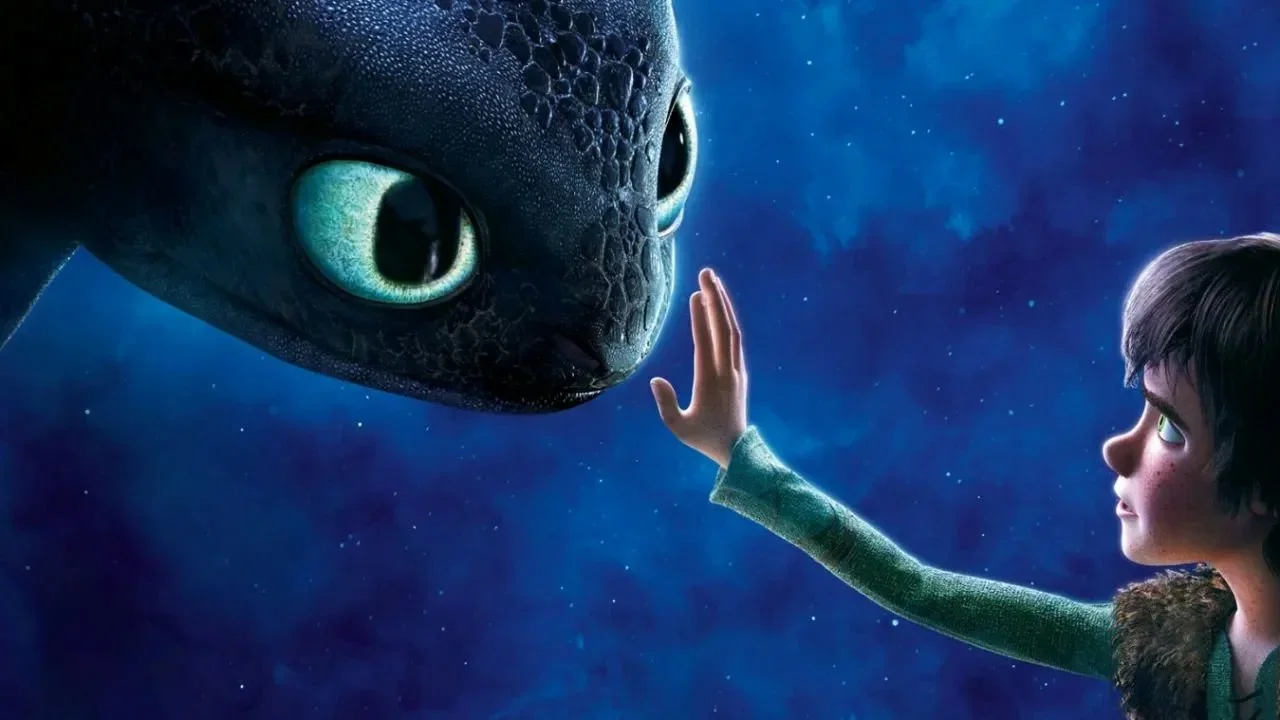
Hiccup reaching out to touch Toothless’ snout with a night time background
Image Source: CultureSlate
At the heart of Cressida Cowell’s YA Fantasy novels, How to Train Your Dragon is a beautiful coming-of-age story about what it means to grow up, including accepting yourself and others for who they are, learning to love, and how to say goodbye.
DreamWorks did an excellent job of bringing How to Train Your Dragon (HTTYD), written and directed by Dean DeBlois (Lilo & Stitch), to life on the big screen and of creating a family-oriented animated trilogy that respectfully honors the characters and themes from the original source material, beginning by placing the protagonists, particularly Hiccup (Jay Baruchel) and Toothless, on a linear timeline.
RELATED:

This means viewers watching, in what seems like real time, the teenage characters grow from the stage of idealistic, inexperienced adolescence into young adulthood, then into fully grown adults, reaching maturity and the kind of wisdom only gained through living life.
It’s noteworthy that animated films geared toward kids, aimed at teaching lessons, such as those mentioned above, walk a thin line between age-appropriate storytelling and the exploration of heavier themes, including complex relationship dynamics, marriage, disability, death, and grief.
As we look back on the animated trilogy—How to Train Your Dragon (2010), How to Train Your Dragon 2 (2014), and How to Train Your Dragon: The Hidden World (2019), we would be remiss not to point out the ahead-of-its-time achievement that DreamWorks accomplished with the beauty and wonder of these films. It’s noteworthy that this franchise has earned numerous awards and nominations as well.
Looking back at the trilogy as a whole, we will discuss the two main characters, narrative arc, a glimpse at the technical side of the production, and, of course, dragons.
Let’s start with the stars—Hiccup and Toothless.
Hiccup and Toothless
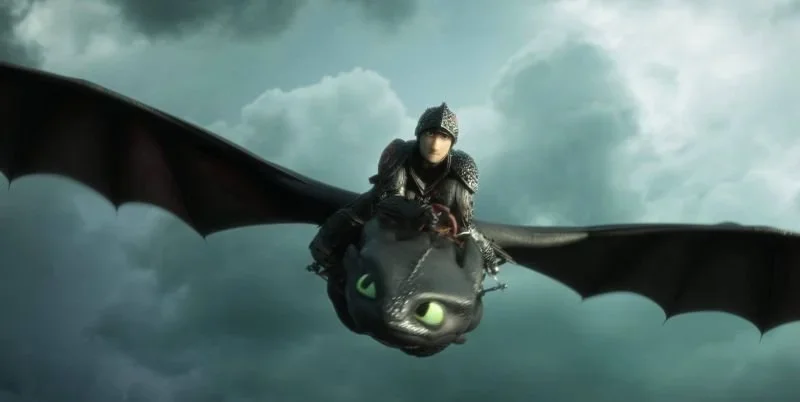
Hiccup and Toothless flying together in HTTYD 3
Image Source: DreamWorks
These two were made for each other and essentially serve as the heart of the trilogy. Hiccup doesn’t fit in. In fact, he says so himself frequently in the first film. He sees himself as a disappointment to his father, Stoick the Vast (Gerard Butler). His peers and even Stoick view him as weak. The first lesson Hiccup learns is that being different doesn’t mean weak or less than. Physically, he is tall and lanky compared to his Viking peers, and he doesn’t fight or really want to kill dragons. What he thinks he wants is to fit in. Part of the fun of this ride is watching him realize that the desire to fit in isn’t truly what he wants. What he really wants is acceptance. And that core theme hits the mark in all three films.
Hiccup is inventive, creative, and compassionate, but in an attempt to fit the mold, he shoots a dragon out of the sky. Fortunately, when he tracks and finds the dragon, his conscience won’t allow him to take its life. Which is good, because otherwise…it would have been a short movie.
One of my favorite scenes is a conversation between Hiccup and Astrid (America Ferrera) after the tribe finds out about Toothless. Stoick has already captured Toothless and is forcing him to help reveal the dragon’s den. Astrid asks Hiccup why he didn’t kill the dragon when any of their friends would have. Hiccup starts by saying he couldn’t. She presses him to explain, and in doing so, we see what she sees and he doesn’t—his strength. He shifts his wording ever so slightly from “I couldn’t” to “I wouldn’t,” and I love the foreshadowing in this moment of the leader he will become by the third installment. “I wouldn't kill him, because he looked as frightened as I was. I looked at him . . . and I saw myself.” There is strength in empathy.
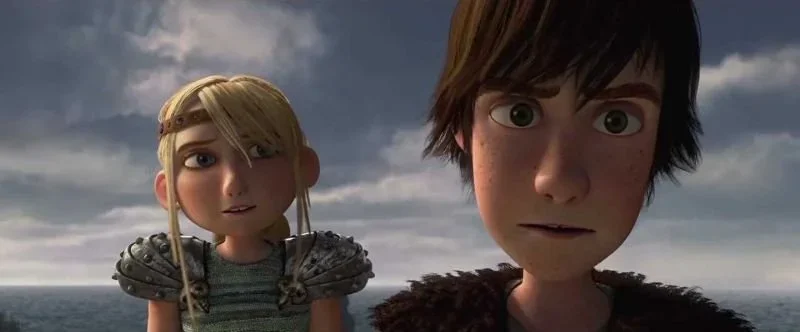
Astrid and Hiccup on the docks watching Stoick sail away with Toothless
Image Source: YouTube
And that brings us to the adorable apex predator and my personal favorite character—Toothless. Y’all… he draws! He, too, shows restraint, empathy, and gratitude. Hiccup puts himself in an arguably vulnerable position, one where, if Toothless were so inclined, he could have exacted his revenge. However, after making Hiccup work very hard to foster the inklings of trust that would, of course, evolve into a friendship of epic proportions, Toothless watches Hiccup draw in the dirt, excitedly takes the stick away, holds it in his mouth, and draws pictures in the dirt himself.
Aside from the above scene endearing this character to young children, a comparison quite literally is drawn between Toothless and Hiccup—highlighting common ground in intellect, creativity, and, again, empathy.
Another comparison between them is their mirroring of injuries, which, in my opinion, represents one of the most positive and normalized portrayals of disability and the use of prosthetics in mainstream media.
These mirrored injuries, treated with prosthetics, go one step further in the storytelling process. The choice to have Hiccup lose a leg and Toothless lose a tail fin shows the audience that their relationship is based on one of mutual reliance rather than any kind of ownership.
Creating Toothless’ prosthetic and teaching Toothless to fly with it opens the door to Hiccup’s discovery that dragons aren’t monsters but misunderstood, smart, and playful creatures worthy of respect.
Through that open door, Hiccup is able to respectfully approach and learn that Toothless’ overall demeanor is not the exception, but the rule.
Throughout their time together, the two develop a playful, loving bond and a successful partnership that extends to Astrid and the rest of their friend group as they each bond with their own dragons, who have similar personalities.
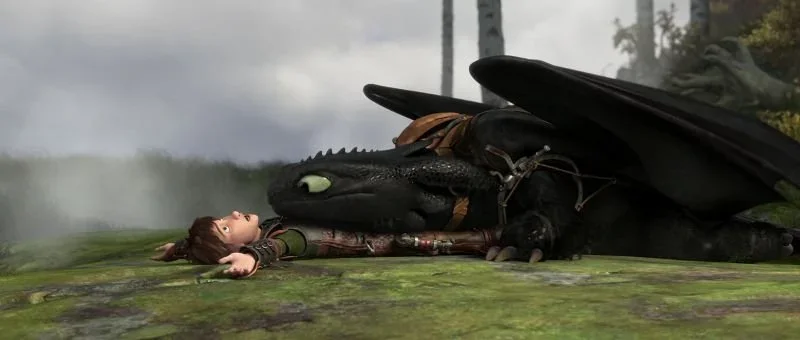
Toothless laying on top of Hiccup playfully
Image Source: Fandom
I think it is neat that with each installment, Hiccup’s engineering skills mature with him and their relationship, including the evolution of how their prosthetics work together for flight in HTTYD 2, to crafting a system that allows Toothless to fly on his own again in a full circle moment in The Hidden World storyline.
Heroic Narrative Arc
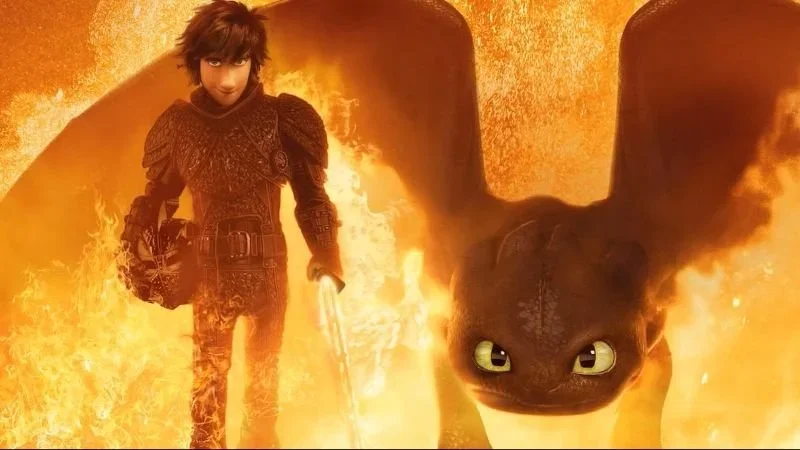
Hiccup and Toothless heroically walking out of flames
Image Source: CBR
The trilogy uses each film to focus on the power of growing up and all that it entails. The first film hones in on adolescence and the subversion of tradition, while the second explores the weight of responsibility and grief among young adults, and the final film addresses maturity, including the necessity of letting go while transitioning into leadership. From start to finish, these films demonstrate the hero’s journey for both Hiccup and Toothless.
The parallels in their leadership for Hiccup, destined to become Chief, and for Toothless, meant to ascend to Alpha status, illustrate all they overcome as they reach their fullest potential while quite literally making the world a better place.
In the first film, once the secret Hiccup’s been keeping about the dragons is out, we as viewers get to see Stoick, as a leader and a father, admit that adults make mistakes. The lesson, though, is that owning up to them and taking steps to make things right is what matters.
By contrast, in order for Stoick to have that opportunity, Hiccup must be brave and challenge the traditions that he grew up with. And of course, Hiccup’s sacrifice in the third act cements his and Toothless status as equals.
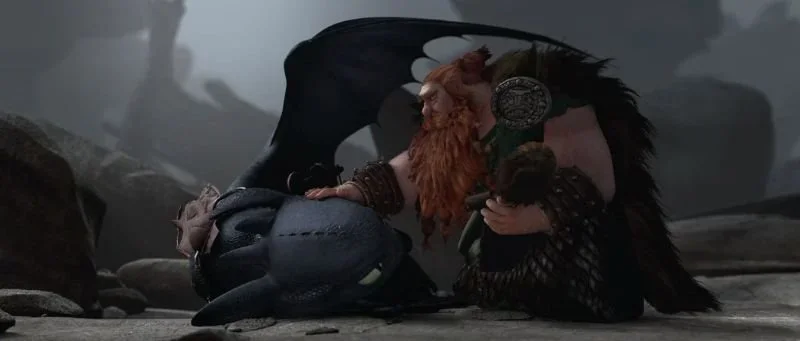
Stoick holding Hiccup in his arms while apologizing to Toothless
Image Source: Fandom
These concepts expand in the second film, set five years after the defeat of Red Death, the merciless Queen of the dragons. At the outset, Hiccup wants nothing to do with succeeding his father as Chief, yet much to Hiccup’s chagrin, Stoick begins preparing him for the role, or trying to anyway.
As if discovering a secret dragon sanctuary isn’t enough to handle, Hiccup must learn that his mother, Valka (Cate Blanchett)is alive and that she chose to stay away for a multitude of grown-up reasons. Of course, it turns out that Hiccup is a lot like his mother.
Through her discovery of dragonkind being gentle, loving creatures, she is able to further Hiccup’s education on dragons, including the discovery that Hiccup and Toothless are the same age.
The tension and emotional conflict during the reunion between Stoick and Valka are palpable. It would have been lovely to let them live out the rest of their days together. But life doesn’t always work out that way, and in a sense, Valka’s presence offers a nuanced way to help Hiccup navigate his grief after he loses his father. Leading his people in Stoick’s place leaves Hiccup no choice but to step into the shoes he always thought were too big for him to fill.
And likewise, after defeating the Bewilderbeast, the dragons need an Alpha to lead them. At this point, who better to fill that void than the only known Night Fury?
The final film, How to Train Your Dragon: The Hidden World, serves to resolve the trilogy in a full-circle, well-done way by showcasing the balance between independence and letting go.
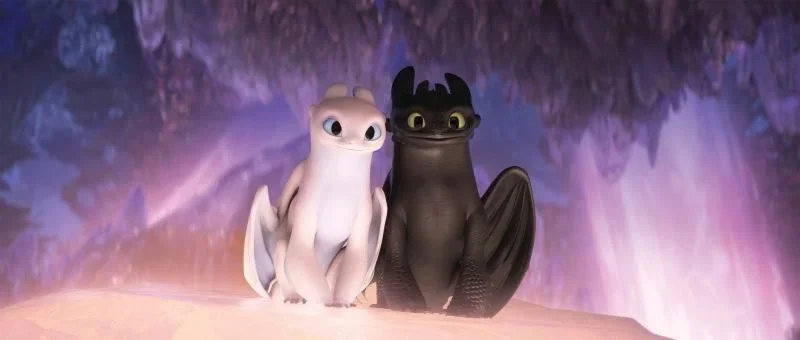
Toothless with the Light Fury
Image Source: Fandom
In Berk’s evolution as a society and cooperation with dragons, both the people and the dragons have become targets. We meet the beautiful Light Fury who is meant to be a representation of living in the wild to Toothless who is arguably lonely for a mate, as Hiccup and Astrid have each other.
When Hiccup realizes that Berk is no longer safe, he makes the difficult adult decision to find “The Hidden World,” the ancestral home of the dragons, so they can return there and be out of harm’s way.
Stoick appears in a flashback in which a very young Hiccup asks him if he will get them a new mom, and Stoick tells him no. He says, “With love comes loss, son. It’s part of the deal.” The film offers this with impeccable timing, as Hiccup is now grieving Stoick’s death while also grappling with saying goodbye to his best friend.
Technical Side of Production
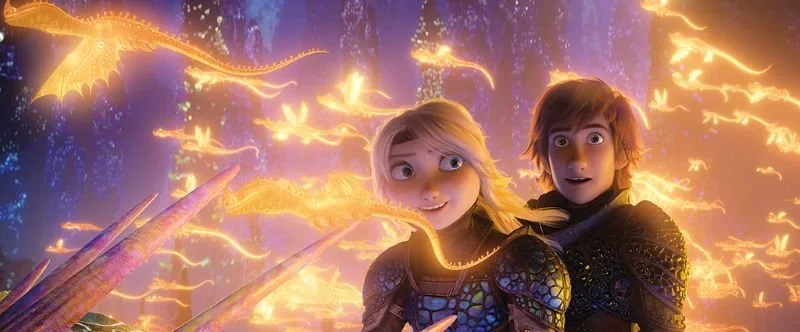
Hiccup and Astrid discovering the Hidden World with MoonRay renderer
Image Source: VFXV
The way that DreamWorks utilized concepts such as the animation itself, the physics of flight for the dragons, the unique use of light to convey the story, and, of course, the musical score further positions the setting and ambiance as characters in the story.
Cinematographer Roger Deakins (1917, Rango, Blade Runner 2049) served as a visual consultant for the entire trilogy. He taught the animators to treat the digital camera like a real one. Instead of impossible zoom-out shots, the films use more “realistic” lighting, often portraying the characters as silhouettes against a sunset or illuminated by campfire light. A beautiful example is Stoick’s funeral pyre in How to Train Your Dragon 2. This, coupled with Gobber’s (Craig Ferguson) eulogy, is tear-provoking to say the least.
Music, like lighting, plays into how audiences perceive a story. John Powell (Kung Fu Panda, Wicked) wrote the score for all three of the HTTYD films. And he did it so beautifully that the music emphasizes the emotional beats throughout.
Legacy
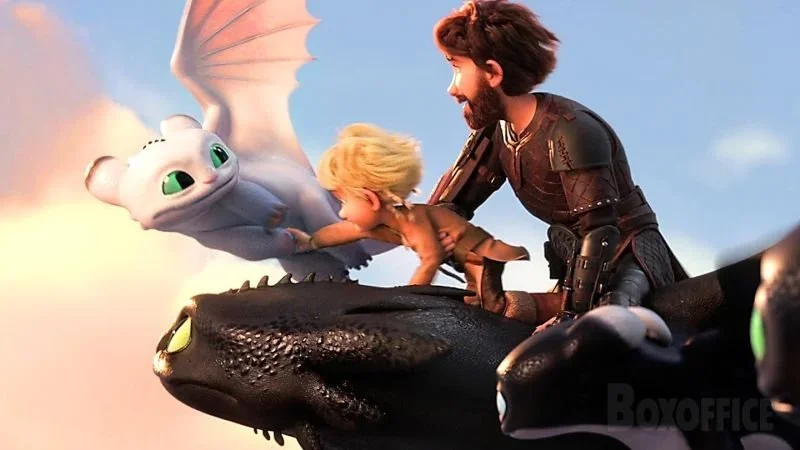
Hiccup flying with one of his kids on Toothless’ back alongside the Light Fury and the Night Lights
Image Source: YouTube
At its heart, the HTTYD trilogy is a story about the end of childhood. Audiences meet Hiccup as a boy trying to change the world so he can fit in and throughout the course of the three films watch him grow into a man seeking change to keep the ones he loves safe.
The epilogue beautifully captures that growth and full circle moment as Hiccup tells his children, “There were dragons when I was a boy,” before giving the audience a brief glimpse of Hiccup and Astrid’s children and of Toothless and the Light Fury’s young ones (Night Lights). Stormfly drops in, and she and Toothless give the families a ride while the Light Fury flies with the Night Lights. The creators could have let them reunite permanently, but instead left it as a memorable connection, symbolizing the beauty of growing up, accepting yourself and others for who they are, learning to love, and knowing how and when to say goodbye.
The animated trilogy is now streaming on Netflix, so it’s time to pop the popcorn and settle in for a great time! Don’t forget the box of tissues. You’ll need it, but in the best possible way.
CultureSlate: Made by humans, for humans.
Please consider supporting our AI-free content via our Patreon page.
READ NEXT:
Sources: Fandom(1), (2), (3), (4), (5), YouTube (1), (2), IMDb (1), (2), (3), (4), (5) DreamWorks, VFXV, Animation World Network, MoonRay, CBR, Craft Recordings
Latest News
Featured



• All sizes are adult unisex
• Printed art on the front
• 100% cotton
• Pre-shrunk fabric
• Shoulder-to-shoulder taping
• Culture Slate Exclusive Design
See more products here