
'The Adventures Of Elliot: The Millennium Tales' Prologue Demo Impressions
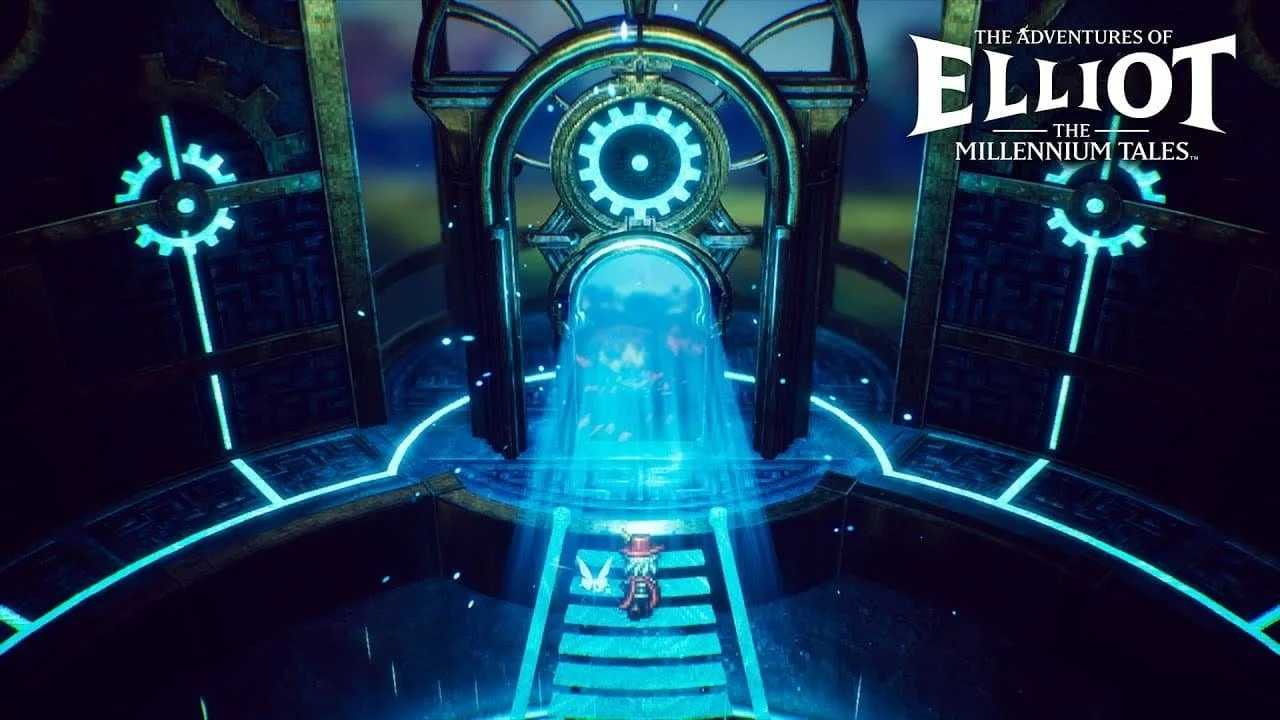
Image Source: Wccftech
Square Enix’s latest game, The Adventures of Elliott: The Millennium Tales can best be described as if The Legend of Zelda and Chrono Triggerhad a baby and hired a talented cast of voice actors to babysit. I’ll admit I was a little trigger-happy with the next button, and I missed a lot of the performance. Square Enix recently released the game’s entire prologue as a demo a month before its release, which gave me between two and three hours with the game. I was playing on the Steam Deck, and other than the battery draining faster than with older titles, I didn’t encounter any problems with running the game.
The demo starts off in the Kingdom of Huther in the Age of Safekeeping. It’s called this because Princess Heuria is constantly maintaining a spell that keeps monsters out of the castle and surrounding town. We play as Elliott, an adventurer who donates some of his earnings to a local orphanage. When the game begins, Elliott is searching for a man’s comb when he receives a summons from the King. Elliott is recruited to check out the Northern Ruins much to the dismay of the King’s minister who wants to claim power for himself. Princess Heuria volunteers to go with Elliott but since she cannot leave the castle without putting the kingdom at risk, she gives Elliott a pair of earrings that allows them to communicate across distances. The Princess can also heal him from afar in this age. With the Princess set up as his mission control, Elliott is ready to begin his adventure.
RELATED:
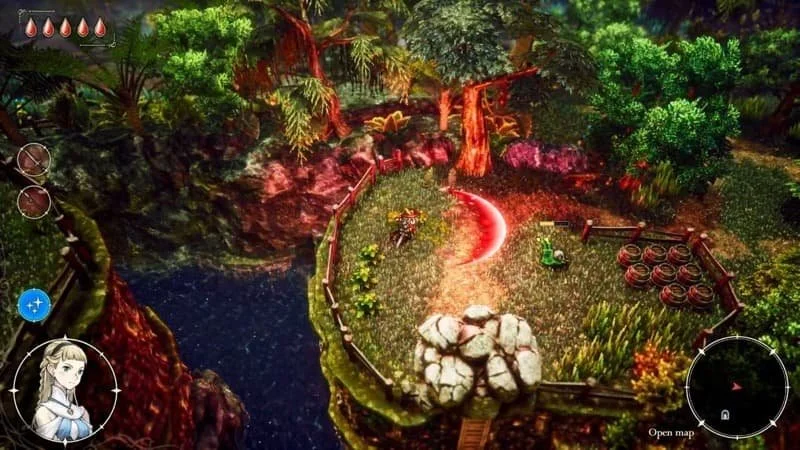
Image Source: RPG Site
From the very start of the game, Elliott has access to a sword and shield. The shield comes with its own button, while the sword must be mapped to one of the two weapon buttons. During the demo, I gained a boomerang, spear, bow and arrows, and bombs. The shield will break if it takes enough damage, but unlike Zelda, it will regenerate on its own. Weapons can be switched out through a quick press of a shoulder button that brings up a dial. Items can be used the same way with the opposite shoulder button. Action is paused while these menus are up, but it is a much more streamlined way to progress than opening the menu, scrolling to the item, and assigning the button.
Combat was simple but effective, and the demo gave a wide variety of options to experiment with. I found I used the sword and boomerang for the most part, but the bow came in clutch with bosses. Most mooks can be taken out with a simple sword swipe or a couple of tosses of the boomerang. Some needed to be blocked with a shield to stun before attacking. The most clever enemy design outside of bosses is beasts that look like roosters. The catch is these enemies recur, but with different weapons. Some had spears, some had bows, and some had boomerangs. These enemies have a twofold purpose. Learning how to dodge these attacks also gave me a better understanding of how to use the weapons more effectively.
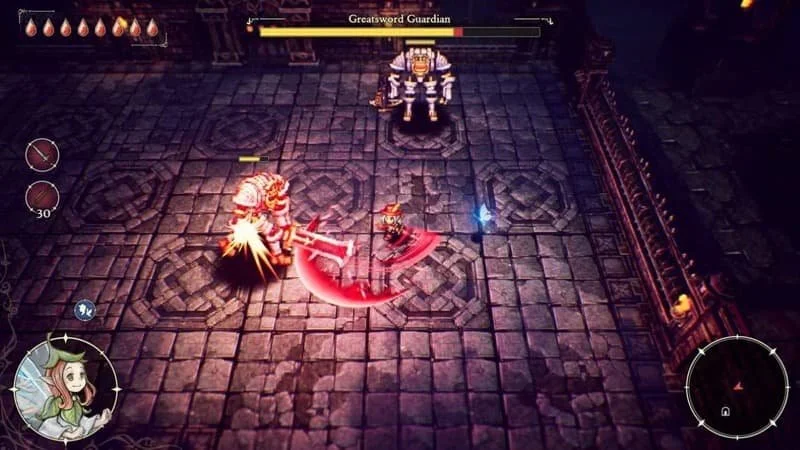
Image Source: Square Enix
Boss battles were engaging but also simple. The few bosses I encountered had the same pattern. Attack, attack, attack, recover. I did have some issue with a late-stage boss, to the point that I had to go back to present for Heuria’s healing and pick up a few advanced potions before warping back. Everytime Elliott encounters a save post, it can be used as a warp point, and these work across different ages.
Where the combat differs from earlier titles is that weapons can be upgraded through a magicite system. Certain mooks and all bosses drop magicite. Elliott then takes the magicite to a shop vendor and gets upgrades to weapons, like longer change times or higher attack power. The upgrades are randomized, so players can’t just choose to overpower a singular weapon. Even in the demo, I found plenty of magicite to make my attacks stronger and faster.
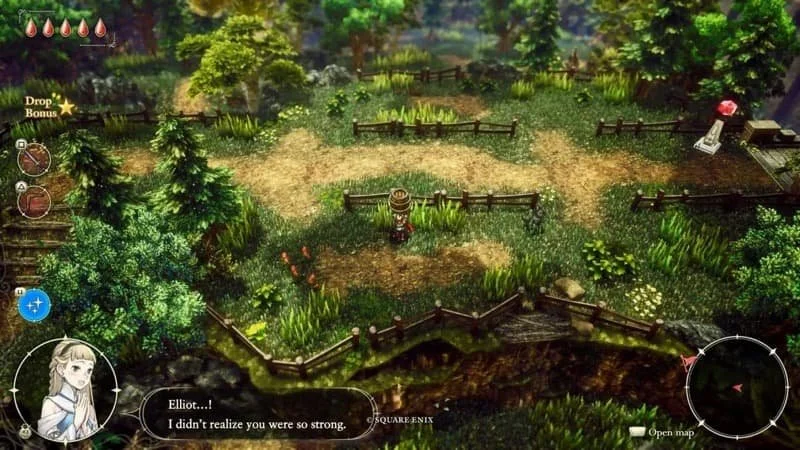
Image Source: Gamer Matters
Where this game truly shines is in exploration. The game is intuitive right off the bat. From the moment I saw cracks of light peeking through doorways, I knew I needed bombs to get in. Similarly, I found large pegs blocking a path and knew immediately I needed a hammer. The world of Phiabeldephia (yes, that’s the real name of the continent the game is set on) was beautiful. The game uses an HD-2D format that is lush with greenery in the present age and still just as beautiful in what is meant to be a sort of Dark Ages in the past. The features extend in the background, and the HD graphics make the cave walls feel tall during explorations. Sometimes, with the 3D cliffs, Elliott is hidden from view, but otherwise, there were no issues.
During my time with the demo, I came across several caves that usually had at least one treasure chest. Some caves were even shortcuts to other parts of the continent. In addition to these caves, there were also shrines, which immediately reminded me of Breath of the Wild. The shrines functioned as mini dungeons with either puzzles to solve or enemies to defeat. The rewards in the demo were exclusively shards of life. If you collect four shards of life, you get a new health bar. Since enemies offer no experience, collecting these and upgrading your weapons are the only ways to level up, making the fast travel much more essential.
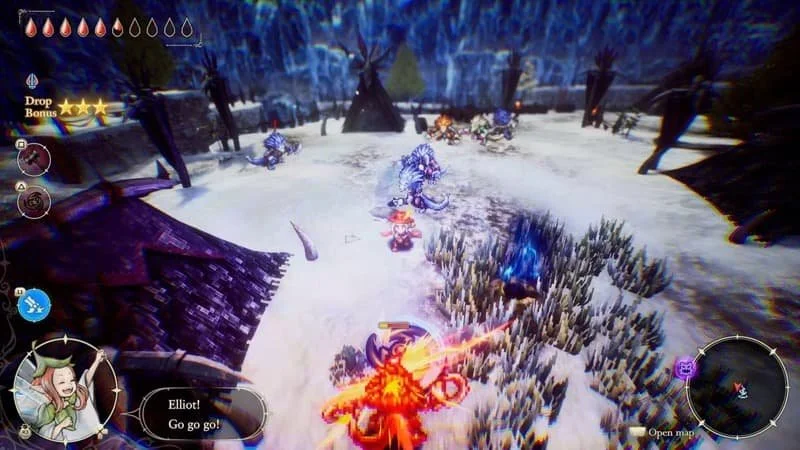
Image Source: Square Enix Store
Towards the end of the demo, I finally got to experience the time travel aspect of the game. Elliott chases the villain through the Doorway of Time and ends up in the Age of Reconstruction. Early in the demo, I found different manuscripts detailing each age, which provided some helpful background. The Age of Reconstruction is like our world’s Dark Ages. Beast tribes attack in large numbers, while people flee to the castle town, which is in ruins, to stay safe. Much of this landscape is covered in snow. The only real difference in gameplay here is Heuria can no longer heal Elliott, but she can still communicate.
The music of the game deserves a mention here. Aside from Elliott’s mission control partner, he is often alone on this quest, but the music takes on a character of its own. From gentle but still powerful instrumentals sweeping across the wide continent to a more fast-paced, frantic beat during boss battles, the music captures the emotional ups and downs of Elliott’s journey.
The final thing to touch on is side quests. Half of the weapons I received were through side quests. These side quests consisted of defeating enemies, collecting resources or finding a certain item. The game also offered the helpful option of marking the location of the side quests on the map. Opening the pause menu and clicking on quests shows you what quests are complete and if there are any quests you missed, a silhouette appears, often with the location of said character. This lets players enjoy and explore the game naturally without having to run to the internet for a guide.
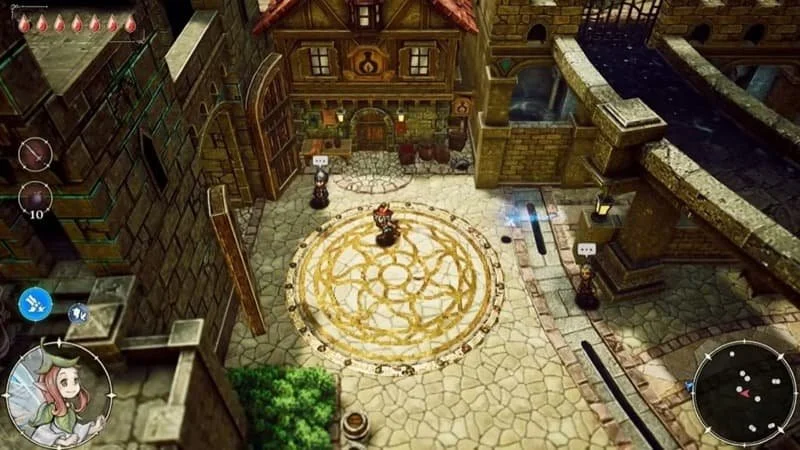
Image Source: Rectify Gaming
I should also mention that the Princess constantly chats with Elliott during this demo. Some of these are true gems, and the characters have an engaging chemistry that’s not quite romantic. Some lines however, are repeated whenever Elliott finds money or a shard of life, and these become tiresome. Supposedly, there’s a setting that reduces the frequency of these, but I was never bothered enough to search it out. It is my understanding that the character Faie will replace the Princess as mission control, but the demo ends before that character is properly introduced.
Overall, Millennium Tales brings some of the best things about old school games to the modern era with quality of life features and voice acting. However, some of the gameplay, particularly with the overworld mooks, is repetitive. The fast travel system alleviates a lot of this, and the settings can tone down but not completely eliminate Elliott’s mission control. The gameplay is very intuitive and engaging, even with the repetition, and the feeling of discovering a shrine or cave around the next corner is a simple joy that most modern games abandoned years ago. The time travel aspect is intriguing, but I only had two ages to explore in the demo. The demo covers the entire game’s prologue, and progress will transfer to the main game, letting players pick up where they left off. Millennium Tales has the potential to be game of the year, but that depends on where the rest of the story takes us. The game releases across all platforms on June 18, 2026.
Rating: 9/10
CultureSlate: Made by humans, for humans.
Please consider supporting our AI-free content via our Patreon page.
READ NEXT:
Source(s): Square Enix, Ltd.
Latest News


Featured


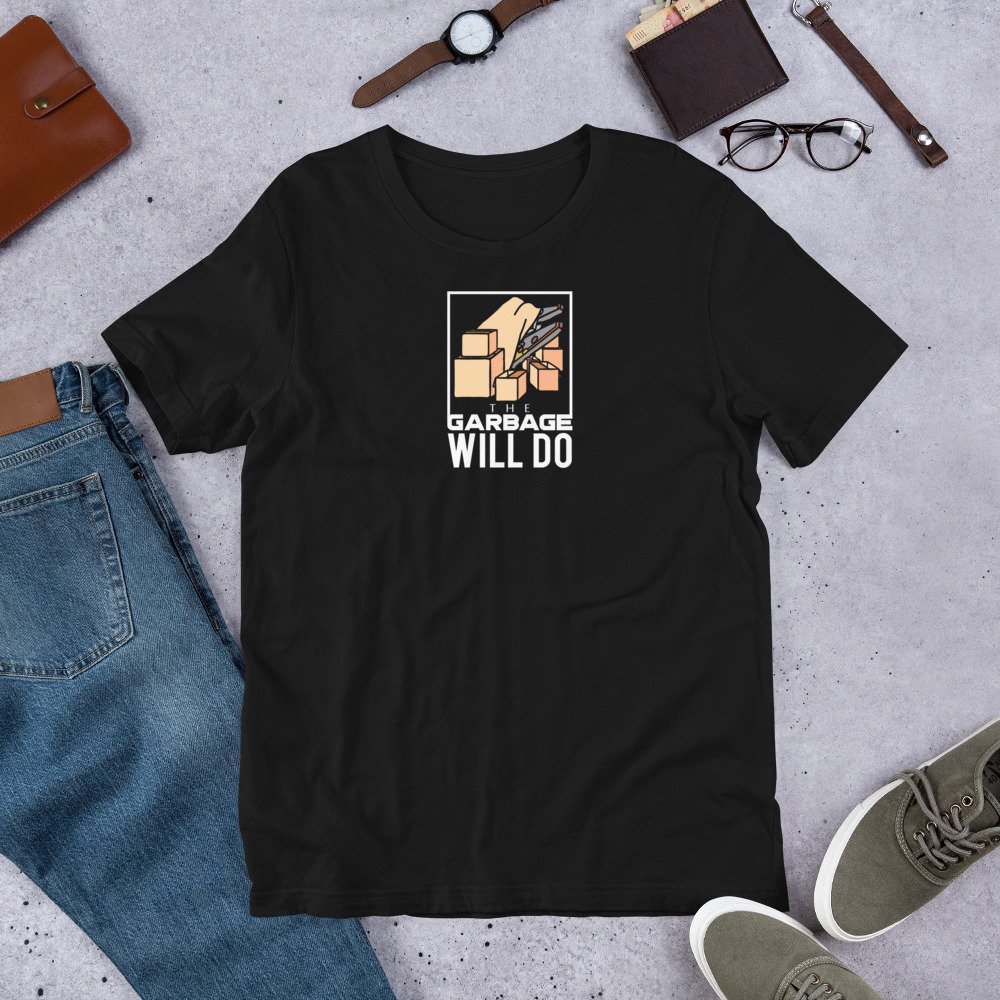

• All sizes are adult unisex
• Printed art on the front
• 100% cotton
• Pre-shrunk fabric
• Shoulder-to-shoulder taping
• Culture Slate Exclusive Design
See more products here