
Image Source: CultureSlate
CultureSlate had the chance to talk to several amazing artists and storytellers who have worked on Broadway, film, music, and TV in various different ways. All of them shared their stories, how they came into their roles, and what their jobs entail in the industry.
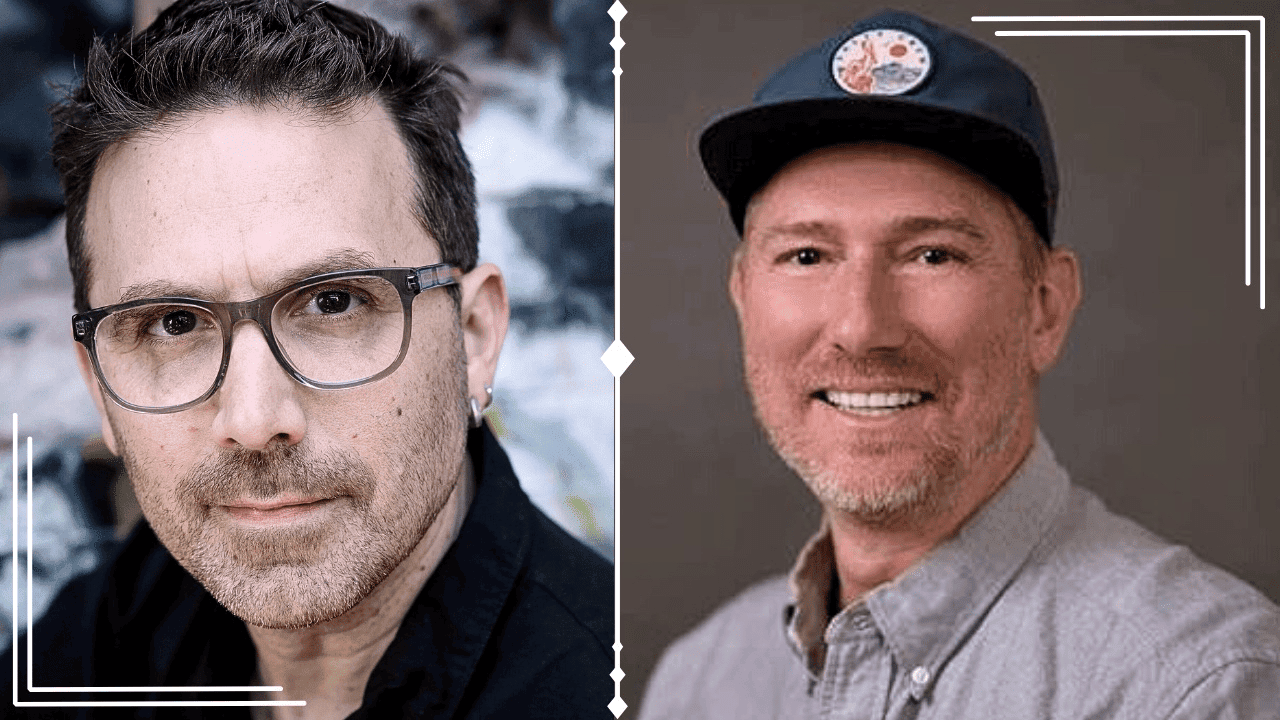
This interview is with David Meyer and Jason Ardizzone-West who both work in production and scene design. David has been a production designer and art director on projects from music videos (Miley Cyrus: Something Beautiful) to big-budget films (Joker: Folie à Deux) and theater productions. Jason has done production design on big and small projects, including Redwood and Jesus Christ Superstar Live.
CultureSlate: You’ve had a vast career of projects When you work on very different projects, how do you approach them? What is your process?
David: My background is in architecture and theater. I made the choice back in 2007 to leave Rochester, New York, quit architecture as a full-time job, and go to NYU for grad school for design for stage and film, after meeting the designer (Stuart Craig) for Harry Potter. He gave a presentation, and it was all about designing the world of Harry Potter. I had never known that that job existed. I assumed that they went and found a castle and filmed a great hall or a cathedral, and brought in the candelabras and the tables and the benches. But no, that was literally a fully built soundstage set, 30 feet tall, soup to nuts, from scratch, designed by and executed by amazing makers and doers and creators, all for the magic and the control with a blue screen ceiling, so they could animate the magical moving ceiling and also be able to light through it. All of those techniques and tricks that's theater, that's architecture, that's all the things I already do. So I asked him how did you become a designer? And he's said “Oh, just you got to go find the industry. Go work for my buddy Stephen Graham in New York, or come with me to London. If you're already an architect and know how to draw, and you do theater, you have the skills.”
RELATED:

Image Source: DavidMeyerDesign.com
The storytelling is what we all get and how we all begin. I tell all of the directors and writers, the students I teach, the first rule is story. The second rule is story. And the third rule is story, because I'll read the story before I ever meet you, and that story has to grip me in some way for me to then want to give you my artistic skills or my vision or my process. I've worked on movies from Birdman to The Wolf of Wall Street to Top Gun Maverickto the Miley Cyrus music video to Smash season one to Westworld to Vice where we had an entire music video interlude in the middle that was cut on the cutting room floor. To all these projects story is the thread of the through line.
The next thing is people like the people you work with, the teams you form, the creators, the artists give you the tools and the assets to uncover and mine and read between the lines and find the subtext. And through all of that process that you do with your collaborators, you'll find the tone, the theme, the vision. Actors bring ideas. Directors bring ideas. Cinematographers bring ideas. Costume Designers bring ideas. Everyone is striving to present the visual story, and that's what I make. So whether it's Joker, where we have musical fantasy interludes that have to thread themselves into the narrative in a weird way through sound and mood and tone and light, or Miley Cyrus, which is an entire visual album. My job on that is to reinforce her vision, but bring my own spatial ideas and try to enhance the scope and scale of the lyrics, because the lyrics become the story and music video musicals are similar.
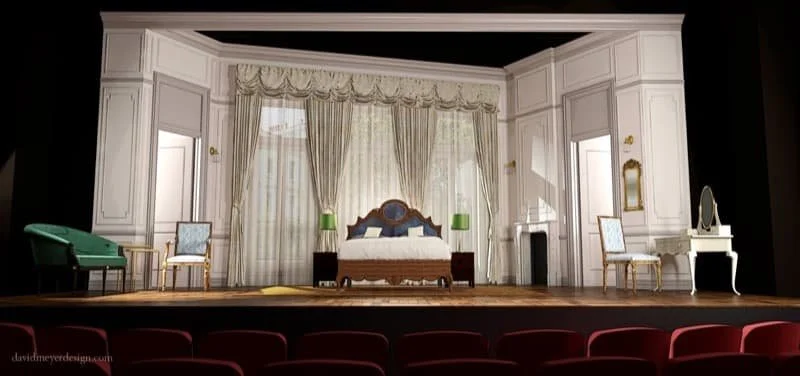
Image Source: Geffen Playhouse
I also got to work as a set designer on the Tragedy of Macbeth, which is black and white. Now you're adding, how do you access language? That language is also tricky, because it's Shakespeare, and it becomes about extreme close-ups and seeing lips. That's just like a music video. You want to see the lips move to hear the song, seeing the song, listening to the lyrics. You have to dance between the scope and scale of the biggest thing, to condense it on a frame or in a lens to the face, or the key insert shot of a prop, because that's important for storytelling, and all of those are choices propel the audience's understanding of the story that we're all telling.
CultureSlate: Did you find it difficult to go from architecture to scene design?
David: I was a theater kid-ish, I did all the musicals and drama club as well as sports, and was really good in math. At Syracuse, where I went to architecture school, I had the interest in going down to the drama department. They took one look at me and introduced me to the scene design and scene shop. Four short years later, I had a full minor in theater, and I was designing Syracuse stage’s professional production of Hedwig and the Angry Inch, which transformed my entire understanding of theater. I took all of that energy into three years in Rochester, and then quickly was doing every community theater show I could. Sleepless nights, building my own sets, and I quickly realized that architecture wasn't enough, I liked to be hands on, telling the story, presenting it to audiences, having actors on stage and figuring it out. And after meeting Stuart Craig and learning about Harry Potter, I realized I wanted both of those things.
My very first job after graduation was an Art PA for Men in Black Three working for the guy that Stuart Craig told me to work for, Stephen Graham. It changed my life because it was 45-50 art department members from L.A. to New York, and all of those people have given me jobs since.
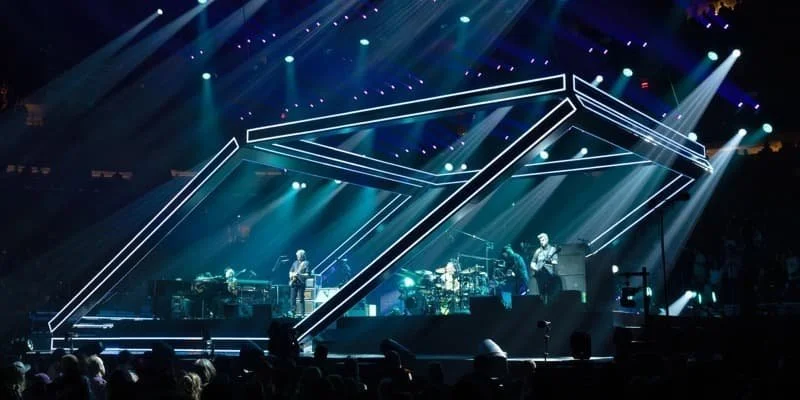
Image Source: jaw.studio.ny
CultureSlate: When you get assigned a story, what is your starting process for scene design?
Jason: Every project is different, so it sort of depends on what it is. I always start with the text, because usually there is a text, an existing script, or in the case of concert design, a set list of music. I try to analyze, not just myself, but in conversation with the director, usually, at first, what's the story? Not just what's the story on paper, but why are we doing it now? Why is it important to tell the story now, in this place, in this particular room, in this particular city. The starting place is almost always a deep analysis of the story.
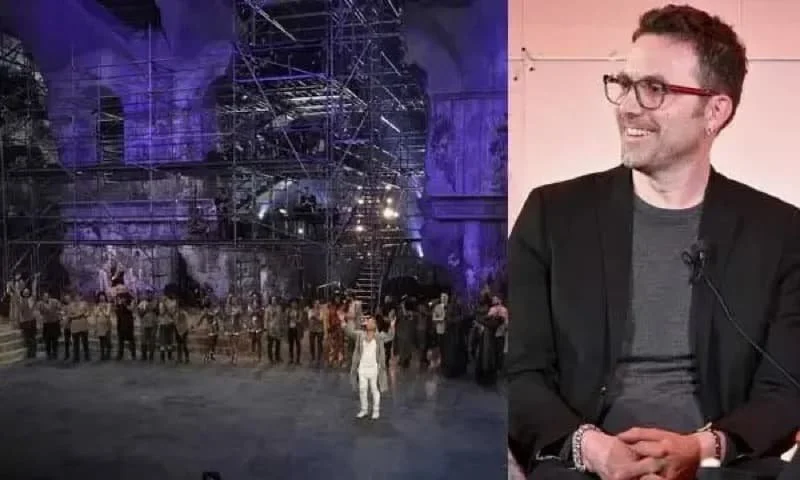
Image Source: Gold Derby
CultureSlate: Do you have a favorite story that you have worked on?
Jason: It's like picking your favorite child, but yes. I try to only do projects that I find really exciting and interesting, so truly, I love all of the things I get to do for the most part. I would say some highlights are the weird intersectionally hybrid projects that don't fit neatly into the category of theater or film, concert or TV. For example, Jesus Christ Superstar Live from 2018, which was broadcast on NBC, was definitely a highlight, in terms of it being a really interesting combination of architecture, art installation, musical theater design, live concert design, and, of course, TV. Getting to think about camera and point of view, it's unusual to get to think about all those things together in one project. And it's one of my favorite Andrew Lloyd Webber concept albums. I've been able to do it twice now which is really cool.
And then Lady Gaga, The Mayhem Tour, which I co-designed with ES Devlin, was another highlight for similar reasons. It was a very robustly spectacular concert that also had a pretty robust narrative storytelling that leaned heavily into musical theater and dramaturgical kind of backstory.
CultureSlate: Do you have a project that was a particularly hard challenge?
Jason: All of the large-scale concert design projects that I do are, by nature, a very hard challenge because they have to [have a physical element]. Usually, if I'm involved, it's because the artist wants to have not just lighting and video, but some kind of interesting physical structure, some production design, set design, as part of the concert. And then I have to figure out how to deliver a kind of sculpturally robust physical structure in a way that can break apart in just a few hours and fit into a very specific number of trucks and then move to the next thing and come out in a specific time, go together again and then repeat that over and over and over again. Overlay is a really, really interesting logistical engineering challenge on a really interesting artistic process. And I really like that intersection of trying to solve the puzzle of touring logistics while also maintaining and pushing the boundaries of physical sculptural design.
Be on the lookout for more interviews in this artist, film, and musician series!
CultureSlate: Made by humans, for humans.
Please consider supporting our AI-free content via our Patreon page.
READ NEXT:

Latest News



Featured



• All sizes are adult unisex
• Printed art on the front
• 100% cotton
• Pre-shrunk fabric
• Shoulder-to-shoulder taping
• Culture Slate Exclusive Design
See more products here