
Planes, Light Trains, And Automobiles: How Joseph Kosinski Became The King Of Blockbusters
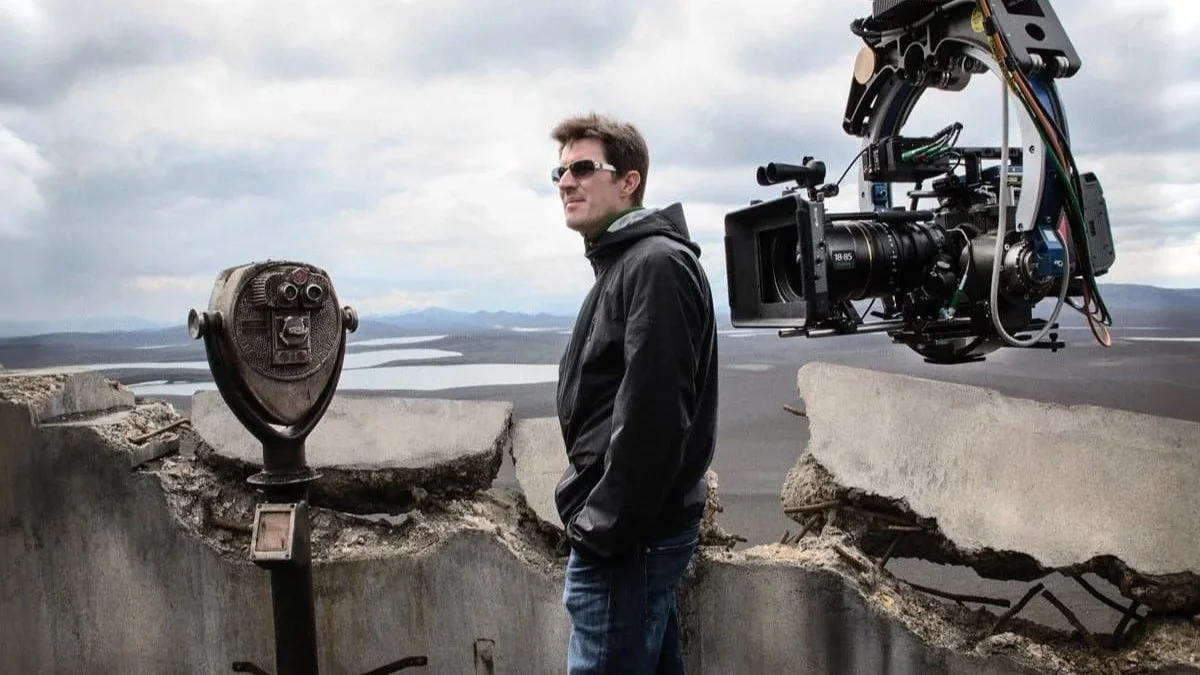
Image Source: ICG Magazine
When there are blockbusters, there are also blockbuster directors. A tale as old as time, many of the movies you see in the summer are directed by filmmakers who had unlikely origins. Did you think the director behind recent Spider-Man films got his start making comedy sketches on the pre-YouTube internet? Did you think the director of Edge of Tomorrow and the director of Edge of Tomorrow worked together on Swingers? Did you know the director behind Cloverfield and The Batman made a romantic comedy? Now you do! But if I told you one of the biggest blockbuster directors in Hollywood went to college to study architecture? And what if that same director gained his directing experience from commercials? Enter Joseph Kosinski!
For the last fifteen years, Joseph Kosinski has made a name for himself in Hollywood. While casual audiences may only know him as ‘The guy that directed…”, Kosinski has become one of the most reliable blockbuster film directors in the game. While his films have varied in their critical and financial success, it’s not unfair to say that Kosinski has put out an insanely consistent body of work. But how did we get here? How did a former teacher who started in commercials become Hollywood’s new king of the blockbusters?
Let’s find out!
RELATED:
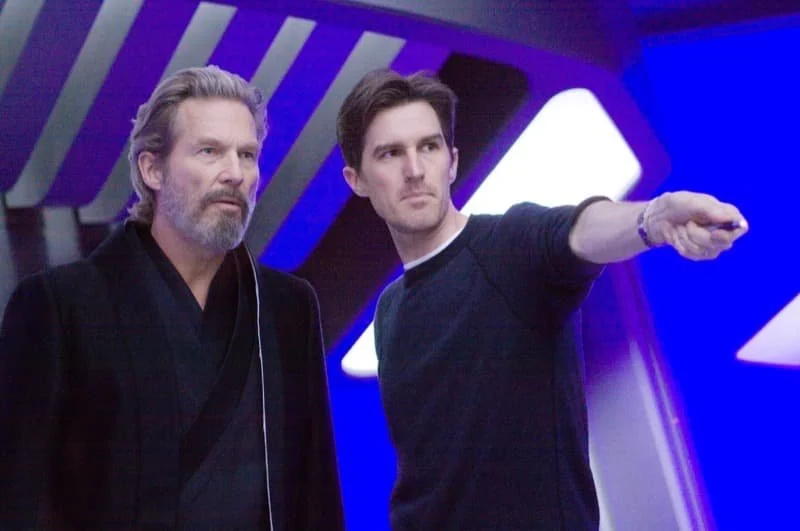
Image Source: IMDb
Since 2010, Kosinski has directed six feature films: Tron: Legacy (2010), Oblivion (2013), Only the Brave (2017), Top Gun: Maverick (2022), Spiderhead (2022), and F1 (2025). To more, ahem, uppity sections of film fandom circles on social media, Joseph Kosinski is nothing more than a studio journeyman director with nothing to offer artistically. I’m always on record that being a journeyman director is not a bad thing. While film bros treat the term “journeyman” like a slur for directors they don’t like, people like myself essentially act as cheerleaders. Directors such as Jon Favreau, James Mangold, Gore Verbinski, Jon Watts, and Gareth Edwards are essential to the Hollywood ecosystem. While yes, having auteurs such as Christopher Nolan, Denis Villeneuve, Ryan Coogler, and Greta Gerwig in the blockbuster space is an absolute good, we need directors who specialize in pure blockbuster entertainment. Joseph Kosinski is one of those directors.
While studio directors such as J.J. Abrams and James Gunn look to directors such as Steven Spielberg for influence, Kosinski channels the same rebellious energy that was once radiated by John McTiernan (Die Hard, Predator, The Hunt For Red October) and the late Tony Scott (Top Gun, True Romance, Crimson Tide). Going back to Tron: Legacy, Kosinski provides his movies with a sense of scale, speed, and polish that sets him apart from other directors at his level. His experience in commercials and his architectural education also help make him well-equipped to create some of the most kinetic, sleek, and (for lack of a better term) badass blockbuster films around.
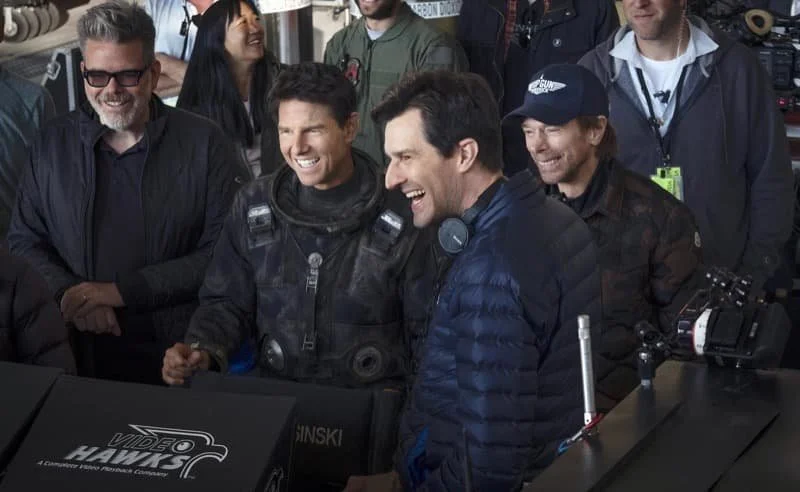
Image Source: Deadline
The basic set-up for a Joseph Kosinski film is as follows: A man who is either down on his luck or fallen into routine is plucked out of their comfort zone to face a challenge that is bigger than anyone can imagine.
This, of course, is a massive oversimplification, but you see my point. While Kosinski only has a writing on one of his directorial efforts (F1) and the only other one he has is for a film he didn’t even direct (Twisters), you can find thematic throughlines in his work. Joseph Kosinski’s films often feature characters trying to accomplish things far beyond their own abilities. Storylines such as Sam Flynn needing to help the Grid from being taken over by CLU, Jack Harper figuring out his purpose on planet Earth, Maverick teaching a group of young pilots to accomplish a life-threatening mission, or Sonny Hayes and Joshua Pearce needing to work together to win a race all paint the picture that Joseph Kosinski’s films are primarily about perseverance, self-discovery, and loyalty. Kosinski’s films embody what I can best describe as the American Spirit. In a perfect world, Americans would be defined primarily by our sense of determination and courage. Kosinski’s films envision worlds and futures where our differences in age, gender, and racial identity are seen as strengths rather than weaknesses. That might sound like a lot when talking about movies by the guy who made the Taco Bell Nacho Fries commercial with Josh Duhamel.
Still, in my honest opinion, it’s hard not to see that rallying cry for courage and loyalty in Kosinski’s work. His films may not break new ground plot-wise, but that’s not a black mark on anyone’s work, let alone his. His steady hand helming films with scripts with a tried-and-true formula only makes his movies more compelling. While far from the first of its kind, you can trace back all the frequently used benchmarks of the modern legacy sequel to Tron: Legacy. An older version of the character we followed in the first movie, now more jaded and needing the fighting spirit of the next generation (either an offspring or a protegé) to bring them back into the current conflict, while also needing to pass the torch in the process. Films such as Creed, Star Wars: The Force Awakens, Halloween 2018, Ghostbusters: Afterlife, and Scream 5 all owe some debt to Tron: Legacy. Kosinski and his team of Oscar-nominated writers will even go on to create the most acclaimed legacy sequel ever made with Top Gun: Maverick. If it ain’t broke, right?
As I mentioned in the last section, Joseph Kosinski has an educational background in both architecture and mechanical engineering. That education has lent him the tools to create film worlds that feel precise, purposeful, and lived-in. Whether it be the sci-fi worlds of Tron: Legacy and Oblivion, or our real world in a more polished coat of paint, such as Top Gun: Maverick and F1, when you watch one of his movies, you’re instantly transported into them. Even films that don’t have many indoor sets, such as Only the Brave, make good use of the real-life setting in which the story unfolds. The immersive cinematography (courtesy of Kosinski’s frequent collaborator Claudio Miranda), the interactive sets, and the near-perfect blend of digital and practical visual effects are further elements that make Joseph Kosinski’s films so entertaining. At its core, Joseph Kosinski’s directing philosophy can be described as “Make shit look cool, but make it engaging.” Going back to my own experience of seeing F1 in the theater, Kosinski’s prioritization of immersion is what gets people to see his movies, especially in IMAX.
The audience I saw it with was engaged, with people of different ages and genders wearing Formula 1 merchandise and reacting to scenes as if we were watching a real race. Whenever Sonny Hayes or Joshua Pearce gets behind the wheel, so do we. The kinetic direction, the visceral visuals, the expert sound design, and the pulse-pounding music all come together to give you the time of your life. The composers of Kosinski’s films also deserve a shout-out: Daft Punk (Tron: Legacy), M83 (Oblivion), Joseph Trapanese (Only the Brave, Spiderhead), and Hans Zimmer (Top Gun: Maverick, F1). And who can forget the near-unrivaled sense of immersion in Top Gun: Maverick, which earned Kosinski a much-coveted Directors Guild of America nomination for Best Director?
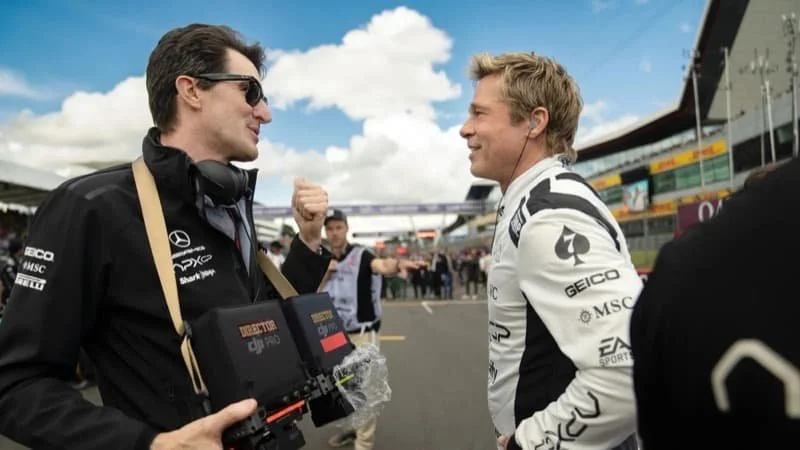
Image Source: The Hollywood Reporter
As of the writing of this editorial, Kosinski has three major projects in the works: A sequel to Top Gun: Maverick, which Oscar-winner Christopher McQuarrie is currently penning. An original and currently untitled UFO-centric film for Apple TV that Jerry Bruckheimer is set to produce. And the next film on his docket is a new adaptation of Miami Vice, which may star Michael B. Jordan and Austin Butler as the iconic duo of Rico Tubbs and Sonny Crockett, respectively. Miami Vice is currently set for a release on August 7th, 2027. As Joseph Kosinski takes his first jump into the world of police thrillers with writer Dan Gilroy (who recently won the Primetime Emmy Award for Outstanding Writing for a Drama Series for the Andor episode Welcome to the Rebellion), we can take pride in knowing that whatever Kosinski makes will be as entertaining and engaging as the original TV series and the 2006 film adaptation from Michael Mann.
The debate over whether movie theaters are dying will likely not go away any time soon, nor will people who say “Nobody makes original movies anymore!” for social media clout. However, at least we can put our trust in filmmakers who still believe in the theatrical experience. The immense success of Kosinski’s own Top Gun: Maverick and F1, as well as films such as Barbie, Oppenheimer, Dune: Part Two, and Sinners, bodes well for the future of audiences’ relationship with movies. Joseph Kosinski’s films may seem like substanceless noise to people who look down on blockbusters, but to those of us who appreciate great filmmaking in big-budget films, we know they’re more than that. Joseph Kosinski and his creative teams understand the power of cinema. Films are supposed to make you feel. Even if you’re only emotional reaction to anything in Legacy, Maverick, or F1 is “HOLY SHIT THAT WAS AWESOME!”, that still counts. We can wax poetic all day about how movies can bring people together as if I’m auditioning for my own AMC commercial, but if there are still directors who believe in theatrical films, we will be ok. Theatrically released films, regardless of style, genre, budget, or filmmaker, are meant to entertain, inspire, and move people. It can be a Joseph Kosinski film, a Christopher Nolan film, a Yorgos Lanthimos film, a Coralie Fargeat film, a Ryan Coogler film, a James Gunn film, or a Greta Gerwig film. If it makes you feel something, it counts. You go into a Joseph Kosinski film cause it looks cool, you stay cause of the genuinely remarkable filmmaking from all involved, and you come out wanting to see it again, and again, and again. That’s the power of Joseph Kosinski in a nutshell.
Biodigital Jazz, man!
READ NEXT:

Latest News
Featured





• All sizes are adult unisex
• Printed art on the front
• 100% cotton
• Pre-shrunk fabric
• Shoulder-to-shoulder taping
• Culture Slate Exclusive Design
See more products here