
Evolution Of The Mandalorians
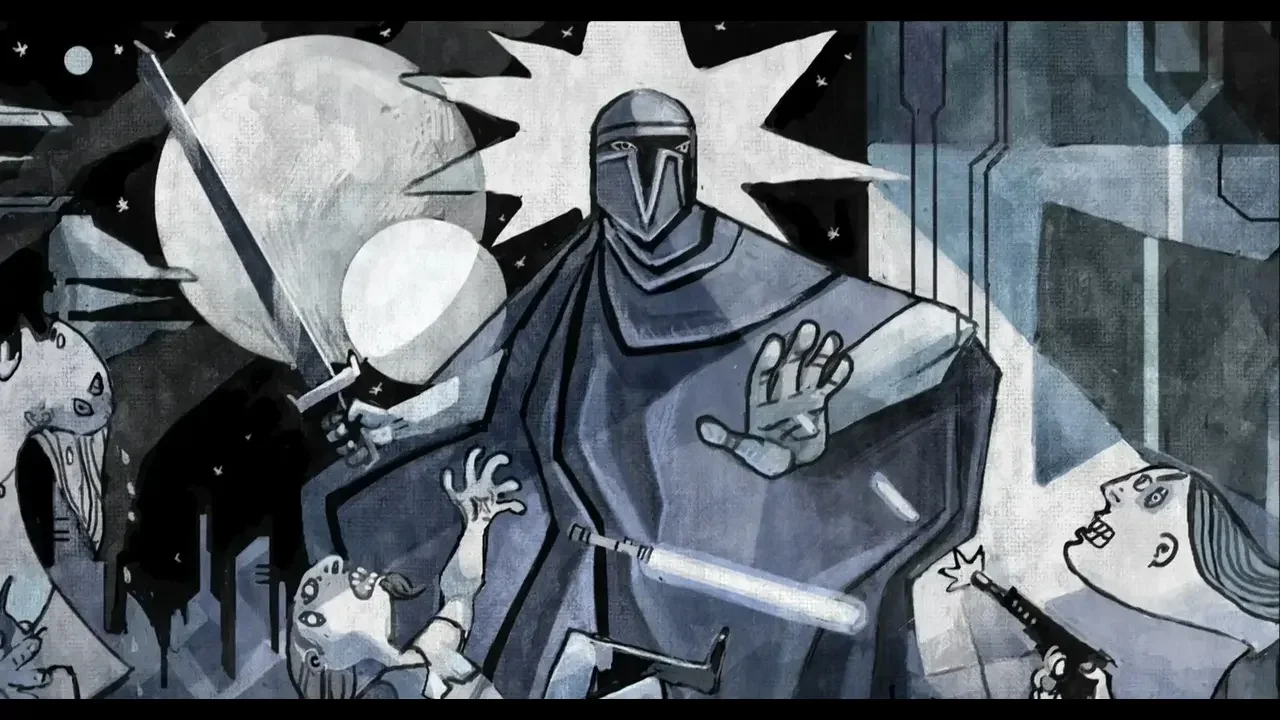
In-universe cubist art of the Mandalorians’ wars against the Jedi
Image Source: Wookieepeia
What is a Mandalorian? A stoic, fully armed space warrior? That would be correct, but it is not the whole picture. Mandalorians have played a crucial part of Star Wars ever since the making of The Empire Strikes Back and have maintained a surprising longevity beyond their toy appeal.
The origin of Mandalorians cannot be discussed without going over the origin of Boba Fett. He was conceptualized as an updated stormtrooper for the sequel to Star Wars, after the 1977 movie became an instant classic. Imperial supercommandoes would carry various weapons like flamethrowers and jetpacks—with the intent of making 100 of these costumes. However, when the budget was tabulated, this plan was put on the backburner and the prototype armor based around Joe Johnson’s concept art (seen below) became a single bounty hunter.
RELATED:
(1978—1991) BIRTH OF THE MANDALORIANS
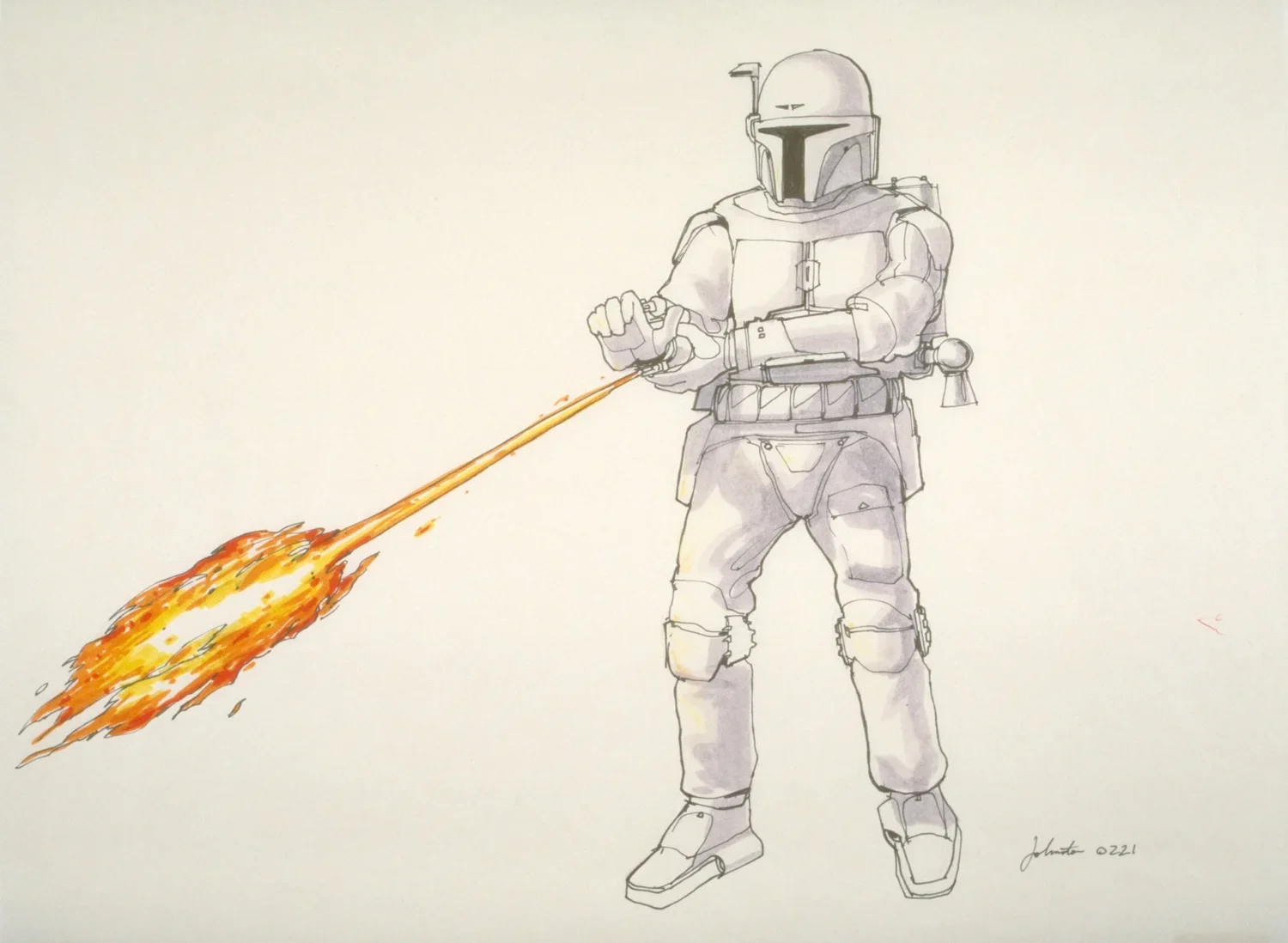
Imperial Supercommando concept art by Joe Johnson
Image Source: Boba Fett Builders
Mandalorians (and likewise Boba Fett) play off the Western genre archetype of black-hat gunslingers widely recognized throughout media, but what makes this bounty hunter unique is that he has an array of gadgets on display yet is never used onscreen, further teasing his potency. Not just a jetpack, he has trophies, a flamethrower, projectile launchers, a utility belt—everything about his design hints at him being a living weapon, a killing machine.
Boba Fett’s onscreen introduction was in the maligned Holiday Special. Despite ignoble beginnings, there was this budding excitement for his appearance in the then-upcoming sequel. Darth Vader, the most popular action figure at this time, even claims: “I see why they call you the best bounty hunter in the galaxy.” Game recognizes game.
The Empire Strikes Back was his formal introduction. Boba Fett became this curiosity. His face was never revealed under his helmet and he has surgically few lines of dialogue. There were fleeting mentions of the word “Mandalorian” in promotional material for Empire that claim Boba Fett’s armor came from “extinct” warriors who fell to Jedi in a previous war. Like the “you fought in the Clone Wars?” namedrop, fans wondered what that conflict could have looked like.
Despite Boba Fett having this reputation as a nothing character, just somebody who stands around in the background—consider this: the first thing he does is outfox the fox. Han Solo pulls a disappearing act where his broken starship, the Millennium Falcon, latches onto the back of an enemy capital ship, hiding in plain sight until the proper moment when the heroes can drift away. And yet Fett disguises his own starship, the Slave I, as a piece of space debris in order to follow his quarry. Therefore, Boba Fett is secretly a crucial part of the movie. If not for him, Han and Leia would not be the bait that lures out Luke Skywalker.
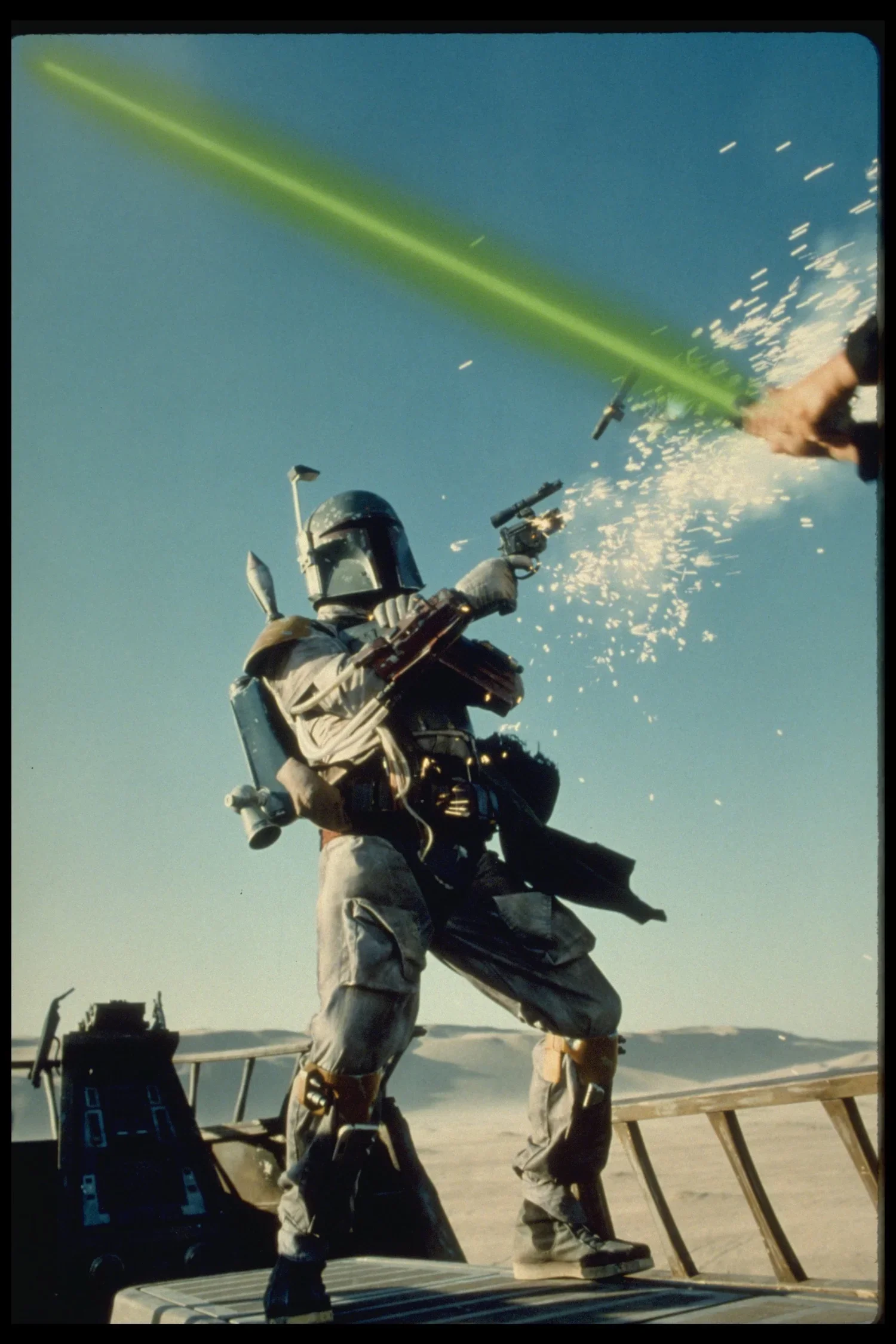
Boba Fett in Return of the Jedi
Image Source: The Dented Helmet
Let’s lay out the traits of the first onscreen Mandalorian:
· Brutal Warrior
· Quiet Intelligence
· Classical Archetype
· Air of Mystery
Three years later, with the release of Return of the Jedi, Boba Fett finally gets to use some gadgets against a Jedi, but he ends up knocked unceremoniously into the Sarlacc Pit… by accident. Many fans wanted the character to receive justice, but by that time, the Trilogy was finished. For years, it seemed like Star Wars would drift out of the public’s consciousness.
(1991—2003) BOBA FETT IS ALIVE
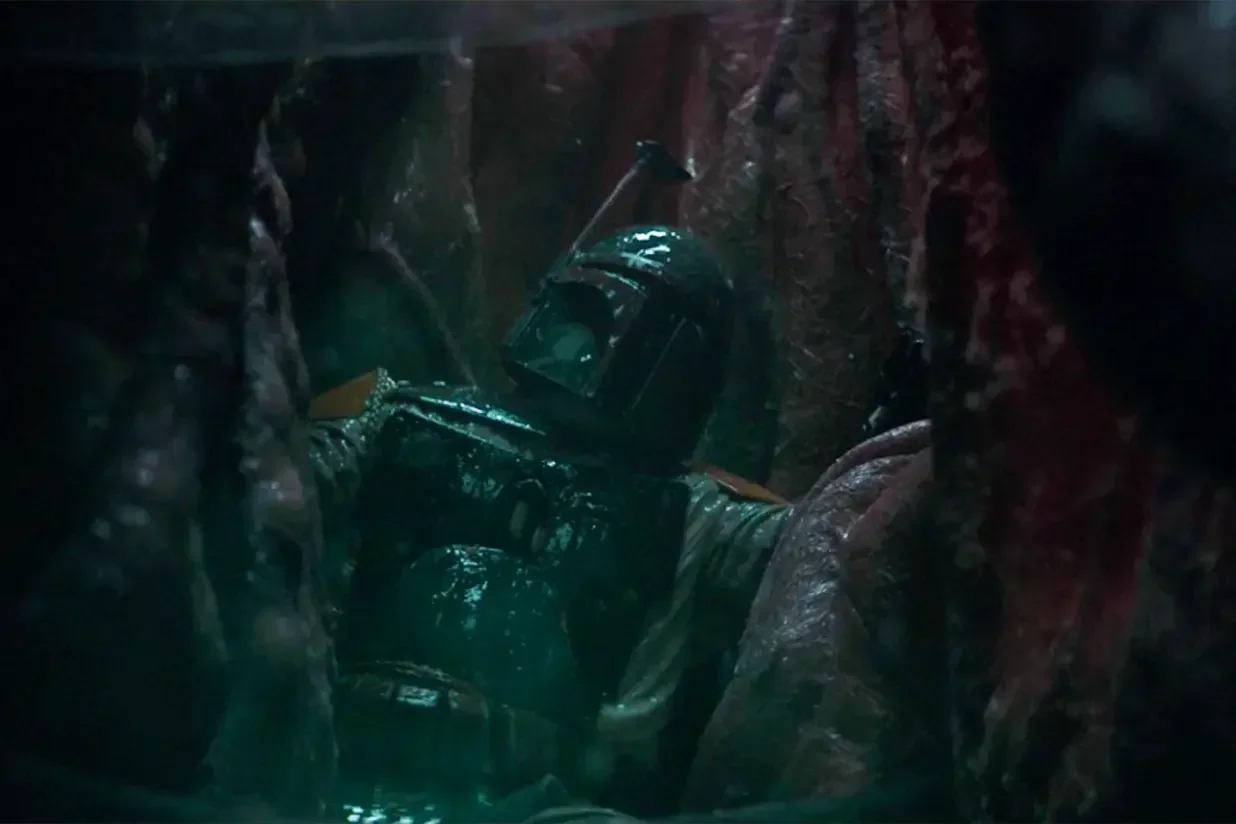
Boba Fett inside the Sarlacc Pit
Image Source: Decider
Despite a disappointing death, interest continued to spread for more Boba Fett, more Mandalorians. In 1991, one of the first pieces of Expanded Universe was the post-Return of the Jedi comic Dark Empire, and Fett makes a sudden reappearance hunting Han Solo. What was the explanation for how he survived? “The Sarlacc found me somewhat indigestible.”
So how did he survive? His armor was strong enough to survive the Sarlacc’s painful digestion. It’s made of Mandalorian iron—beskar—a kind of steel that can fend off lightsaber blows.
Boba Fett is now a recurring character in the books, best summed up by whispers that circulated where he rose from the grave: “Boba Fett is alive…”
Mandalorians were expanded upon through Boba Fett. They will receive their biggest update with the release of Attack of the Clones, the second film of the Prequel Trilogy. This peeled off the helmet to show Boba Fett as a kid, an unaltered clone of another bounty hunter, Jango Fett. His “father” was someone who has proven warrior enough to kill a Jedi, a desirable trait for the Sith’s conspiracy when it came to manufacturing a clone army. Just like that, Boba Fett’s character arc had everything to do with family. However depraved, Boba saw Jango as an honorable father. Those conflicting traits serve as a basis for many Mandalorian characters to come, as well as open the door to some introspective questions: what part of a Mandalorian makes them a hero and what part makes them a beast?
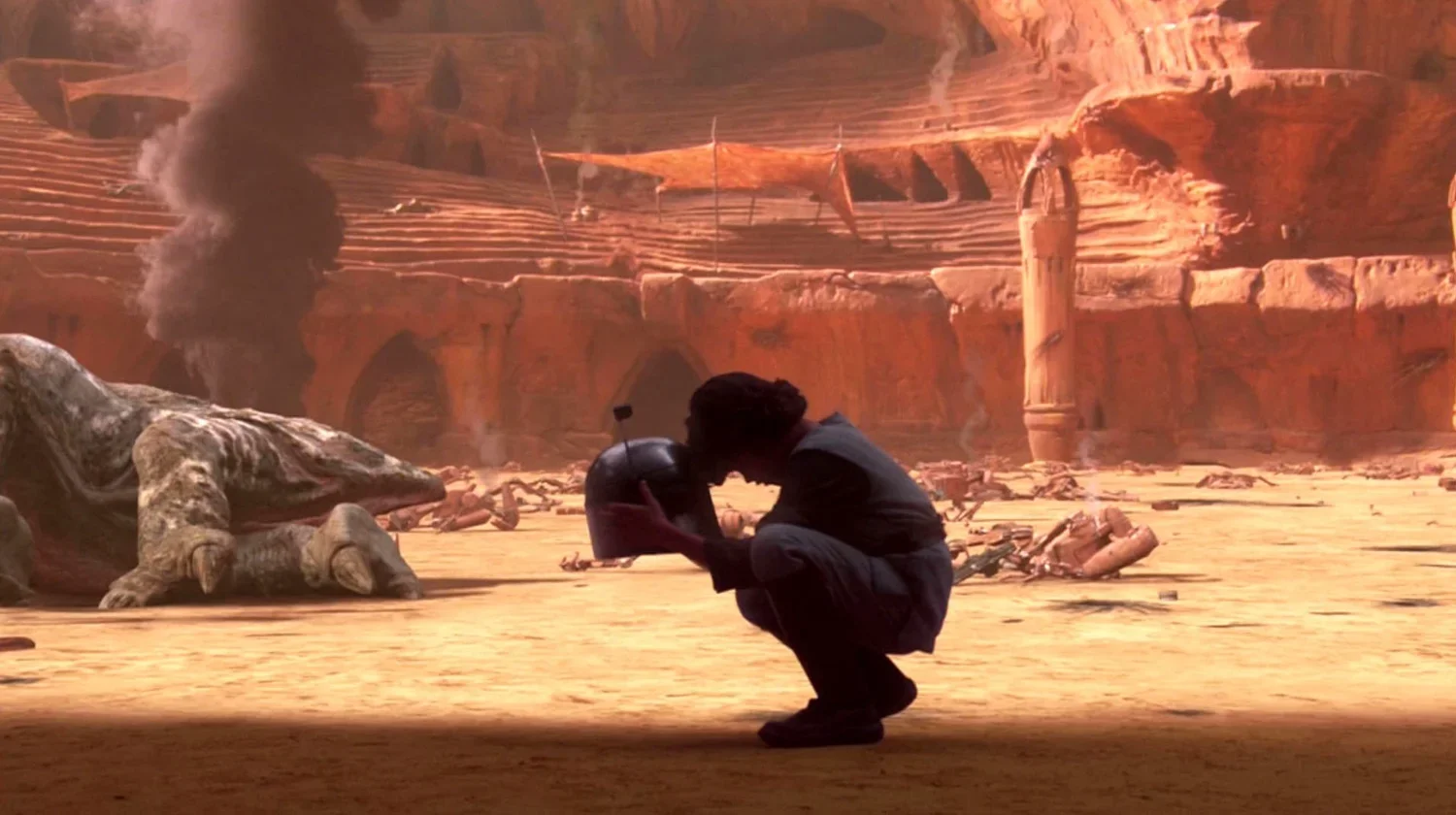
Even though some fans were disappointed that the mystery behind the mask was answered, it did bring the character back to his roots. Mandalorians were first mentioned as a warrior coven from the days of the Old Republic and Boba Fett was supposedly their final vestiges. By having Boba Fett be the prime clone of the only-hinted-at Clone Wars, it makes the character directly tied into the history of the galaxy. Every trooper in the Clone Wars is basically Boba Fett.
(2003—2009) MANDALORIAN UPRISING
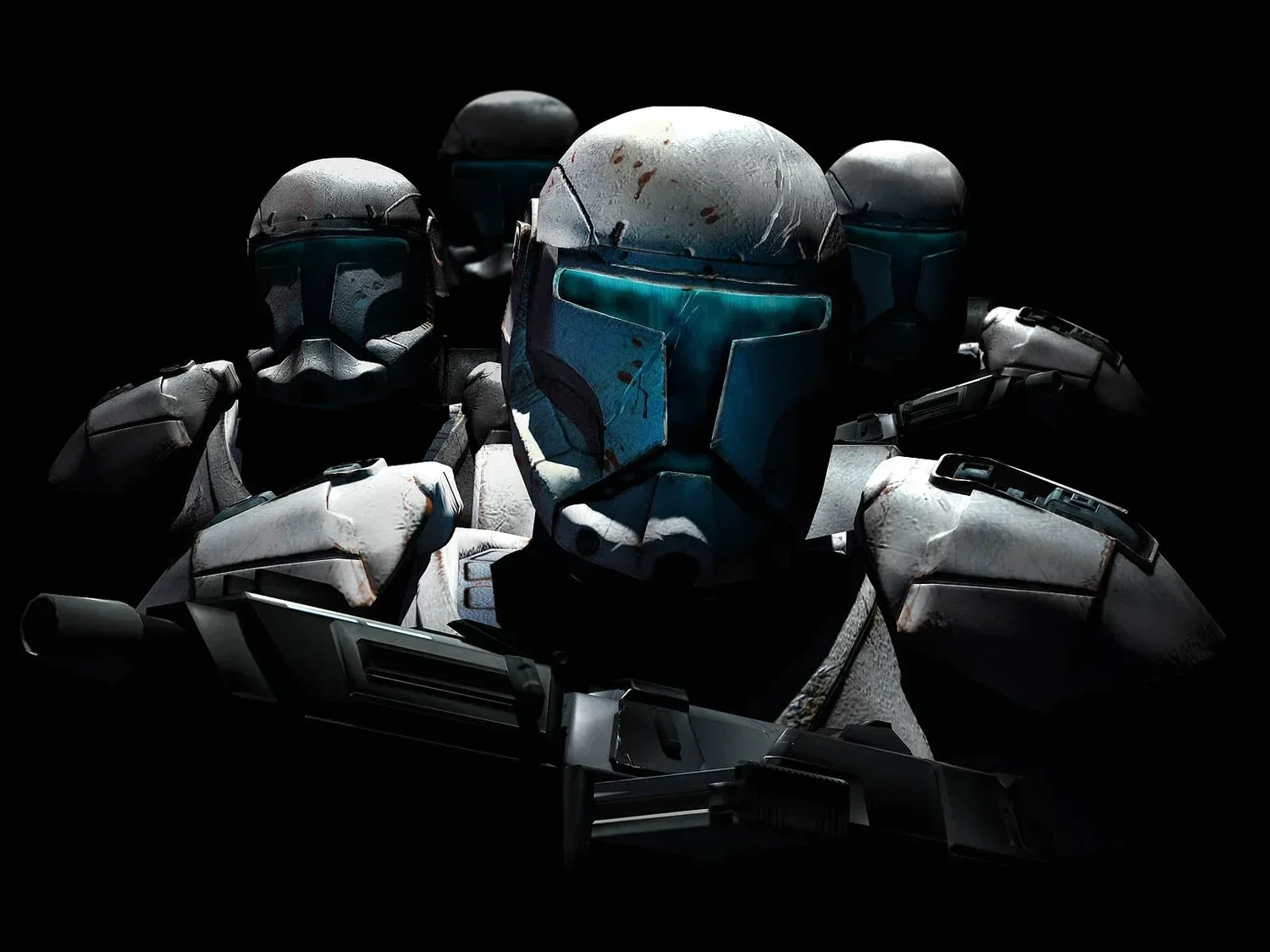
Republic Commando promo image
Image Source: Wookieepedia
The video game, Republic Commando, brought clone troopers into the foreground, but it was not until author Karen Traviss penned the tie-in novels did Mandalorian culture receive its most massive expansion. She wrote about how other Mandalorians trained Jango Fett’s clones—how they were often vagabond mercenaries who carried wildly different codes of honor—how many of the freshly batched clones revere their relative Mandalorian heritage—how the clone troopers had a range of personalities and were not devoid of humanity—how beskar is significant to a family’s hand-me-down traditions—and most distinctive for any culture, how Mandalorians had their own language: Mando’a.
While this fictional language is incomplete, unlike J.R.R. Tolkien’s Elvish, Traviss went to great lengths to pepper words and sentences throughout her books. Phrases like “Su cuy’gar” (Hello), “Ret’urcye mhi” (Farewell), “K’oyacyi” (Cheers!), and “Aliit ori’shya tal’din” (Family is more than blood) have become familiar phrases for diehard Fandalorians. Mando’a has a staccato rhythm with plentiful apostrophes, but enough vowels that short sentences can flow, a combination fitting for a militaristic culture. It also has some basis in the Māori language, considering how Temuera Morrison (actor for Jango Fett and his clones) has an indigenous Polynesian background.
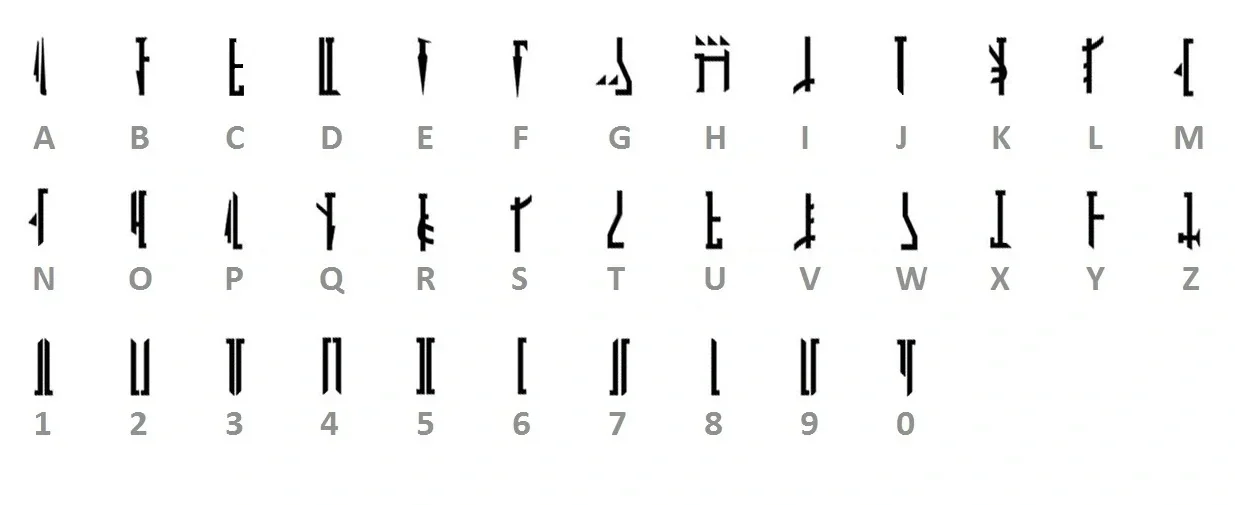
Mando’a alphabet
Image Souce: Fandom
Around this time, Knights of the Old Republic and its tie-in comics expand Mando history. At last, their fight against the Jedi during the Mandalorian Wars are on display. There was not always a leader that united the clans, but when there was that individual was so renowned in songs and tales that they earned the title of “Mandalore”—warrior-king. Mandalore could be overthrown, but only by somebody who has adopted the traditions, which becomes a point of contention in-universe.
On the Mandalorians’ opposing side was a masked man as enigmatic and mischaracterized as Boba Fett: Revan, great hero of the Republic. Using renegade factions within the Jedi Order, Revan would turn the tide by using Mandalore’s own tactics against him. Revan claimed a fallen helmet as his own, vowing to keep his face hidden until he saved the Republic from the Mandalorian Neo-Crusaders. The war ended in a one-on-one duel.
The Old Republic era became a cornerstone for featuring fresh Mandalorian characters—one that continues to this day through The Old Republic MMORPG video game. A big reason why is because this is an era that does not interfere with the ever-shifting timeline of the Skywalker Saga.
(2009—present) THIS IS THE WAY
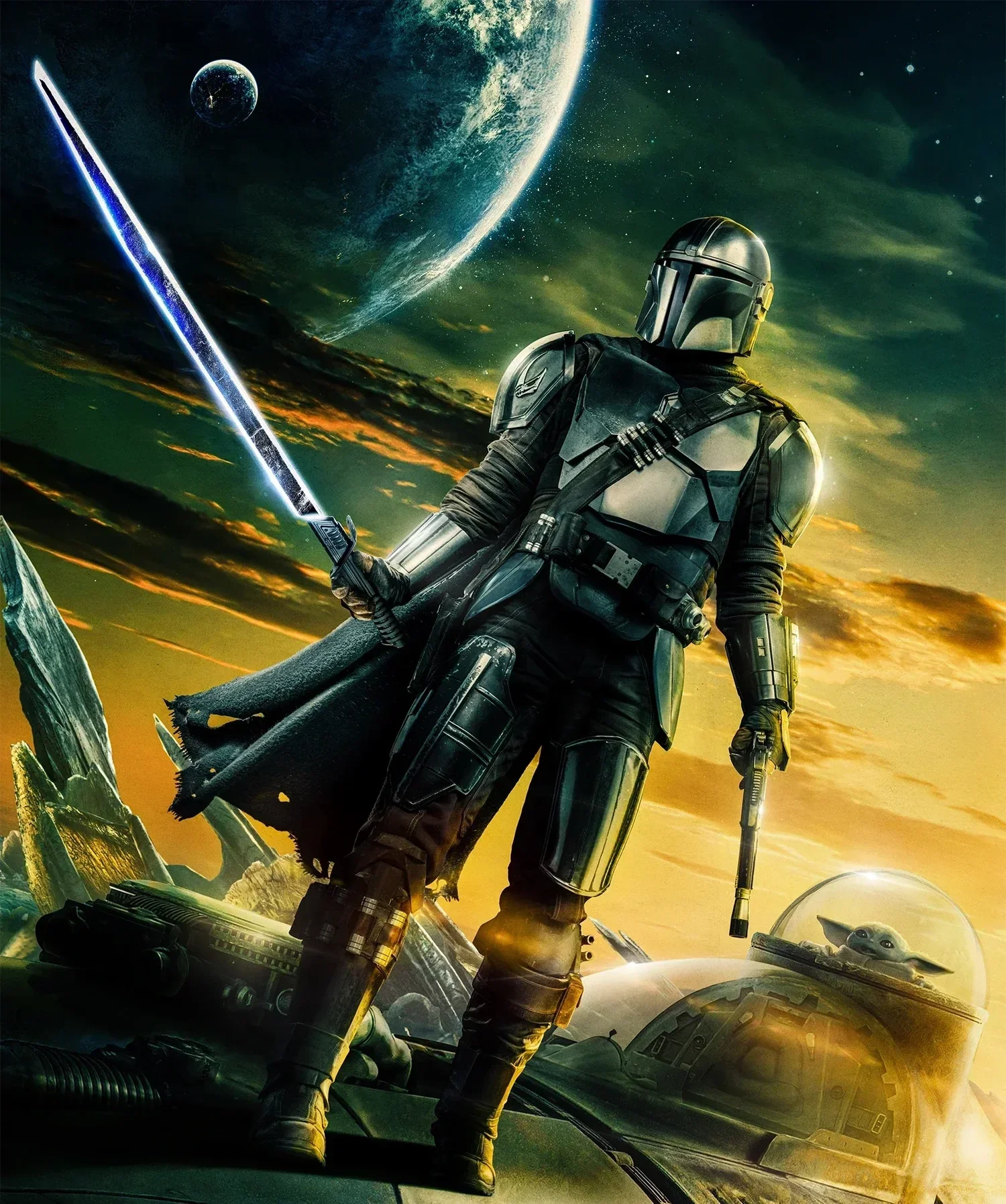
The Mandalorian season 3 official poster textless
Image Source: Fandom
The Clone Wars TV show became George Lucas’s final touchstone to Star Wars. One piece of the show’s lore would include his interpretation of Mandalorians. The planet Mandalore was once a grassland paradise annihilated into a desert of windy white sand due to the Mandalorians’ endless wars. Survivors fled from ecological collapse by constructing hermetically sealed domed cities, adopting pacifism instead of warfare, and becoming the New Mandalorians. Duchess Satine Kryze would lead thousands of neutral systems through her promotion of peace in a galaxy going dark. A galaxy where the Sith secretly rule, the Jedi have disavowed their peacekeeping ways by becoming generals of a Clone Army, and where the remains of the old fighting ways have survived in a splinter faction known as Death Watch.
Although first mentioned in the Imperial Sourcebook published in 1989 (as an in-universe design inspiration for Imperial Royal Guards), and they were in the Legends comic Jango Fett: Open Seasons, Death Watch was largely introduced in The Clone Wars TV show. They had a similar color motif to Jango Fett’s blue-and-gray beskar, named terrorists by the New Mandalorians, and were led by the megalomaniac Pre Vizsla who carried a curious black, sword-shaped lightsaber. The Darksaber.
It’s not until the next animated TV show, Rebels, that would tell why the Darksaber is so unique. It was constructed by Tarre Vizsla, the first Mandalorian to be inducted into the Jedi Order. Vizsla’s descendants raided the Jedi Temple and reclaimed it during the fall of the Old Republic, seeing it as their birthright that whoever won the sword through noble combat had a divine right to be the leader. The Darksaber is won through multiple hands with varying disputes of legitimacy, including a one-on-one duel between Pre Vizsla and a reborn Darth Maul that led into a tumultuous regime change.
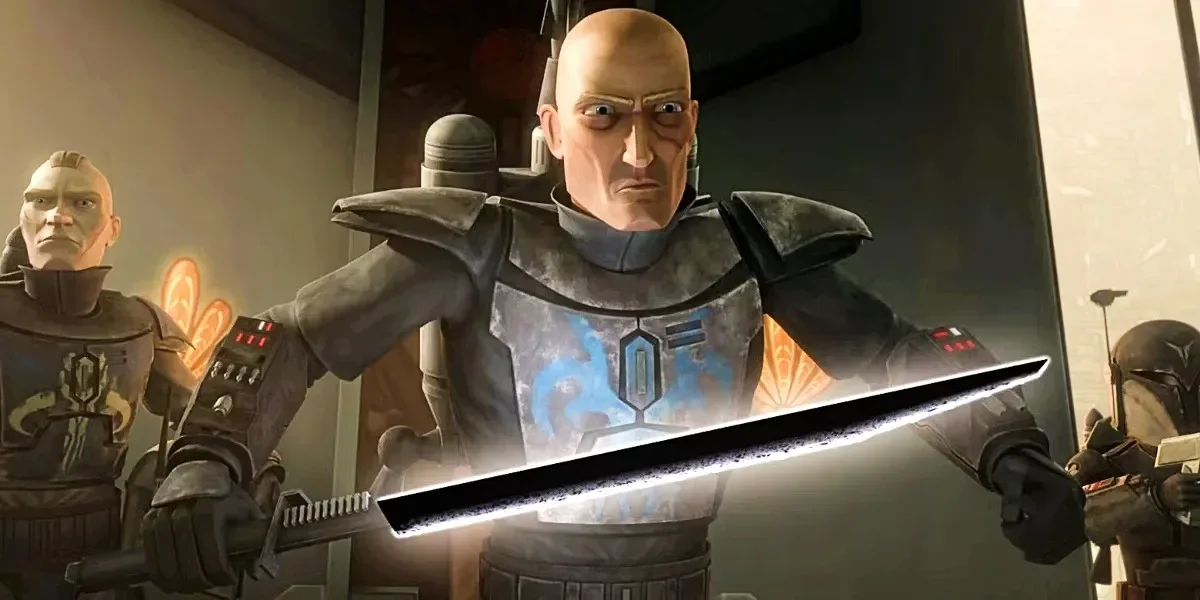
Pre Vizsla in The Clone Wars
Image Source: The Mary Sue
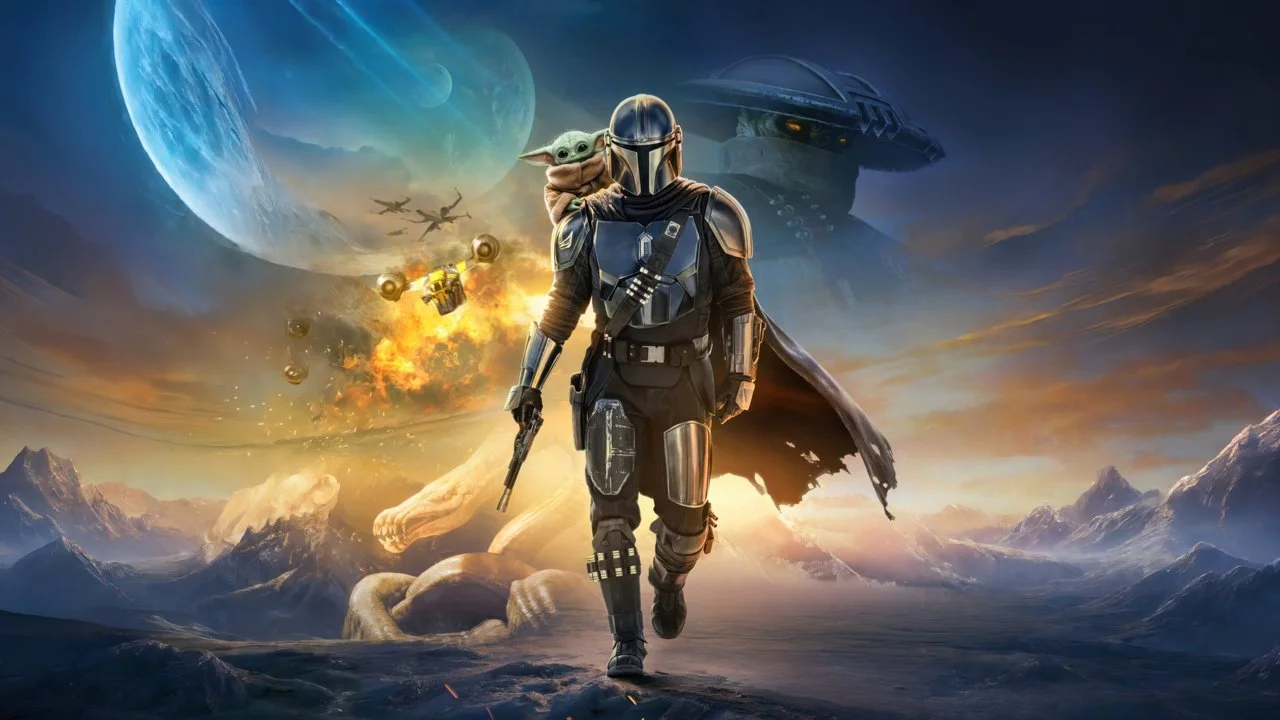
Which finally leads into the ongoing events of The Mandalorian, and The Mandalorian and Grogu movie releasing May 2026. Bits and pieces of what happened after Rebels, and why they are considered extinct by the time of the Original Trilogy, are revealed. It is also this show that made Mandalorians a household name. Mainstream. A show that brought the Western gunslinger aspects of Star Wars into the forefront alongside a new, initially nameless, protagonist.
From zero mention of the word in any Star Wars film to the first ever live-action Star Wars TV show, Mandalorians have become the backstory for every major galactic army seen onscreen. Their DNA is in clone troopers who trained stormtroopers and onwards into the resurgent First Order. They both existed as individuals with customized armor and a uniform military, from individual faceless nomads like Boba Fett to clones of diverse allegiances… like Boba Fett.
Mando’ade is not a race, they are a Creed.
This is the Way.
CultureSlate: Made by humans, for humans.
Please consider supporting our AI-free content via our Patreon page.
READ NEXT:

Sources: Fandom, Boba Fett Builders, Boba Fett Fan Club, The Dented Helmet, Yahoo! Entertainment, Reddit, Decider, IMDb, The Mary Sue, SWTOR
Source(s): Wookieepedia (2) (3) (4) (5) (6) (7) (8) (9), Boba Fett Builders, Boba Fett Fan Club (2), The Dented Helmet, Yahoo! Entertainment, Reddit, Decider, IMDb, The Mary Sue, SWTOR
Latest News

Featured



/Legends?file=MandalorianWritingSystem-SWcom.png)

• All sizes are adult unisex
• Printed art on the front
• 100% cotton
• Pre-shrunk fabric
• Shoulder-to-shoulder taping
• Culture Slate Exclusive Design
See more products here